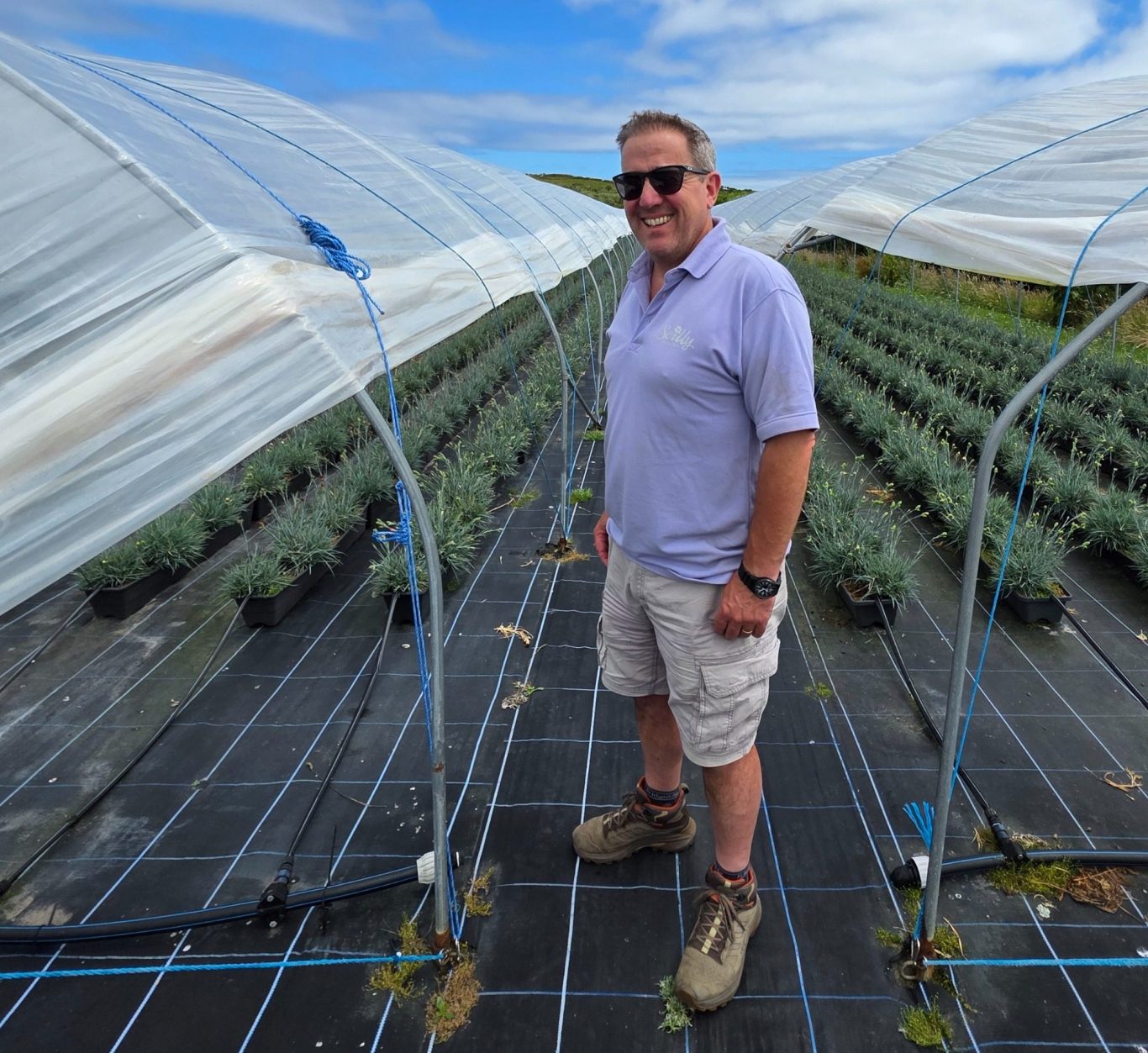
Ben Julian showing his drip irrigation of pinks
9th October 2026
For most flower growers, water is fundamental. The family run Scilly Flowers, based on the beautiful island of St Martin's in the Isles of Scilly, is no exception. St Martin’s is the most north easterly of the five main Scilly islands with a population of around 140 living on less than one square mile.
During a visit to Scilly Flowers earlier this summer, shortly before the isles were designated as being in drought, I spoke with owner Ben Julian about growing flowers on a small Atlantic island, the challenges of water supply and how the business has adapted to thrive in a unique environment. Ben's family moved to St Martin's in 1986, and the mail-order flower business grew from modest beginnings, including an early advertisement in Good Housekeeping.
Scilly Flowers is best known for its iconic scented narcissi, which have been associated with the Isles of Scilly for generations. However, the business now produces flowers throughout the year, including a significant summer crop of scented pinks, helping the farm supply customers well beyond the traditional narcissi season.
The company sends around 110,000 boxes of flowers annually to customers across the UK. It provides an important source of employment on St Martin's supporting the equivalent of around 16 to 17 full-time jobs, making it one of the island's most significant year-round employers.
Farming Without Rivers
Unlike many UK agricultural businesses, Scilly Flowers operates in a landscape with no rivers, streams or significant surface freshwater resources. "The obvious thing is that there's no surface water," Ben explained.
Despite South West Water taking over the water and wastewater services on the islands in 2020, Scilly Flowers has no access to a mains supply.
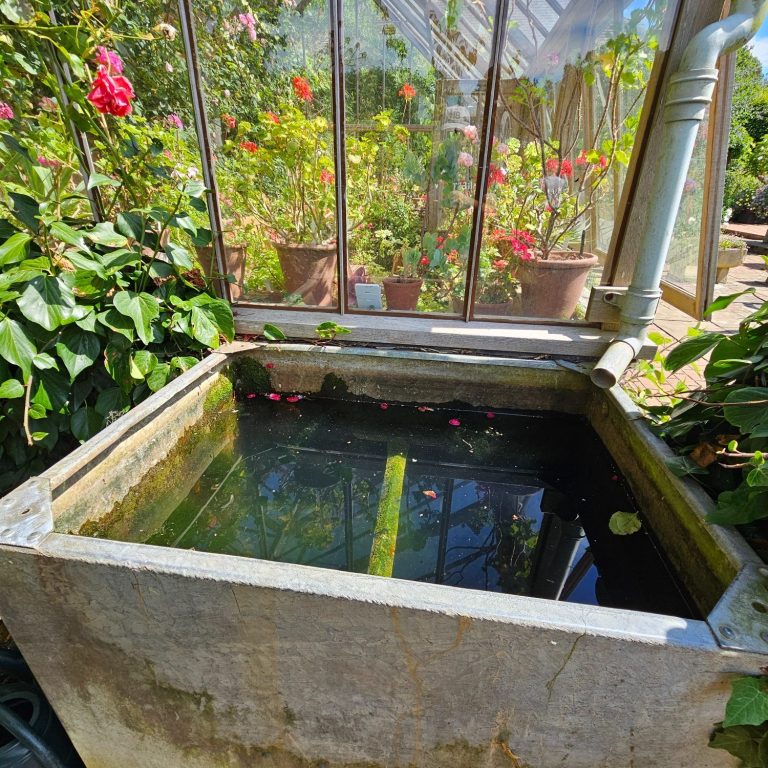
The farm relies on a combination of rainwater harvesting and groundwater abstraction from boreholes tapping the island's shallow granite aquifer. Recharged by winter rainfall, this underground freshwater resource acts as a natural reservoir beneath St Martin's that has supported farming on the island for generations.
"I think this is more than sustainable," he said. "St Martin's is small enough that you can see it fill up every year. It's not expensive for me to pump the water I need out of those bore wells, and it's not being detrimental to anyone else's access to water."
Precision Irrigation in a Water Limited Environment
With limited water resources and highly free-draining sandy soils, efficient irrigation is essential to the success of Scilly Flowers. While the farm's famous narcissi are naturally adapted to the island’s sandy soil environment, the summer pink crop requires careful irrigation throughout the growing season. Rather than using traditional overhead irrigation, the business has adopted a highly efficient drip irrigation system adapted from commercial strawberry production.
The system delivers water directly to the plant root zone via drip lines, reducing evaporation losses and ensuring water is used as efficiently as possible. Growing the crop in coir-filled troughs also gives much greater control over moisture levels and nutrient management than growing directly in the sandy island soils.
For Ben, the attraction is simple: "The big thing for us is our pink crop in the summer, and we're able to use drip irrigation and be very efficient with it."
The irrigation system also serves as a delivery mechanism for nutrients through fertigation, allowing water and nutrients to be applied together in carefully controlled quantities. This helps minimise waste while maintaining flower quality.
Ben believes the approach represents the most efficient use of the island's valuable water resources: "We're not losing loads of that back into the groundwater. It's an efficient way of doing it. As efficient as we can be, I believe."
Over time, the business has refined how it operates the system. Rather than applying small amounts of water throughout the day, experience has shown that a single well-managed irrigation event works best. "We used to try and get more complicated about it," says Ben. "Actually, it worked better with just one decent irrigation once a day to make sure, we're balancing that and adjusting as needed and feed them at the same time."
Ben explained that the drip irrigation system is designed to maximise longevity and minimise waste: "The T tape will last us two seasons. So, this will do a first year, it'll go through this winter, it'll do next summer as well as a second-year crop." When the drip tape reaches the end of its useful life, it is recycled: "We send it away for recycling, but we can't really use it for more than two seasons."
Ben explained that the harsh island environment limits the lifespan of irrigation materials: "It has a relatively rough life out here being outside. Rabbits and pheasants and things peck holes and everything." He also noted that the main infrastructure remains in place for much longer: "All the header pipes and underground pipes and the main pipes obviously are there."
The Challenge of Storage
One of the biggest water challenges facing the business is not necessarily lack of rainfall, but a lack of storage capacity.
The farm captures rainwater from roofs, but heavy winter rainfall frequently exceeds what can be stored. Ben pointed to a pair of tanks capable of holding 20,000 litres, his largest individual storage asset. Yet when irrigation demand peaks in summer, that volume can disappear quickly. "At this time of year, irrigating the pinks, that's probably about four or five days' worth," Ben explained.
Like many businesses on the Isles of Scilly, logistics add significantly to costs. Importing additional storage tanks is expensive, with freight costs approaching the value of the tanks themselves. Ben has considered constructing a reservoir, but available land and construction costs make this difficult to justify.
"I've looked in the past and thought could we build a proper reservoir and then take all the roof water in the winter and have a big reservoir lake. I haven't got enough land to be able to give up space to an above-ground reservoir."
Looking Ahead
Despite ongoing debates about future water infrastructure on the islands, Ben remains confident about the sustainability of the farm's current approach.
For him, the solution lies not necessarily in large engineering projects but in understanding and working with the natural resources already available. "There is a rich history of water capture, storage and water efficiency," said Ben. "It always has been. "Do I see it changing at all? No."
Ben is equally committed to improving soil health to increase resilience in the future: "The aim and the long-term vision has got to be to try and improve soil organic matter and soil structure in such a way that it is more resilient through the summer."
The result is a growing system specifically adapted to the unique conditions of the island. While many growers elsewhere in the UK are investing in larger reservoirs and new water infrastructure, Scilly Flowers has focused on precision, efficiency and making every drop count.
In an era where water security is becoming increasingly important for agriculture across the UK, the experience of Scilly Flowers offers a valuable lesson. Resilience is not always about having more water. It’s more about using the water you have wisely, efficiently and sustainably as possible. On St Martin's, that philosophy has helped turn a small island flower farm into a successful year-round business.
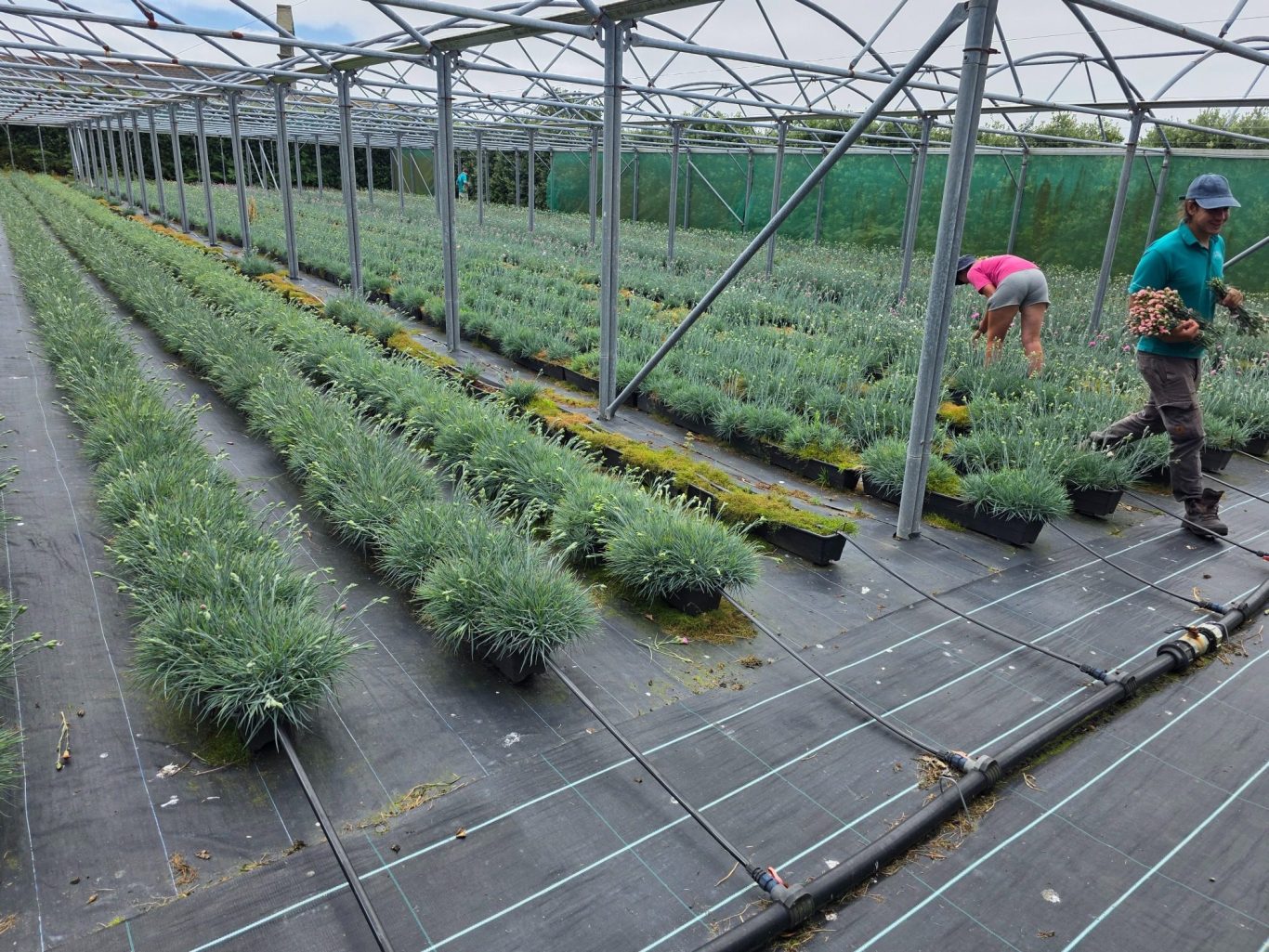
Cutting of the pinks
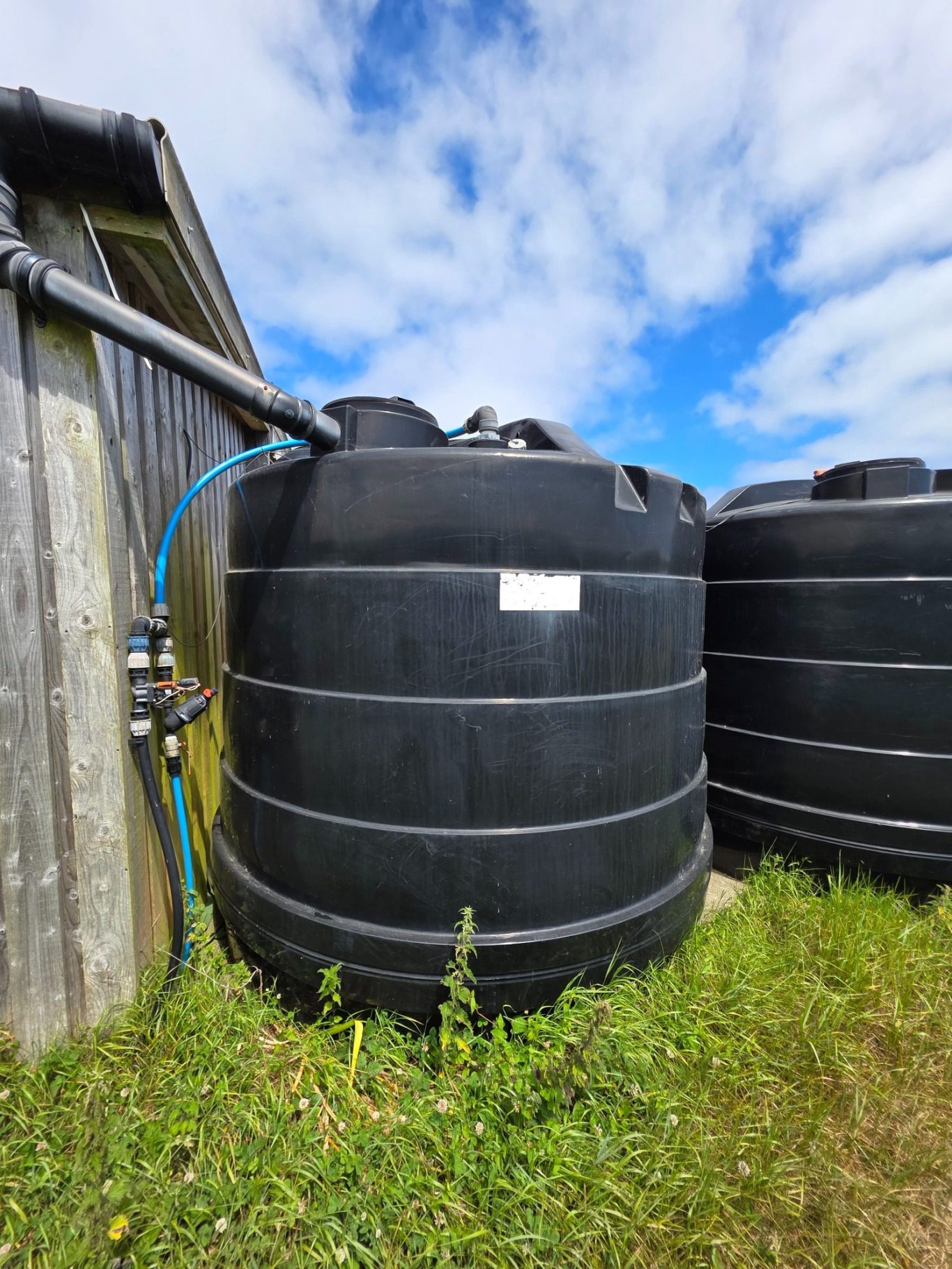
Scilly Flowers water tanks which store rainwater and groundwater
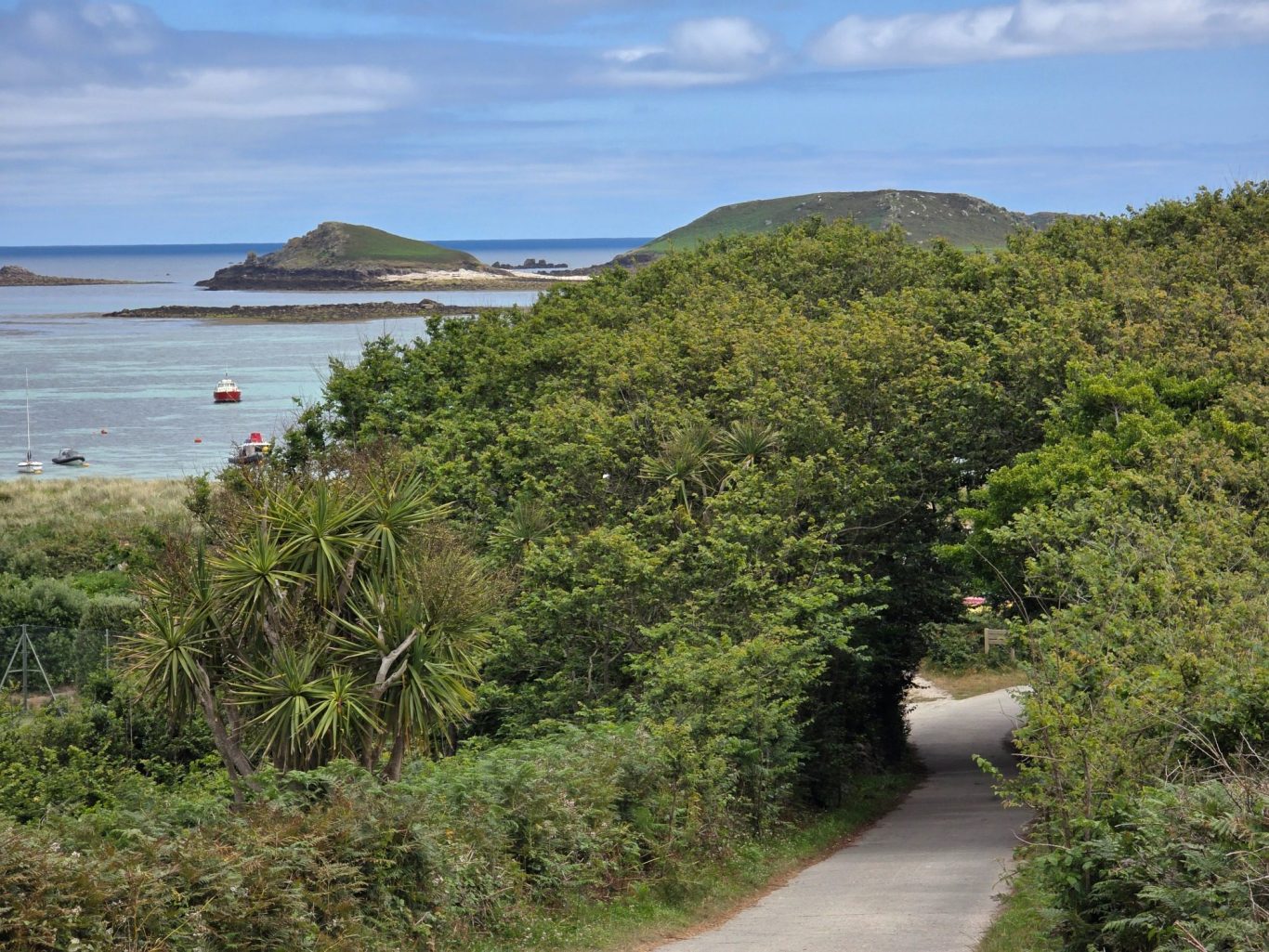
The beautiful island of St Martin's
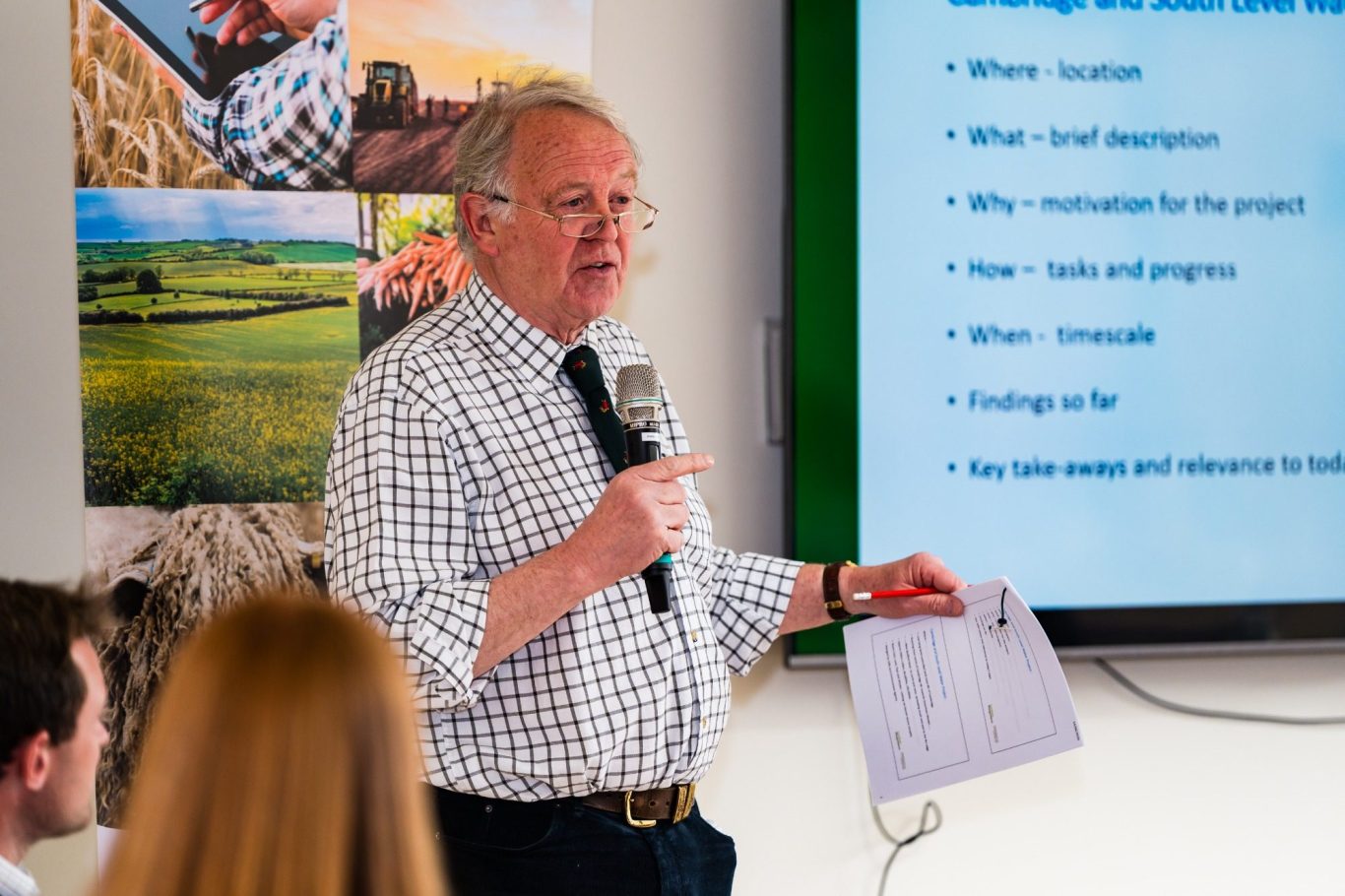
Lindsay Hargreaves - photo courtesy of Epic Media UK
5th August 2026
Farmers across the South Level of the Cambridgeshire Fens are facing increasing problems as the drought continues to stretch ever decreasing water resources, while concerns grow over the impact on crops and the availability of irrigation supplies later in the season.
Lindsay Hargreaves, Chair of the Lark Abstractor Group, has warned that the situation in the South Level “is just really precarious” as water availability continues to diminish with possibly just enough for one more night time irrigation run this week and one next week.
According to Lindsay, growers are battling against not only the lack of water but also the direct effects of extreme temperatures on crops. With the challenges to stressed plants increasing on a virtually daily basis, Lindsay explained: “There is a moment when you have to differentiate heat effects and water effects on crops. Regardless of how much water they've got, and it's very often the case that at this time of year, not only do they need the water to grow, but there is an important function of putting some water on the surface to try and cool it down.”
Lindsay highlighted the plight of onions. He said: “One of the problems with onions is that they scorch, they get sunburned in very high light intensities.” The effects can be particularly severe in fields with exposed, dry soil, where temperatures can rise dramatically. “Surface temperatures of 50 centigrade have been measured in onion fields where you have bare soil, so it gets incredibly hot. It's a bit like the track temperature on a car racing circuit.”
These heat-related impacts extend beyond cosmetic damage. They cause chemical changes in the tissue of the bulb with knock on effects on saleability, storage and price. Lindsay noted that while onions can become disfigured by scorching, other crops also suffer from reduced growth during periods of extreme heat.
“This has a disfiguring effect on the bulb and is aside from the growth inhibiting effects of high temperatures. Potatoes for example slow down above 25°C and stop completely at 30°C .”
Despite the challenging conditions, many growers have adapted their farming practices to cope with increasingly common periods of hot, dry weather.
Lindsay reflected: “I would say it's been hot and dry enough for long enough now that people have built in coping strategies, but it's going to have an impact on the output.” However, concerns remain over whether existing water licences will be sufficient if dry conditions persist through the remainder of the growing season.
“People relying on summer groundwater will have access to their licensed quantity, but is their licensed quantity enough? And of course, farmers can't apply for a drought order to carry on abstracting when they've used their licensed quantity. So that's an issue for them. And whether people have enough is a function of their risk strategy.”
Lindsay revealed individual farm businesses have adopted different approaches to water management, with some building greater flexibility into their irrigation plans than others.
“Some people might design their irrigation programmes around needing, let's say, 75% of licensed quantity in a normal year, whatever that is, and they've got enough headroom to cope with something like this. Others might plan rather differently.
“And so, this is really triggering, a water stress response of the sort I just sort of mentioned. It’s changing their irrigation priorities and eking out the water.”
One of the biggest unknowns facing growers is whether they will have enough water available for harvesting later in the season. Potatoes for example may require irrigation to wet up soils to enable lifting without bruising the tubers.
Lindsay continued: “Another issue for people, especially potato growers, is come harvest day, if it still remains dry, will they have enough water available to wet the soil to support harvest? And that's a really hard chance to take because you're looking at a harvesting event, which is going to take place sometime in September or even September or October.”
That's quite a long way away in meteorological terms. Is it going to have rained by then? Am I holding back water for an event that might not happen? And you flip a coin on that one.”
While uncertainty remains over the weather in the coming weeks, Lindsay admitted many farmers are adopting a pragmatic approach to the challenges ahead.
He concluded: “There’s a mood of resignation amongst the farming community that this is what we've got now, so we work our way through it as best we can and just hope that the authorities are doing all they reasonably can to help us.”
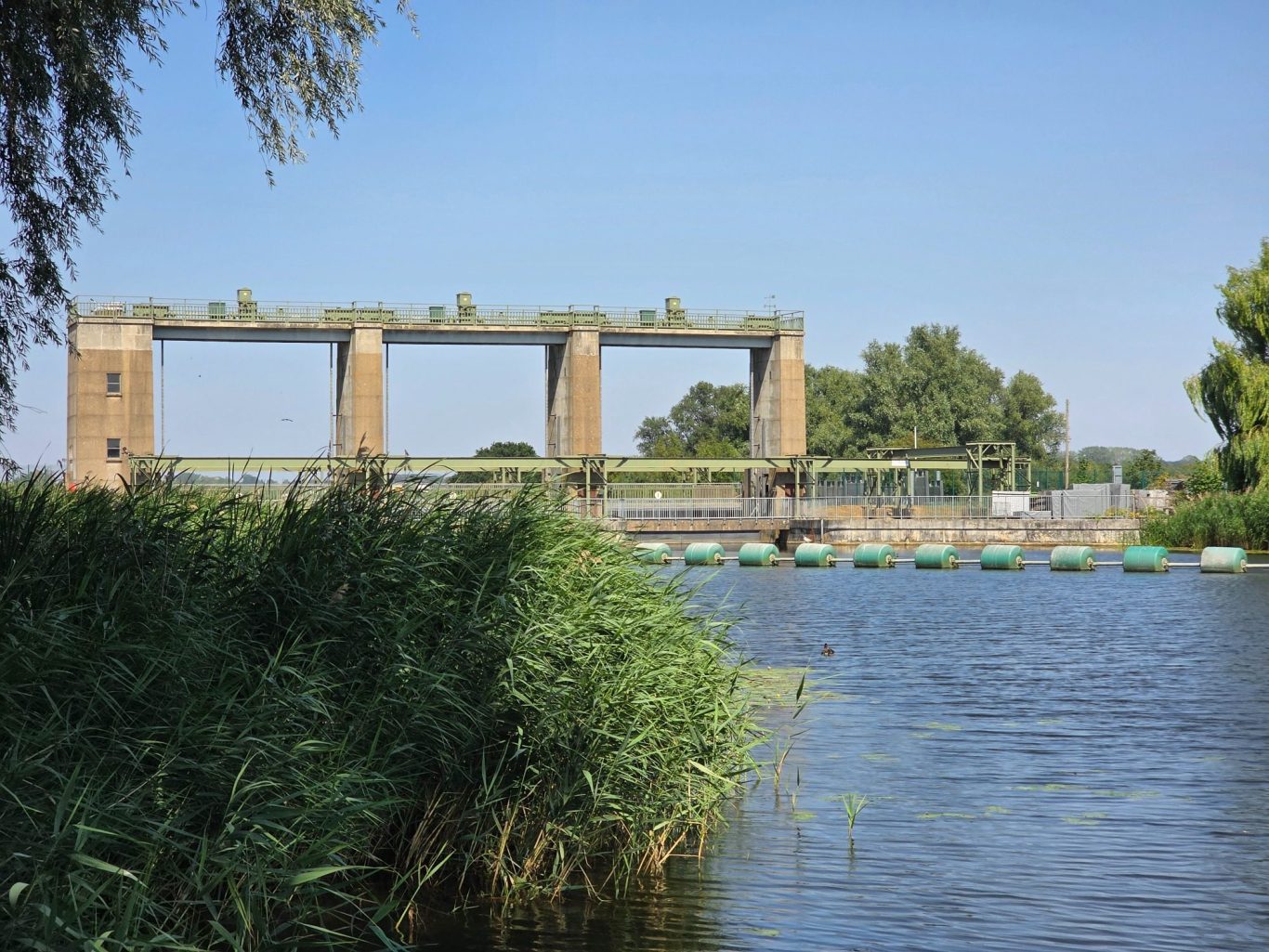
Hands off flow conditions for South Level farmers are set at Denver on the Ely Ouse
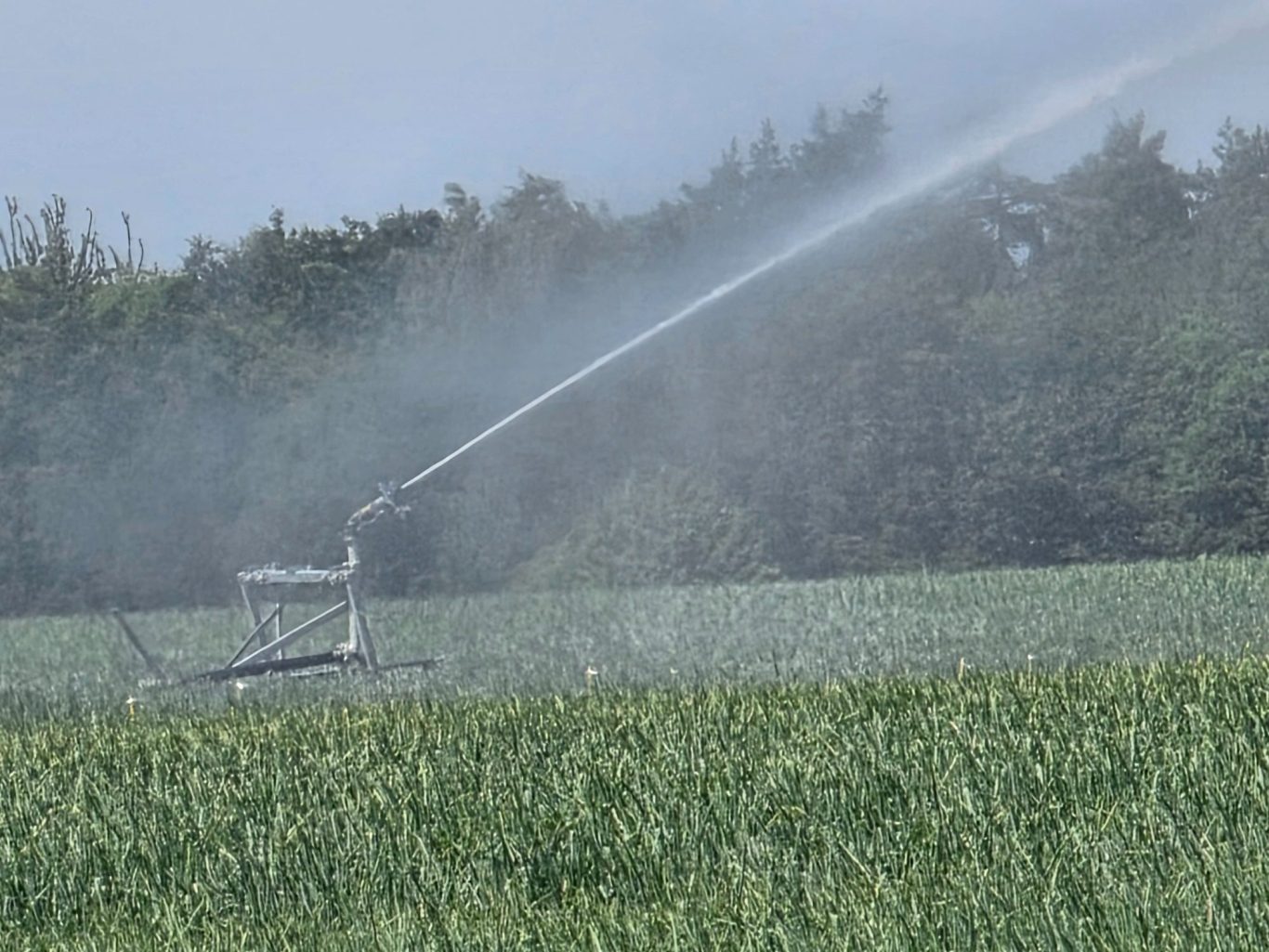
Irrigation of onions in Norfolk
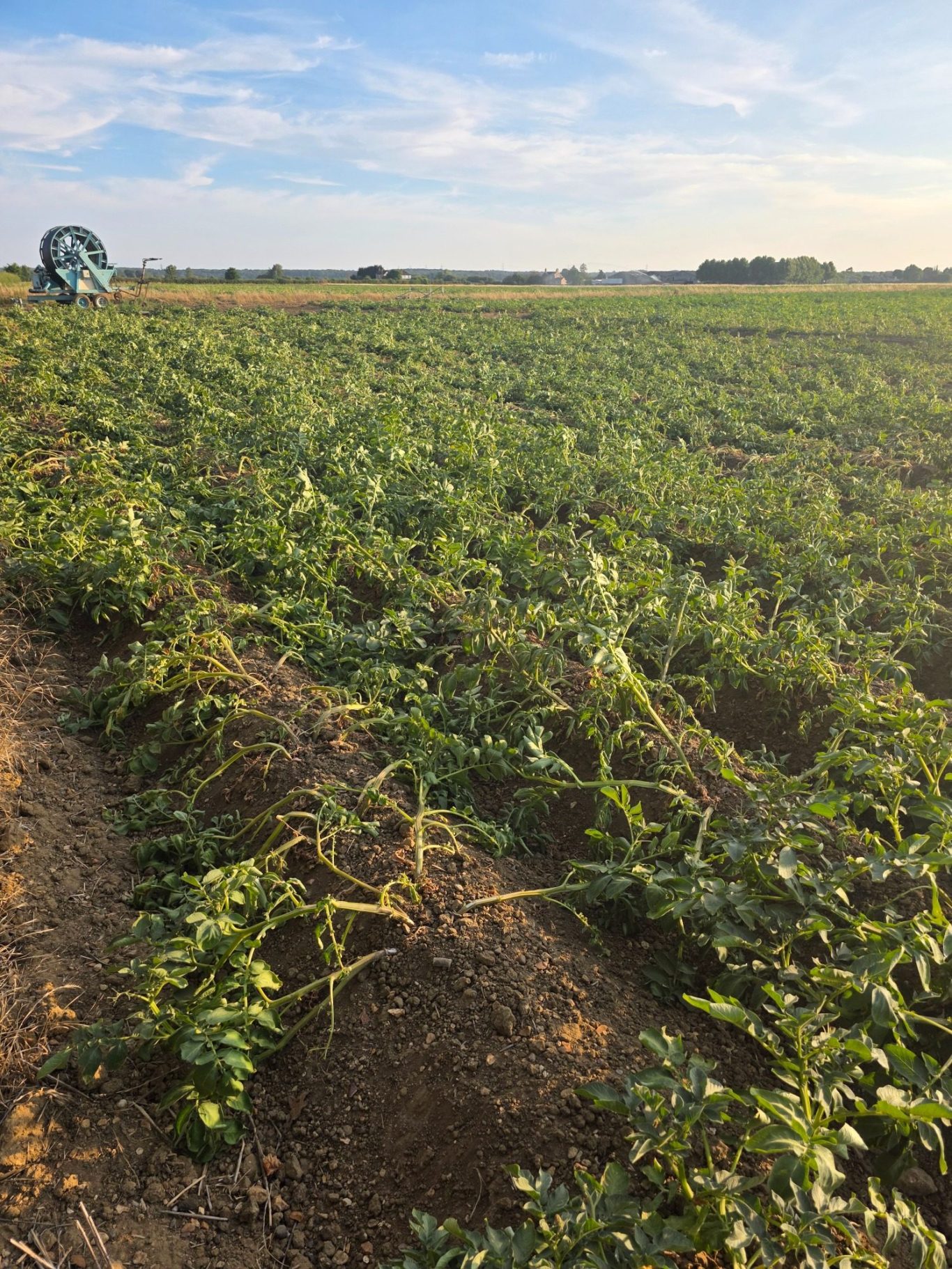
Wilted potatoes suffering from the hot and dry weather

It’s easy to sign up to Probcast for a free trial period at https://catchmentai.com/
6th May 2026
With a continuing dry spring and an early start to irrigation a new company is looking to help farmers and growers ensure they maximise the effectiveness of their remaining available water resources for the season.
The team at the recently launched CatchmentAI has produced an advanced risk-based weather forecast app (Probcast). Probcast is designed to help achieve optimal irrigation, at a time when the recently Updated Irrigation prospects have deteriorated across parts of England.
We are all familiar with weather apps which provide probability of rain forecasts throughout the day. Probcast goes beyond this as it breaks these forecasts down into hourly intervals of a range of different probabilities of rainfall accumulations over a five day period. 78% of heavy rain (>10 mm events) are missed by existing weather apps. Probcast’s advantage is it provides a 10% risk alert identifying these unlikely rainfall events, capturing approximately 70% of the risk missed by traditional forecasts.
Founder of CatchmentAI and CEO Will Veness says that farmers mostly want to know when there is a 10% risk or more of very heavy rain in an hour, which Probcast provides. This type of rainfall event is often depicted in standard apps as a sunny cloud icon plus a description of 20-30% ‘chance of rain’, with little indication of how heavy the rain could get. Probcast can help farmers avoid over-irrigation if the unlikely heavy shower does hit and causes saturation of the soil and runoff, wasting time, money and water.
Will reveals: “Many farmers told us it clicked for them when they realised Probcast is not just about having the best weather forecasts. They saw that having risk-based forecasts effectively makes the platform their operational management tool. Weather is the biggest driver of variable costs year-to-year for arable farms, and operations should be planned and optimised for the lowest-risk weather conditions as far as reasonably possible. We’ve found turf growers are especially precise at irrigation so typically pay close attention to our daily cumulative rainfall forecasts.”
Conversely farmers do want to be notified when there’s no chance of heavy rain so they can confidently continue irrigating. There are also other alert parameters including frost, high likelihood of dew and strong winds within the platform to help farming operations.
So how does it work? Probcast uses 18 Met office simulations each hour to provide its forecasts. The platform also uses European Centre for Medium-Range Weather Forecasts (ECMWF) 15-day forecasts of 51 simulations and it also planned to blend these with other leading providers into a ‘super-ensemble’ that can pick up the variations between other model providers too.
Although there is a higher concentration in East Anglia and Lincolnshire, Probcast has a number of users spread across the UK from Cornwall and the Isle of Wight to peninsulas north of Inverness.
Probcast continues to be refined and developed as Will explains: “For smart farming, we’ve built an Action Planner into Probcast where farms set weather thresholds for specific operations like spraying, drilling and irrigation. Then we give their teams simple metrics and traffic lights on when they have the best odds of getting those conditions without disruptive weather. That tool has a natural evolution into smart farming - mostly by integrating existing farm datasets with the weather layer, such as soil moisture probes, weather stations, soil nutrition, chemical runoff, disease monitoring, etc. With a reliable weather layer these can all be better modelled, forecasted, anticipated, and proactively acted upon.
“We are also working on Smart Farming at the catchment scale with Water Resources East and the Environment Agency on a smart agri-abstraction dashboard designed to make water management simpler for irrigators. It brings key information into one place, including licence limits, live meter readings, river levels and local restrictions, so growers can see their position clearly rather than piecing it together from different sources.
“The overall aim is to help farms and other catchment abstractors collectively make better use of available water, for example taking water when conditions allow and storing it in reservoirs, then using their allowances more efficiently during dry summer periods when supplies are tighter and pumping costs can rise.
“We’re still at a stage where it's a new technology, so as founders we are trying to talk personally with our users to understand why they’re using it, what they’d like to see, and make sure we build the features.”
As for the price of Probcast Will reveals: “Cost is also a discussion at this stage, but we use £1/ha annually as a general guide based on expected savings of £50+/ha annually for arable farms through reduced waste (e.g. spray wash offs, over-irrigation, reduced chemical efficacy).”
Probcast is free for anyone to try for a few weeks through the website www.probcast.co.uk. Will and his team then contact people who have signed up to discuss their future needs.
So where did the concept of CatchmentAI come from? Will explains: “We were interviewing farms to scope out their problems around water themes initially (the topic of my PhD research), but they kept steering us towards the weather.
“In one conversation, a farmer told us about a time he lost £15k in one afternoon the week before when a seemingly clear forecast on his four weather apps turned into >10mm rain. He seemed exasperated and asked us ‘surely there was a way of warning me that cloud was coming?’”
“This generally put us on a research path that led us to probability forecasts, and of course when we recreated the forecasts for that event we realised we could indeed have warned him that there was a 20% chance of that happening.
“It’s really been since then that we’ve been building Probcast. Though I’d say there have been many Eureka moments since as well! This includes the additional precision we give irrigators, the additional frost insights we give fruit growers, and the interest in using our tool for agricultural event planning, de-icing roads, disease forecasting and more. It’s been exciting to bring a different technology into a new space and continually learn the potential applications and where we can fit in and bring value to farms.”
Anyone interested in how Probcast can potentially help their business can initially contact Will at will@catchmentai.com.
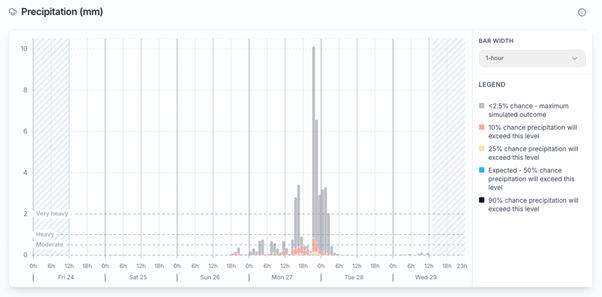
Probcast forecast showing a hidden risk of 10% high hourly rainfall for Norwich in April where traditional weather apps predict zero accumulation.
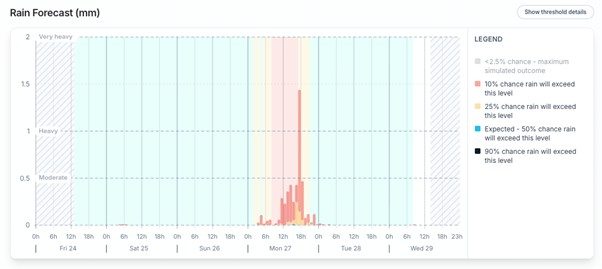
Probcast forecast showing that the heaviest rain simulations are predicting up to 10 mm/hr at and 10% of them are exceeding 1mm/hr. A heavy rain simulation is a major risk for any farm that might irrigate that day.
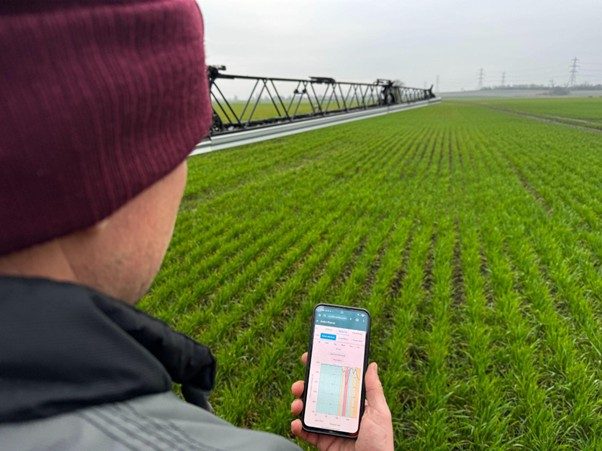
The Probcast App out in the field – photo courtesy of Rockscape PLC
31st December 2025
Anthony Hopkins, Managing Director of Wroot Water and Chair of the UK Irrigation Association (UKIA), is at the forefront of water management innovation in British agriculture.
At Joseph Camm Farms near Retford, Anthony’s wife, Ruth, her daughter Priscilla, together with farm manager Matt Turner are continuing a legacy of resilient water infrastructure foresight started over fifty years ago by her family. Today, Ruth and Priscilla are determined to future-proof the family business against the growing challenges of climate change and water scarcity.
The farm boasts a 40-million-gallon (182,000 m3) reservoir, boreholes, and an extensive underground ring main, installed decades ago, which now forms the backbone of the farm’s irrigation system. Anthony is leading efforts to refurbish and upgrade this system, working closely with Matt and Priscilla, to ensure maximum efficiency is achieved. Improvements include new valves to prevent water hammer and the irrigation hydrants in the field on 5-inch pipes, enabling effective operation of multiple irrigators.
Following Anthony’s approach of flexibility and resilience, the farm’s water supply can be drawn from either two Sherwood Sandstone boreholes or the reservoir, ensuring that if one source is unavailable, the other can compensate. He says: “You've got any combination really, having the flexibility that if one goes down, you've always got something else.”
Bringing things up to speed with modern-day technologies, the irrigation system is controlled via a mobile app, allowing precise management of pumps and water flow. All the pumps have been fitted with variable speed drives, which not only helps save energy but also protects the pumps when high water demand is required during busy periods.
The system can deliver up to 300 cubic metres per hour, supporting up to six irrigators simultaneously. Priscilla and Matt, keep a close eye on the pumps and the control system, ensuring smooth operation during the summer months. Anthony and the team at Wroot Water service the pumps during winter to maintain reliability for the critical irrigation season ahead.
The next step toward a more effective system is to connect the two boreholes, allowing maximum operational flexibility, as the abstraction licences associated with them start at different times in the season. This means crops needing early-season irrigation for germination can be reliably watered, regardless of licence conditions, in order to future-proof” the farm and their irrigation network.
Although, reservoir storage was very low towards the end of the irrigation season, Anthony isn’t too concerned about winter refill. He’s one step ahead as usual. He explains: “We renewed about nearly one thousand metres from the River Idle pump to the reservoir with polyethylene pipe. The first year we renewed this pipe, the reservoir was filled in four weeks.”
He adds: “We ought to connect it all up together, using the borehole water predominantly over the reservoir water, if possible, because that's always there. Priscilla and Matt were pumping around about 455 hundred cubic metres an hour in the summer, and had all the irrigators going for several weeks continuous, probably 18 hours a day.”
Ruth and Priscilla have renewed their Sherwood Sandstone groundwater abstraction licence and are considering building another surface water reservoir within the next four to five years. With Anthony’s help, they have also successfully applied for a Local Resource Option (LRO) with the Environment Agency on their other farms in the Idle Torne catchment, which he believes will help secure water supplies for the next 30 to 40 years.
On the 2,000-acre farm, crops like onions and Chantenay carrots (destined for freezing) benefit from tailored irrigation strategies. Onion irrigation has proven challenging this year, sparking discussions and plans to trial sprinklers next year, with the primary aim to adopt a “little and often” water regime that onions prefer.
Reflecting on the broader water situation in the UK, Anthony’s philosophy is clear: proactive investment in infrastructure, smart management, and collaboration within the farming communities and with regulatory bodies is essential for long-term water resilience.

Anthony Hopkins checking a hydrant in the field

Anthony Hopkins inspecting one of the pump control panels

Booster pump linking two boreholes for greater flexibility

182,000 cubic metre reservoir at Joseph Camm Farms
23rd November 2025
For the third and final part of the interview with the Right Honourable George Eustice he focusses on water and the government’s house building plans – the so called “Build Baby Build” approach from Housing Secretary Steve Reed.
Mr Eustice, the former Secretary of State, begins: “I think the government has gone for the usual easy targets of newts and bats. We're being told to believe that they are holding up all these developments. The truth is that the real constraints on housing development now are access to finance. Developers who've got land, often can't see a way of getting onto it with the money they'd have to borrow at the current interest rates, or they can't get access to finance.”
He continues: “There are just bigger factors at play that are slowing down housing growth and house building. Even if you killed every newt and every bat in the country, there are then some fundamental constraints and water resources is one of them. If you look at all the modelling, availability of water is only going to get tighter over the next 15 to 20 years.
“The Environment Agency now designates, a whole trunk down the centre of the UK basically as designated as being water stressed. And more and more of those areas are going to tip over into severely water stressed. It's just going to be very difficult to support housing demand growth ambitions within that context of a lack of availability of water, because if it isn't there, there's only a limited amount you can do."
The government has committed to fast-track the delivery of nine new reservoirs, supporting its plans to get Britain building and deliver 1.5 million new homes by the end of this parliament. However, Mr Eustice says: “What worries me is the government is slightly in denial about the nature of the water constraint on its house building ambitions. And that's particularly acute in areas like Cambridgeshire, where there just isn't the water.”*
He explains: “We do need additional supply. We ideally need to find a way of moving water from the west to the east with potentially new infrastructure, a bit like they put in place after the Second World War. It will take time. Things can be be done to improve reservoir capacity, but it still only gets you part of the way there. We've got to get demand down per capita.”
How does Mr Eustice view the proposed changes to Water Efficiency Standards for new homes? He responds: “I think it will help, but the concern I've got is on the demand reduction side. The way the Environment Act was conceived, it was to have a target for demand reduction. That was a target on the government.
“And it was seen that it was the government's responsibility to deliver and that various people would have a role to play. There’s a role for the planning system to play to get that demand reduction down and a role for water companies to try to reduce leakage. Then there's a role for government in other policy areas such as possibly having some kind of water credit system to fund retrofitting of certain things.
“But the thing that concerns me is that target's been taken and placed on the shoulders of the water companies alone, and they've been told, this is your target now, so off you go and deliver it. And the big problem is that the water companies don't have all the levers to be able to deliver that target. It has to be a shared endeavour. What the water companies are then doing is exaggerating the likely impact of smart metering. We know that if you meter a property, demand reduction due to behavioural change goes down by about 13-15%.
“But if you're looking for a big demand reduction of 30 or 40%, smart metering is not going to get you there. You've got to do retrofitting of properties, you need flow regulators, and the sort of shower heads and taps installed that use less water. All of these things have got to be done, and you probably need grey water loops and rainwater harvesting as well. At the moment, nobody's really grasping that.”
We touch on the cost of water. Mr Eustice reflects: “We need to value water differently and not just assume that water is quite cheap. Society doesn't value it as it should. They're valuing it now because more people are wild swimming and there's more concern and anxiety about bathing water qualities in freshwater rivers. But fundamentally, the money that people pay for their water bills is still quite low in the scheme of things.
Mr Eustice advocates possible energy and water synergies as we move onto data centres. He says: “There are some interesting projects being talked about how you could co-locate glasshouse production alongside data centres. I think we might have to start to say that in the planning system, if people want to build data centres, they need to have a coherent plan as to how they'll use the sort of consequential heat that's generated for another purpose rather than just allow it to be wasted.
“If you've got heat being generated as a data centre, rather than just having it cooled by water and then lost, you should be trying to think of ways to conserve that heat and capture its value. That might mean using systems that aren't reliant solely on water, or at least not solely on a constant flow of water, so that you have like a radiator system, for want of a better term, that can capture the heat and then make use of it in some other way.
“There are suggestions, for instance, of data centres being co-located with swimming pools. It's a beautiful symbiotic relationship in some ways because we have leisure centres up and down the country that can't afford to heat the swimming pools anymore due to energy costs. You've got data centres that have got all this surplus heat but nothing to do with it. We've got to get better in the planning system at co-locating things so that you don't waste that heat.”
*A recent joint letter from Defra, the Environment Agency and Ofwat to Cambridge Water highlighted that “The company has also implemented controls to new non-domestic supplies which has the potential to constrain development and this government’s ambition to achieve sustainable, high-quality growth in the area.”

The Right Honourable George Eustice talks to The Growing Voice

Anglian Water's Rutland Water - the government has committed to fast-track the delivery of nine new reservoirs

Smart water meters can lead to significant water savings including through identification of leaks

There are significant water constraints on the government's house building ambitions
15th November 2025
Last week in the first of a three part interview the former Secretary of State for the Environment Food and Rural Affairs, The Right Honourable George Eustice highlighted the importance of agriculture having fair access to water, efficient irrigation and its intrinsic role in ensuring national food security.
In this second session Mr Eustice discusses the Cunliffe Report - the Independent Water Commission’s final report which sets out recommendations for major reform to improve the water sector regulatory system in England and Wales. The government's Water White Paper is now expected in January.
The Water Minister Emma Hardy has reaffirmed that the government will establish a single, powerful regulator – bringing together the roles of Ofwat, the Environment Agency, Natural England, and the Drinking Water Inspectorate.
Mr Eustice says: “I think there were some good things in there around improving the coherence in the system with better coordination of resources and requiring water companies to come together and plan certain resources on a regional basis. It also has some things around improving some of the regulation and the way that works.
“But set against that, my feeling is that it recommends a lot of things that are already happening to a certain extent. What's been proposed is not that radical in that we already have regional water resource management groups. If the view is that they don't have sufficient powers to make it work, we need to answer what additional powers do they need to make them work.
“And there's talk of having a strategic policy statement. A strategic policy statement's (SPS) has always existed. Defra produces one before each pricing review round is set which is then converted into the WINEP (Water Industry National Environment Programme) and Wiser document (Water Industry Strategic Environmental Requirements) that the Environment Agency does. The question is, therefore, not do you need another strategic policy statement, but how do you make the current one more effective and make it work?
“There were definitely some good things in there. However, the really big question that government now has to answer is how you translate a lot of the architecture he [Cunliffe] recommends that already largely exists into something that has got more definition to.
“I certainly felt in my time at Defra that there was perhaps too many of the connections were dotted lines rather than strong accountability and decision making. The SPS statement and the legislation created loose obligations on water companies to plan for their needs based on assumptions on housing growth.
"So, I think a lot of it is turning, to use this sort of analogy, some of the dotted lines into clear lines of accountability and responsibility. That's not to put blame at anyone's door, it's just that probably the system has relied too much on inferences and understandings rather than a very clear kind of direction.”
Mr Eustice focusses on the Environment Agency and what plans he had while in office. “I had a view when I was there that the Environment Agency was a very large organisation and that the model we were looking towards was having a floods agency that would be effectively half of the Environment Agency. We would then take some of the regulatory functions on things like waste and air quality and put it with Natural England's responsibilities on wildlife licensing.
“The idea was you'd have a flood agency that did the infrastructure and then you'd have a single environmental regulator that could make sense of all these things. It would reduce some of the tensions between what the Environment Agency was saying should happen under one body of law and what Natural England said should happen under another. I would have done organisational change, but, I would have done it probably in a slightly different way.
“I think the thing that concerned me about the suggestion of just pulling everything together is that you've got a very small organisation like the Drinking Water Inspectorate that's innocent of all charges as far as I can say. They've done nothing wrong. When all the staff surveys came out, they were a happy bunch of people.
“It was a small, low-cost organisation - no chairman or chief executive on loads of money, just, an efficient small group in the civil service and an old-fashioned inspectorate. And it performed well, and it seems to me, rather odd to just say this is untidy, we're going to throw it into a super water regulator, because I think it was doing its job really quite effectively.”
Mr Eustice also has sympathy for Ofwat who he believes were effectively just following government orders: “I think it was unfair the way that Ofwat were blamed because in a sense they were arguing quite consistently over about 10 or 15 years that the priority was to keep bills down. Therefore, we should be sceptical about requests for infrastructure investment. But they were getting that order from, the governments of the day, of all colours, from the financial crisis onwards, saying, people haven't got any money, so we need to keep bills down. So, it's a bit unfair to blame them for doing really what was set out in a series of strategic policy statements.”
In the final part of his interview next week Mr Eustice covers the government's house building programme and the importance of water.
The Right Honourable George Eustice talks to The Growing Voice

The Environment Agency set to become part of a super regulator

Mr Eustice welcomes water companies coming together to plan resources on a regional basis

Environment Agency, Defra and Drinking Water Inspectorate staff on St Agnes, Isles of Scilly in January 2015 during the government consultation on bringing water resources regulations to the islands
7th November 2025
In the opening segment of a three part interview the former Secretary of State for the Environment Food and Rural Affairs, The Right Honourable George Eustice raises the importance of agriculture having fair access to water, efficient irrigation and its intrinsic role in ensuring national food security.
He lifts the lid on his thinking when in office as the longest ever serving Defra minister. He was responsible for designing and introducing the policy architecture for the post EU era including the Agriculture Act 2020, the Fisheries Act 2020 and the Environment Act 2021.
He also developed much of the detail behind the Sustainable Farming Incentive, Biodiversity Net Gain and the statutory targets set under the Environment Act. Following his very successful political career Mr Eustice formed his own company, Penbroath Ltd, which is a policy and regulatory affairs consultancy specialising in the environment, natural capital, water, agri-food and waste sectors.
Mr Eustice immediately highlights the importance of water to farmers and growers: “In agriculture, there's obviously the constant challenges on abstraction. I don't want agriculture to be the poor relation when it comes to access to a scarce water resource. It shouldn't just be based on historic access and on a sort of presumption that water companies come ahead of farmers because food production does matter.
“I do feel that agriculture was often in danger of being overlooked as the loser against water companies who always seem to have first call on abstraction licences. The abstraction regime should reward people who are adopting technologies that have lower impact on water.
“You need to develop a system in the abstraction regime that incentivises people that do the responsible thing and effectively grants a sort of judicious use premium on access to water and more likelihood of getting a licence. I think there are some things that we need to do in that space to reward people for switching to water efficient systems of irrigation.”
Mr Eustice was Secretary of State when trickle (drip) irrigation was brought into water resources regulation. He reveals: “For many years, I opposed the removal of the exemption for trickle irrigation. In my view, there were legitimate reasons for trickle irrigation to be treated differently to irrigation through a rain gun. It's a lower impact form of irrigation, which I think we should be encouraging.”
He continues: “It works well on high value crops. And even though the sort of outright exemption was removed, I was still very keen that there should be a weighting attached to that for farmers that approach their irrigation and water use judiciously. That could be, in these days, using AI systems or other sorts of precision technologies that only use the water where you need it. Those that embrace those sorts of solutions should have easier access to the water resources there.
“And if we can build that in, then I think you can square this circle and you can ensure that agriculture's got access to the water that it needs, while alongside that, using that regulatory carrot to incentivise them to do things that reduce water wastage.”
How important does Mr Eustice think food security is for the UK and the part that water plays in determining it? Mr Eustice responds: “Under the Agriculture Act, the government now actually produces a very comprehensive review of food security. The first one and the second one that was published last December both concluded broadly the same thing. If you're worried about food security and our national resilience, then the sectors that are of greatest concern are not really beef or sheep or cereals, those we were largely self-sufficient in and there's a global market. The ones that we're most vulnerable on are fresh produce, salads, tomatoes, cucumbers and lettuces, where we're over-reliant on countries like Spain and Morocco.
“What the report shows quite clearly is that neither Spain nor Morocco have anything close to a coherent plan to deal with the water scarcity challenge that they're going to have. We are very dependent on production from the Mediterranean region to give us those fresh salads. There's no guarantee at all that by 2050 they're still going to be able to produce them. That's quite a near-term challenge.
“And that means, that we're going to have to reshore quite a lot of that production, probably through a new generation of glasshouses in this country, producing salad crops under protection using surplus heat or CO2 from industrial processes. We need them co-located with industry so that you can re-establish some of that production, which used to be here in the 1960s, but was lost largely as a consequence of the EU."
Mr Eustice agrees that the agriculture sector has had an unfair negative press around pollution rather than highlighting the benefits it brings especially around food security .
He responds: “Yes, that's probably right. I would like to think that we changed it, because when I arrived, there was this sort of cultural thing that said water pollution comes from agriculture. And then when I looked at it, was pretty clear that phosphate pollution in particular was coming from water company sewage treatment works, alongside the storm overflows, and their inadequate infrastructure. The argument that diffuse pollution from agriculture was the number one thing was wrong.
“Half the nutrient pollution we had was coming from agriculture, especially on the nitrate side. But on phosphate pollution, it was principally from water companies, and you therefore needed to move the dial on both of those issues.
“A lot of the policies we had around the SFI (Sustainable Farming Incentive) were geared towards trying to reduce that nutrient pollution and improving slurry handling infrastructure. Options such as herbal lays and green cover crops are all about trying to reduce runoff to keep nutrients locked up. We designed a lot of the future agriculture policy to try to deal with diffuse pollution. And that's why we were confident to set a target that we could reduce it by about 40% and it did.”
Look out for the second part of the George Eustice Interview which focusses on future water regulation and the Cunliffe Report.

The Right Honourable George Eustice talks to The Growing Voice

Trickle irrigation of Lincolnshire leeks

Irrigation of celery in Murcia, Spain

Dyson Farms in Lincolnshire which grows strawberries in its glass houses using its own water supply from reservoirs and heat from its anaerobic digestors
13th September 2025
One of the UK’s leading potato growing experts is arguing for more effective water and food security policies.
Dr Mark Stalham was formerly Head of the NIAB Potato Research Group and now offers specialist consultancy services to potato growers, particularly irrigation scheduling and cultivation strategies.
For several of Mark’s clients, this year’s potato yields are up 20% compared to the long-term average, driven by an exceptionally sunny growing season and the ability to irrigate to meet the crop’s demands. Yet water availability remains the critical constraint.
Mark says: “Growers had great planting conditions, with the crop largely unhindered by soil conditions and if they’ve had water, they have been able to drive yields just like being in a very bright environment like Spain. And then the water has run out with a month to go, or crops have had to be killed prematurely.”
The reason behind this botanical euthanasia is both a potato glut in the market and plants producing fewer stems given the late seed production in 2024 and early planting in 2025, resulting in fewer, larger tubers which fail customer requirements on size.
Mark believes despite regulatory changes to abstraction licences, levels of irrigation have been at near record levels this year. He says: “It’s interesting when people say we’re restricted on licence renewals. The amount of water I’ve recommended and seen growers applying has been as high as ever before.”
Many growers have used water earlier than ever before. “As I’ve been saying for years, that’s going to be the norm by 2030. Owing to increased CO2 concentrations in the atmosphere, growers are going to need the same amount of water or slightly more to grow the same yields in future, but in a two-to-three-week shorter season and that’s exactly what’s happened this year.”
Despite excellent yields derived from good growing conditions, the economic situation is far from rosy. Mark argues: “Growers are asking what is the point of having more water if there isn’t a demand for potatoes? There’s no market currently for the excess. There’s always something else that makes money as an enterprise, but most seem to be unprofitable currently. The confidence is really down, everyone’s depressed.”
He continues: “It’s like Foot and Mouth or BSE, where growers had to cull every animal in the herd. The excess production this year is not waste value, it’s generally of high quality. We can’t keep on growing a product with a value so far below the cost of production.” He’s relatively relaxed about these crops being fed to animals, since that has a historical precedent, but not into anaerobic digestors, which is “absolutely crass.”
Mark reflects on the weakness in the government’s food security policy: “I personally think we as a nation need to grow a higher proportion of what we need. We’re not processing or eating as many potatoes and we’re importing both fresh and processed products and substituting for others. The government seems to have a food policy of the UK being financially capable of buying food from somewhere else when we need it.”
He adds: “Food security is going to be the key issue, just like energy. If the ‘pipeline’ gets cut to major commodities like grain, then we are in serious trouble. The world is awash with carbohydrate at the moment, but there is a distribution issue, and some major global producers are being faced with competitors who can do it cheaper.”
Mark believes there should be more effective management of the water we have. He argues: “We have adequate licences. If we don’t use the water, it will be taken away and only 50% of the UK’s licensed volume is used. It could be used 200% in places – it’s a commodity we can move.”
He advocates cross-sector sharing of strategic water supplies. He asks; “Are we able to have access to those big reservoirs because they’re public water drinking supply? You see pipelines and cables going in east to west. Why can’t we build the water infrastructure?”
Mark discusses the question of irrigating in August and using data to optimise water use, but soon returns to economics. He argues: “Models are good, and they work, and you can plan scenarios with them. Linking that ability to predict outcomes to the number of years we are going to grow crops, gives us the confidence we need to invest. But when you’re losing money on potato crops, where’s the money for investment? The banks aren’t willing to loan you anymore. Do we want to be farming or not?”
Regarding government grants for water infrastructure such as reservoirs Mark despairs: “When you go to the national level there is no more money, the government is looking under the seats for cash. As a country, we are really short of money unless we suddenly change the policy and borrow more. Look at America’s national debt: they have had an expansionist policy, but now want to bring production back home. We are still waiting for Defra and its policies, and growers rely on those decisions to plan for the future.”

Potatoes in Aberdeenshire back in June benefiting from ideal growing conditions.

Spray gun irrigation of potatoes in Cambridgeshire – this year has seen elevated levels of irrigation.

“Topping” of potatoes in Suffolk to prematurely stop them growing.

Rutland Water – there is a need for cross sector sharing of strategic water resources assets.
Our man in the Black Sea, Mike Lee talks irrigation, climate change and the importance of water in the region 29th August 2025
Mike Lee, founder of Green Square Agro Consulting, is no stranger to the complexities of farming in the Black Sea region. A seasoned agronomist and crop forecaster, he has managed farms across Ukraine, Moldova, and Southern Russia, and is the author of Seeds of Resilience, a book chronicling Ukrainian agriculture.
Despite the ongoing war in Ukraine, Mike continues to visit the region regularly. Speaking ahead of a recent trip to Southern Russia, he jokes about the suspicion he faces at the border: “They’re fairly convinced I’m a spy, every time I cross the border. They say ‘We know you’re a spy’. I reply ‘I’m not, I’m just a farmer!’”
Russia remains the world’s leading wheat exporter, while Ukraine has slipped to sixth due to the war. Yet, Mike sees growth potential: “We have seen an increase in hectares of crops and an increase in yield per hectare. The total production is increasing and there's still plenty of scope to increase yields across the Black Sea.”
There have been significant moves to adopt minimum tillage methods in recent years. However, Mike has observed plenty of bad agricultural practices with “fields turned to dust." He explains: "Soil erosion and soil loss – until it’s pointed out to you, you don’t necessarily see it.” And it's a similar story for irrigation. “There’s plenty of cases where it has gone wrong. We can be looking at the same picture but we don’t necessarily see the same thing."
Climate change is reshaping the region as he explains: “We assume it will get hotter and drier in the Black Sea Region, particularly the Southern parts. In Moldova where we have farmed in the last four to five years we have had drought for three years with literally no rain.” He adds: "Statistically you’d have to look at weather data, but it appears we are seeing more volatile weather conditions which is obviously going to affect crop production.”
Farmers are responding by shifting to more resilient crops as Mike explains: "We are also seeing a shift away from crops that are more susceptible to drought conditions in favour of deep rooted crops—sunflowers in particular. You literally can’t kill them, growing in any form of weather conditions.”
Despite this Mike says, "There's a lack of understanding of the connection between water and yield." Irrigation remains a challenge—especially in Ukraine. He reveals: “Post the Soviet Union, everything that could be stolen was stolen. So anything above ground, all the metal work, all the pipes and irrigators were stolen and pumps—people stole them and sold them for cash. It was desperate times—it’s what people had to do to survive.”
Even where irrigation is possible, it must be done carefully as Mike highlights: “You can get irrigation wrong unless you're doing it properly, and you get salinisation, overwatering, and you can get cold shock on plants.”
Mike discusses an example in Southern Russia - a 10,000 hectare farm business in Stavropol: "It’s state of the art pivot irrigation, underground pipes, all driven by computers and sensors through the soil. Money was thrown at it – it was a big investment. But when they started to operate it, they found that because the water was coming from aquifers, it was coming out very cold and it was chilling the crops and causing check to the growth. That wasn't something that was factored in when they were planning it all. It wasn't as straightforward as it was supposed to be running the whole thing from a mobile phone."
Water quality is another critical concern. Mike outlines the problems: "You've got heavy metals and pesticides being put back on the land and radioactivity from Chernobyl… washed into water courses. Nobody knows the extent of the radioactivity coming down the Dnipro river. You're not just taking clean water out of a water course, you're taking contaminated water… you could end up creating longer term effects."
It's not just weather and water issues that pose problems to farming. Mike reveals that smaller farms have been bought out by some murky organisations: “The farms have been realgamated by the big businesses - gangsters basically. They wanted to get into nightclubs and hotels and real estate - that was all the sexy stuff they wanted to get into, nobody wanted to go into farming. But, they realised land is going to have a value, so they started to acquire land. And they realised that you might as well farm it."
He continues: "It was quite dangerous at times but it was good fun and you felt like you were making a change. We’d get land stolen off of us. You’d go to combine the field, and somebody else was already in there combining it. It sounds bad, but all you had to do was to build your business to be robust enough, that, you could tolerate this."
Despite these many challenges, Mike sees Black Sea cereal production as competitive with Western systems. He says: “It’s very ironic that a lot of the Western countries were getting p***ed off with Russian farmers competing with them. But you won the Cold War, you wanted them to become capitalists, and you can't complain that they're beating you at capitalism. And now you complain, it’s not fair because they're too good.”
Listen to the full interview with Mike Lee (split in to two parts of around 30 mins each for easier listening) at:
Mike Lee Black Sea interview - part 1
Mike Lee Black Sea interview - part 2
(All photos courtesy of Mike Lee)

Mike Lee, never happier than being in a field

The War in Ukraine has significantly impacted farming

Boom Irrigation of Maize

Combining of wheat

The Dnipro hydro electric station

Irrigation Canal

Adoption of mimimum tillage methods has increased in the region
From Crisis to Collaboration: Lindsay Hargreaves explains how Water Abstractor Groups are emerging as an increasingly vital tool for agriculture water management
24th August 2025
A Water Abstractor Group (WAG) is a group of farmers and growers who work together to manage shared challenges around accessing water and abstraction licensing issues.
Lindsay Hargreaves, Chair of the pioneering Lark Abstractor Group (LAG), reflects on over four decades of experience in agriculture resources and offers practical advice for those considering forming a WAG.
LAG was established in 1992 in East Anglia’s Ely Ouse & Cam catchment, following the sudden enforcement of Section 57 spray irrigation restrictions by the then National Rivers Authority (NRA). Farmers were ordered to halt irrigation, risking what Lindsay describes as “complete crop loss.”
This crisis revealed a critical gap in communication between the regulator and abstractors. Lindsay recalls: “It highlighted the need for better communication between the regulator… so that if things were getting into a bit of a muddle then, we could perhaps manage our way through it.” LAG became that bridge—facilitating one unified conversation with the NRA and later the Environment Agency (EA), rather than dozens of fragmented ones.
He continues: “The agency's problem was, how do we protect the environment. Our problem was, how do we maintain access to water and keep our crops alive.” Lindsay measures the success of this collaborative approach by the fact that these restrictions have not occurred since in the catchment.
Another success was the group engaging positively with the EA on developing an abstraction licence capping policy. It allowed farmers to take water at defined historic peak demand levels in the summer while still protecting the environment. He continues: “We collectively found a solution that was not as damaging to agriculture as it might have been, but had every chance of allowing the agency to meet its requirements as well.”
With more regulatory changes coming up, including abstraction licence renewals in 2027 the LAG allows an effective forum with the EA, “to do what we can to ensure that our interests are considered appropriately and being confident that decisions made are based on good science and good evidence.” Lindsay adds: “we want to work collaboratively with regulators in a collegiate atmosphere, protecting our interests in parallel with those of others, especially the environment.”
He reflects; “We need to find imaginative and innovative ways of managing that water as optimally as we can and for the benefit of as many people as we can. I would encourage anybody to get involved in this, in a collaborative approach." Lindsay continues to believe that forming a WAG offers a good way to engage with the EA. He insists: “I think you are more likely to be listened to.”
He expands: “Most farmers are not necessarily well informed on the on the detail of the hydrology and hydrogeology, the ecology. It’s very easy to go into a conversation, totally ill equipped and not really being able to engage. You just haven't got the knowledge or the expertise. So, another thing that collaboration can bring is the ability to either access knowledge if it already exists… or if the data doesn't exist, then a group can commission a study to improve their knowledge.”
Lindsay outlines that LAG has engaged with Cranfield University for “better understanding of collaborative access to water” and is “working at capturing data in near real time” to “unlock opportunities that aren’t there now.” He candidly admits: “We are good and bad at collaborating, but once we get united, if you can walk under a banner with confidence, then you can make it work."
Although the group was formed “because of a crisis” he prefers the term “chronic stress” for the “long term challenge” ahead. He warns: “It's not as if most businesses are going to be shattered tomorrow, but if they don't engage, then they stand a chance ofthe regulatory process bringing forward changes that don't necessarily take into account those things that matter to farmers. We do need to take some of the responsibility for the future of our own sector.”
The LAG later became a registered company, limited by guarantee, but Lindsay says: “Other people might think it more appropriate to use another business model, for example a community interest group or just remain informal. The focus has to be on the willingness of people to work together, and the mechanism that works best for them to achieve their stated objectives.”
Lindsay even questions the term ‘Water Abstractor Group’ given multiple challenges of water resources, quality, flooding and drought. He concludes: “If we don't play our part, we're going to be in trouble. Whilst our emphasis might be water for irrigation crops, we are very much a stakeholder in the wider water environment in our catchment.”
More information on WAGS:
Lindsay is happy to talk to anyone thinking about setting up a WAG.
His email address is lhh@lindsayhargreaves.com.
UKIA has also published a booklet on forming a WAG.
You can also speak informally to me at bobhillier@thegrowingvoice.co.uk or call 07719 574524
Listen to the full interview* with Lindsay Hargreaves
*The written article is based on the full audio interview with some additional comments from Lindsay. The interview is around 25 minutes long.

Lindsay Hargreaves,
Chair of the Lark Abstractor Group

Irrigation Iicences are at risk from a range of challenges, including regulatory and climate change

The Water Abstractor Group guide available on the UKIA website

WAGs can help with constructing and operating reservoirs - photo courtesy of Lindsay Hargreaves
Recycling Every Drop: Horticultural Expert Urges Smarter Water Use as Irrigation Prospects Worsen
27th June 2025
As the Environment Agency further downgrades its irrigation prospects for the remaining summer, a leading horticultural specialist gives his advice on water resources resilience strategies for the glasshouse sector.
John Adlam founded Dove Associates in 1985. https://www.dovebugs.co.uk/doveassociates.htm It provides managerial and technical services, including water resources management to the nursery industry. He is a past President of the IPPS (International Plant Propagating Society) as well as a Chartered Horticulturist, a Fellow of the Institute of Horticulture and registered Pesticide Practitioner.
John highlights the importance of water recycling as a useful water resilience option to mitigate drought impacts and provide longer term water security. “The biggest thing I’m working on these days is recycling of nursery water. People are capturing rainwater and their own irrigation runoff, processing it, cleaning it, and putting it back. You have to look at ways in which you can preserve the water you have.” It is especially important where growers are unable to increase their licensed abstraction quantities. “The idea is very much to recycle whatever and wherever you can.“
Another recycling option is capturing condensation. John says “Part of the water that you can collect is condensation from the inside the glass house. In the UK it tends to go to waste, but I’m looking at ways we can utilise that. If you have a hot day and a cold night you have an enormous amount of condensation forming on the glass or polythene. As the dew point changes the water forms a film on the underside of the glass.”
A further strategy for saving water is reducing plant transpiration “For crops transpiration (evaporation of water from the plant) is our biggest water enemy, as much as 90% of the water absorbed by a plant can be evaporated from the leaves. It disperses all the water we do get into the air and we do have tools to reduce that. Growers are using antitranspirants (chemicals capable of reducing transpiration). When plants are newly potted or planted in the field they are sprayed with a weak solution of a biodegradable film over the leaf and that dramatically reduces them transpiring. It just naturally cracks and flakes off within 2-3 weeks as the leaf grows. The leaf surface is sealed rather than the stomata being totally blocked up.” John adds “These are all things we’ve always had and known but never really adopted to any degree – but now needs must.”
With the continuing dry weather there are reports that some horticulture businesses are running out of water, especially if supplementing stocks through rainwater harvesting. Some are resorting to tankering in supplies. John emphasises the importance of ensuring appropriate water quality when considering this option. “The water may have a different hardness to your supply as well as differing mineral content. In some cases with quality issues, it may require reverse osmosis treatment as it isn’t sourced from the mains. Young and small plants such as plugs or cuttings won’t tolerate poor quality water and will simply rot and die. We have one project where we are removing pesticides from recycled water using carbon filtration.”
It's already been a long busy summer of consultancy for John as he jokes “I always get the difficult and hard ones and awkward ones I’m afraid, but I like the challenge of it.”
For more information about water recycling and other water resources options such as rainwater harvesting and water sharing to help groups of growers go to: https://engageenvironmentagency.uk.engagementhq.com/local...
There is still time to apply for a screening study with the Environment Agency to assess and rank water resources options to increase water supply resilience as part of a group of neighbouring farmers. https://www.gov.uk/.../how-to-apply-for-a-local-water.... The deadline for applications is the 20th July.
John also provides licensing advice. Growers should understand the conditions of any abstraction licences they may have, especially noting end dates to apply to renew in a timely way without risking them expiring. More information on renewing abstraction licences in England is available at: https://www.gov.uk/.../apply-to-renew-a-water-abstraction...
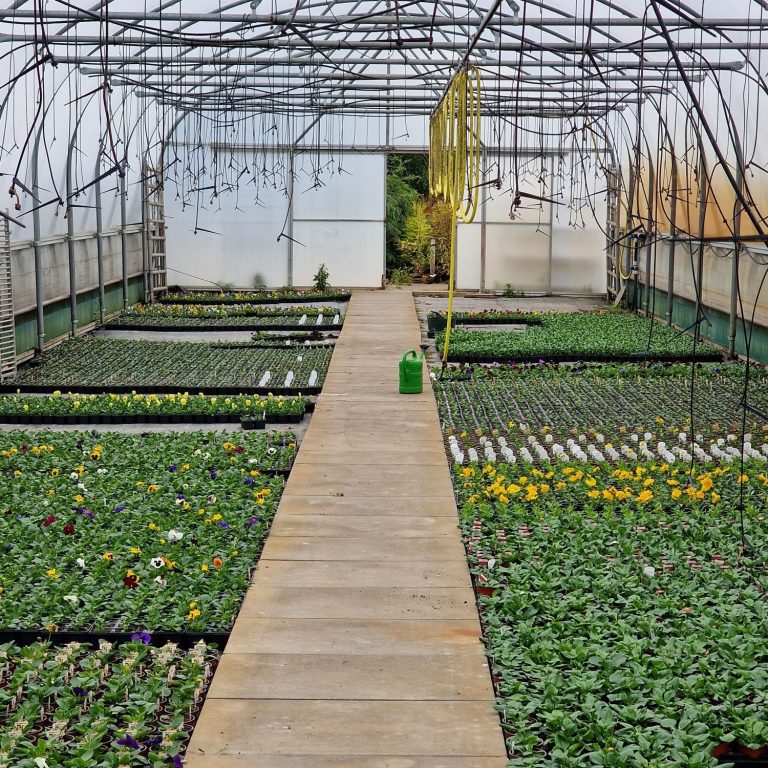
Polytunnel Pot Plant Production - Yorkshire
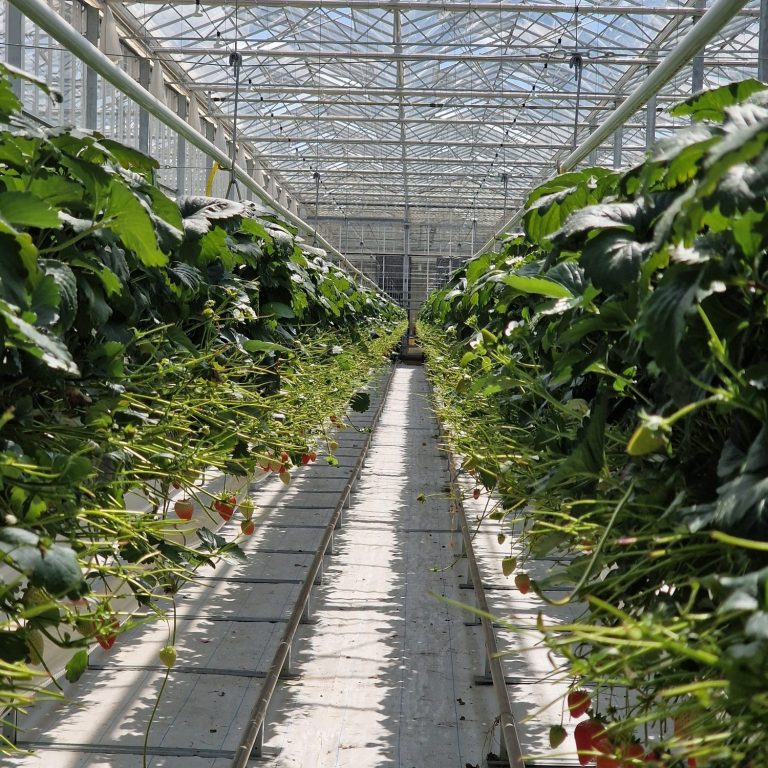
Glasshouse Strawberry Production - Lincolnshire
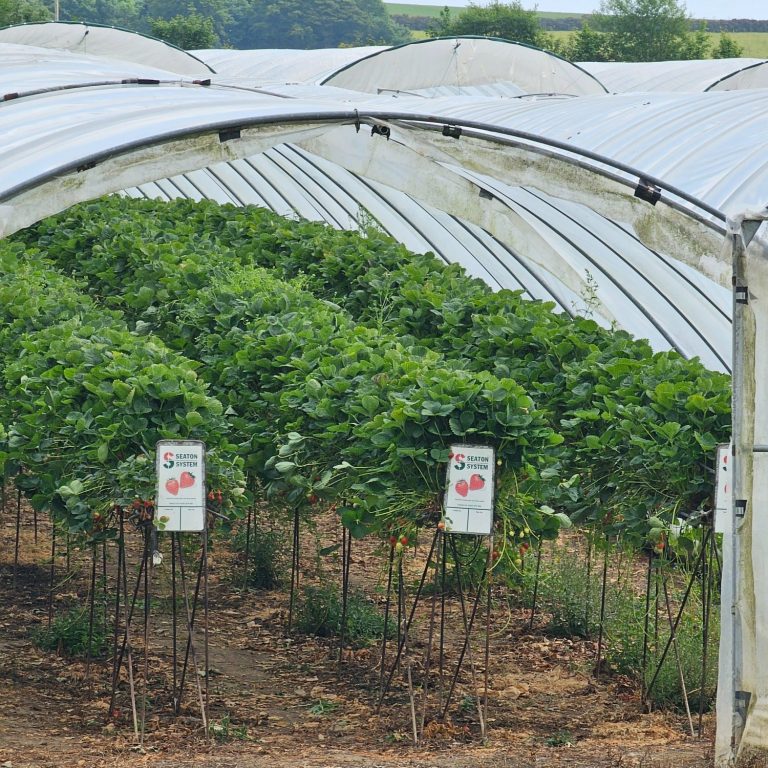
Polytunnel Strawberry Production - Aberdeenshire