
News Drops
Water News from the Growing World
12/10/2026
The Government's recent announcement on establishing a new Flood and Drought Resilience Taskforce is an important acknowledgement that floods and droughts can no longer be treated as separate challenges.
The reality is that climate change is increasingly delivering both extremes, often within the same year. This year alone England has experienced a wet winter, a hot dry summer and continuing widespread drought conditions which cover much of the country, with the prospect of a wetter winter ahead.
The new taskforce will bring together more than 50 organisations, including the Environment Agency, Met Office, water companies, local authorities, emergency services, insurers and the farming sector. It will sit alongside the existing National Drought Group, which will continue to coordinate operational drought response, while the new body focuses on longer-term resilience and preparedness.
The emphasis on collaboration is welcome. However, it doesn’t necessarily need more groups and governance structures. What it needs is better integration between flood and drought management, ensuring existing organisations work together more effectively and translate discussion into delivery.
This was one of the themes underpinning evidence jointly submitted by myself to the House of Lords Environment and Climate Change Committee inquiry, Surviving Drought: Reclaim the Rain. Our evidence argued that drought resilience, flood management, food security and economic growth are fundamentally interconnected. We highlighted the need to store water when it is available, particularly during periods of high winter river flows and flooding, so that it can be used during future droughts.
For agriculture, this is becoming critical. Farmers and growers are increasingly facing abstraction restrictions, hands-off flow conditions and uncertainty over future water availability. Yet the same floodwater that causes problems during winter often cannot be captured quickly enough for subsequent summer because of planning, licensing and infrastructure barriers. Our parliamentary evidence called for greater collaboration, improved water storage, more pragmatic regulation and stronger support for both reservoir development and groundwater-based resilience measures.
Many of these themes were echoed by the House of Lords Committee report, which concluded that England's challenge is not simply a lack of rainfall, but insufficient capacity to capture, store, share and reuse water when it is available. The report highlighted that: “Drought must be considered in a more integrated way alongside nature restoration, flooding, food security and urban development.”
The creation of the new taskforce is therefore a positive step alongside the keenly awaited reservoir funding; and already delayed revised planning guidance for on-farm reservoirs which missed last month’s promised deadline. The real test, however, will be whether it delivers tangible outcomes for agriculture, wider businesses and communities.
If these issues affect your agriculture business, feel free to contact me at The Growing Voice for independent water resources advice and consultancy.
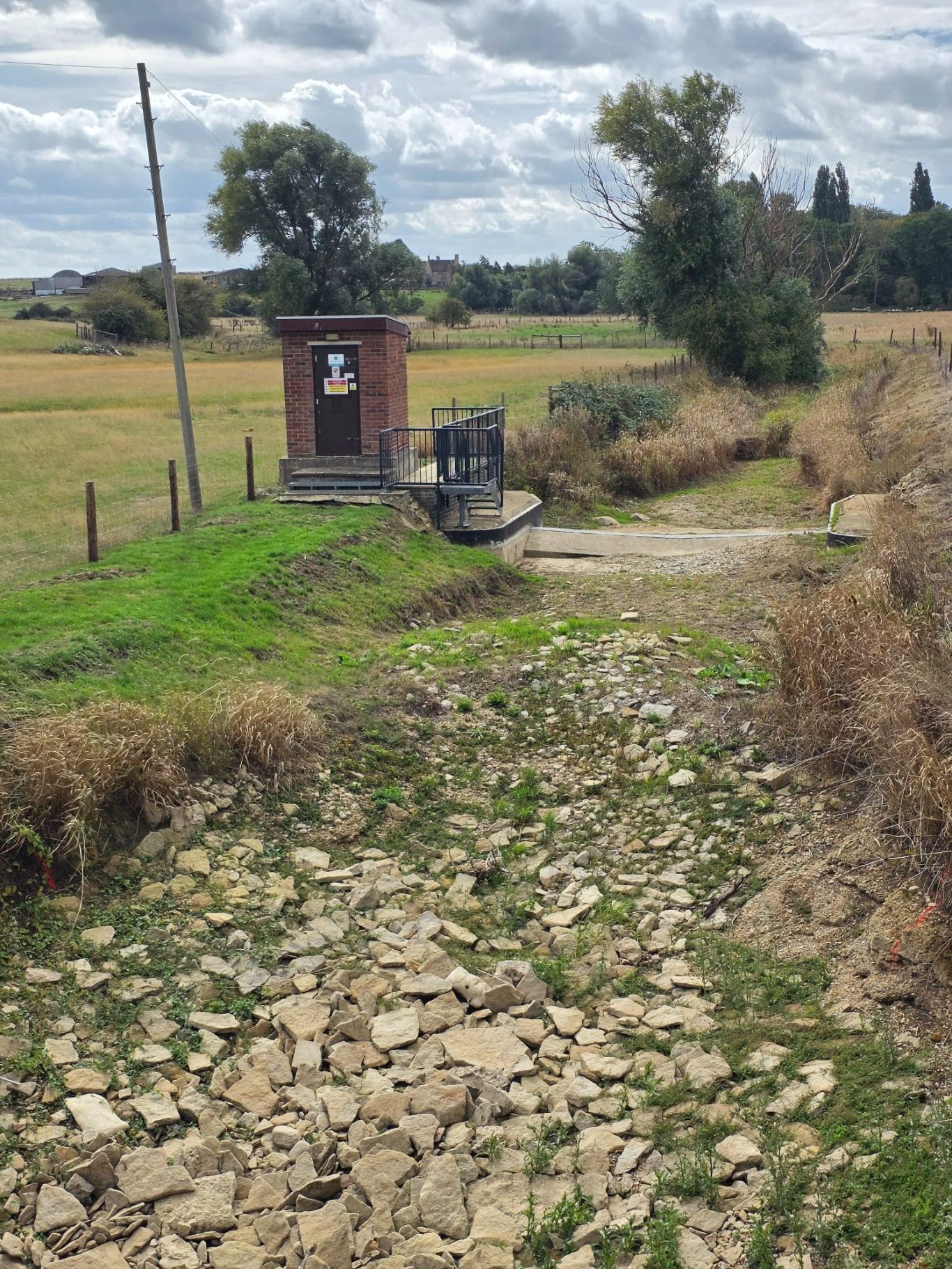
Dry river bed on East Glen at Manthorpe
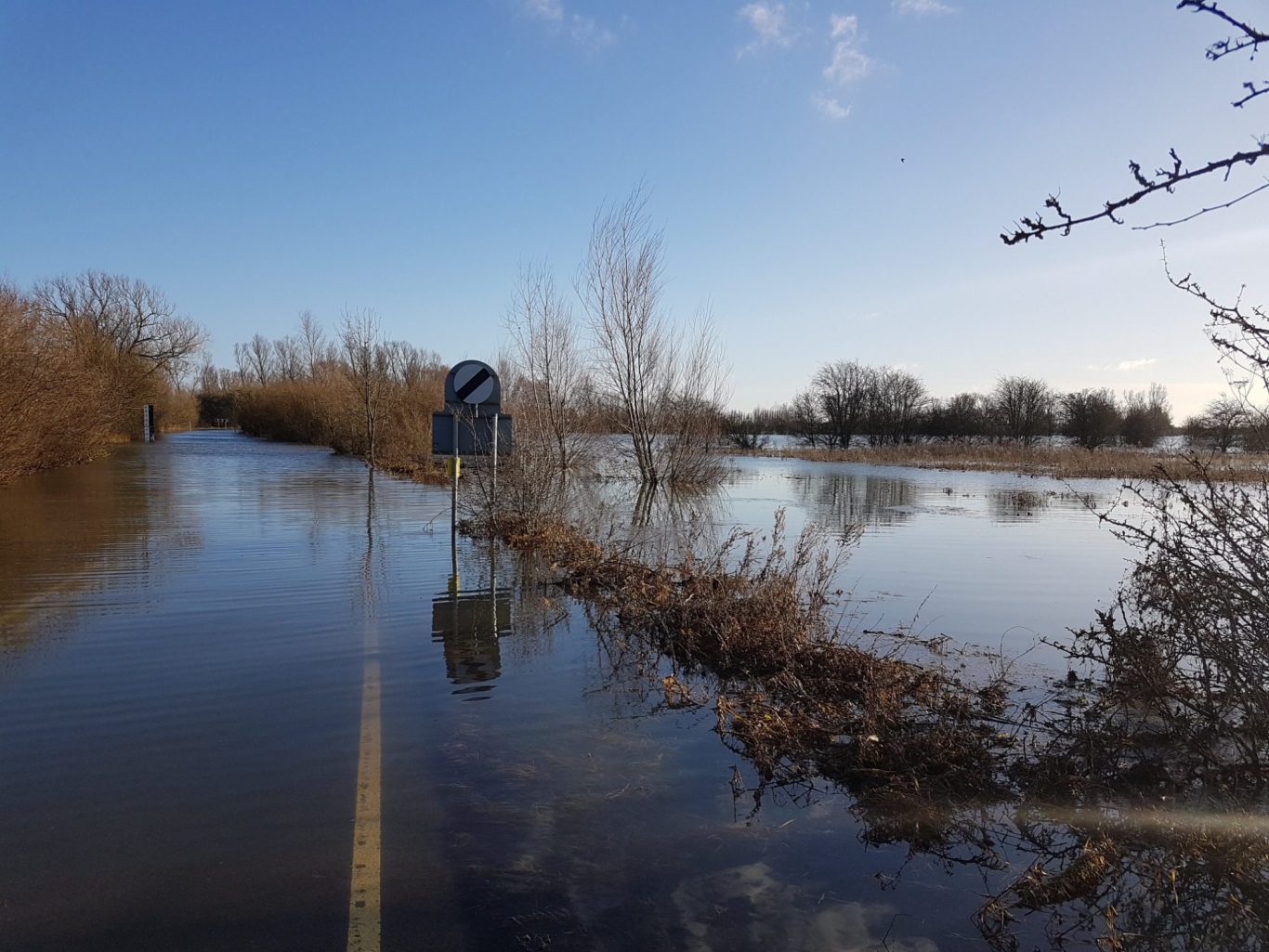
Flooding at Welney on the Ouse Washes
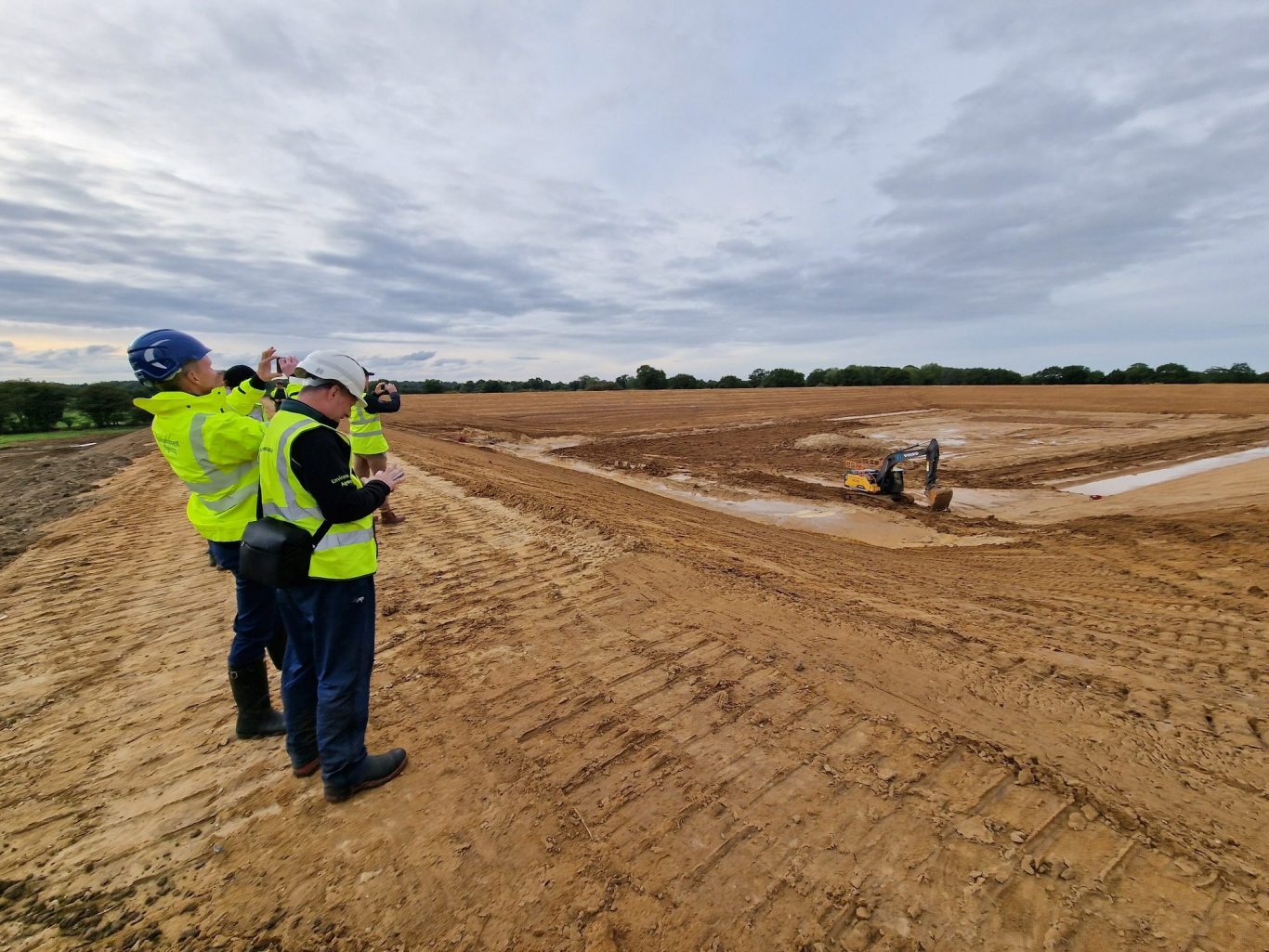
Planning guidance for reservoirs has been delayed from its September date
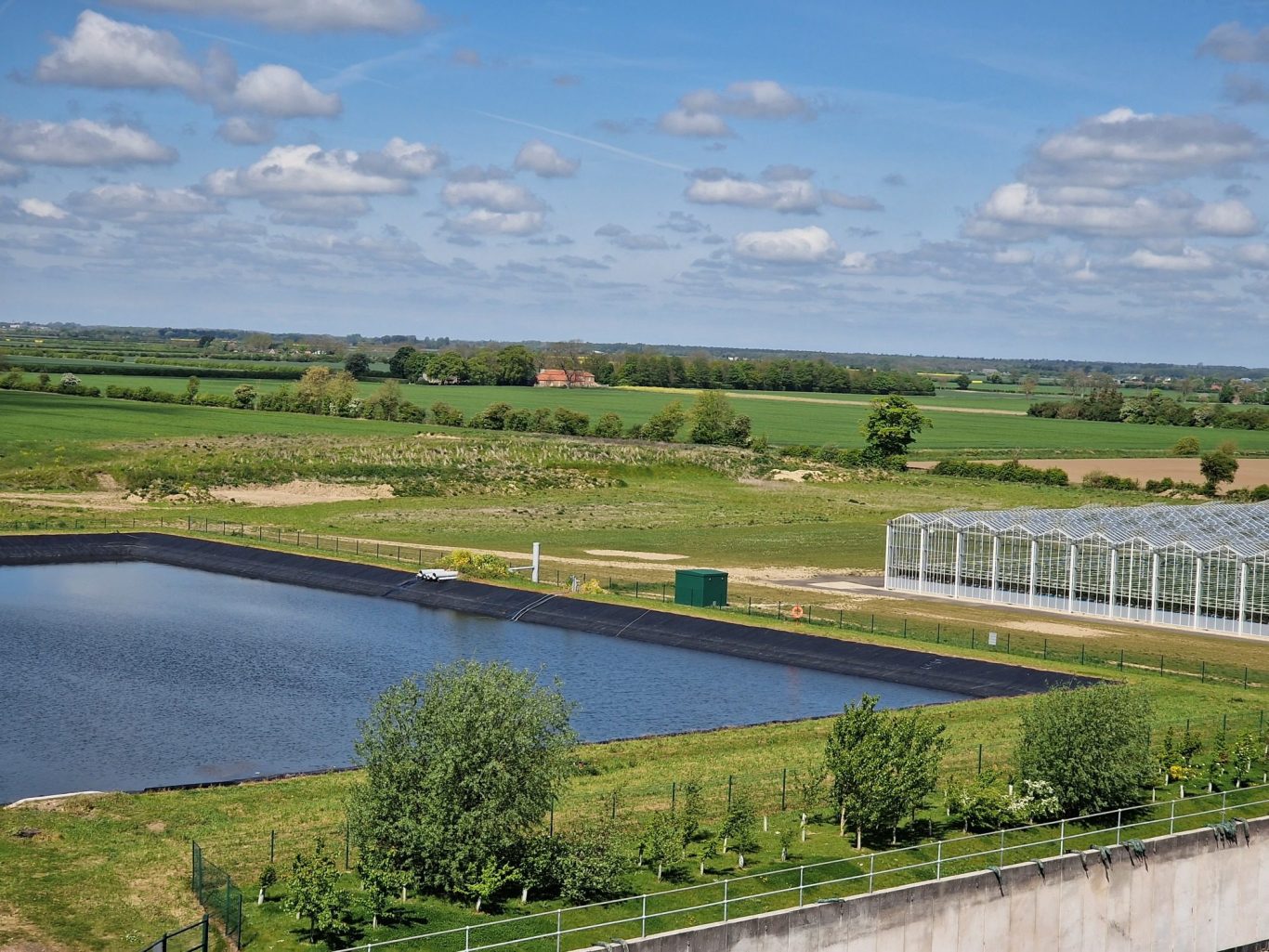
Water management grants for reservoirs are eagerly awaited by farmers and growers this autumn
10/10/2026
The declaration of drought in Yorkshire, has heightened concerns for farmers and growers hoping to refill farm reservoirs this winter. Yorkshire has experienced its fifth driest April to September period on record, prompting the move into drought status.
The Agency has also warned that England will require around 120% of average rainfall over the coming months to return water resources to more normal levels. Against that backdrop, many irrigated businesses are entering the winter refill season with uncertainty over whether sufficient water will be available to secure supplies for the 2027 growing season.
For many farmers and growers, Yorkshire Water’s response will be viewed with dismay. While the regulator is warning about drought conditions and growing concerns over reservoir and river levels, the water company continues to reassure customers on its website saying: "We're in a strong position across Yorkshire, with water resources healthier than this time last year."
It also states: “Our reservoir levels are higher than they were this time last year, with groundwater and river levels also in a healthy position. Right now, there's no need for restrictions, and there are no concerns about water supply."
For agriculture, the contrast is significant. The EA is signalling concern over water resource pressures and refill opportunities including agriculture, while Yorkshire Water is stressing that public water supplies remain secure.
Recognising the challenges faced by agriculture, the Environment Agency has already introduced temporary flexibility to allow some licence holders to begin filling reservoirs earlier than normal, subject to conditions. As discussed in The Growing Voice drought update, this early refill opportunity could prove crucial for businesses seeking to secure water supplies for next year. [
However, the latest EA drought report also confirms that water companies continue to progress drought permits and drought orders. While subject to environmental safeguards, these measures can allow additional abstraction for public water supply, potentially reducing the volume of water available in rivers for farmers and growers looking to refill winter storage reservoirs.
The report also notes that water demand in other parts of England remains relatively stable partly because of cooler temperatures and the continued use of Temporary Use Bans. If restrictions help suppress demand elsewhere, the agriculture sector may reasonably question whether the absence of similar measures in Yorkshire could make winter refill more challenging should dry conditions persist.
Research commissioned by the Environment Agency earlier this summer found strong support for prioritising essential water uses during drought. Respondents largely viewed food production and agricultural water use as more deserving of protection than discretionary household activities such as watering gardens, washing cars and filling paddling pools.
The same research found limited public support for restrictions on agricultural abstraction. Respondents were generally unsupportive of formal Section 57 restrictions, which can reduce or suspend abstraction licences to protect river flows during drought. Many recognised that water abstracted by farmers and growers ultimately supports domestic food production and considered agriculture a higher-priority use than many non-essential household activities.
As highlighted in The Growing Voice's review of the survey, the findings suggest that the public broadly supports protecting water for food production and is cautious about measures that could restrict agricultural irrigation.
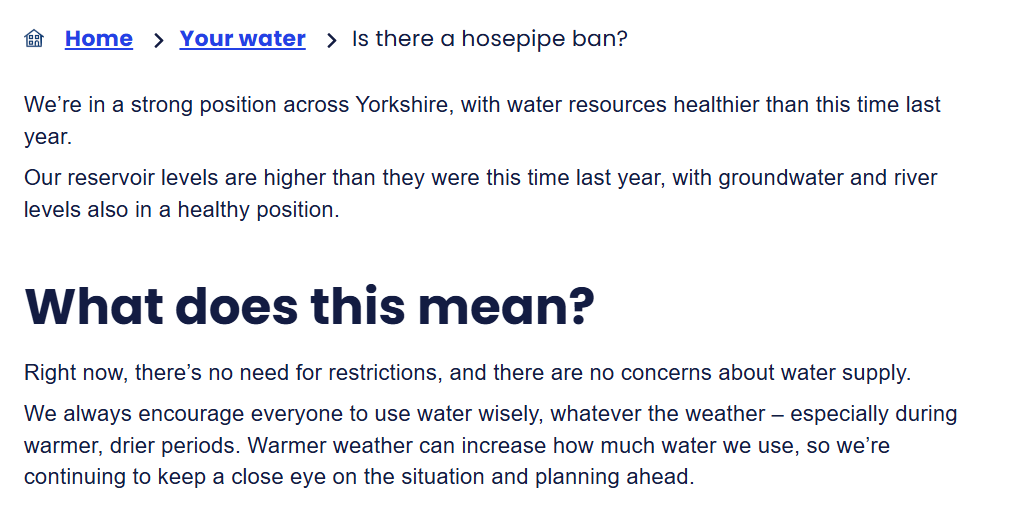
Yorkshire Water's key water messaging - in stark contrast to the EA's announcement of drought
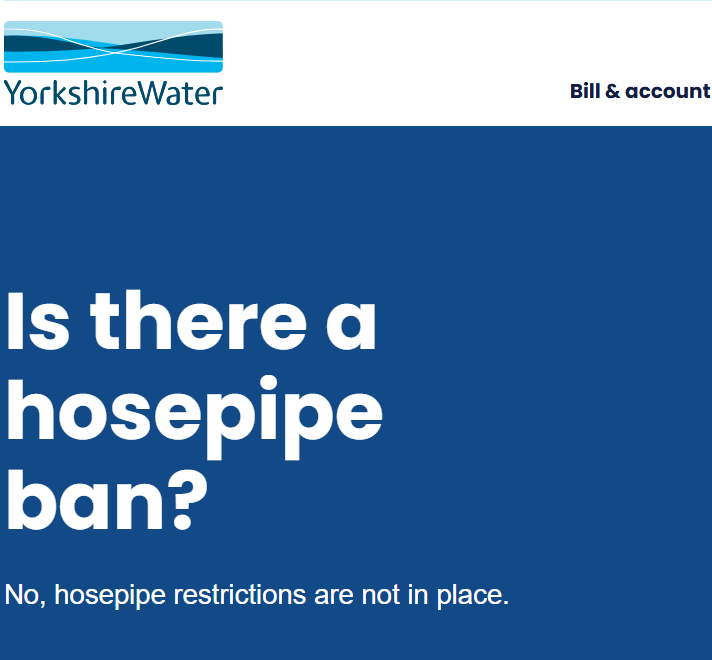
Yorkshire Water - no hosepipe ban
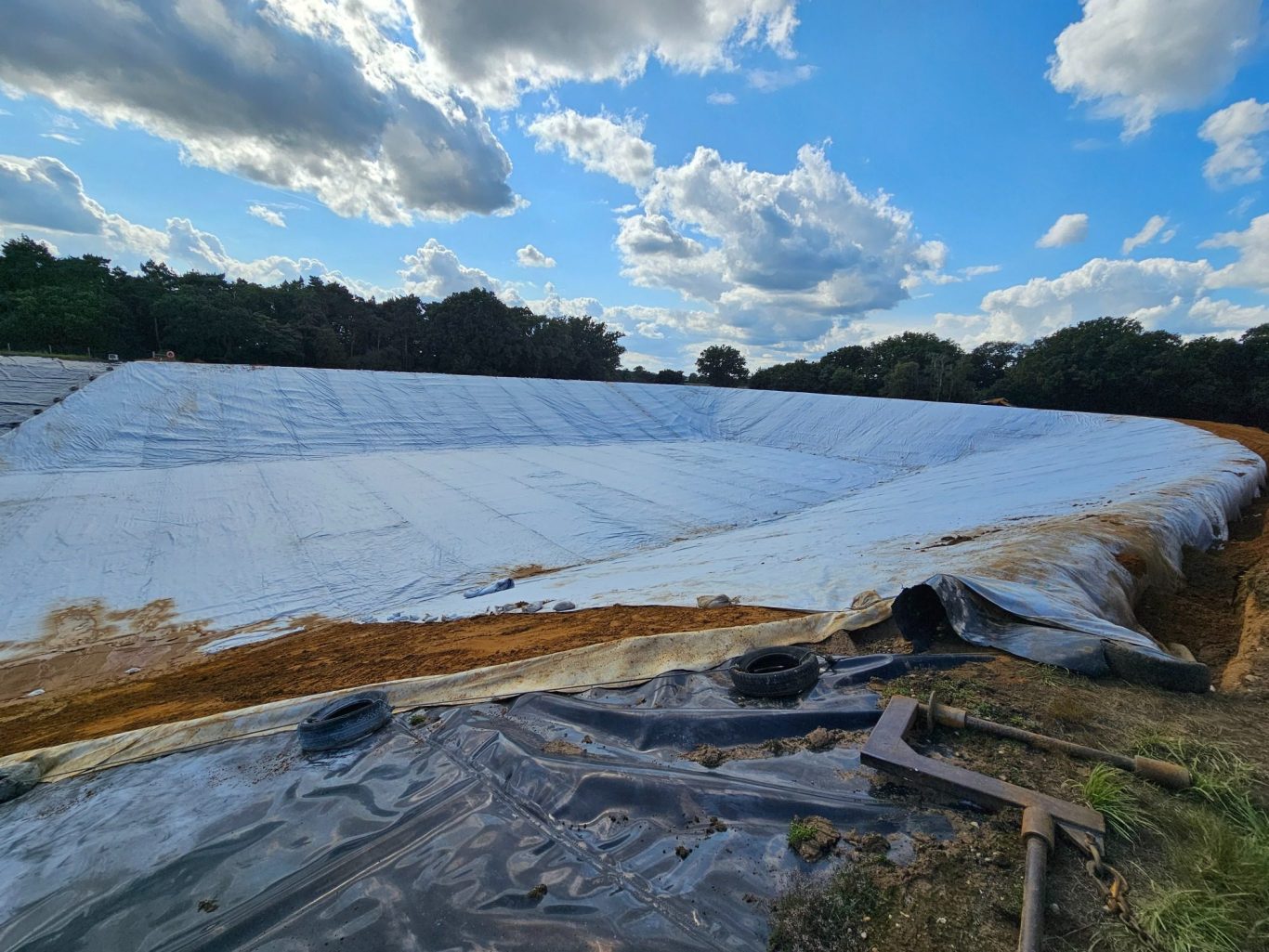
Government funding for constructing farm reservoirs is expected this autumn
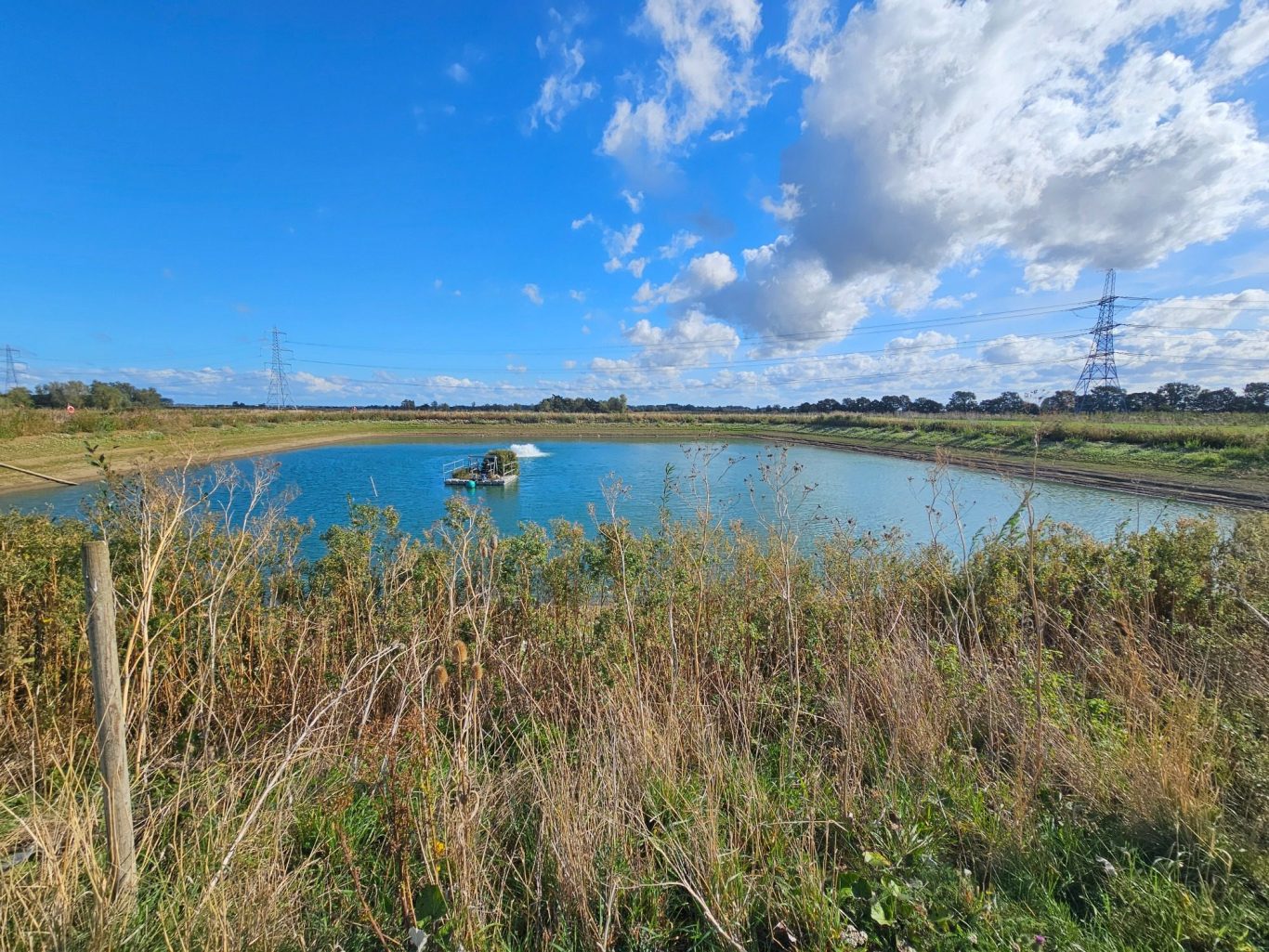
Farmers and growers have increasing concerns over refilling reservoirs this winter
03/10/2026
Following the government’s commitment to new drought support for farmers the Environment Agency (EA) has rolled out two key measures for farmers and growers. The initiatives are a new temporary flexibility for early winter reservoir refill through RPS 382, alongside simplified requirements for obtaining long-duration abstraction licences.
Following the drought conditions experienced across much of England this year, the EA has introduced RPS 382, allowing eligible abstraction licence holders to refill winter storage reservoirs in October - earlier than the normal licensed abstraction season.
The move is designed to help farmers and growers rebuild water storage while maintaining important environmental safeguards. It is arguably the agricultural equivalent of the drought permits and drought orders being used by water companies to increase water stocks.
Key conditions include:
- Principal salmon catchments remain excluded.
- Catchments subject to Section 57 spray irrigation restrictions remain excluded.
- Licence holders must continue to comply with all existing licence conditions, including Hands-Off Flow (HOF) and Hands-Off Level (HOL) restrictions.
Abstractors must notify the EA before abstracting and are being encouraged to register their intention to use the RPS well in advance. Early registration allows licence holders to be added to HOF and HOL notification systems so they can receive alerts when abstraction opportunities arise.
To register for the RPS, email rpsregistrations@environment-agency.gov.uk and include "RPS 382" in the subject line. Operational or policy queries can be directed to WRRegulation@environment-agency.gov.uk.
Additional clarification from the Environment Agency confirms that:
- Newly constructed reservoirs can use the RPS where an appropriate abstraction licence is in place.
- The flexibility can be used for licensed storage reservoirs and water storage tanks supplying subsequent spray or trickle irrigation.
- Newly constructed reservoirs requiring water to assist liner stabilisation may also benefit where a suitable licence exists.
- RPS 300 remains available for abstraction of floodwater outside licence conditions during qualifying flood events.
The latest Met Office three-month outlook indicates an increased likelihood of wetter-than-average conditions during October to December. There may be opportunities for farmers and growers to take advantage of the RPS over this month to help early rebuilding of water reserves ahead of the 2027 irrigation season. South Level fen abstractors in Cambridgeshire are already taking full advantage of the RPS to start filling reservoirs.The EA will also publish its farm reservoir winter refill prospects report later this month.
Alongside the RPS announcement, the EA has updated its guidance on long-duration abstraction licences, making the application process more straightforward for businesses investing in long-term water security for up to 24 years.
Applicants must still provide:
- A business plan.
- Finance agreements, or agreements in principle.
- A summary explaining how the proposal contributes to sustainable development.
However, a significant change is the removal of the requirement for applicants to undertake their own assessment of long-term environmental and economic sustainability.
Instead, the EA will include licence conditions that allow abstraction volumes to be reduced in future if climate change or environmental pressures make an abstraction unsustainable. Potential reduction volumes will be identified when the licence is issued and will be based on climate change projections for the relevant waterbody.
Crucially, licence holders would receive a minimum of six years' notice before any future reduction takes effect, designed to allow time to adapt, develop alternative water sources and review reservoir investment plans.
For advice on long-duration licences, applicants can use the EA's pre-application advice service.
These are welcome developments for farm water resilience, but important pieces of work remain.
With Defra expected to launch the next round of the Water Management Grant later this autumn, growers will be looking for greater certainty around water availability and reservoir investment opportunities. The EA's forthcoming response to its consultation on reserving future water abstraction rights will therefore be particularly important, especially in catchments where agricultural and public water supply demands may compete.
There would also be significant value in the EA hosting a webinar or industry briefing on the new long-duration licence approach. While the changes are welcome, many farmers and growers will want to understand how future climate-related licence reductions could operate in practice and what this means for reservoir investment decisions.
If these changes could affect your business, feel free to get in touch with The Growing Voice for independent advice and support on your water resource requirements.
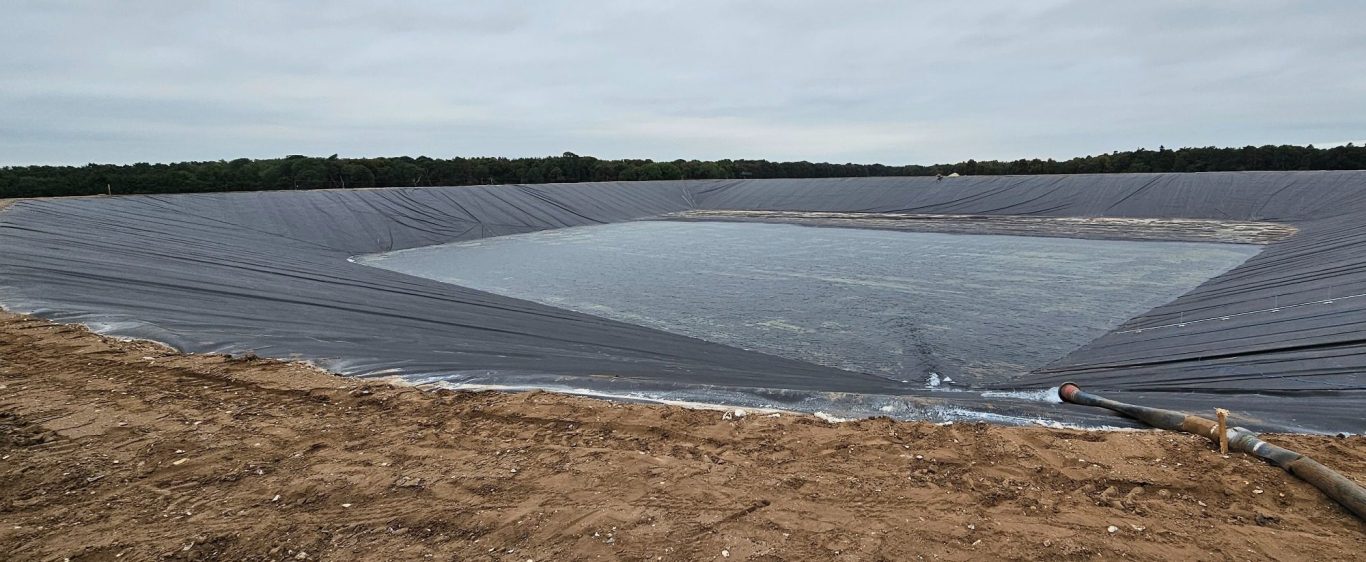
Early reservoir refilling enabled by the Environment Agency's RPS 382
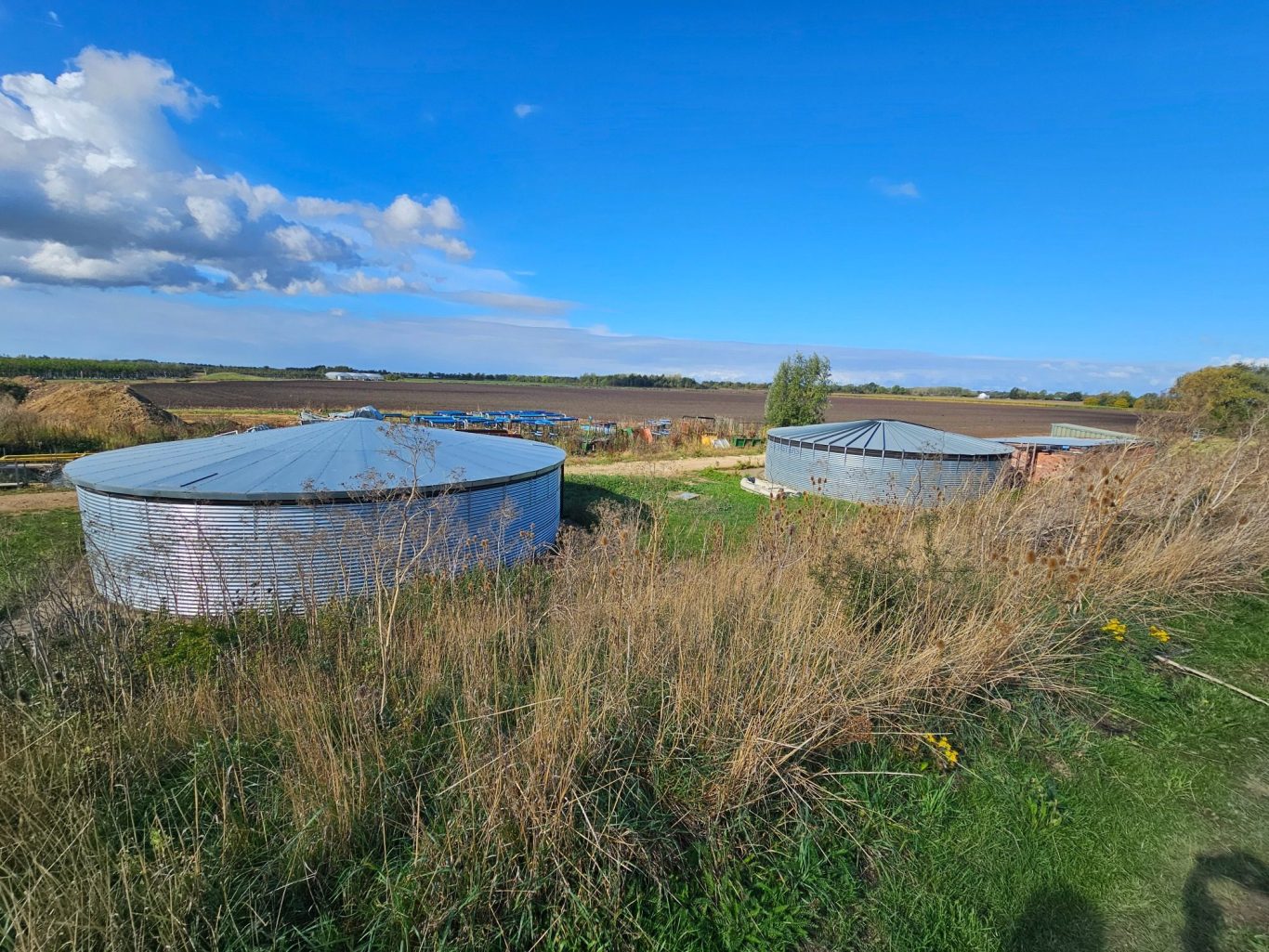
RPS 382 allows water tanks to be filled to for subsequent irrigation use
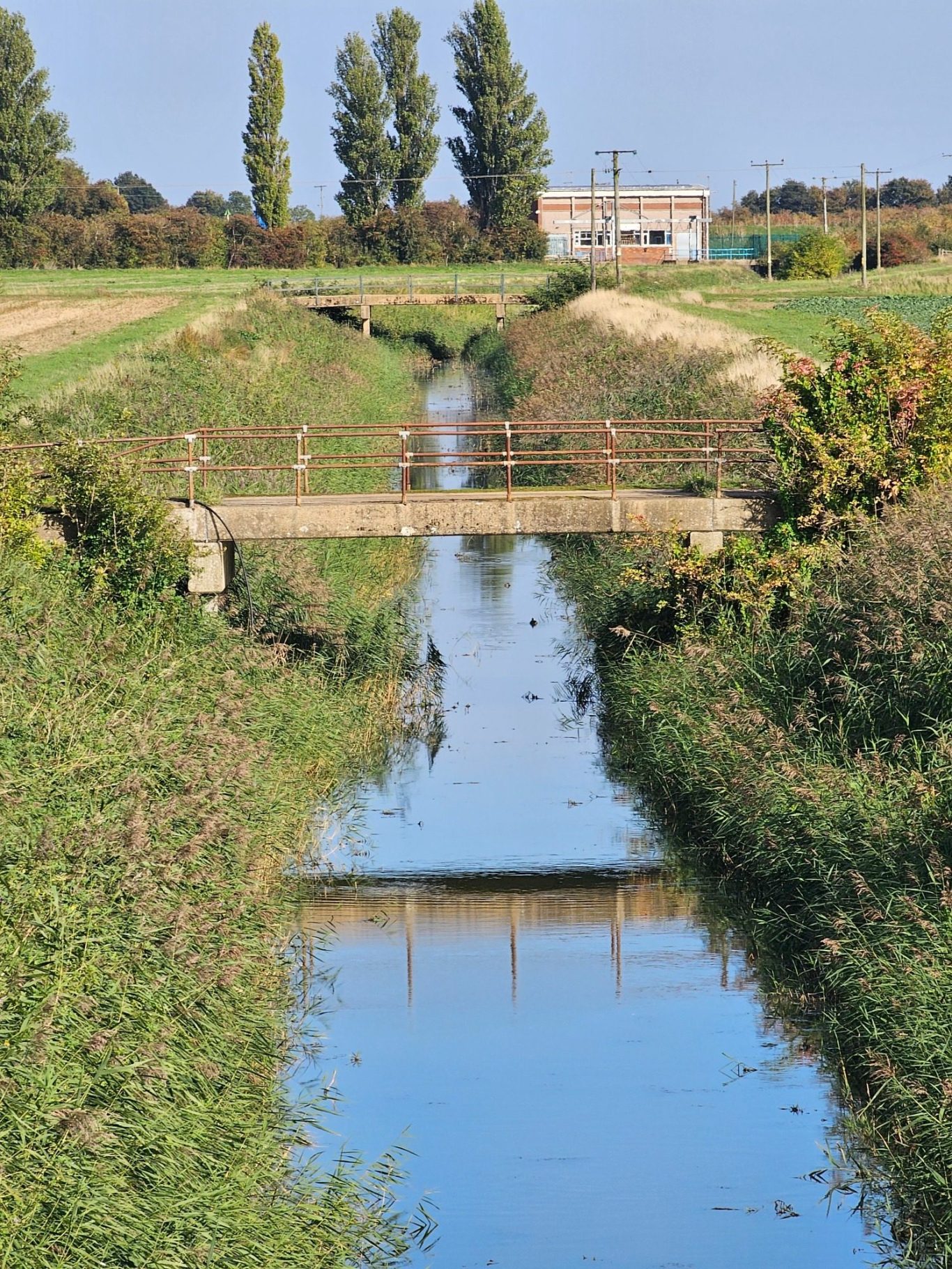
Level dependent fenland systems are looking to take full advantage to start filling reservoirs early where possible
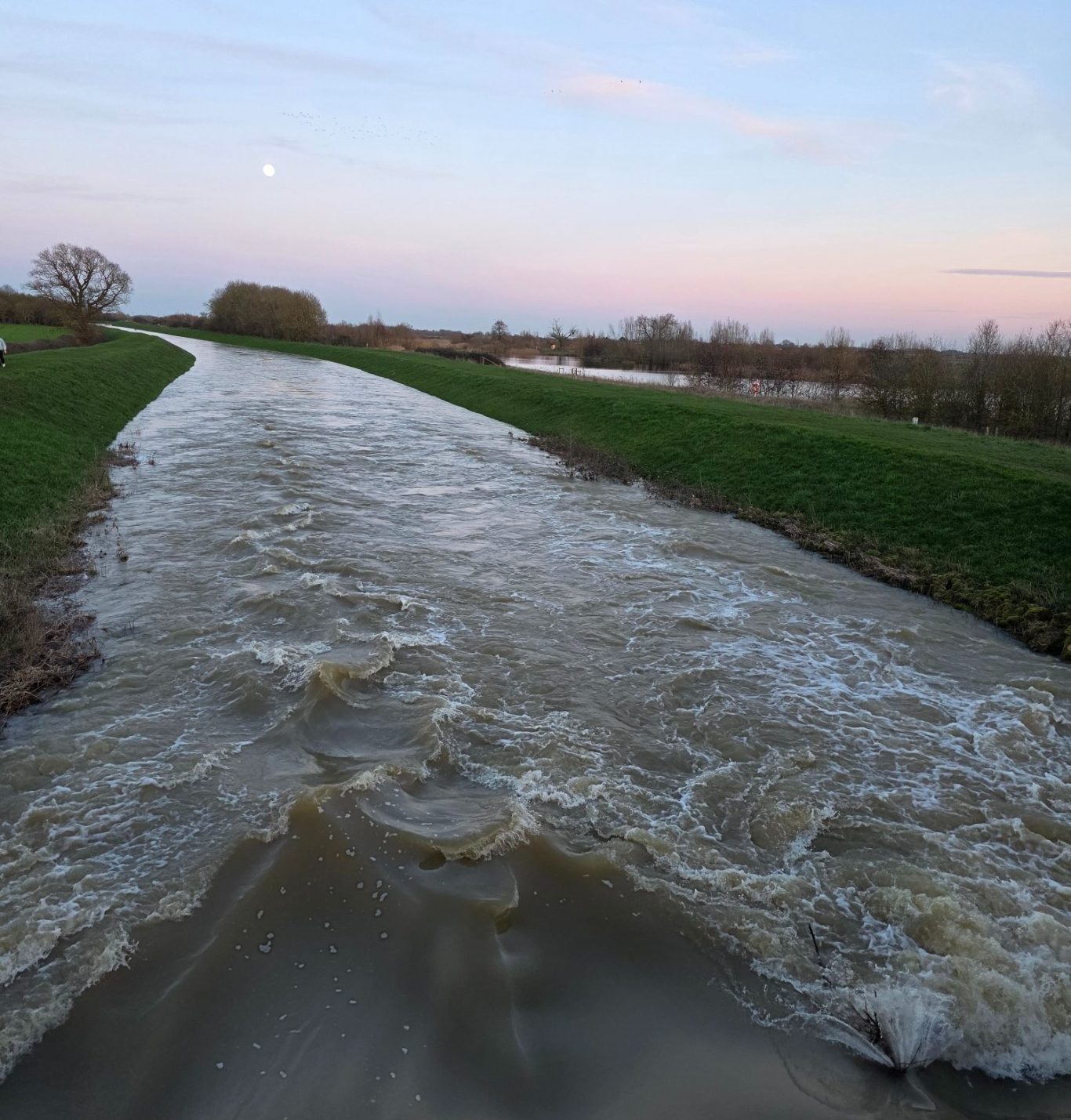
RPS 300 is still active to allow flood flow abstraction where conditions are met
12/9/2026
As irrigation equipment is moved out of fields and attention turns to autumn planning, farmers are increasingly focused on long-term water resilience.
Four weeks after the Prime Minister announced a package of drought support for agriculture, many of my clients are still waiting for details of the £15 million water management grant designed to support reservoir investment. Time is already against them. Given the lead times required for planning permission, abstraction licences, construction and winter filling, any new reservoir project starting today is unlikely to be operational before 2028.
For many businesses, expanding an existing reservoir may offer a quicker and more cost-effective alternative.
Increasing the storage capacity of an existing reservoir avoids enlarging its overall footprint and therefore minimises the loss of valuable arable land. We will have to see whether raised reservoirs will be eligible for grants this time round.
Additional storage enables farms to capture more surplus winter water and build resilience against increasingly frequent summer droughts. A larger reserve of stored water can reduce reliance on river abstraction during low-flow periods, lower abstraction licence costs and help businesses meet long term sustainability while protecting crop production.
There can also be other practical advantages. Expanding an existing reservoir typically requires fewer archaeological and ecological surveys than constructing a new one. Capital costs are often lower, with reduced major earthworks required with associated infrastructure potentially already in place.
The UK Irrigation Association's reservoir design guide highlights the example of Home Farm, Nacton, where storage capacity was increased by 35,000 cubic metres. However, Managing Director Andrew Francis noted that the project was delayed after missing out on grant funding, resulting in the loss of an entire winter's opportunity to fill the reservoir.
Yet even when grant funding becomes available, it is unlikely to provide the instant solution many farmers and growers are hoping for. Successful reservoir projects still depend on the essential triad of funding, abstraction licensing and planning approval.
From September, the Environment Agency is expected to simplify the application process for long-duration abstraction licences for reservoirs. The intention is to provide greater certainty for applicants and support long-term investment in water infrastructure. However, at the time of writing, detailed guidance on how the revised process will operate has not yet been published.
Current guidance on long-duration licences, which can run for up to 24 years, requires applicants to demonstrate that future environmental and economic changes are unlikely to undermine the sustainability of the abstraction. Assessments consider factors such as population growth, industrial development, competing water demands and potential changes to river flows.
Environmental Impact Assessments may also still be required in some circumstances. As a result, it remains to be seen how far the promised simplification will extend, particularly while proposals on reserving future water abstraction rights have yet to emerge.
Farmers are also awaiting updated planning guidance for on-farm reservoirs from the Ministry of Housing, Communities and Local Government. Greater clarity on planning requirements would help give businesses the confidence to move forward with investment decisions.
Even after the promised guidance is published, the effectiveness of the new arrangements will depend on how quickly applications are processed. The Environment Agency's target determination period for abstraction licences is typically four months, but pressures created by ongoing drought management could affect timescales.
Water companies are already engaging with the Environment Agency on winter drought permit applications which will be prioritised ahead of agriculture needs. Anglian Water for example will be looking to reduce the minimum residual flow requirements on the Nene at Wansford to help fill Rutland Water should significant rain not materialise from the forecast effects of El Nino. Rutland is currently ranked as exceptionally low for the time of year being 72% full.
For farmers considering reservoir investment, the coming months will be critical. While additional funding and regulatory reform are welcome, the real test will be whether government and regulators can turn announcements into practical, timely decisions that allow businesses to strengthen their water resilience before the next drought arrives.
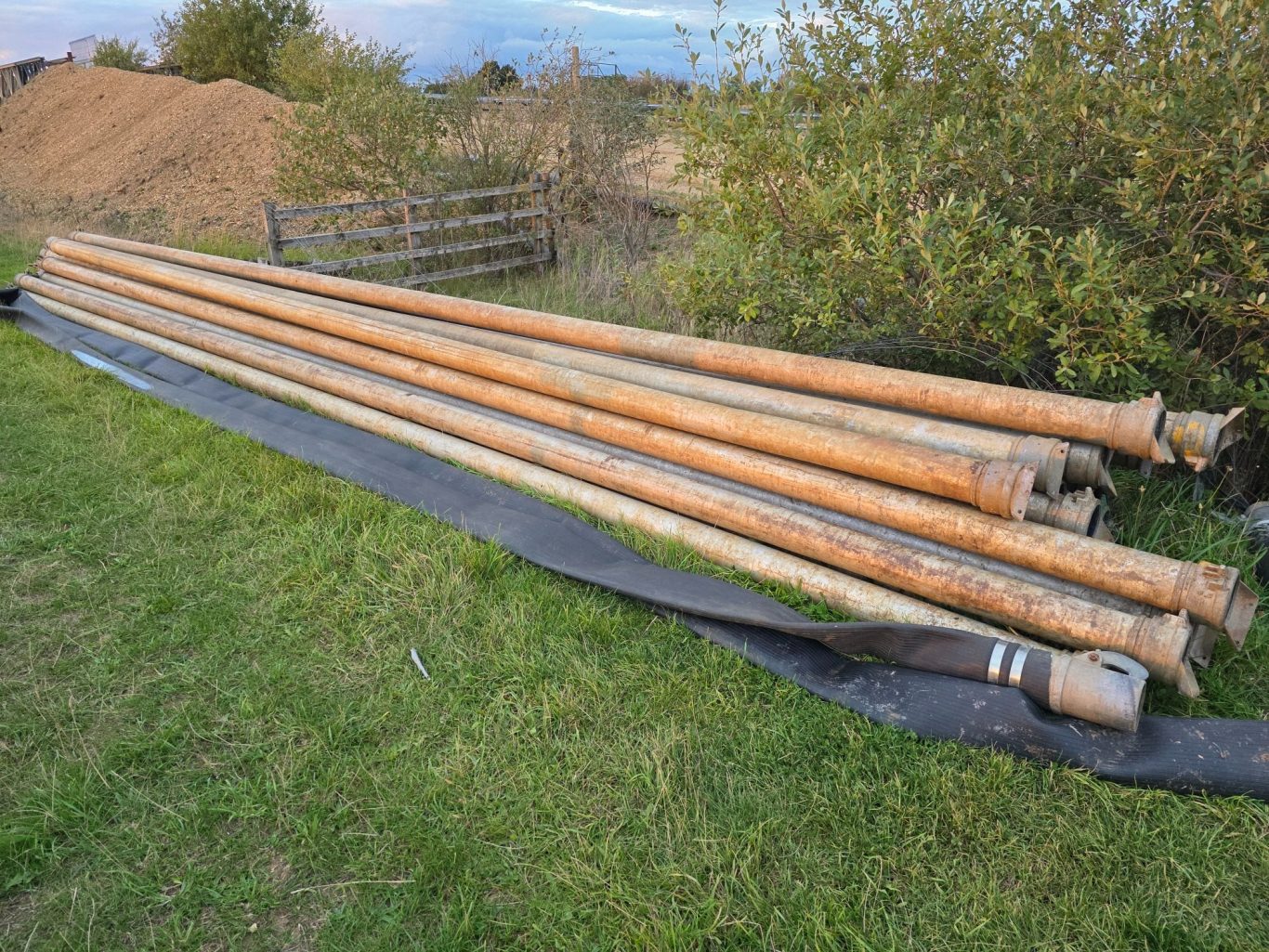
Irrigation equipment is being removed from fields
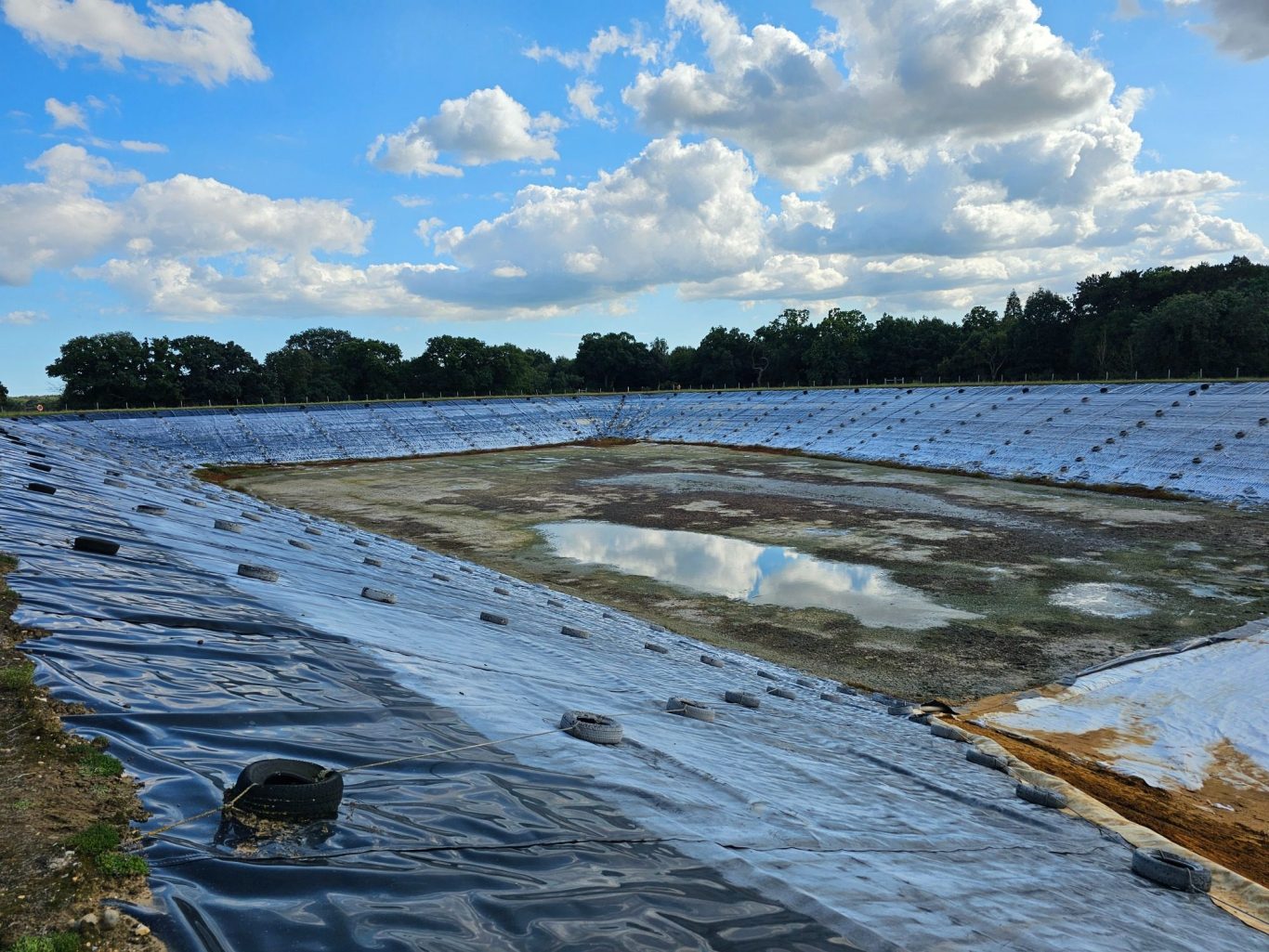
Extension of Home Farm Nacton reservoir in Suffolk
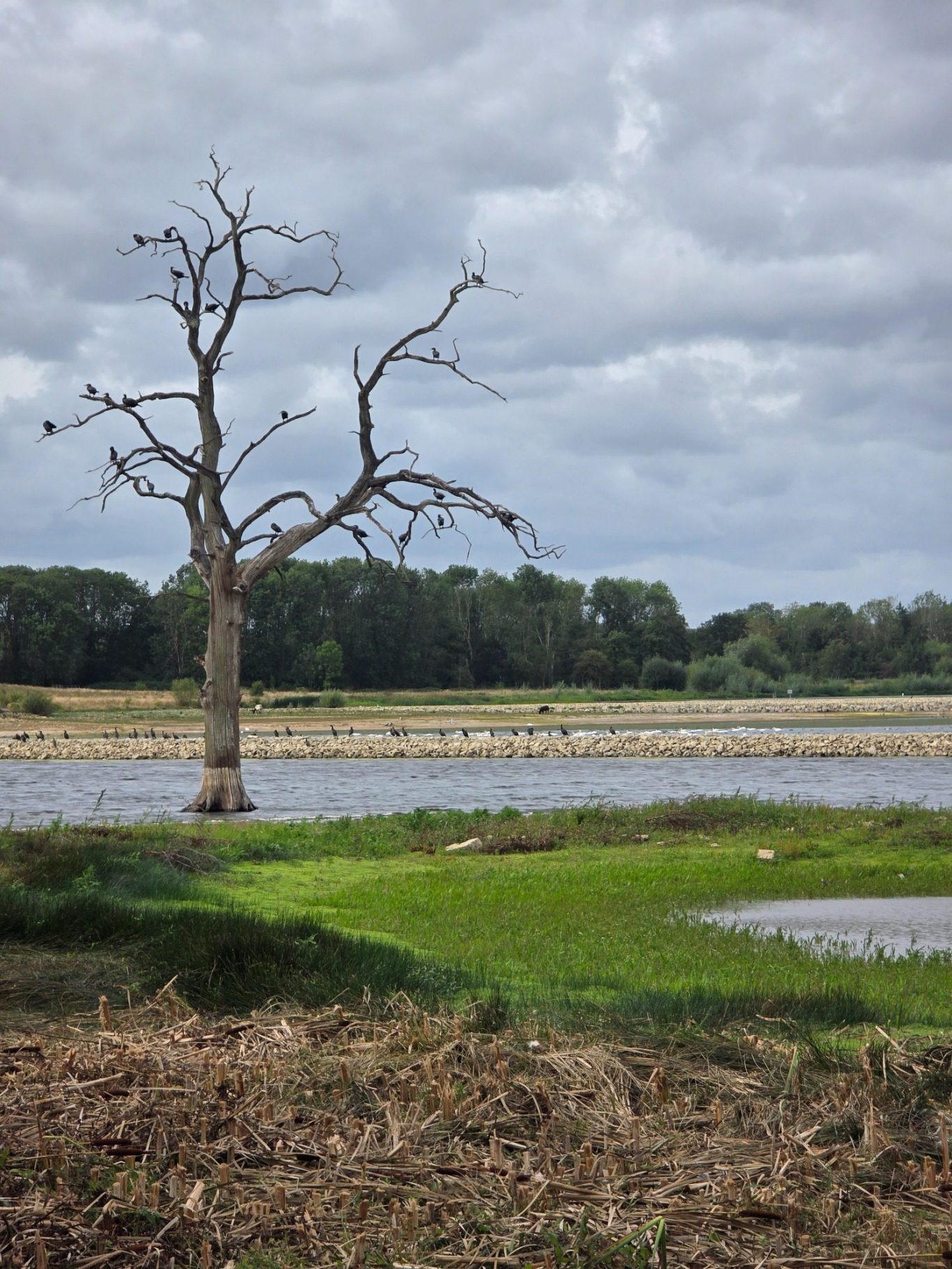
Manton Bay Lagoon at Rutland Water showing lowered water levels
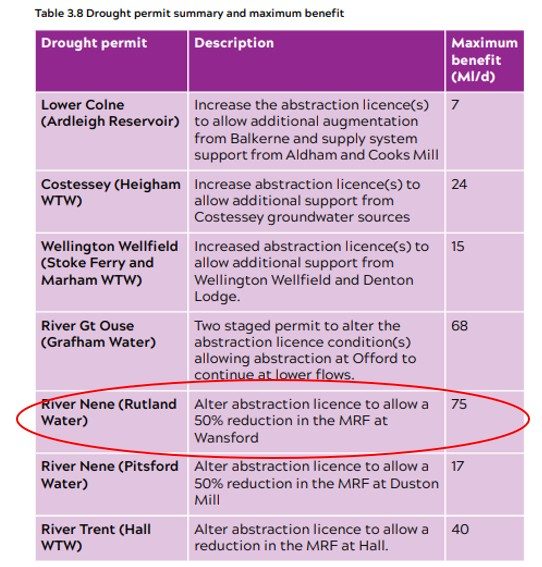
Anglian Water Drought Permit options including on the River Nene for Rutland Water
31/8/2026
While recent unsettled weather may have done little to significantly increase flows in rivers and streams to help farmers irrigate, the demand for water will be reduced as soils wet up. Any uplift in flows will have been typically short-lived giving farmers little chance of capturing water, especially over the bank holiday weekend when abstraction alerts won’t have been active.
As is often the case with thunderstorms, rainfall totals have varied considerably across the country. Some locations, including parts of drought-hit East Anglia, have received more than 50mm of rain over the last week. While soils remain well below field capacity, rainfall will have reduced soil moisture deficits and replenished water in the upper soil layers.
This will aid the harvesting of mature crops and improve conditions for establishing autumn plantings, including oilseed rape, cereals and cover crops.
There could also well be good news for those farmers and growers under the threat of S57 spray irrigation restrictions. Cooler temperatures and wetter weather with the irrigation season winding down means that there will be reduced demand for water. Therefore, the imposition of restrictions is likely to have a declining benefit on river flows.
There will also be huge political pressure with ministerial interest in drought understood to be at unprecedented levels along with the promise of government support to farmers. However, while there is no strict definition of exceptional shortage of rainfall a return to drier and warmer conditions in the next few weeks could reverse a decision on restrictions while water quality runoff problems driven by thunderstorms could also see them back on the table.
For those who are currently constrained by hands off flow conditions more significant rain is likely to be needed to allow abstraction for late irrigation. Farmers will be hoping conditions allow for refilling of winter storage reservoirs at the beginning of November.
Following this year’s drought an irrigation survey this autumn would be an ideal time to collect data especially on changing irrigation techniques, drought resistant varieties and detailed geographical water requirements for the sector. Defra hasn’t undertaken a large scale irrigation survey in England since 2010, although smaller studies have been run subsequently.
Following the recent government announcement on drought support for farmers including water management grants to build reservoirs and reducing planning construction barriers the wait is on for more details to be released this autumn. However, reservoirs won’t be an instant panacea for drought impacts. Even with plans put forward today, it is unlikely that a new reservoir would be completed before 2028, given the time required for planning approvals, abstraction licence determinations, and filling with winter water.
Defra, the Rural Payments Agency (RPA) and the Environment Agency (EA) are working together to develop options and the overall water management grant process. It’s understood that the grant process won’t be exactly the same as the last round – the final deadline of which was back in October 2024.
An online checker has been used in previous rounds of the grant to check how well your project fits the funding priorities. The RPA is expected to also launch a webinar associated with the grant, so look out for more details over the autumn.
Water companies will also be heaving a sigh of relief that the last summer bank holiday brought cooler and wetter weather literally dampening down peak demand from customers. With water butts largely full and gardens benefiting from recent downpours domestic demand is likely to remain below this year’s peak values (unless there is a return to a hotter and drier Indian summer in the autumn).
This will reduce the strain on water resources stocks especially reservoirs, although those levels won’t generally increase until significant winter rainfall pushes up river flows so that inflows outweigh the outputs of demand. Temporary Use Bans are likely to be kept in place in many areas until water resources have returned to healthier stocks. The prospect of the influence of El Nino this winter means we could see weather whiplash take us from drought into floods within a few months. The Met Office is forecasting that the chances of a warm wet autumn are higher than normal.
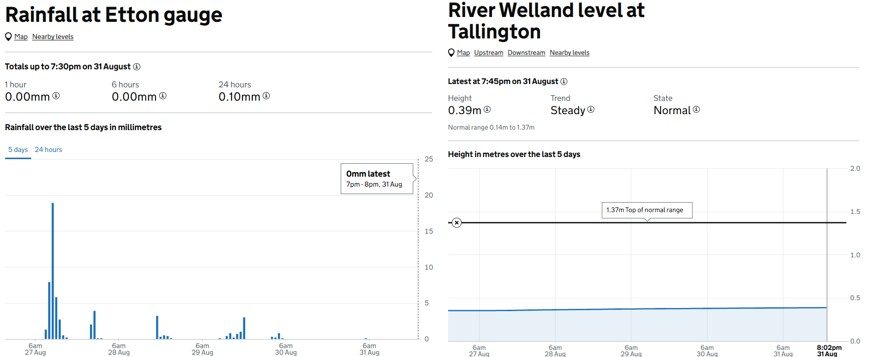
Despite significant rainfall over the last five days river levels haven't generally shown much response
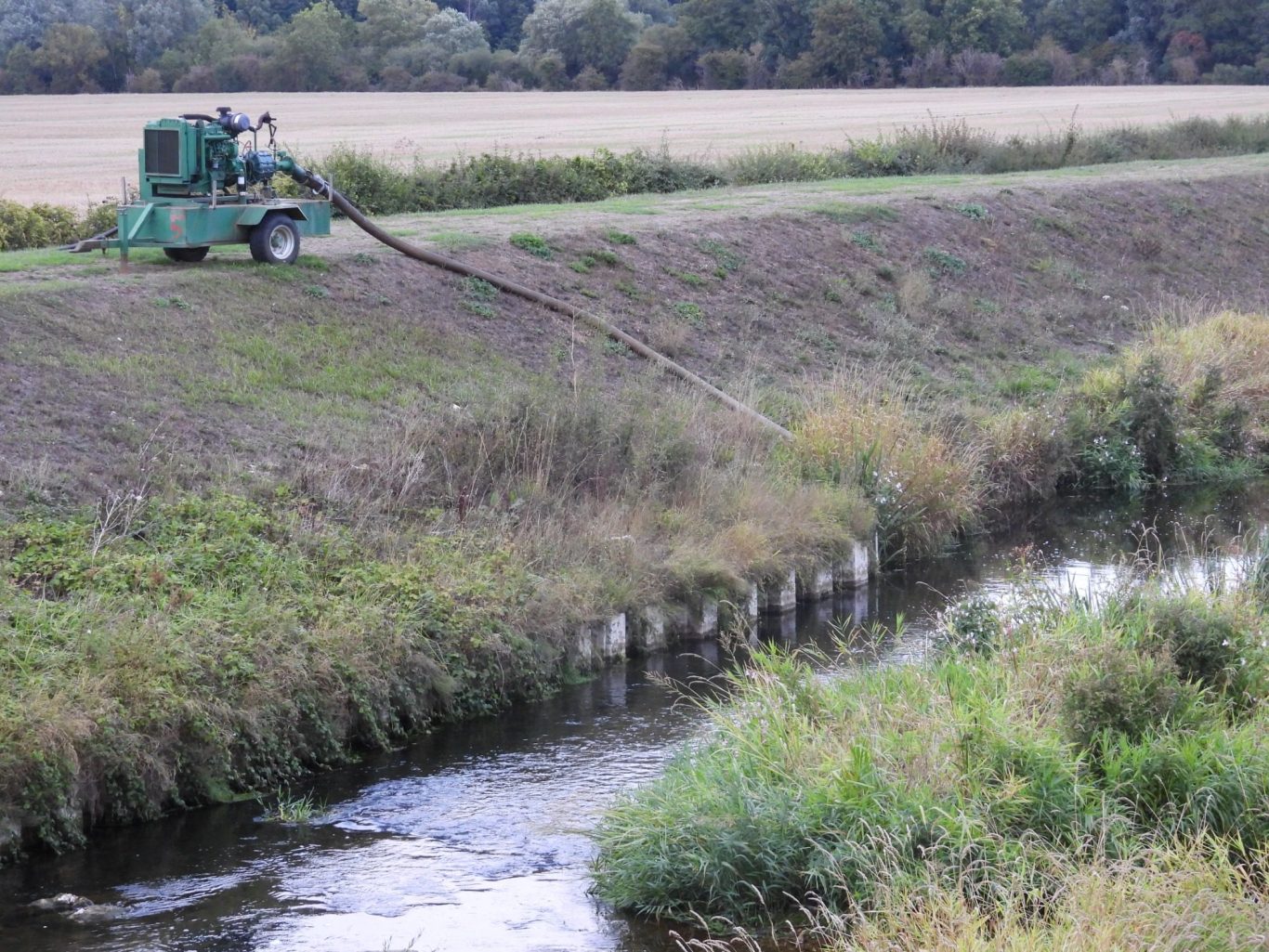
Rain will have reduced irrigation demand
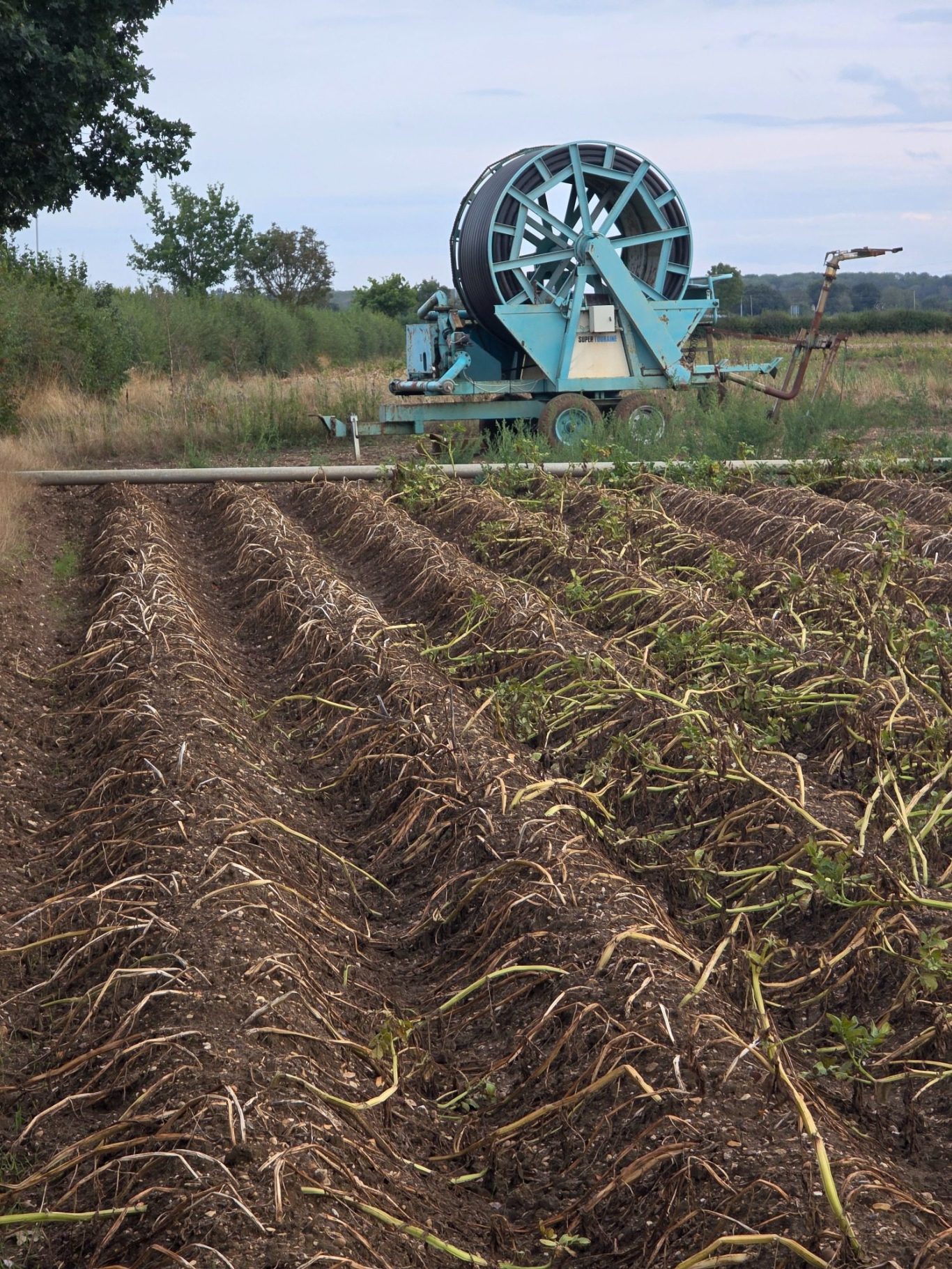
Soils will have wetted up to help crop lifting
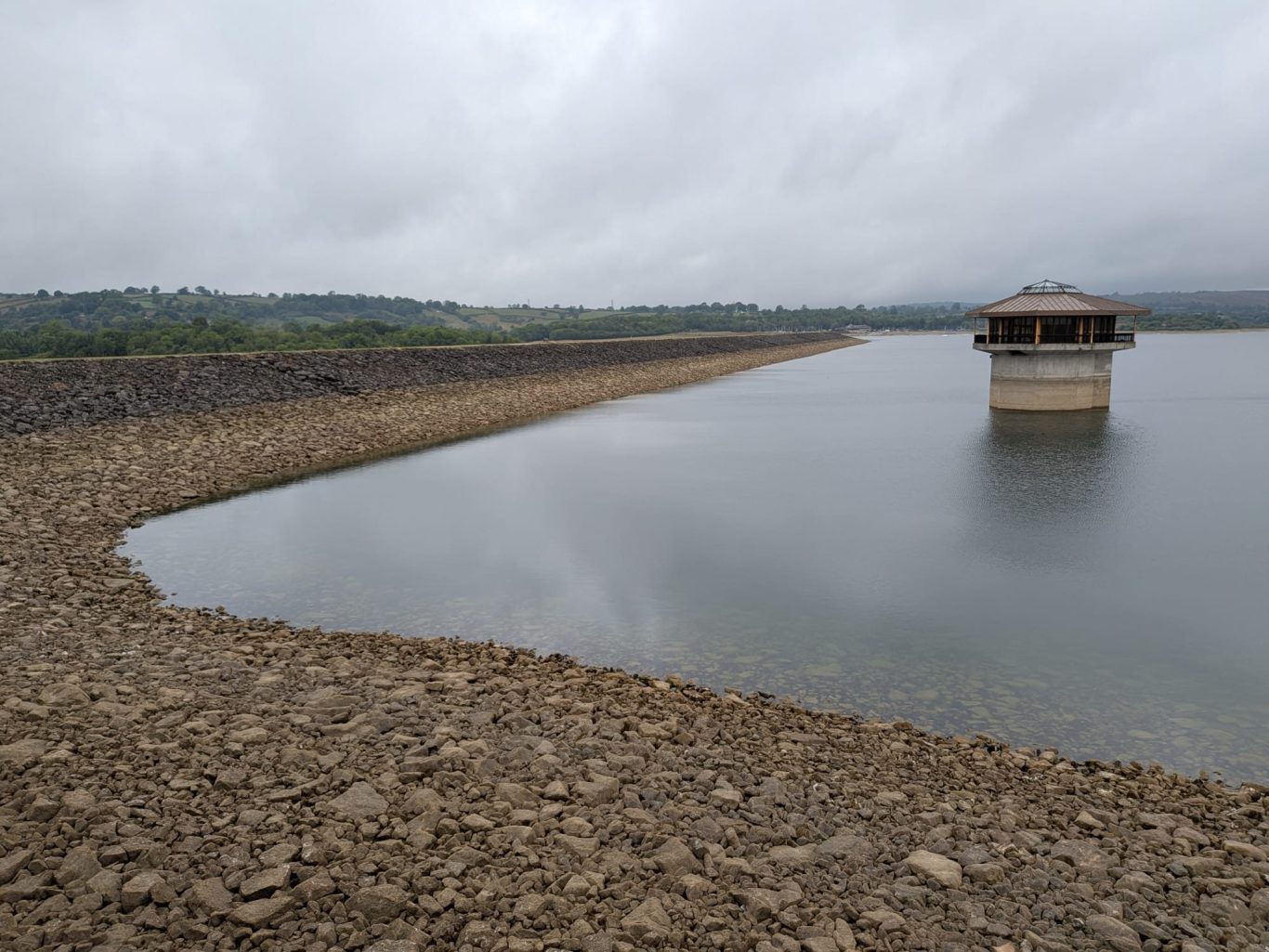
Public Water Supply reservoirs such as Carsington In Derbyshire will have seen reduced water demand over the last week
21/8/2026
As the government goes “all in” on a public water supply reservoir construction programme and tees up a new water management grant to build farm reservoirs, is there a real risk that these new infrastructure projects will simply become stranded assets?
Stranded assets are defined as unanticipated or premature write-offs of fixed assets. The agriculture sector is of particular importance as rapidly impaired and stranded assets can affect the entire supply chain across a commodity type.
At the farm level, stranded assets pose direct financial risks to farmers, particularly those with high sunk costs or long investment cycles and limited liquidity, who may face loan defaults or business failure.
In a paper published earlier this year it is argued that: “Climate change is probably already contributing to agricultural asset stranding by driving extreme weather, altering water supplies and negatively impacting crop yields”.
In 2024 a paper stated that: “Stranded assets are highly vulnerable to material devaluation, such as farmland and physical infrastructure. This can have a significant impact on the balance sheets of farmers and result in entire agricultural industries becoming unviable.
“Although it is challenging to predict local level extreme events with precision given current datasets the very real risk to production assets include the risk of dams cracking in extreme dry then failing in extreme rainfall, and irrigation systems being unable to cope with increased water requirements of crops due to rising temperature.”
“Water allocations drastically change due to drought, or a certain method of irrigation (e.g., sprinkler) is restricted, which may mean an investment is required or a production area/product line needs to be abandoned.”
The argument isn’t purely academic. Will Shakeshaft, MD of Greens of Soham in Cambridgeshire said this week: “Our budget usually for irrigation is £2 million. In 2025 it was £3 million and the way we're going it's going to be almost £4 million in 2026. So, they're huge numbers and at what stage do you really start to question is this justified and can we continue doing this?”.
Meanwhile, while 302 S57 spray irrigation restrictions are in place in East Anglia, around 1400 farmers across England are just one step away from restrictions with the imposition of the EA’s voluntary cuts. S57 restrictions have only ever been implemented in East Anglia since 1976, although the Wye and the Romney Marshes have come very close in previous droughts. Over 1500 farmers continue to endure loss of access to water due to hands off flow river conditions.
In its Drought Prospects for Spring 2026 the Environment Agency admitted: “We also need to continue to understand how the climate is changing and affecting our water resources so we can better plan for droughts in the future. Research into future droughts needs to start now. We are calling on government and research councils to undertake long-term research into future droughts.” While the National Drought Group has now upped its meeting rate to a weekly footing there is no mention of this essential area of research. We wait and see..
However, it’s not all doom and gloom for reservoirs as: “They may be repurposed for alternative uses, with emerging opportunities in plant-based agriculture, such as precision farming and regenerative farming. There may also be opportunities for repurposing assets for other sectors.”
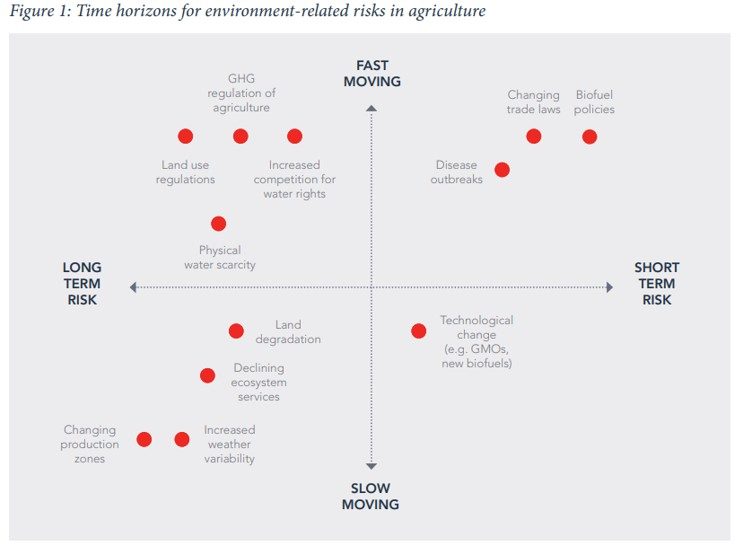
Stranded asset risks for agriculture - University of Oxford
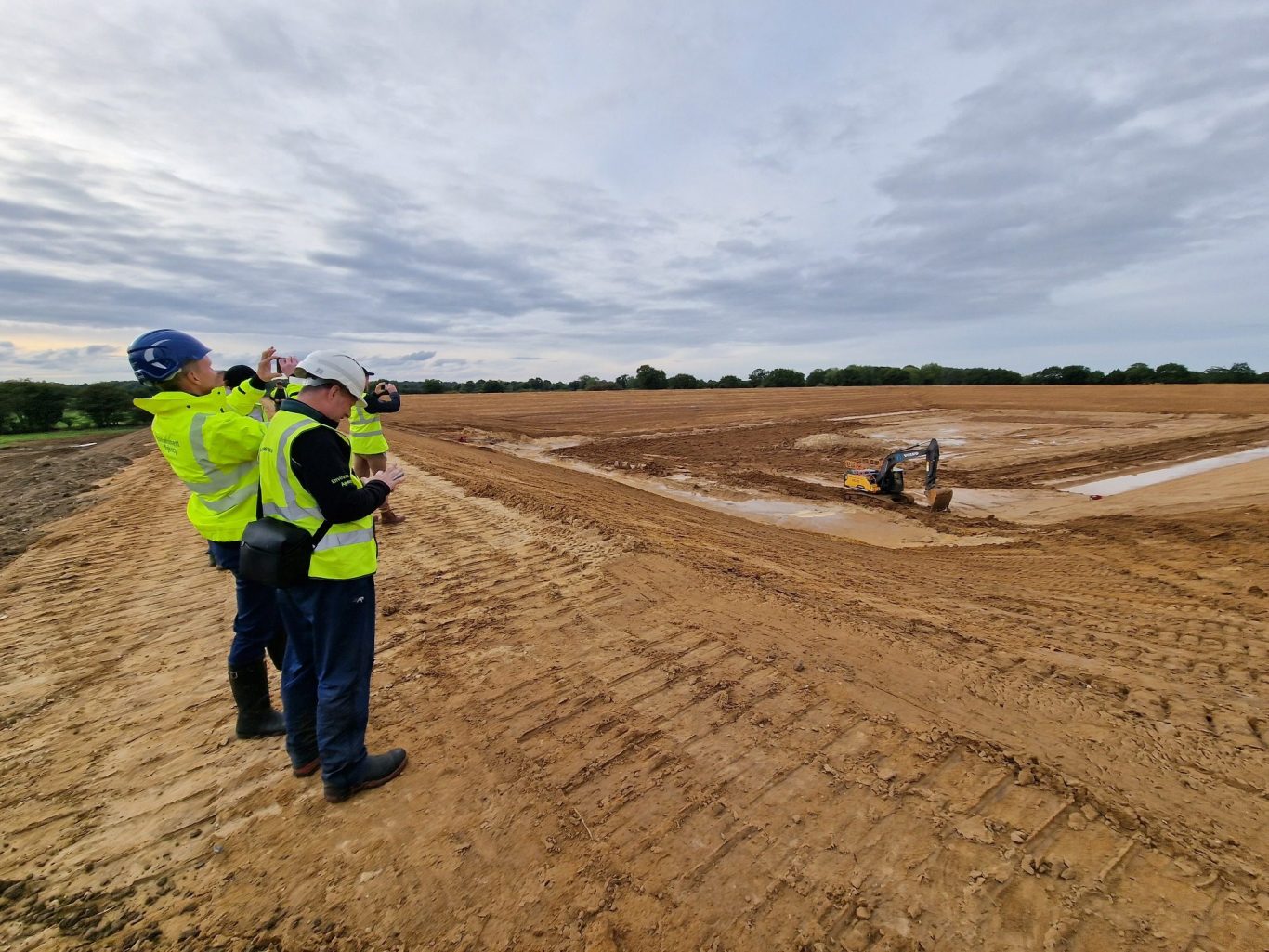
Are we at risk of building stranded reservoirs?
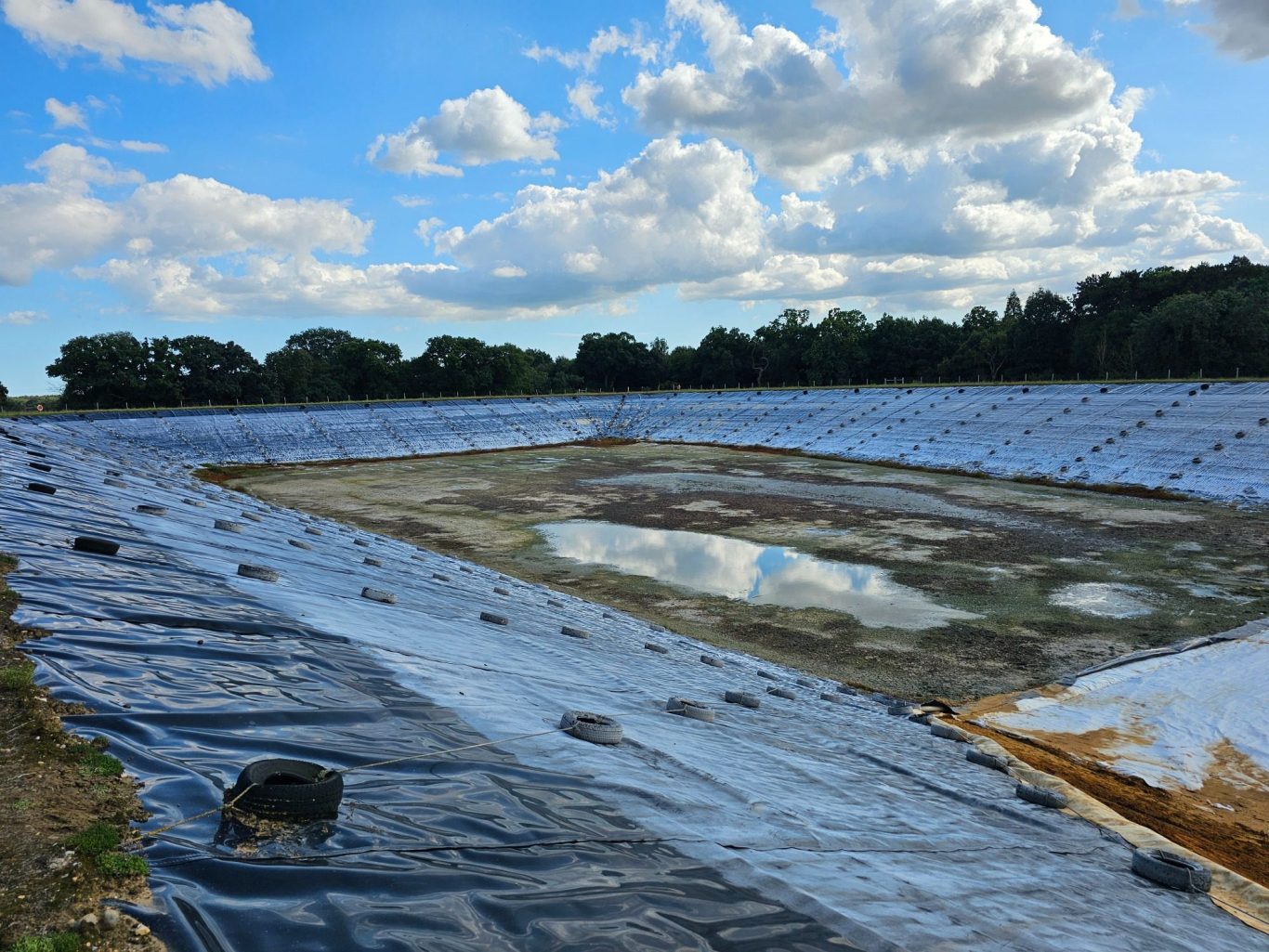
Will reservoirs be at risk of failing to refill with climate change?
Anglian Water's 2019 Water Resources Management Plan included reducing the risk of stranded assets
14/8/2026
Farmers across parts of Eastern England and Scotland are continuing to suffer from water abstraction restrictions as the drought continues to impact agriculture across the UK.
With no reprieve in sight for farmers struggling to access water, Andy Burnham’s new government is understood to be desperately looking at how it can support the sector more substantially during the drought and beyond.
Section 57 spray irrigation restrictions came into force in parts of East Anglia on 10th August and will remain in place until 31st October, unless the hydrological situation substantially improves. While the restrictions impose a 50% reduction of the daily abstraction rate on 288 spray irrigation licences 14 abstractors in the Wensum catchment are now required to cease abstraction completely as river conditions continue to deteriorate. (See map below). This is on top of the over 1500 hands off flow conditions currently impacting farmers and growers in England.
Alongside the formal restrictions, 192 voluntary abstraction reductions have been introduced across East Anglia and a further 300 in the Thames area. The Environment Agency (EA) has indicated that voluntary measures could also become necessary in the West Midlands, Lincolnshire, Northamptonshire and Cheshire should dry conditions persist. Farming organisations are concerned these voluntary reductions could soon turn into formal restrictions.
While the EA has reviewed whether irrigation restrictions should be increased to a full 100% reduction, river flows are currently "holding up". As a result, the EA is not actively pursuing tighter controls at present, although it has not ruled out further restrictions if conditions worsen.
Farmers who rely on boreholes are expected to be largely protected from the latest measures, with similar restrictions on groundwater abstractions at this stage considered unlikely.
Despite the exceptionally low river flows and levels in many catchments, environmental impacts have not been as severe as might have been expected. Incidents such as fish kills have remained relatively limited, although the environment is beginning to show signs of increasing stress as the EA continues to monitor the situation.
The agency has acknowledged the challenges facing irrigated agriculture. Water is likely to be needed to help lift crops such as potatoes in the coming weeks to safely harvest tubers from dry and hard soils to ensure they aren’t damaged. The EA is appealing for farmers to ease off abstracting peak volumes of water for irrigation now where possible to increase the chances of it being available later in the season for harvesting.
The EA said: “We’re encouraging everybody to use water wisely, including the farming sector. We recognise the challenges these restrictions may present and will continue to monitor conditions closely, keeping licence holders informed of any changes and will work with the agricultural sector to understand their water needs when lifting crops."
The EA added: "We have previously highlighted the risk of formal restrictions through our Irrigation Prospects updates, available on the Farming Advice Service website, and have asked abstractors across all sectors who take water from rivers to make voluntary reductions in abstraction to help manage the developing situation.
"Our teams continue to monitor conditions closely, working with abstractors and partners to manage water resources effectively and responding to reports of environmental incidents. We will keep the situation under regular review and provide further updates as conditions develop."
Agriculture water concerns are being echoed north of the border. According to the latest Scottish Environment Protection Agency (SEPA) Water Scarcity report, abstraction restrictions are in place for farmers and other abstractors across many parts of Eastern Scotland. Following the trend of last year there is an east west split with the majority of the east coast catchments in significant or moderate water scarcity.
SEPA said compliance with existing restrictions has been positive and urged businesses to continue following requirements designed to protect rivers under pressure.
"Our officers have seen good compliance with the restrictions currently in place. These are regulatory requirements designed to protect rivers when they are under significant pressure, and it is important that businesses continue to comply.
"As our climate changes, rainfall is becoming less predictable and water may not always be available where and when it is needed. Building resilience means planning for that uncertainty, adapting how we use water and taking action early rather than waiting until water availability becomes a problem.
"We'll continue to monitor conditions closely, work with abstractors and take action where necessary to protect Scotland's water environment."
Meanwhile, drought conditions remain widespread in Wales, where the entire country is currently classified as being in drought. However, Natural Resources Wales has not yet publicly announced any S57 restrictions on Welsh rivers.
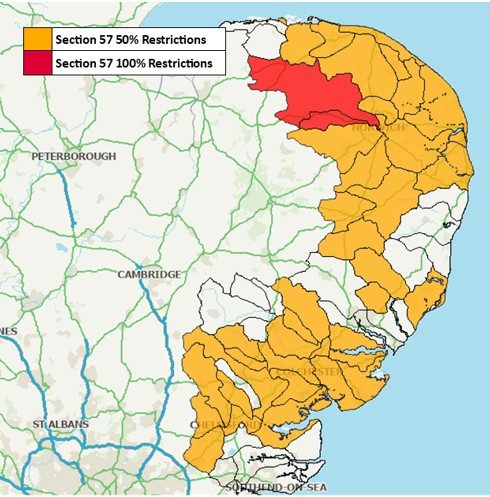
Map of S57 irrigation restrictions in East Anglia
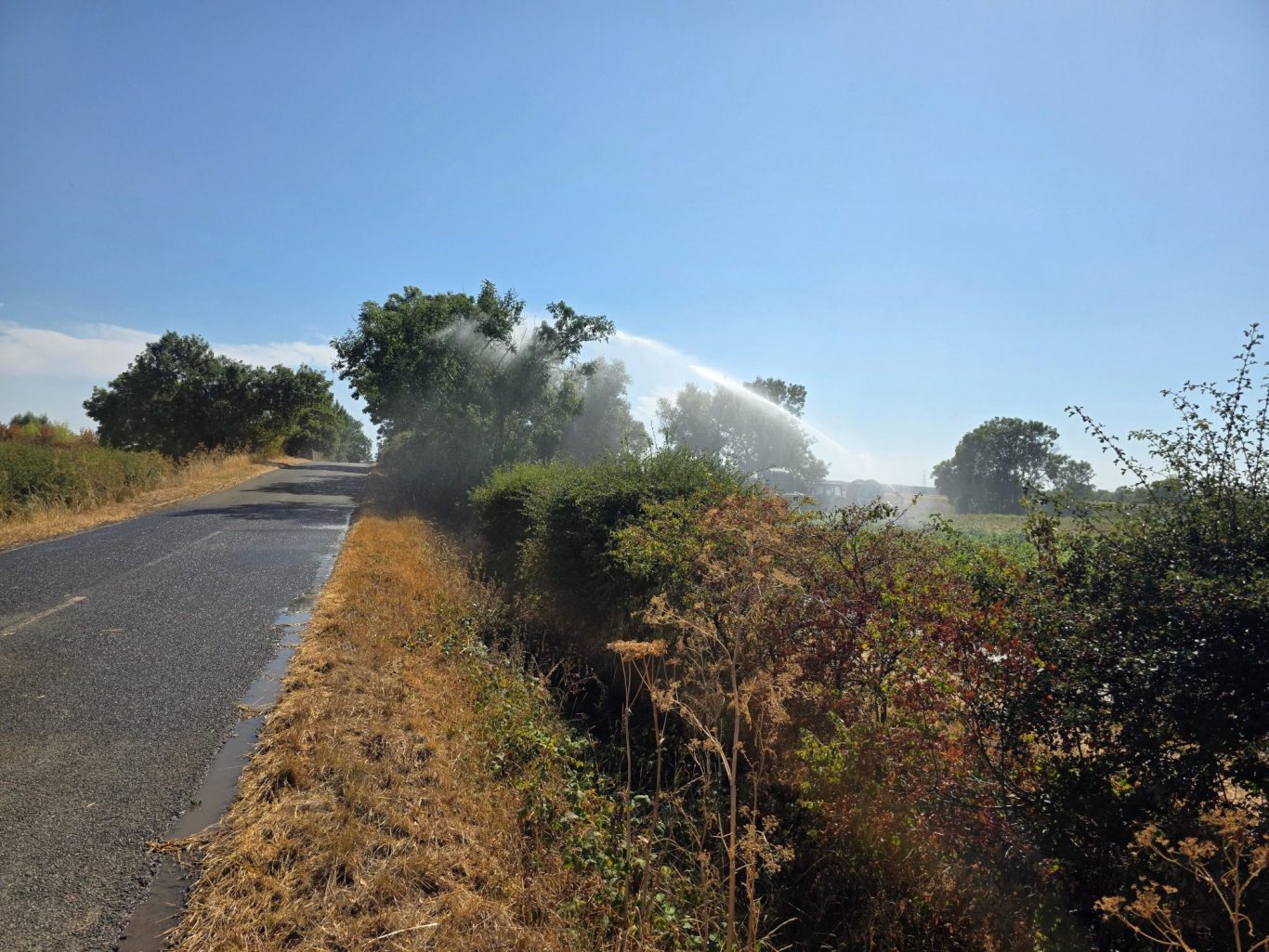
The EA is urging farmers to use water wisely
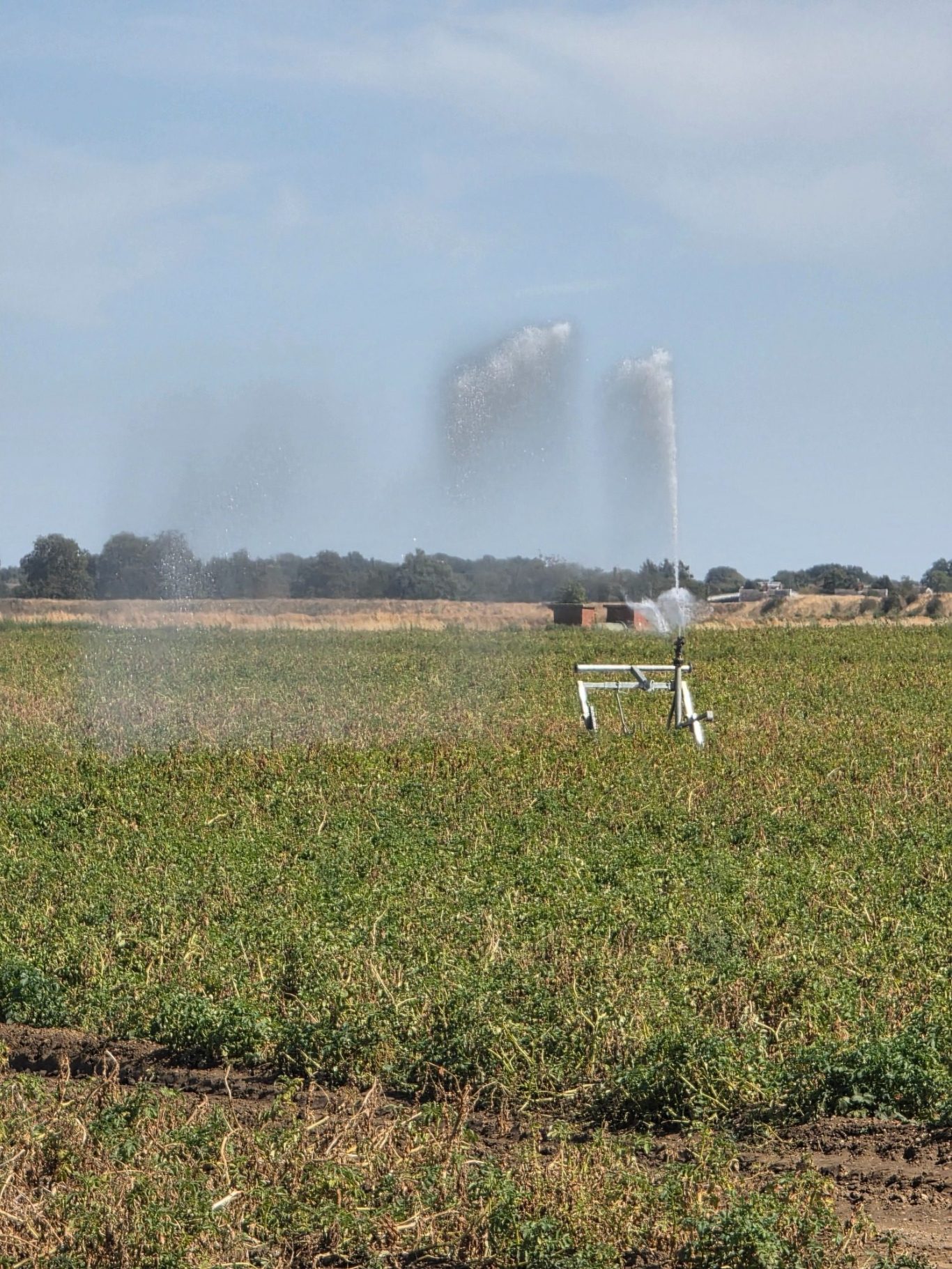
Irrigation for crop lifting is likely to be required this season
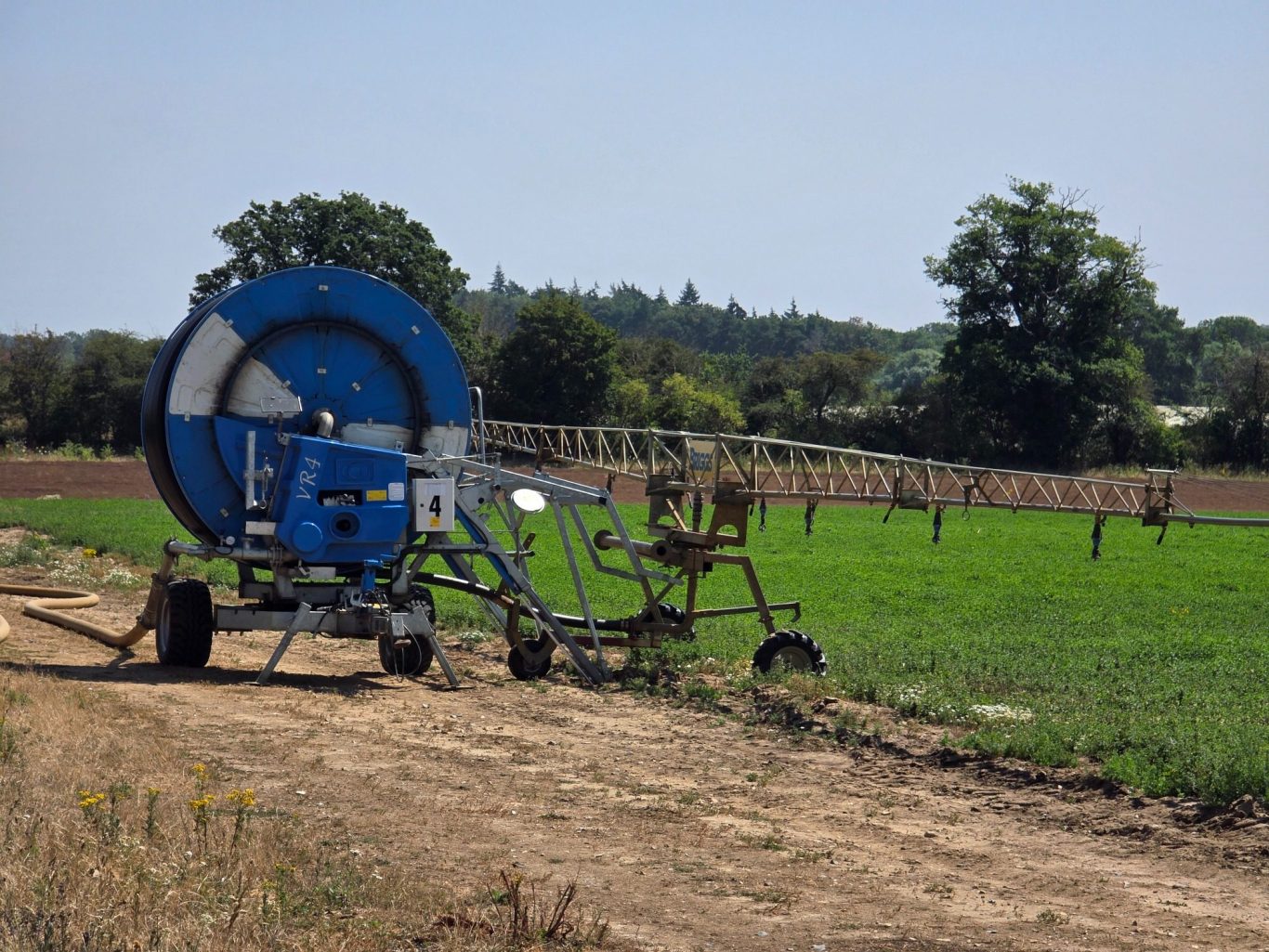
S57 spray irrigation restrictions are affecting several East Anglian catchments
4/8/2026
As England and Wales record their driest July on record farmers and growers are looking to make pivotal decisions on how much water they should leave to help lift crops later next month.
With seven areas recently announced to be in drought, those abstractors lucky enough to have water still left in their reservoirs must balance the irrigation needs of crops now set against water to help harvest them if the dry weather continues. The meteorological crystal ball is being watched closely.
Farmers who abstract water from rivers and streams are also facing the prospect of S57 spray irrigation restrictions in parts of East Anglia. The Environment Agency sent letters to affected abstractors late last week announcing voluntary restrictions and warning that these could become formal should the dry and hot conditions persist over the next few weeks.
The Met Office’s 3-month outlook from August to October already states that the chance of a warm 3-month period is higher than normal. This brings an increased risk of heatwaves and heat-related impacts, especially during the first half of the period. There is also an increase in the chance of a dry 3-month period overall.
While many agriculture businesses continue to suffer from hands off flow conditions, pleading for the EA to show some flexibility to allow them access to water to irrigate dying plants, one water company is playing its ‘get out of jail card.’
Southern Water has already applied for a drought order on the River Test due to an exceptional shortage of rain which will allow them to still take water by reducing the hands-off flow condition on their abstraction licence. A public consultation on this application is underway.
The Environment Agency, Ofwat and Defra jointly wrote to Southern Water last November warning that: “customers are already facing greater risk of water use restrictions, drought permits, and drought orders than planned, particularly in the Western Area” because water resources “schemes remain abandoned or on revised timelines. These delays particularly impact the supply demand balance, especially in the Western Area, and raise concerns over resilience.”
The letter ordered that the company: “should take immediate action to address the issues” and promised that the regulators “will hold companies and their Boards to account.” The letter continued however: “This marks the sixth consecutive year that Southern Water has received a joint letter from the regulators.”
This situation will lead to even greater frustration amongst farmers and growers who have been refused similar flexibility for much smaller volumes of water as they have no legislative provision for drought orders and permits.
The NFU continues to step up its immediate demands to boost agriculture water security to ensure food security. The immediate actions it wants to see all focus around reservoirs - flexible abstraction licences to reflect changing climate to optimise storing water, streamlining the planning system and supporting investment. These are the same messages it gave following the 2018 drought.
Lack of government support on reservoirs is the same issue the agriculture sector is still grappling with fifty years after the 1976 drought. Continually kicking the agriculture water resources can down the road in the face of accelerated global warming will only lead to perpetual failure in breaking the drought hydro-illogical cycle.
Meanwhile, the EA is offering the chance to help them launch a new online service for businesses who need water – a water licensing availability survey. The service will help businesses find out how much water is available in their local area for licensing and allow them to explore alternative options for getting water.
The EA would like to test their designs with people to help them create the best service possible. If you would like to take part, please apply at: https://www.smartsurvey.co.uk/s/ea-water-b3/
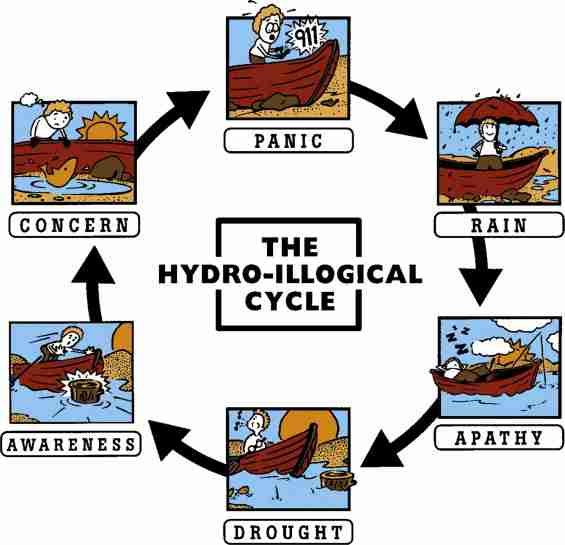
Can the Drought Hydro-Illogical Cycle be broken?
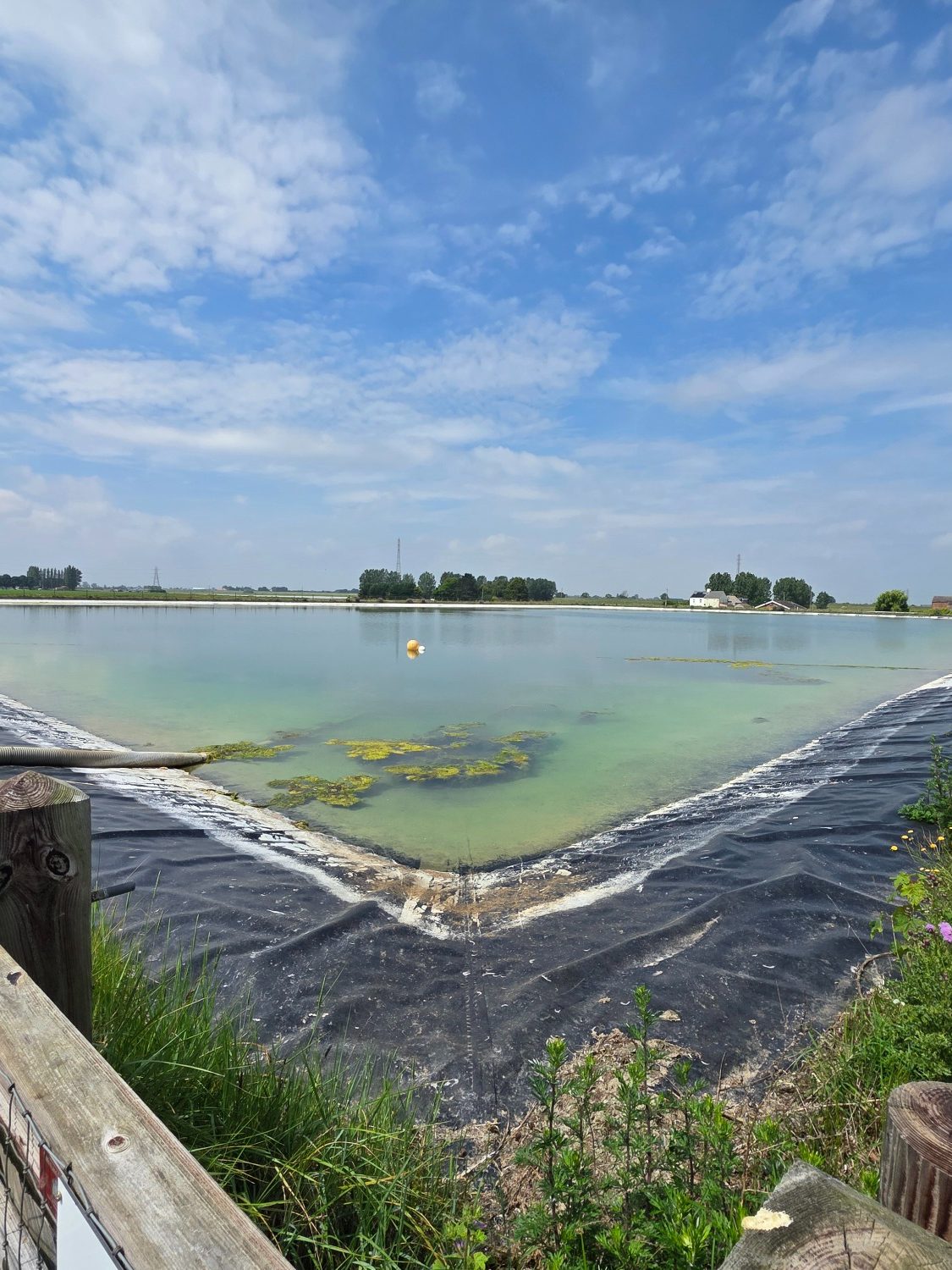
Many farm reservoirs have been drawn down significantly this summer

Many farmers and growers have been hit by hands off flow conditions
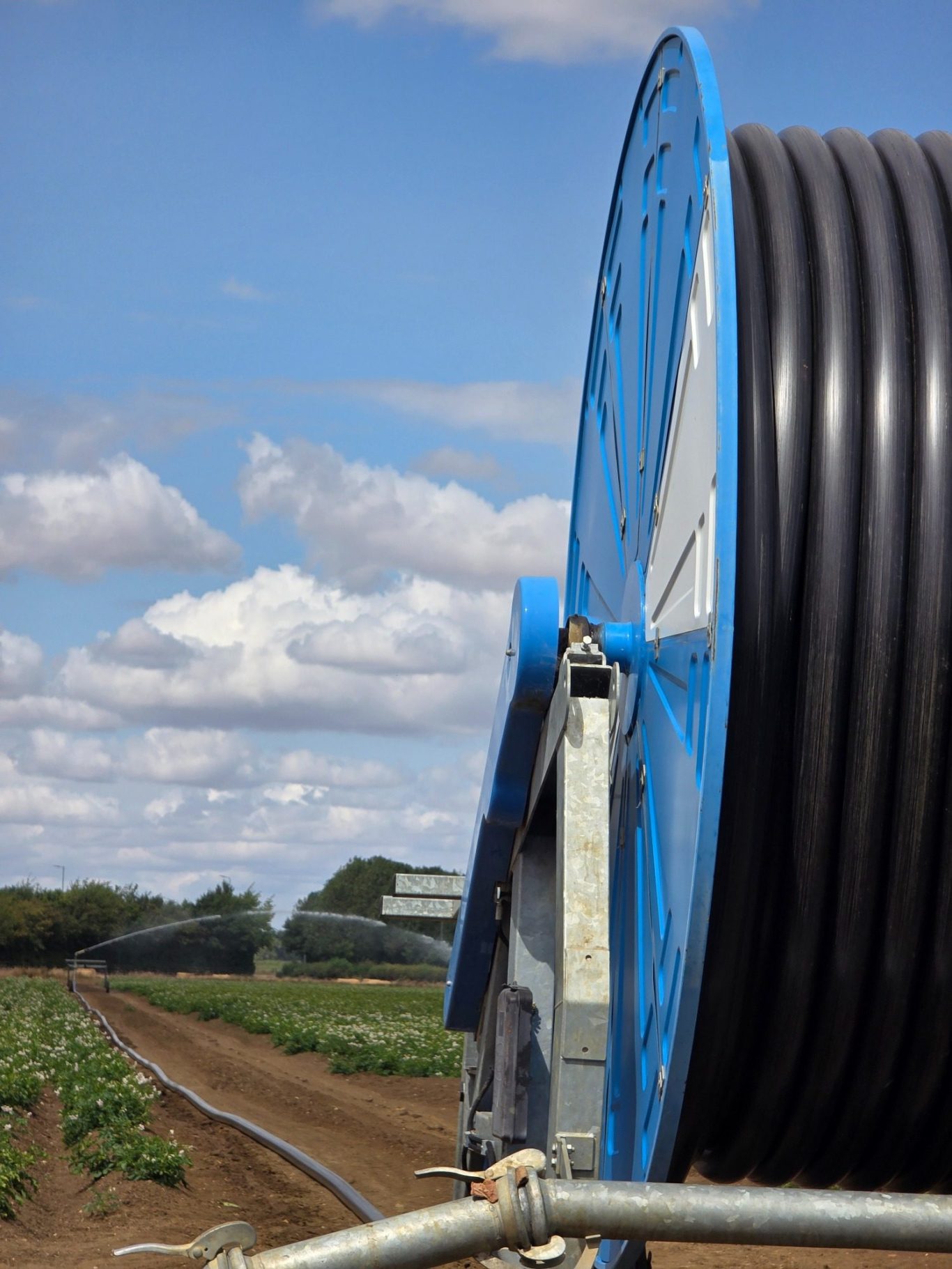
East Anglia is at risk of S57 spray irrigation restrictions
18/7/2026
As agriculture faces an increasing number of hands-off flow conditions across England limiting its access to water, new research shows the public think farmers should be “essentially off-limits for restrictions.”
Ipsos was commissioned by the Environment Agency to conduct research on public perceptions and attitudes towards temporary use bans (TUBs), also known as hosepipe bans, during droughts and periods of hot weather.
Questions were asked on the prioritisation of water use restrictions across different users. Respondents were of the view farmers were seen as essentially off-limits for any water restrictions. Participants strongly felt that farming must be protected to safeguard livelihoods and the food supply. There was a general view that restricting farmers would cause disproportionate harm. Farmers were seen as among the last who should face restrictions.
Respondents indicated a clear preference for prioritising food production during water shortages, identifying crop farmers and livestock farmers as the groups that should be restricted last.
The highest level of support was directed toward farmers irrigating crops by using water stored from winter. Conversely, respondents were less accepting of when businesses like golf courses or car washes continued to operate while households were restricted, a scenario deemed “Unfair” or “Very Unfair” by 53% of respondents.
Government investment in agricultural water storage received overwhelming support (77%). Farmers using water stored from winter to irrigate crops was seen as fair by 71%. Participants felt that farmers should be the first to be given exemptions as water is needed for the welfare of livestock and the provision of food, both of which are essential.
People in ban‑affected areas were more likely than those in non‑affected areas to view it as unfair when water companies asked customers to cut back before taking visible steps themselves especially when farmers are temporarily banned from taking water from the environment for spray irrigation. Moreover, water company customers were more favourable of a scenario where households are under a hosepipe ban while farmers irrigate crops using water stored from winter.
Respondents indicated a clear preference for prioritising food production during water shortages, identifying crop farmers and livestock farmers as the groups that should be restricted last.
Respondents were asked about their support for long-term investments aimed at reducing the necessity for TUBs in the future. Improvements in water recycling and reuse systems received the highest support closely followed by accelerated leak reduction by water companies and more investment in water storage and reservoirs with similar support.
Moderate support was observed for shared public reservoir storage for household water supply and other users including farmers and industry (63%).
Anglian Water implemented a hosepipe ban last week giving just a few hours notice to customers without any period for representation despite its latest drought plan out for consultation stating that: “An appropriate period will be allowed for representations to be received and considered before implementing a TUB. This period will be proportionate to the scale of the proposal, the number of customers affected, and the severity of the water resource situation, but will always be at least three days. The longest period of time will always be provided where possible..”
“The period of representation will be clearly detailed in our notice and will ensure a balance between the urgency of the need for demand restrictions with the anticipated public interest of the restriction.
Responding on LinkedIn Anglian Water said: “Within the Water Industry Act, there is no requirement for water companies to provide notice or a representation period when implementing a Temporary Use Ban. In this instance, shortening this period to 24 hours was the right decision for the environment and water supplies, given the exceptional and unprecedented conditions we are facing.
“Our Drought Plan 2027 is yet to be finalised. We aim to allow an appropriate period for representations before implementing a TUB, but this period will be proportionate to the severity of the water resource situation.”
The warning signs of the need for a TUB however, have been clear for many weeks. Water companies had been picking up excessive demand over the spring and earlier in the summer. The Met Office predicted at the start of June that the chance of a hot summer was higher than normal with an increased risk of heat waves and heat related impacts.
This followed the warmest spring on record for England and Wales. (Indeed, the last three warmest springs on records have occurred in the last three years). So, there was plenty of time for water companies to roll out intensive water efficiency media campaigns to customers and appeal for restraint.
Mike Kendon, the Met Office lead author of the latest edition of the State of the UK Climate report said this week: “What we used to think of as extreme, we increasingly consider as normal.”
Mike added: “Every year is adding to the body of evidence showing climate change in the UK. We are right now living in a time of historic and unprecedented change and in terms of temperature, on annual, seasonal, monthly and daily timescales, this evidence shows the climate of the 20th Century has now gone.”
Can Scotland provide a better way to manage water restrictions? The last hosepipe ban in Scotland was in 1995.
Scottish Water can propose to Scottish Ministers that they make a water shortage order. A water shortage order may permit Scottish Water to carry out various actions including imposing water saving measures on organisations or individuals if deemed necessary, including hosepipe bans.
To begin the process, Scottish Water must publish a public notice of a proposal, after which, there is a period of 14 days when representations can be made about the proposal. Scottish Ministers are then required to consider any representations and advice received from SEPA before making their decision to make an order. If Scottish Ministers decide to go ahead, the order comes into effect three days after notice of the order has been published.
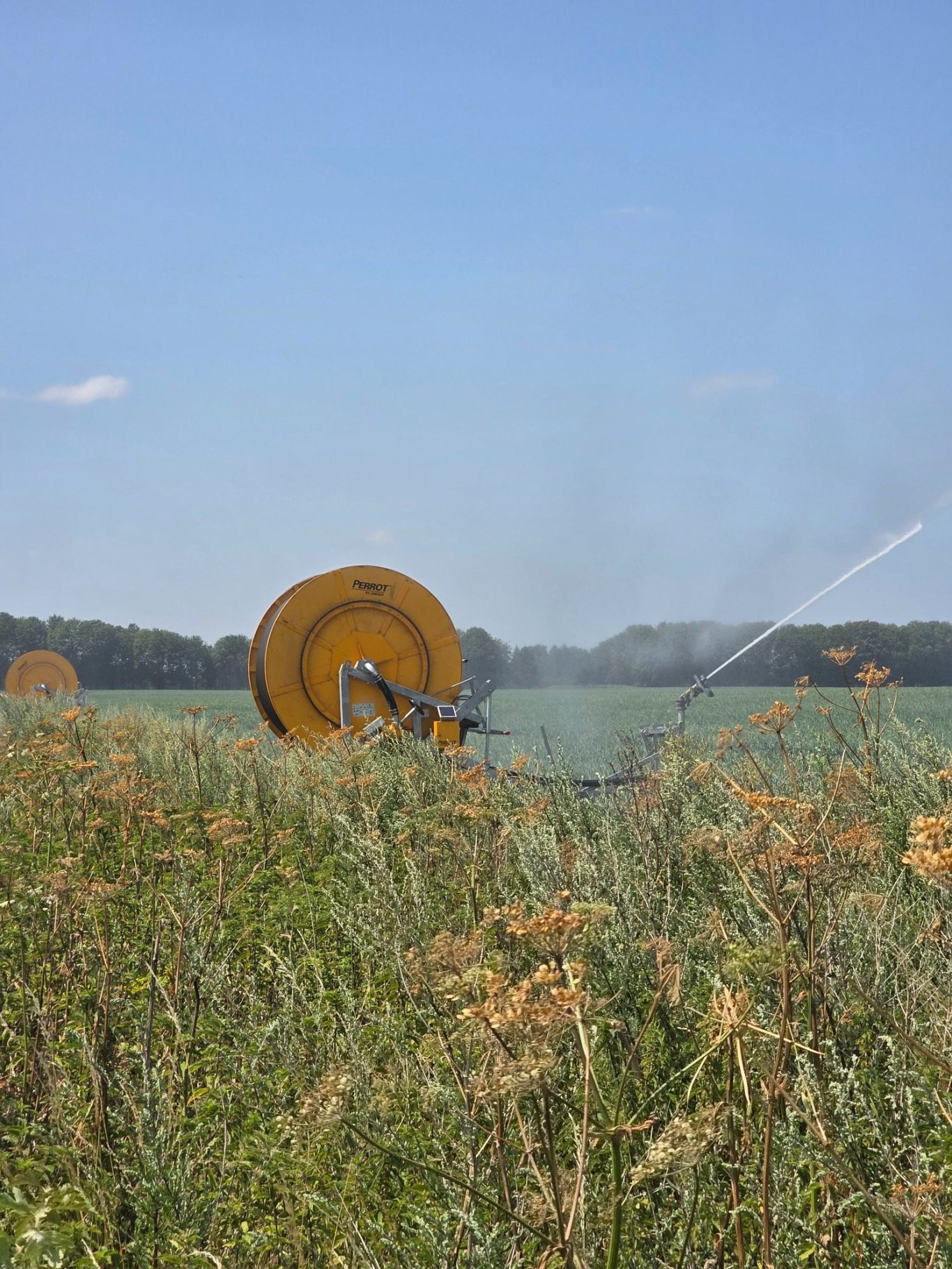
Irrigation rates are still high as this photo of onions being watered near Thetford this week shows
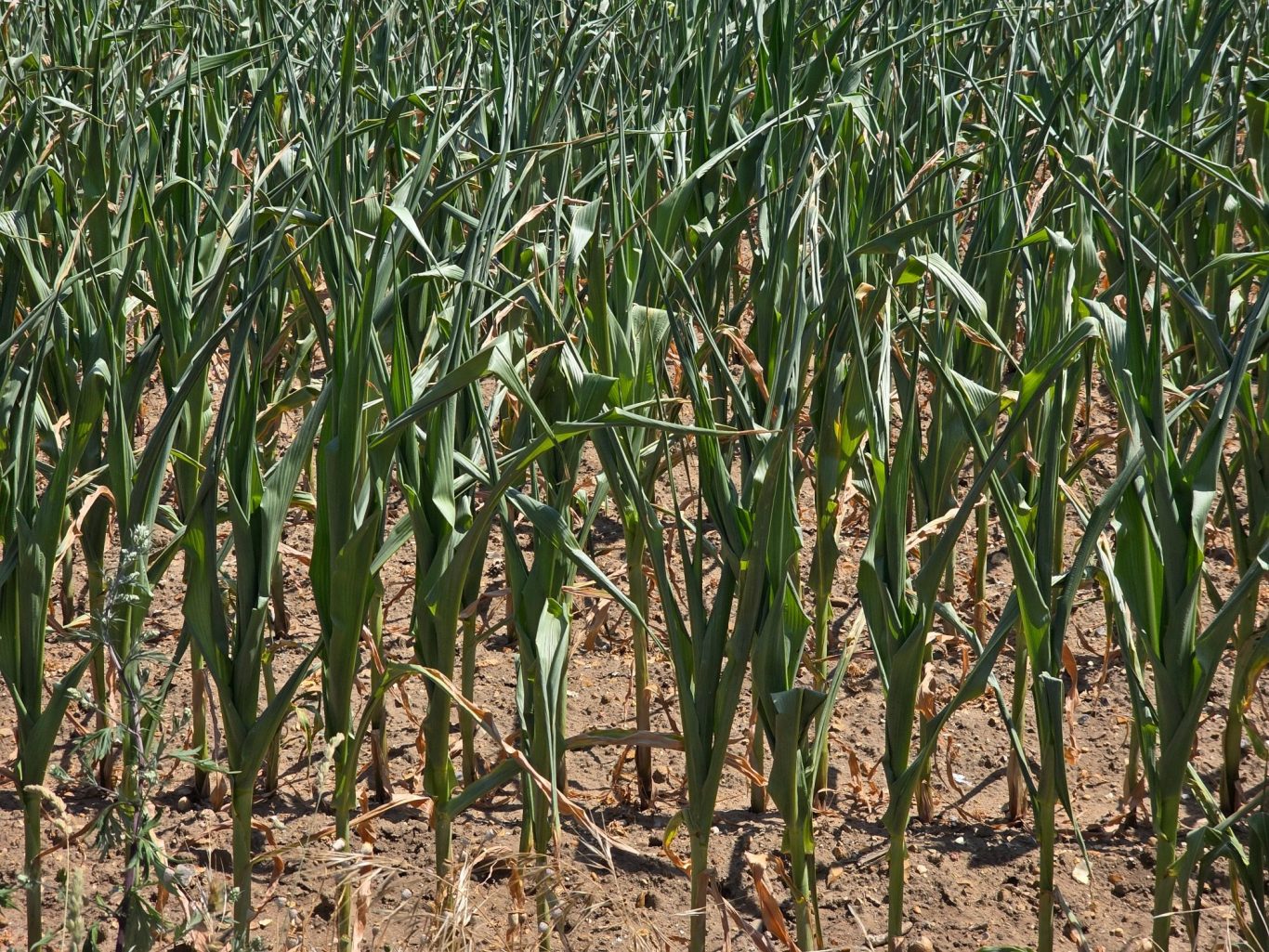
Maize suffering from dry soils near Thetford
12/7/2026
Despite a growing number of hosepipe bans (temporary use bans) being implemented by water companies to reduce huge demand from customers taking water from rivers and aquifers farmers are facing yet another season of abstraction restrictions.
Within 24 hours this week, Cambridge Water, Affinity Water and Anglian Water announced hosepipe bans on top of those already implemented by South East Water and Southern Water. The management of the heat waves appears to have spiralled out of control. This follows a third heatwave this summer after yet another hot and dry spring.
Hosepipe bans are nothing new and were seen during the infamous drought of 1976. However, what has changed since then is a more extreme climate, increasing population and an array of water guzzling gizmos including pressure waters; and gigantic paddling pools which can use the equivalent of fifty people’s water demand per day to fill, dependent on size.
Geoff Darch, Anglian Water's Head of Strategic Asset Planning said on Friday: “This is the third heat wave we've had in a row this summer and it's the cumulative nature of that, the impact of that on our assets, on the water that we have in the environment. But critically also it's the level of demand we're seeing. Just yesterday we saw the third highest ever day of demand within our network.”
The warning signs however, have been clear for many weeks. Water companies had been picking up excessive demand over the spring and earlier in the summer. The Met Office predicted at the start of June that the chance of a hot summer was higher than normal with an increased risk of heat waves and heat related impacts.
This followed the warmest spring on record for England and Wales. (Indeed, the last three warmest springs on records have occurred in the last three years). So, there was plenty of time for water companies to roll out intensive water efficiency media campaigns to customers and appeal for restraint.
Ofwat admittedly did finally publicly launch its water efficiency campaign recently to a luke warm reception.
Anglian water in its latest draft drought plan out for consultation says: “We would allow a period of consultation where representations can be made. An appropriate period will be allowed for representations to be received and considered before implementing a TUB. This period will be proportionate to the scale of the proposal, the number of customers affected, and the severity of the water resource situation, but will always be at least three days. The longest period of time will always be provided where possible.”
This has not happened as the company has clearly left it to the last minute to make the decision to try and head off increased peak demand generated from the start of the school holidays.
The threat of more hosepipe bans is increasing with Essex and Suffolk Water warning that they could impose one if needed.
Meanwhile farmers in East Anglia have been suffering in part from Essex and Suffolk Water’s unconstrained customer demand as much needed irrigation water is exported to meet the company’s water needs. In a drought year up to a third of the water abstracted from the Essex rivers to support its Hanningfield and Abberton reservoirs is supported by the Ely Ouse to Essex Transfer Scheme. This scheme is owned and operated by the Environment Agency and transfers water, when control rules are met, via pipelines and pumping stations from Denver in Norfolk to the headwaters of the River Stour and the River Blackwater.
Despite the best efforts of the South Level Water Abstractor Group through weekly liaison meetings with the Environment Agency farmers in part of the Cambridgeshire fens are facing being unable to abstract water for irrigation. The hands-off flow summer abstraction conditions related to the Denver sluice on the Ely Ouse are expected to have kicked in over this weekend. The Environment Agency has reported that there are currently 729 hands off flow restrictions in force on abstraction licences across England.
Lindsay Hargreaves, Chair of the Lark Abstractor Group, said: “It reinforces the view, especially in agriculture in the East, that we are effectively in permanent drought. We are in a permanent state of water scarcity, one way or another. Because if it's not actually scarce at the moment, it's going to be soon.”
Lindsay appealed yet again for the need for reservoirs: “We can tinker at the edges on terms of efficiency of abstraction and near real-time abstraction and that will make a difference, but it won't be transformative. What will be transformative is storage.”
Meanwhile, in Suffolk the local water abstractor group is concerned that formal S57 spray irrigation restrictions could soon hit farmers. Abstraction licences in this part of East Anglia typically don’t have built-in hands-off flow conditions to constrain them, so the EA has to revert to formal restrictions.
Although the current weather is forecast to break down later this week, temperatures are expected to remain above normal into August keeping water demand high.
In Scotland the River Lossie is now at significant water scarcity as the east bears the brunt of prolonged dry conditions and exceptionally low river flows. Temporary restrictions have now been issued on some licences to abstract water from the environment, to help protect river flows and the wildlife that depend on them.
The Growing Voice presented on the Regulatory Aspects of irrigation at Water Management for Modern Farming Wroot Water Farm Open Day event on Wednesday. If you'd like a copy of my presentation just contact me. There were several fascinating presentations including from Andrew Cottrell at the Met office on how changing climate will impact on agriculture. Anthony Hopkins Chair of the UKIA and MD from Wroot Water also led a tour of the Joseph Camm Farm to demonstrate different irrigation techniques ranging from drip to spray.
Join Water Resources East (WRE) on 20th July for a webinar introducing a new £1.3 million funding opportunity for agricultural and horticultural businesses in Cambridgeshire. The scheme aims to improve water efficiency, increase farm resilience and encourage innovative on-farm water management solutions.

Anglian Water van at a car wash in Peterborough despite the temporary use ban in operation. The company responded "Clearly this isn't the time for shiny vans"
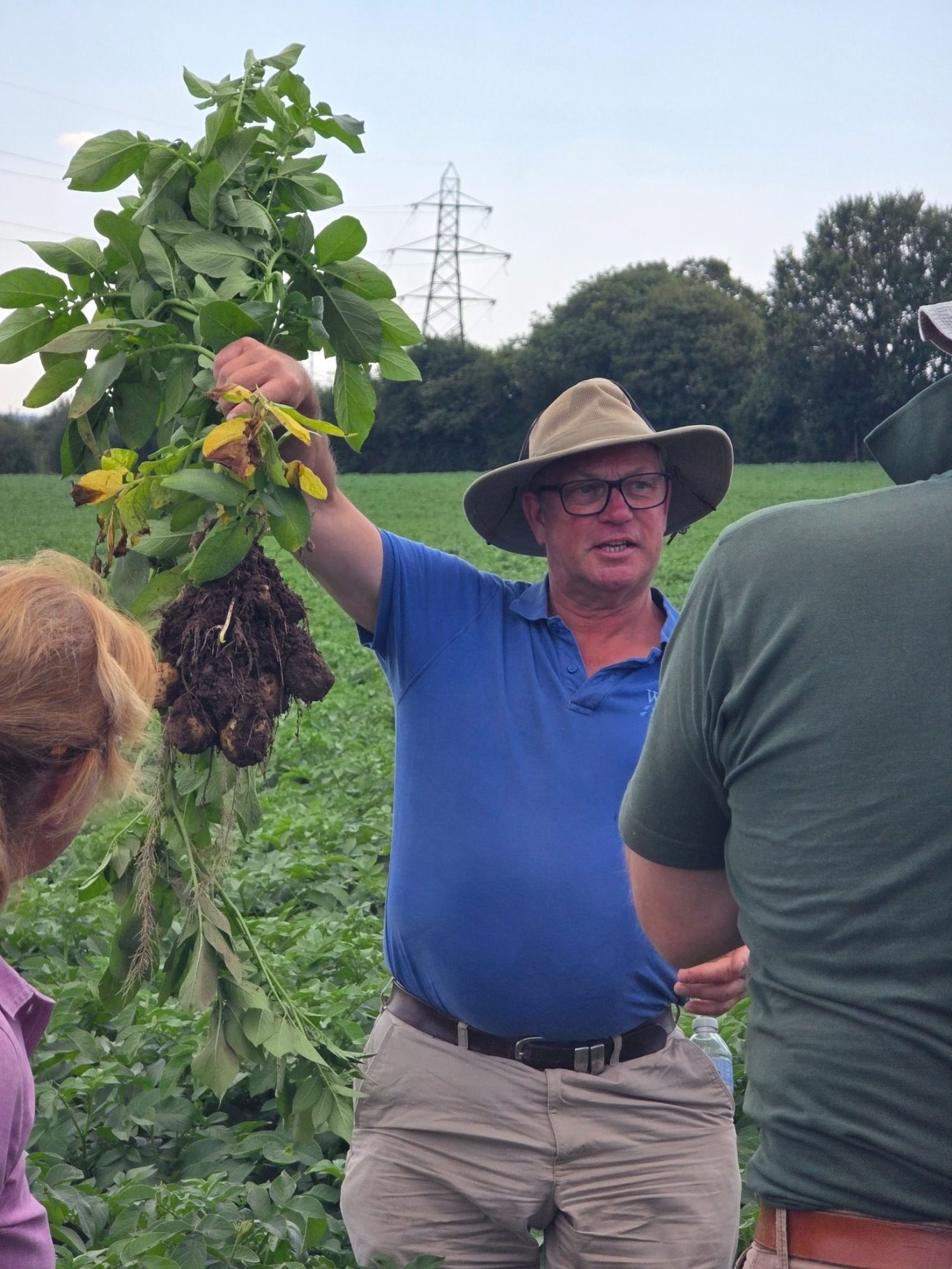
Anthony Hopkins from UKIA and Wroot Water demonstrating the benefits of drip irrigation on potato tubers
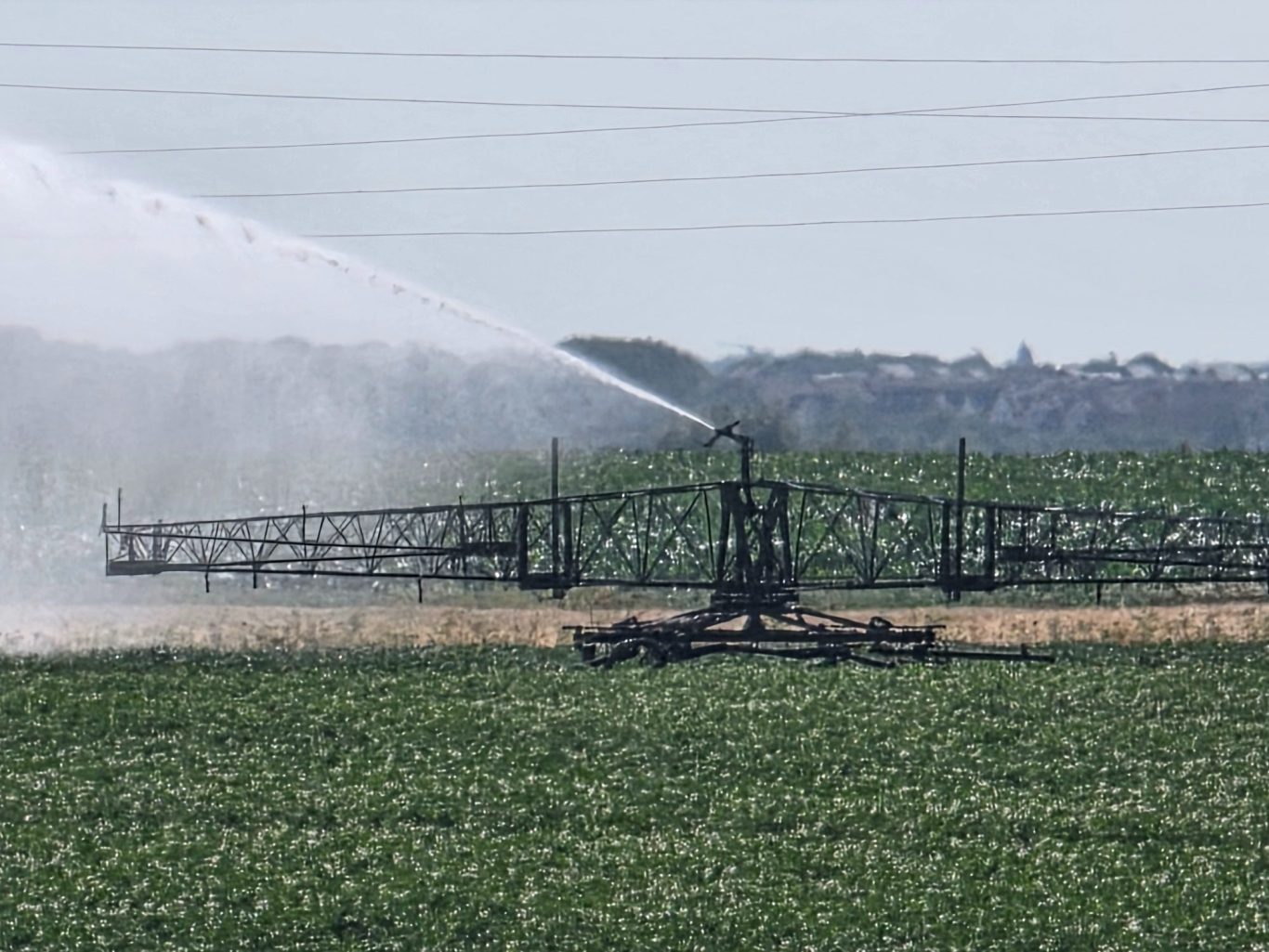
Boom irrigation of potatoes in Cambridgeshire
Water Management for Modern Farming Wroot Water Farm Open Day event on 8th July
23/6/2026
Last week we were very lucky to be part of the UKIA visit to Jack Buck Farms near Spalding – the famous home of ‘The Ugly One’ Celeriac. Managing director Julian Perowne and assistant manager Josh Adams provided some fascinating insights into crop production where water management is at the core of their 2,300 acre business.
Julian explained: “In 2011, we started looking at irrigation for crop security. This initially came in the form of seepage pits (excavated holes that intercept the water table). It works by taking fresh water off the top of the saline water that we've got deep down here and letting it recharge naturally and then taking it again.
“We dug some holes around the farm, monitored them in the first winter and then in the second winter we had sufficient confidence that we had fresh water, so we dug a bigger one. And we then got an abstraction licence for this one on the back of the Environment Agency's help at Lincoln.”
Pointing to a large pond, one of the seepage pits, Julian continued: “We basically abstract the top couple of meters of fresh water off the top of the water table. You don't go too deep because you pull up the salty water, let it rest for a week and repeat filling a small winter reservoir. We had an all-year licence and we could push it in the winter and pump every three or four days.”
Despite subsequently having constructed three winter reservoirs totalling 108,000 m3 Julian is looking to build additional water storage. He commented: “We just don’t have the capacity to get around it all. We don't have the volume of water. We have to just pick our battles a bit and then prioritise some crops. I mean, last year we emptied everything. We tried our best, but we didn't have enough.”
Julian’s experience of the Water Management Grant has been mixed: “We did get a grant for our third reservoir and the underground mains which was helpful. Our timing on the first two reservoirs seemed to be always out of step with available funding at the time!”
Water management on the farm is as much about quality as quantity as Julian highlighted: “The drains respond pretty quickly in the winter after that really good rain in December and January, when you get 30-40 mm over 36 hours. We've found that there's a sweet spot, that first really wet winter's day when the fields have got to field capacity, there's some phenomenal water quality (low salinity) water to be had. Drains are at a level that we can operate within and fill these reservoirs pretty quickly now, so we can fill our big reservoir in 20 days and within the licence limits. We've all learned that as the winter goes on, although it may even get wetter, but for some reason, the quality of the water in the drains deteriorates.”
Salinity is carefully monitored as Julian explained: “We've been fairly reliably filling reservoirs now at 1200 parts per million year in, year out. If it's a really dry winter, we might push it up to 1800. So, we'll only irrigate for onions, potatoes, celeriac, fennel. And a field may not be irrigated for another two or three years as you grow wheat, then bulbs or peas or cauliflower.
“We’re not putting huge amounts of water on as, we were very worried about soil damage, putting salt onto the field, causing a degradation of soil structure. Last year we put four applications of 20mm on the field - that's as much as we'll do.”
The business is continually learning about the best ways to irrigate and adapt to drought, especially from 2025’s experiences. Julian admitted: “With potatoes, we definitely saw a year of irrigation benefit last year. But then we had some other un-irrigated potatoes, which did pretty well. Onions suffered last year without irrigation on these silty soils. We've learned even more that perhaps taking an inch or less or two inches from those potato fields onto the onions would have paid dividends. Just that last three -four weeks of heat stopped everything.”
The need to irrigate for potato scab control has also effectively been eliminated through growing resistant varieties. Julian continued: “So, we're growing quite resilient varieties such as Lanorma, Tyson, Georgina and Skywalker. Scab isn't really much of a worry anymore compared to Maris Piper which we haven’t grown for the last three years. ”
Despite being a Mediterranean plant, fennel is surprisingly far from being drought resistant and needs intensive irrigation care. Driving to a field where it is being actively planted Julian commented: “Fennel is planted in 4 cm peat blocks and they just dry out so quickly when we had that 28-30 degrees. I mean, we did try some peat substitutes, but we can't get the blocks to hold together. The peat does, but the peat-free stuff doesn't contain the water.
“We plant from about 7 o'clock in the morning to about lunchtime. By the time we've come around with the irrigators, the plants are dying and we lost them. So that's how fickle the fennel plants can be. We have to get them irrigated. If it's not had rain and there's not a lot of moisture in the ground, we will have to irrigate them straight away.
“You have to grow it hard, with plenty of nutrition and plenty of water. You have to, if you establish it right, you're sort of almost there, but you just have to water it, to get it to bulk up. We're going to have to be straight out irrigating today afterwards, because It's hot.” As the plants become established high temperatures can also result in them bolting. An additional challenge with fennel, as it’s classified as a salad product, is ensuring that water quality (E. Coli) is managed effectively.
The fennel plugs are brought in from the specialist plant propagators Premier Plants Producers in Hull. Julian admitted: “The truth is that we want ‘hot glass.’ We've got to have 17 degrees in the first few weeks because fennel is a weak germinator. Premier have got the heat capacity with the biomass burners to get that temperature in February and not many glass houses can do it. But there's a real shortage of hot glass in this country because a lot of it got knocked down when the tomato industry declined[BH1] .”
So, how’s this season’s irrigation season going? Julian replied: “We've only really been watering in the fennel and we did have one bit on early celeriac when we planted it because it was a dust bowl, just to give it a boost. And then we've been fairly lucky with the rain we got last week, but all of our moisture sensor probes are showing adequate water at the moment, compared to this time last year.”
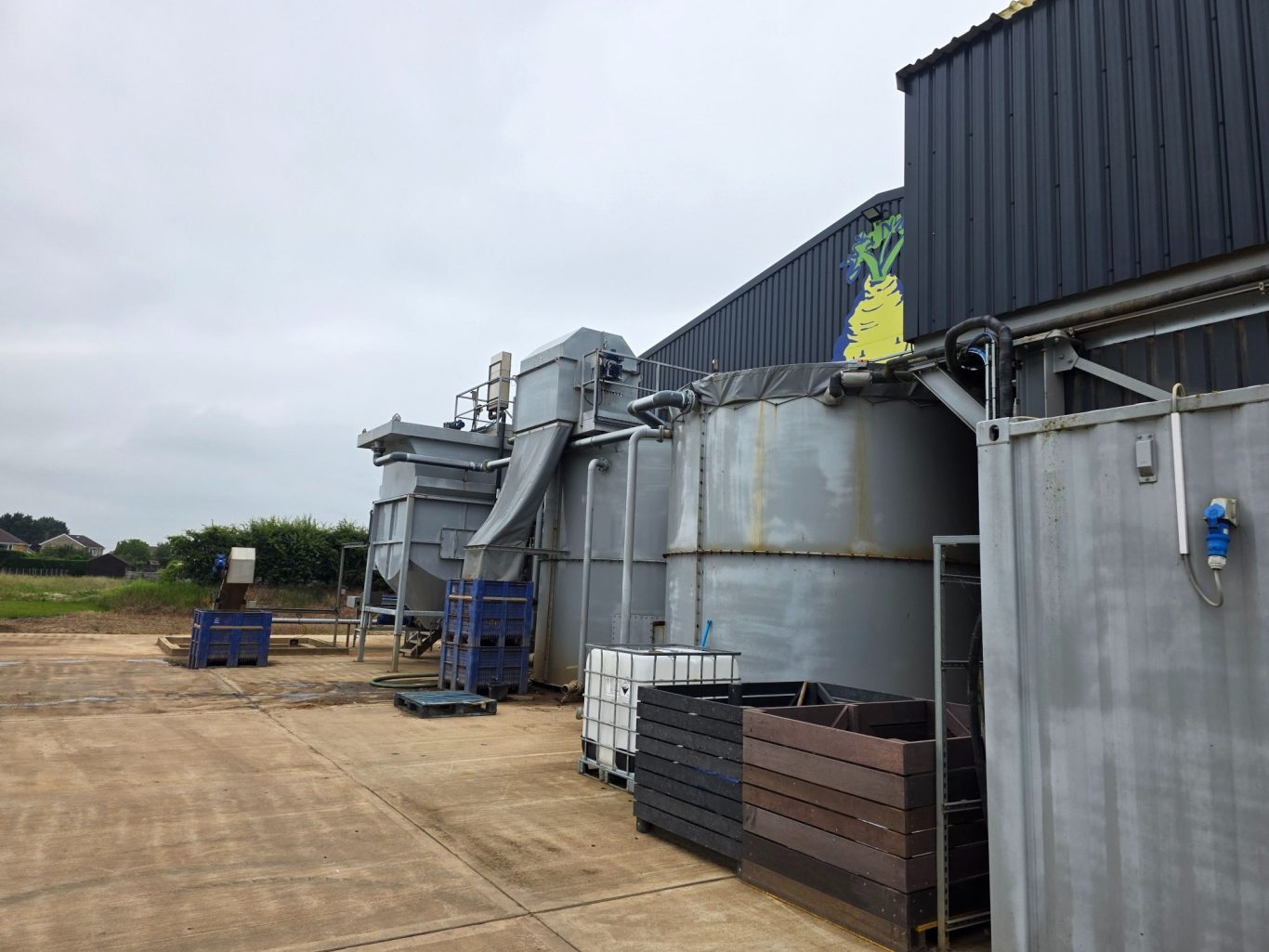
Back at the pack house, water is again still vital to operations. Water dependency continues in the form of cleaning the farm’s trademark harvested celeriac ready for market. Investment in water resilience is again in evidence as a £3.25m packhouse, washing facility and water treatment plant ensures that water efficiency is maximised. The celeriac is washed using recycled mains water (with a 5% allowance for operational losses – mainly taken up by the crop itself).
Julian explained: “We wash about 120 tonnes in a day. The thing is, we've got three cubes (of mains) an hour going in on an 8-hour day, you know, so just 24 cubes going into the 400m3 system.”
As we all went home with a piece of ‘The Ugly One’ celeriac the critical importance of water in its cultivation was left indelibly in our minds.
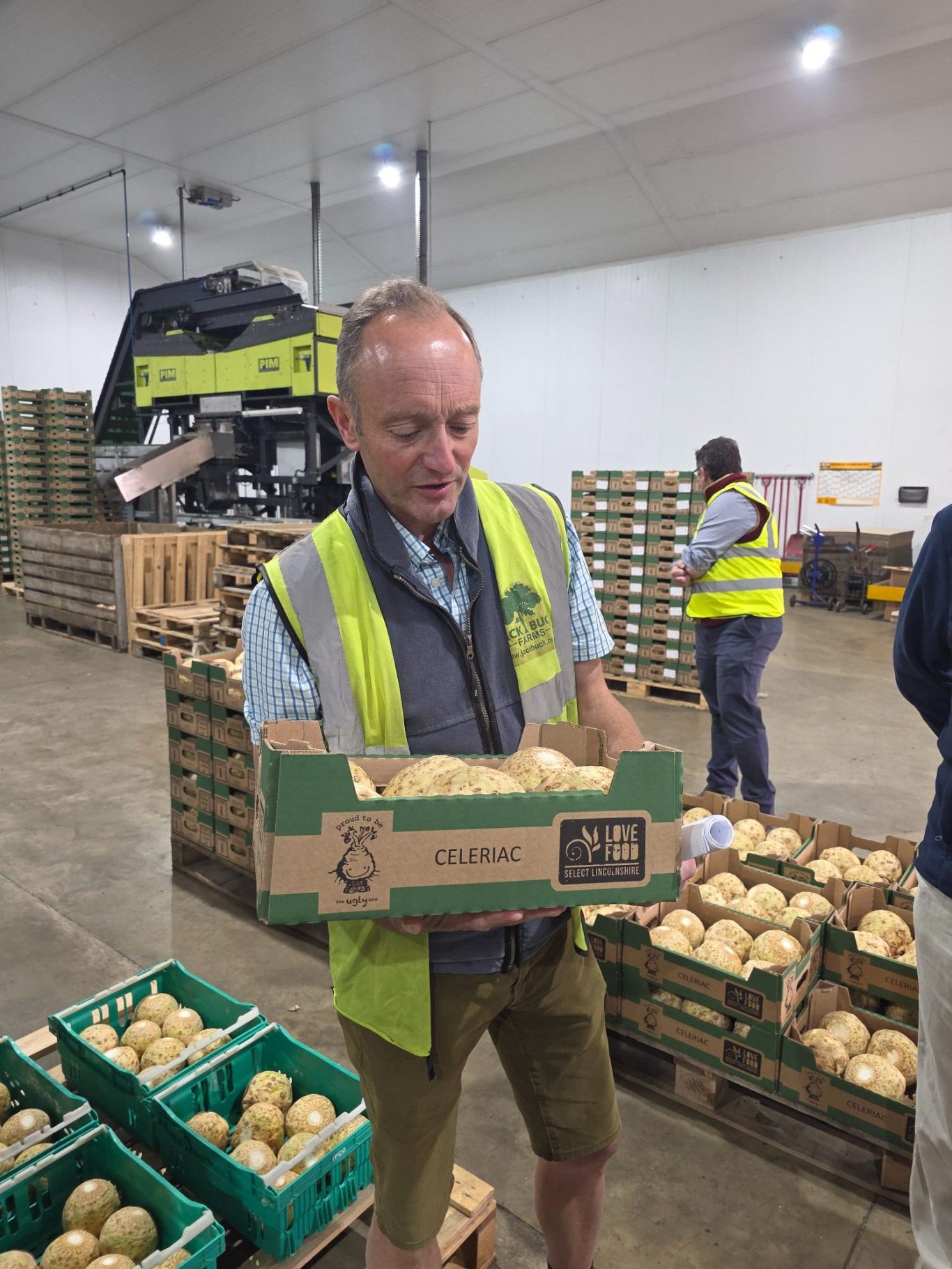
Managing director Julian Perowne with his famous ‘The Ugly One’ Celeriac in the Packing House
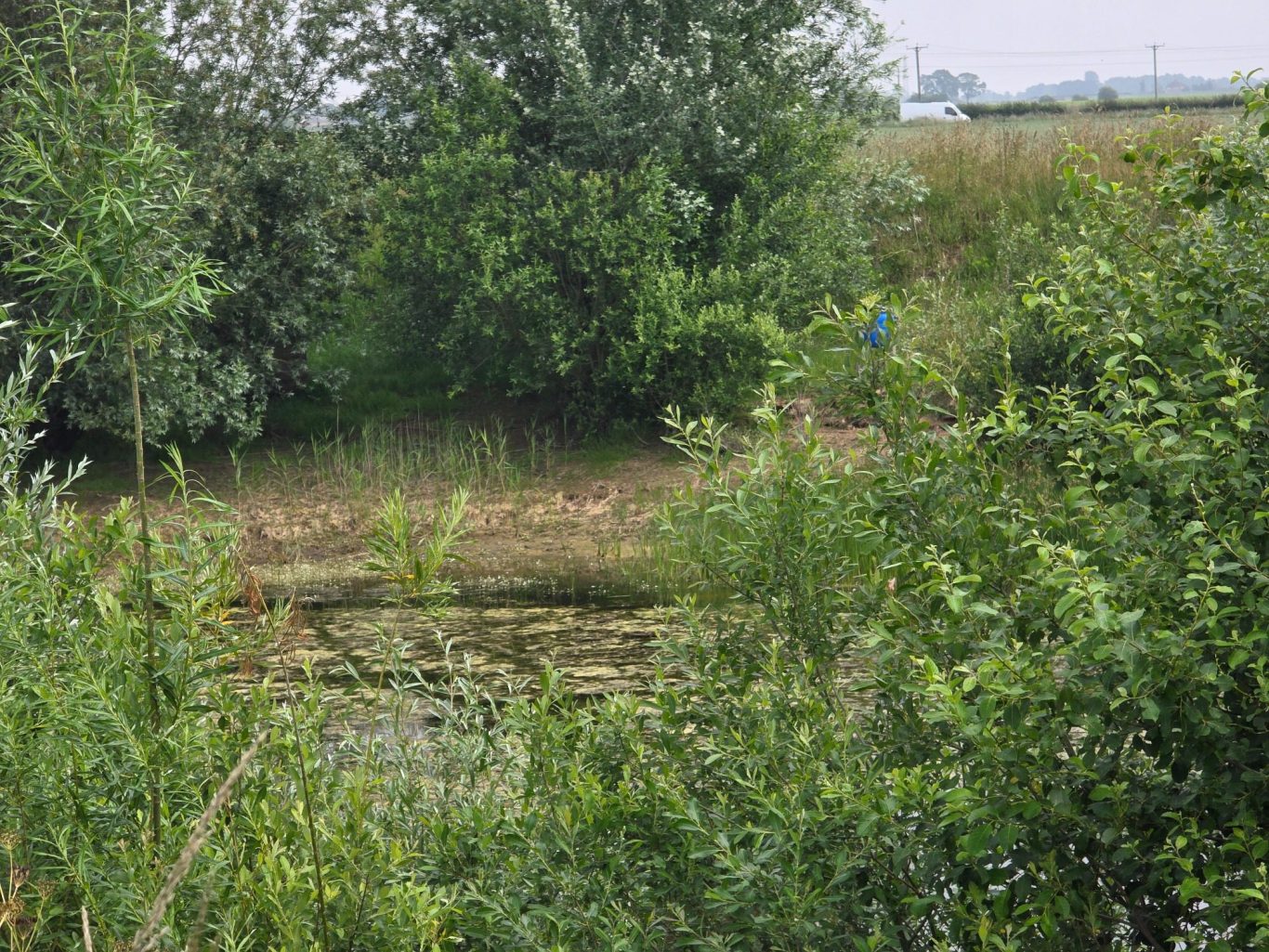
A seepage pit behind the trees - now abandoned for nature conservation
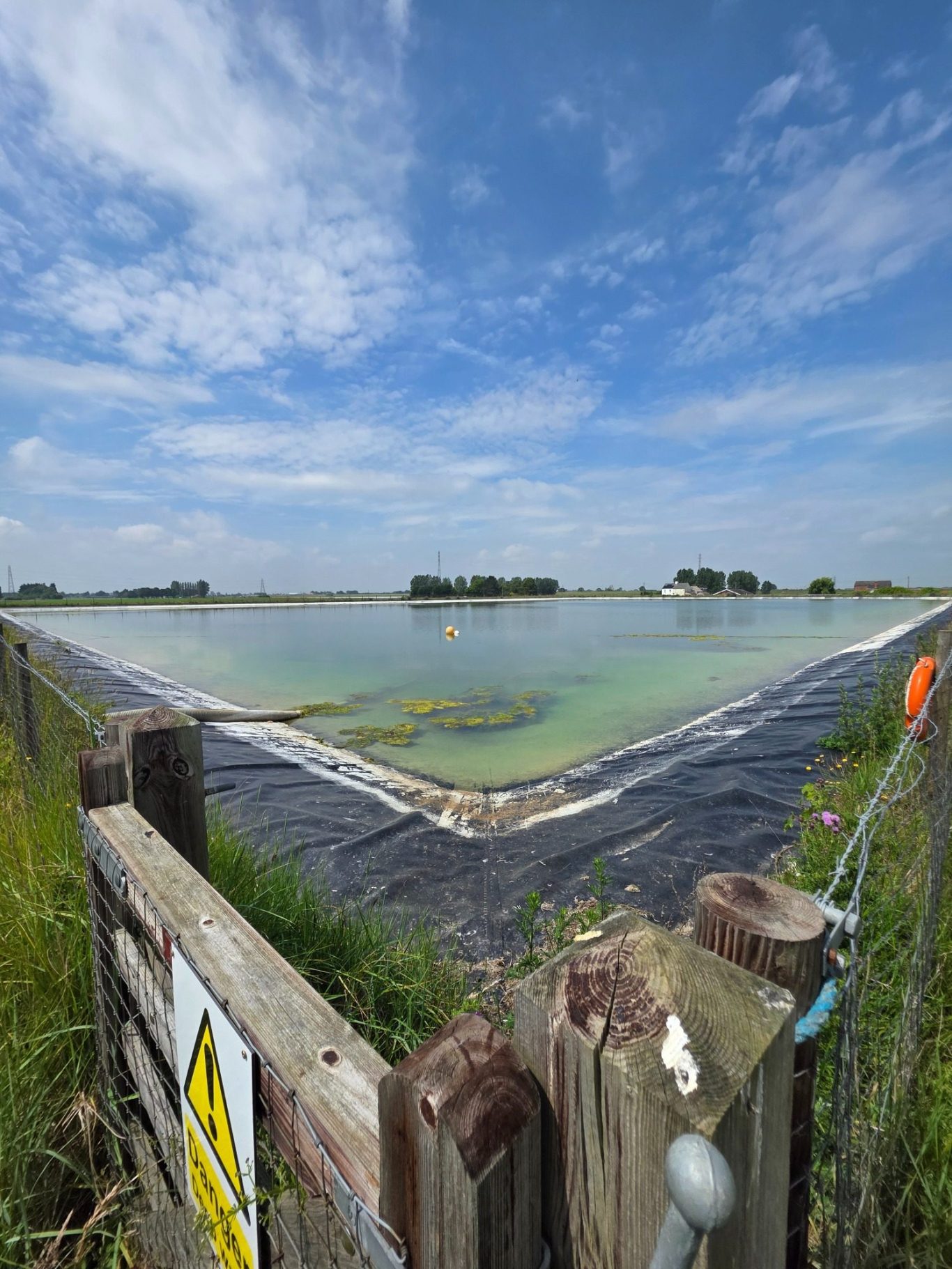
One of the three reservoirs at Jack Buck Farms (45,0000m3)
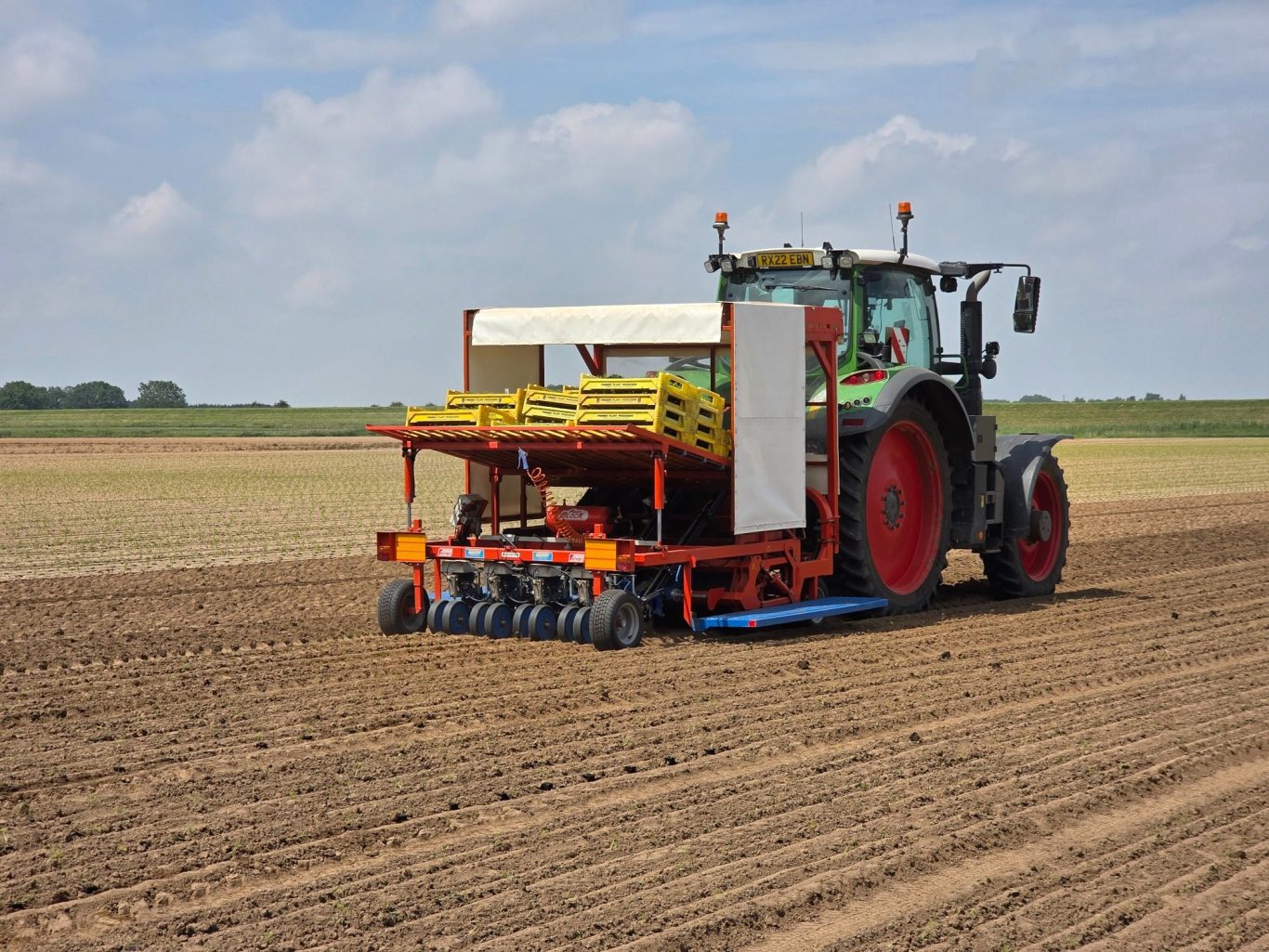
Planting out of young fennel plants
The £3.25m Packhouse, Washing Facility and Water Treatment Plant at Jack Buck Farms
15/6/2026
At the recent Open Farm Sunday event at Oldershaws of Moulton near Spalding in Lincolnshire water management was at the forefront of discussions.
Andy Chamberlain and colleagues from Sakata UK, a vegetable seed company, who breed new plant varieties and sell seeds to farmers spoke about the importance of irrigation in the area.
Andy said: “20 years ago in this part of the world, you know, everyone thought, well, we're on the really nice silt soils, it has a high-water table, normal summer rainfall, you don't need irrigation. But now these growers on these sorts of areas are also having to say, if we want continuity and quality, we need irrigation.”
Unfortunately, some farmers “haven't got the infrastructure, they haven't got reservoirs, they haven't got underground mains and all the equipment.” Investment decisions are difficult considering major economic head winds including rising fuel and fertiliser costs on top of taxation.
Andy continued: “For them now to think about that investment, which is massive, versus where they are in farming today, the returns, they probably also haven't got the appetite to do it. They're not earning enough to pay for it all. There's a few who are thinking longer term.”
One of those few is Oldershaws of Moulton who have built a 50,000 m3 reservoir to help meet their irrigation needs to water crops ranging from potatoes, carrots, onions and brassicas to pumpkins. With a dry spring early irrigation has been essential to control potato scab.
Despite having water infrastructure farms typically can’t irrigate their entire land as they are constrained by the amount of water they can abstract and don’t always have the expertise they require to explore alternative sources. This is where the Local Resource Option (LRO) screening studies can help, involving consultants identifying the top water resources options (such as reservoirs and rainwater harvesting) for farming groups to progress. A reminder that the deadline for applications is 5th July.
Sakata’s own irrigation needs are met from harvesting rainwater off their greenhouses and other buildings plus use of a reservoir. Andy said; “Irrigation is really important for us because we do a lot of drilled crops and because our research trials are very valuable.”
He added: “We've got more capture potential than storage capacity. So, one of our projects would be to increase the size of our storage, build a bigger reservoir”
Plant breeding is also part of the solution to help farmers become more water resilient. Andy explained: “Drought resistance is one of the aspects that the breeders are working on, and we've already got some varieties which are fairly tough and have good strong tolerance. We've seen them, become more important year on year. I'd say 10 years ago, we probably wouldn't have considered we needed varieties like that, but we do now.
“In fact, most of the growers can't manage without one particular broccoli variety, because it's so tolerant. For those who aren't blessed with a lot of irrigation, they'd struggle, without that variety Triton. Even two years ago when we had 40-degree heat, it was still growing.”
Water Resources East has provided an update on its ongoing Smart Agri-Abstraction Trial in the Cam catchment. Amongst the many benefits irrigation is being adjusted to help maintain river levels above the trial Hands-off Flow threshold, using real-time information through a trial dashboard,
The importance of access to water for irrigation and the critical need for agriculture reservoirs was highlighted by the NFU’s Water lead Mark Betson at last week’s National Debate on Resilience in the Water Sector. The newly created NFU water resources task and finish group will be focussed on ensuring that access to a secure water supply is front and centre across government.
While East Anglia looks set to be on target for at least overall average rainfall for June, volumes currently range from 66% of long-term average in North Norfolk to 114% in East Suffolk. With the opening couple of weeks of summer so far largely easing irrigation demand with cooler and wetter weather, the outlook until the end of June is for drier and settled weather initially in the south and east spreading across the country.
The Environment Agency is currently forecasting that by the end of September 2026, there remains the probability of below normal and notably low flows in parts of England, including in eastern counties. Similarly, groundwater particularly across the south, east and parts of the Midlands, is forecast to have an elevated probability of below normal and notably low levels.
In Scotland there are mixed conditions as some areas recover from water scarcity and one catchment reaches alert (Almond).
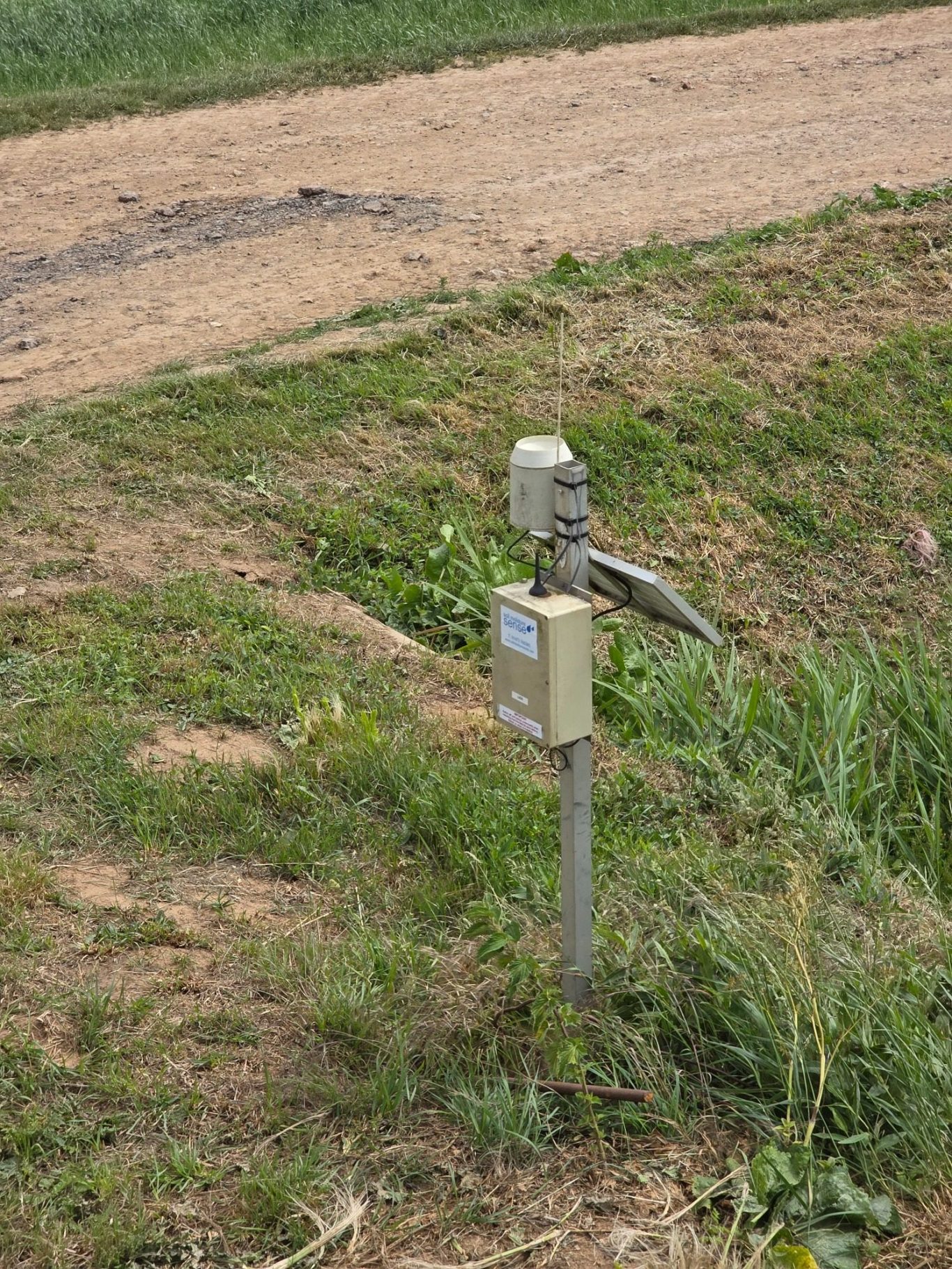
Soil moisture recording equipment on Oldershaws of Moulton farm near Spalding
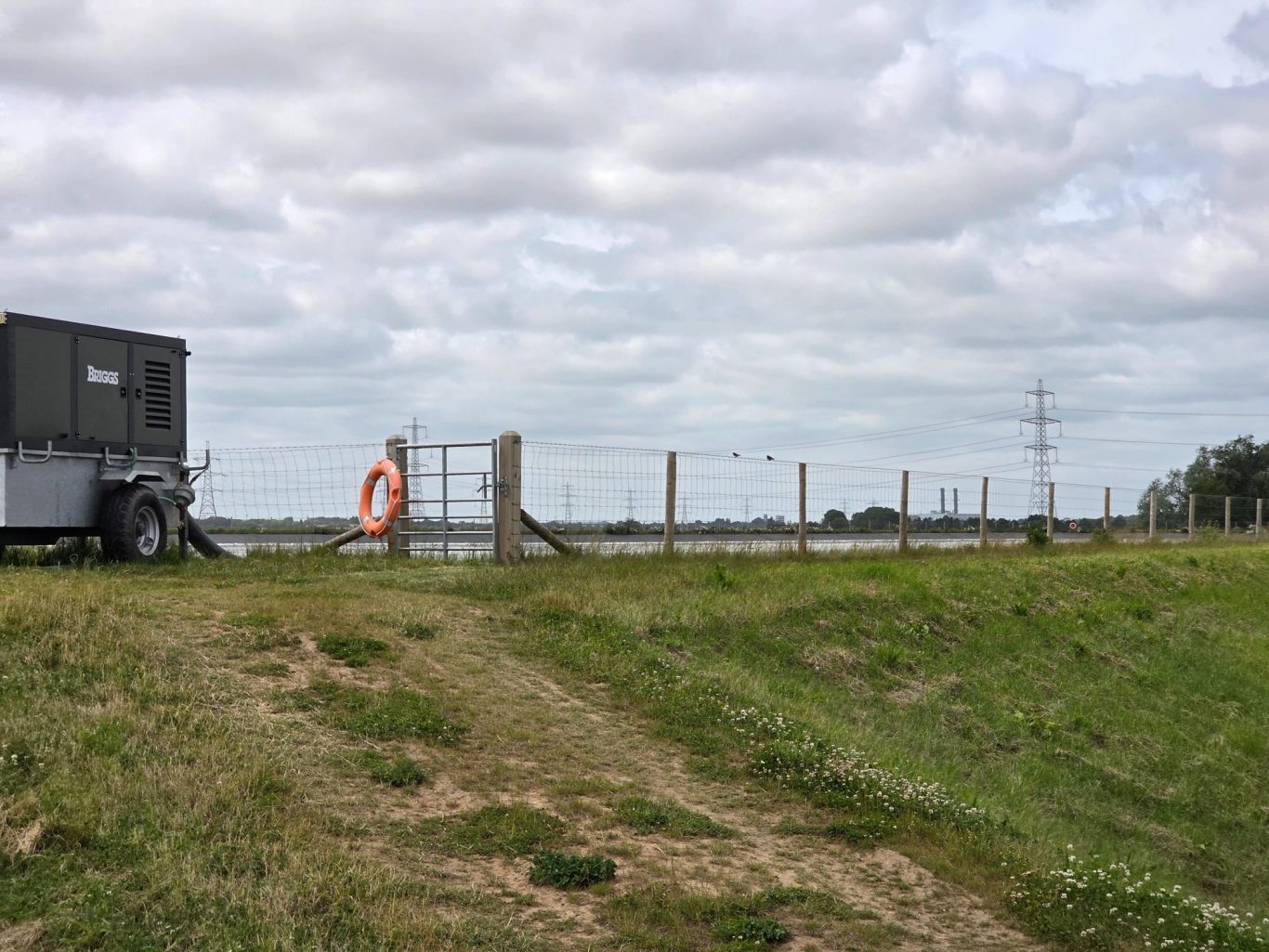
Reservoir on Oldershaws of Moulton farm near Spalding
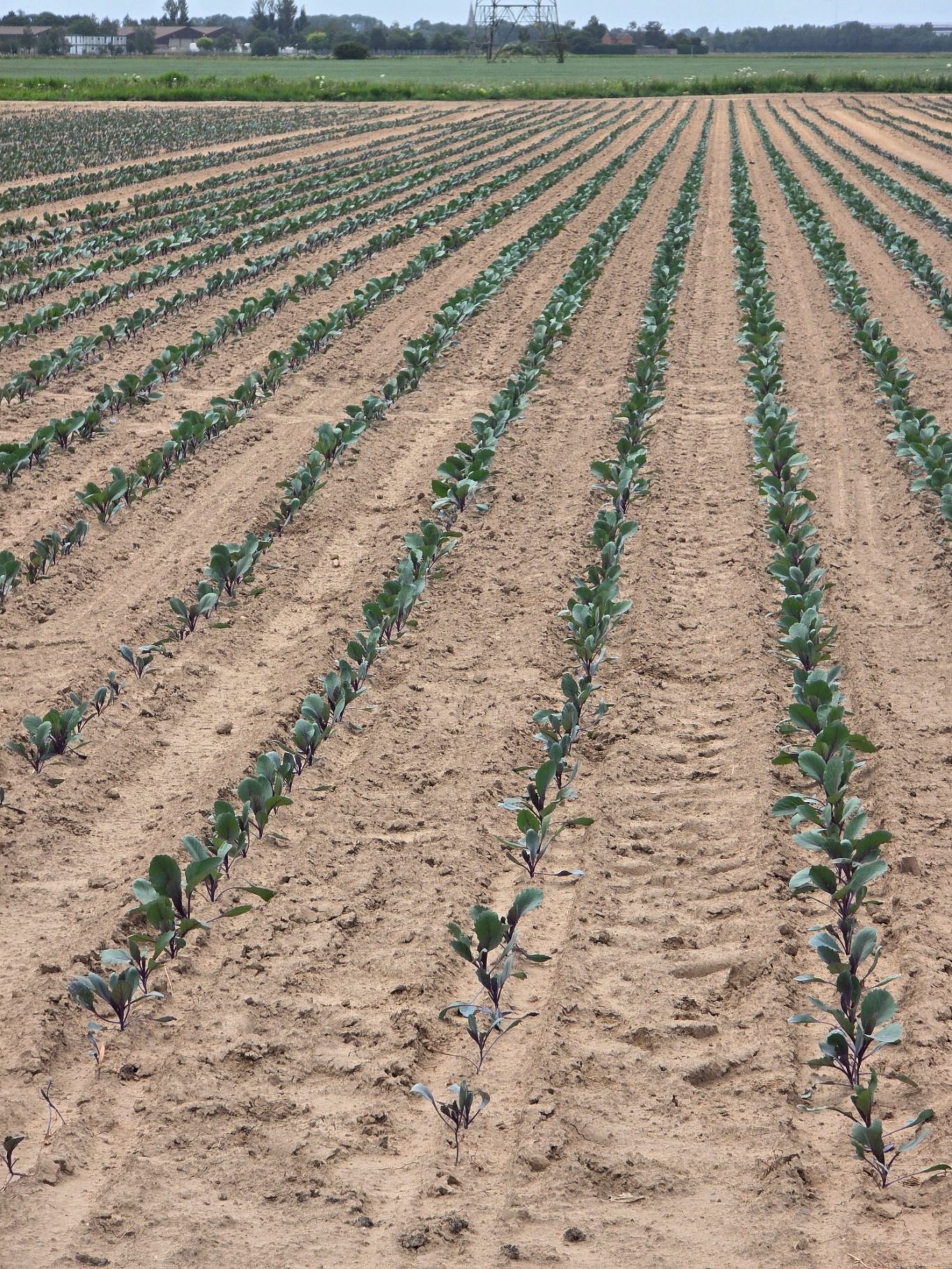
Brassica field on Oldershaws of Moulton farm near Spalding
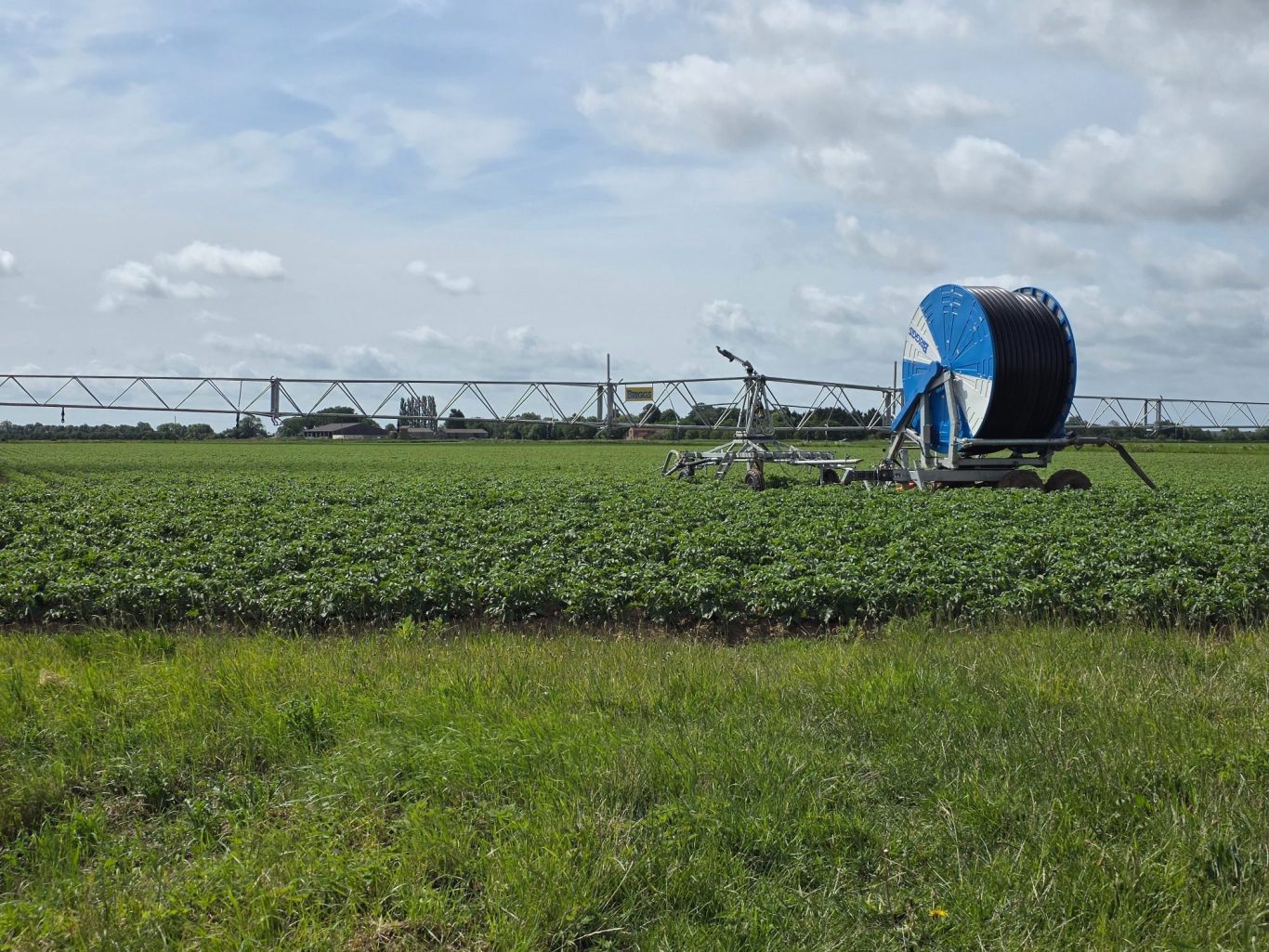
Boom irrigation equipment on Oldershaws of Moulton farm near Spalding
6/6/2026
After a dry spring, the start of summer has been unsettled despite the Met Office predicting that the chance of a hot summer is higher than normal with an increased risk of heat waves and heat related impacts.
The Met Office has reported on spring 2026 which was the warmest spring on record for England and Wales, and the third warmest for the UK, based on mean temperature. This follows last year’s spring which recorded the warmest and sunniest on UK record.
England recorded 65% of its average spring rainfall, with a pronounced north-south split: Northern England saw 90% of average rainfall, compared to just 50% in Southern England. Several counties in the southeast and east of England saw just over a third of their average seasonal rainfall, including Suffolk (33%), Kent (33%), Essex (34%) and Cambridgeshire (35%), City of London (36%). This comes on the back of 2025 when England experienced its driest spring in more than 100 years.
Helen Wakeham, Environment Agency Director of Water and Chair of the National Drought Group, said: “No parts of England are currently in drought, but the risk increases the longer it remains hot and dry. The recent heatwave has seen significant peaks in demand for water, while river flows have fallen due to the very dry spring, and reservoir levels are reducing.”
The NFU has updated its dry weather information and advice including a link to AHDB’s a guide for livestock farms with water supply problems that covers reviewing alternative sources of supply from mains such as rainwater harvesting.
The issue has come to the fore after recent water supply interruptions in Kent, part of South East Water’s supply area, following high demand linked to high temperatures. The company is still experiencing outages in parts of its network due to burst mains. Anglian Water has also experienced water supply issues in Northamptonshire due to the end of May hot weather.
Meanwhile in the arable sector there is concern about the state of crops, especially sugar beet and spring sown cereals. Farmers are keeping a sharp eye on the amount of water that they are drawing down in their reservoirs and how much they’re going to have left for the remaining irrigation season.
At this weekend’s South East Show the NFU says it "continues to highlight the urgent need for guaranteed access to water that farmers need to produce food for the nation.” Mark Betson the NFU’s National Water Resources Specialist added: “We're trying to make farmers aware of what the immediate, medium and longer-term water resources challenges are and the resilience that they need to build into their systems, underpinned by access to water.” Mark will be one of the keynote speakers at the National Debate on Resilience in the Water Sector webinar on the 10th June.
In East Anglia the prospect of voluntary abstraction restrictions in the South Level (Cambridgeshire fens) has been pushed back at least until the latter half of June, given recent rainfall. Despite the welcome rain, irrigation of crops such as potatoes and onions has largely continued in East Anglia.
A quick reminder that groups of farmers in England can now apply for Local Resource Option (LRO) screening studies. These studies involve consultants identifying the top water resources options (such as reservoirs and rainwater harvesting) for farming groups to progress. This year, applications are also welcomed from farm groups that include local non-agricultural businesses, where they could contribute to potential solutions. The deadline for applications is 5th July.
One of the frustrations that Water Abstractor Groups and other farming groups frequently give on their experience with the first two rounds of the LRO programme is that there isn’t necessarily the funding available to take their preferred water resources option forward to delivery. Despite the publication of economic reports such as The value of water for food production to the local and national economy highlighting the benefits of farm reservoirs the challenge from Defra is that there is a still a need to demonstrate a case for sufficient “bang for buck.”
Defra is currently convinced that the latest proposed rounds of the Sustainable Farming Incentive (SFI 26) represent better value for money by funding more projects than the number of reservoirs that would be built through another round of the Water Management Grant. However, the NFU continues to push for budget transparency on SFI26.
In Scotland despite recent rainfall leading to more areas being in recovery across the north of the country, SEPA reports that the east still has five catchments at alert status.
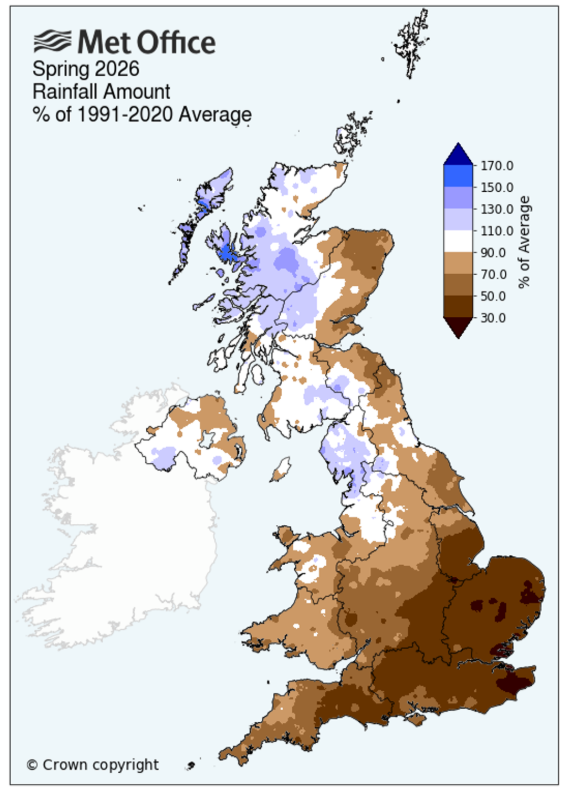
Met Office map showing several counties in the southeast and east of England had just over a third of their average spring rainfall, including Suffolk (33%), Kent (33%), Essex (34%) and Cambridgeshire (35%), City of London (36%).
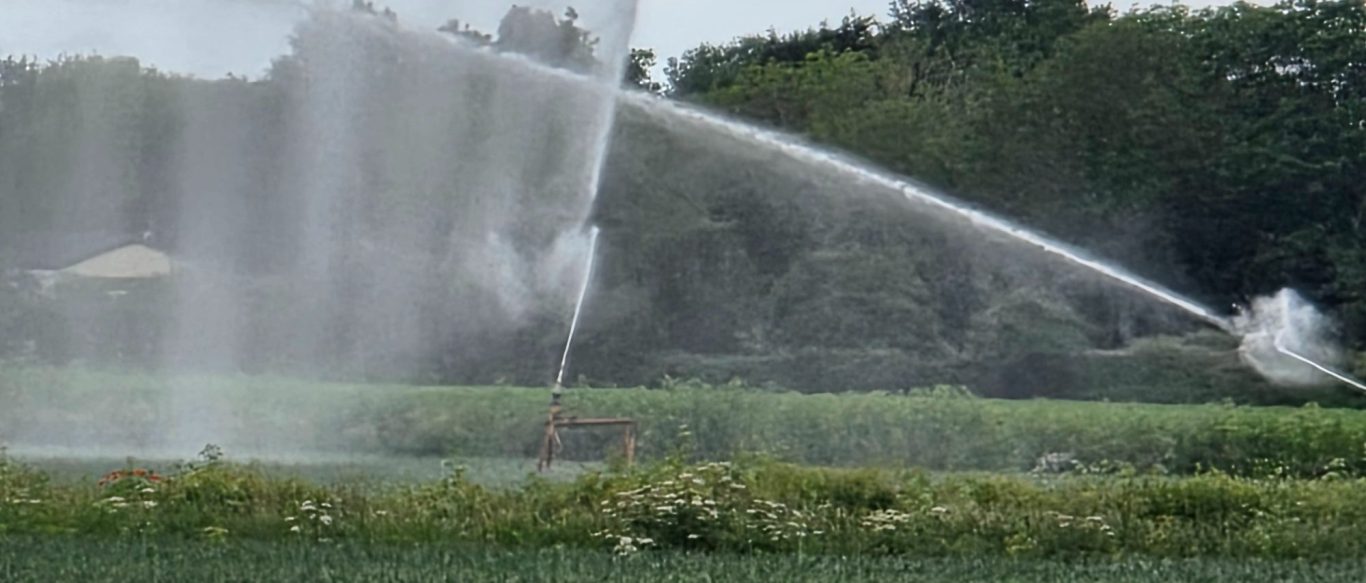
Spray irrigation of onions in Cambridgeshire
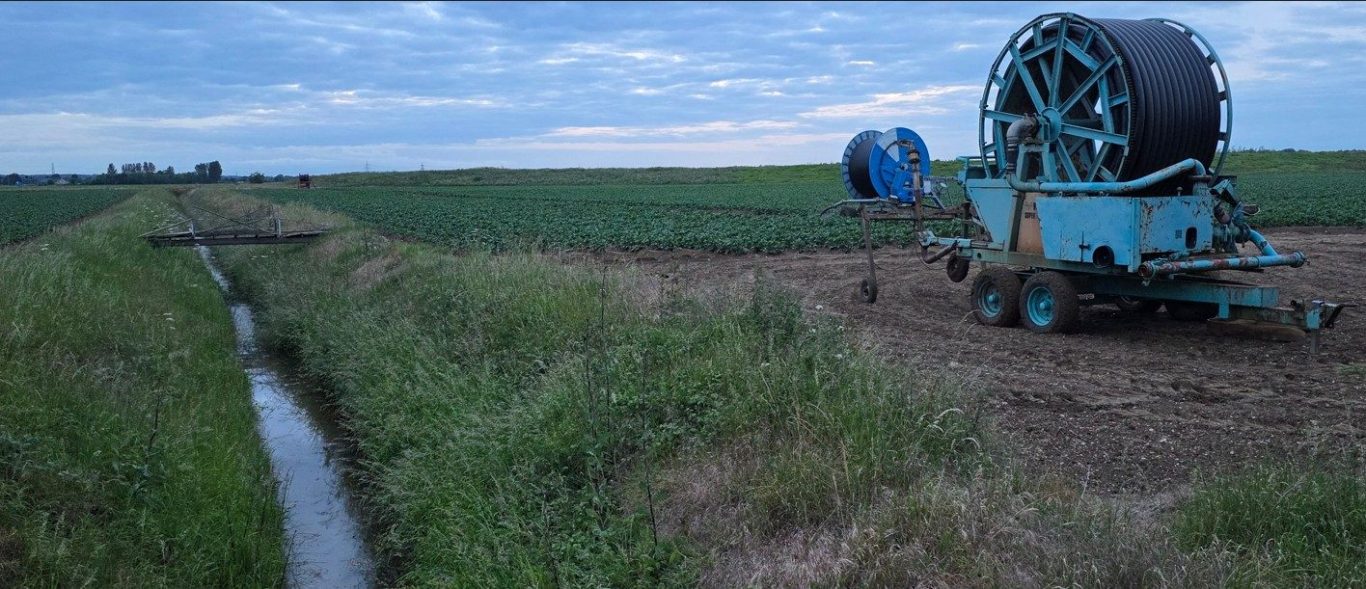
Spray irrigation equipment in a potato field in Cambridgeshire
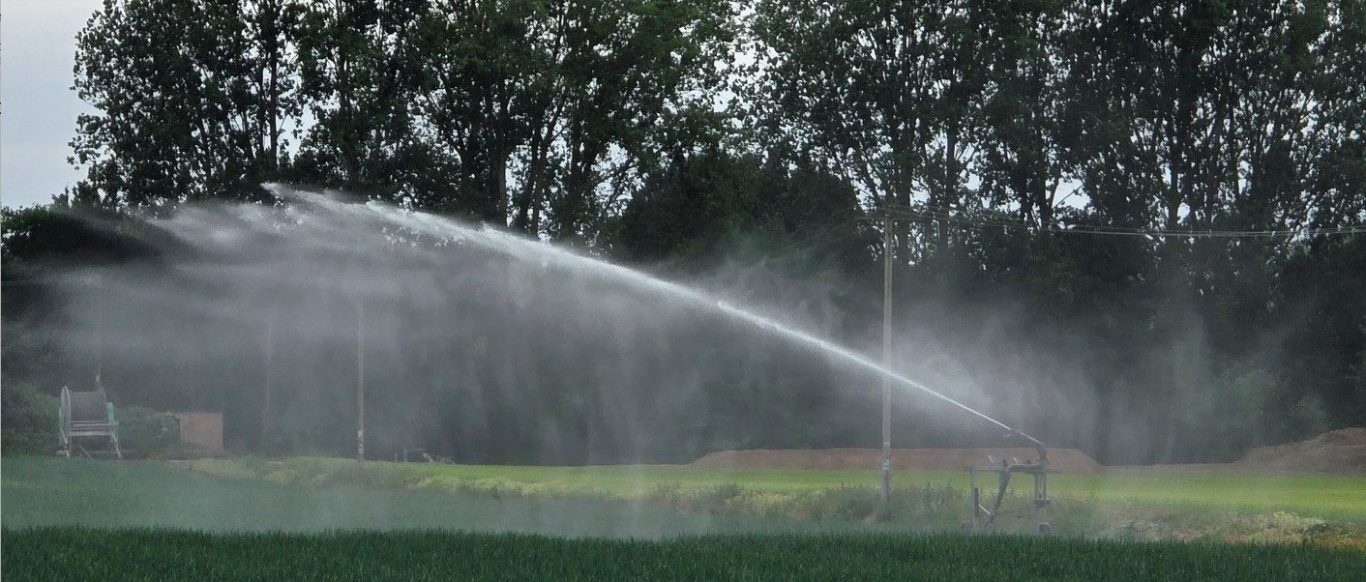
Spray irrigation of onions in Bedfordshire
28/05/2026
With another dry spring, combined with the hottest May temperature on record, some farmers are thinking of stopping growing spring crops.
East Anglia is on course for its third month in a row with below average rainfall, having received around just 40% of long-term average volumes in May so far. This has led the Environment Agency to convene its National Drought Subgroup on Agriculture, but not until late June, deep into the irrigation season.
With the continued dry weather some Water Abstractor Groups in East Anglia are meeting weekly with the Environment Agency and other partners to review water availability in their catchments. The meetings provide an opportunity for irrigators to get early advance warning of any potential hands-off flow conditions or abstraction restrictions.
Heather Oldfield, County Chairman for the National Farmers Union, in South Lincolnshire speaking on the BBC’s Farming Today programme reported that her beans, barley and wheat fields have been significantly impacted by the continuing dry spring.
Heather continued: “Last year between the 1st of March and present day, we had 44.5 mils of rain. This year between the same period we've had 27.9, so that's nearly half of the rainfall. We're seriously considering whether we can grow spring crops.”
As for the question of the benefits of farm reservoirs Heather commented: “It comes back to having that money to invest in that sort of thing.” While she feels that freeing up of planning permission would help, economic and meteorological headwinds are a bigger problem as she explained: “I think there's also not the confidence in agriculture or in farming longer term because we come on the back of probably five or six years where we've had quite erratic weather patterns and a lot happens politically and a lot happens with markets that have been completely out of our control.”
The importance of reservoirs has again been highlighted by Parliament. The Lords Environment and Climate Change Committee published its report on surviving drought, reclaiming the rain. One of its key recommendations is that the government should clarify what support will be given to enable local water supply options, such as smaller reservoirs on farms, golf courses and other appropriate spaces.
The Growing Voice submitted a joint submission of evidence with Envireau to the Committee which included the importance of water storage – both in the form of reservoirs and aquifers. We highlighted the need for integration of reservoirs with flood management.
The Climate Change Committee (CCC) had also published its Fourth Climate Change Risk Assessment - Independent Assessment (CCRA4-IA). The report said: “Resilient water management such as on-farm water storage reservoirs and rainwater harvesting can increase resilience in dry periods or drought.”
Last month’s on-farm reservoirs conference in Lincolnshire has now produced a report containing national and regional actions. These include ensuring abstraction reform promotes farm reservoirs as national infrastructure and better financial support for their construction. Despite the continuing evidence for the need for farm reservoirs Defra have still not confirmed another round of the Water Management Grant. However, Groups of farmers in England can now apply for a Local Resource Option (LRO) screening study. The deadline for applications is 5th July.
In Scotland with a dry week across most of Scotland SEPA has raised more areas to Alert status - Deveron, Firth of Tay, Firth of Forth, Tyne (Lothian) in their latest water scarcity report. Stephen McGuire, Senior Hydrologist in SEPA’s Water Resources Unit, said: “While rain is forecast over the weekend, conditions remain drier than normal across several eastern catchments and river flows are lower than would normally be expected for this time of year. We would encourage abstractors to make use of SEPA’s drought risk assessment tools and guidance to help understand local conditions and support sustainable water use during dry periods.”
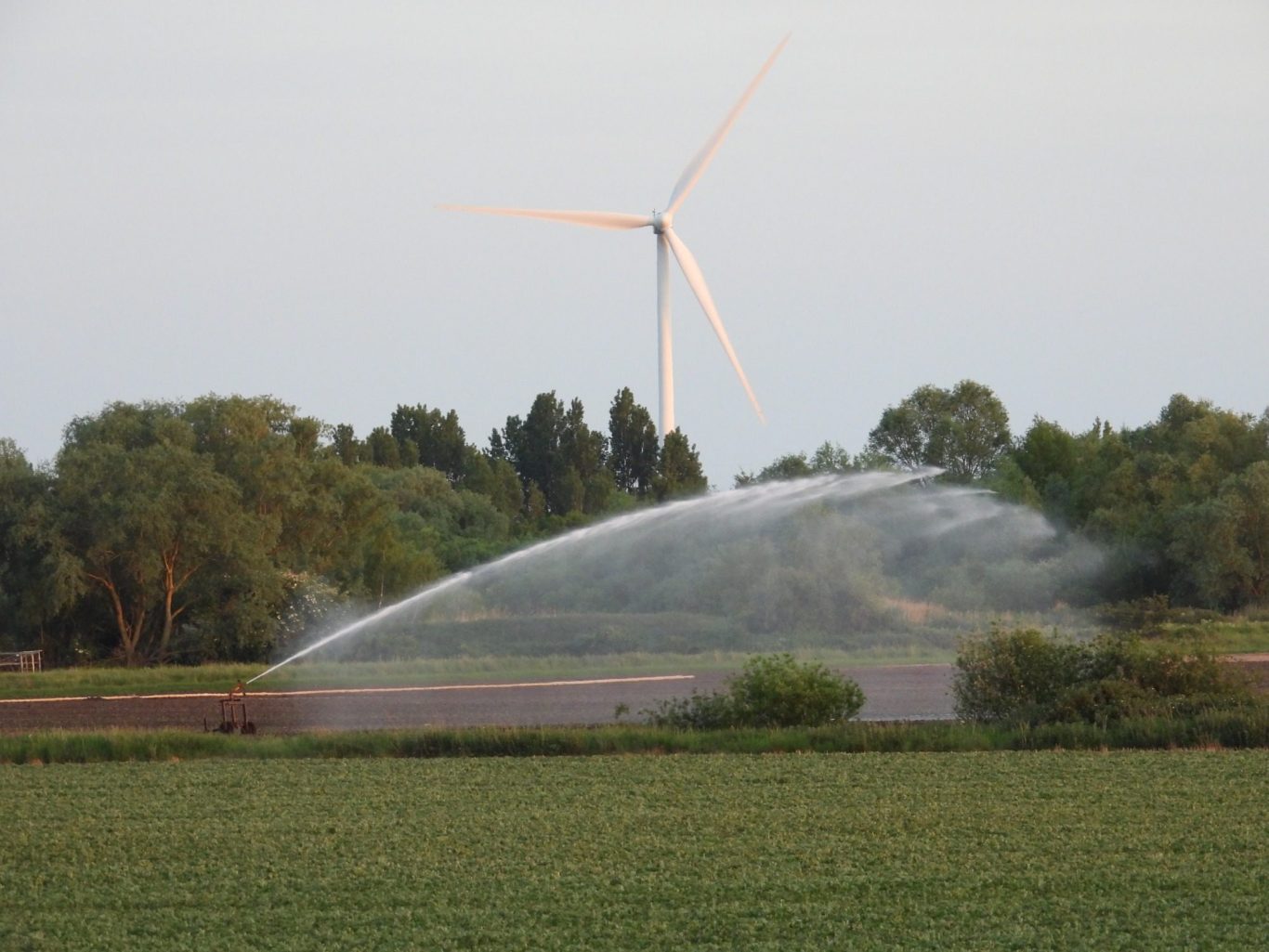
Spray irrigation of potatoes in the Middle Level (Cambridgeshire Fens)
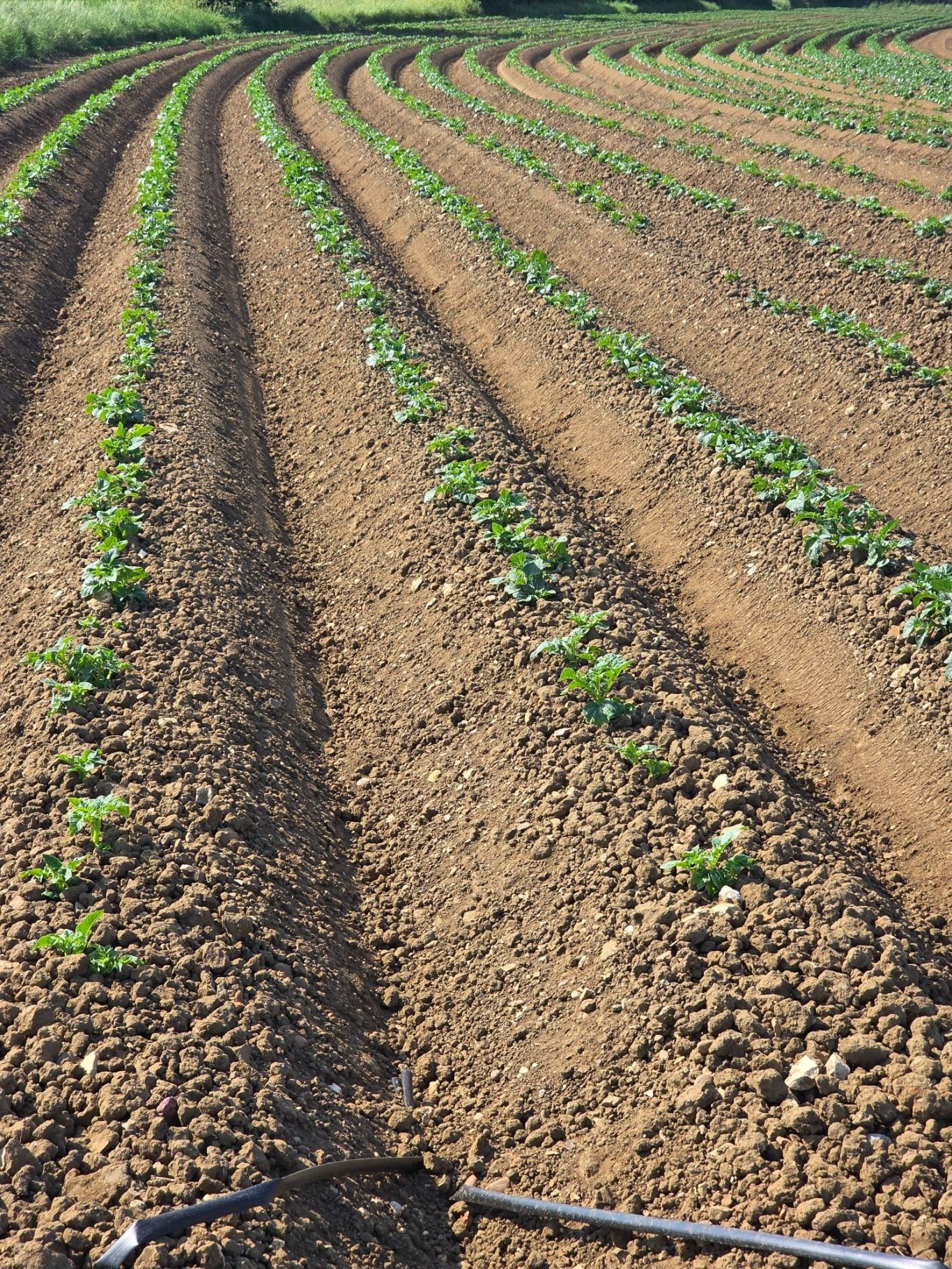
Potatoes in Cambridgeshire with trickle tape in the foreground
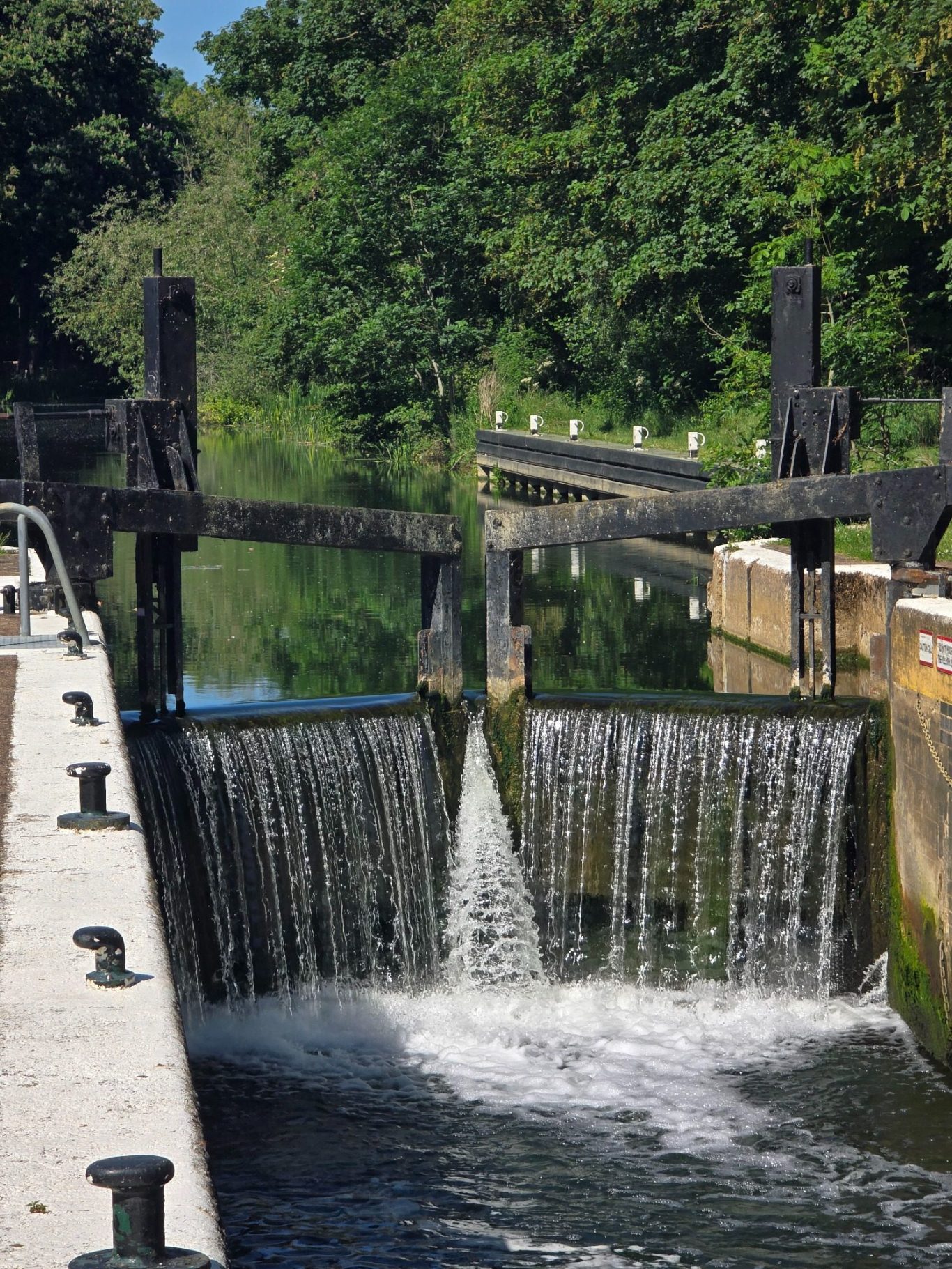
River Nene at Water Newton Lock – water is transferred to the Middle Level downstream
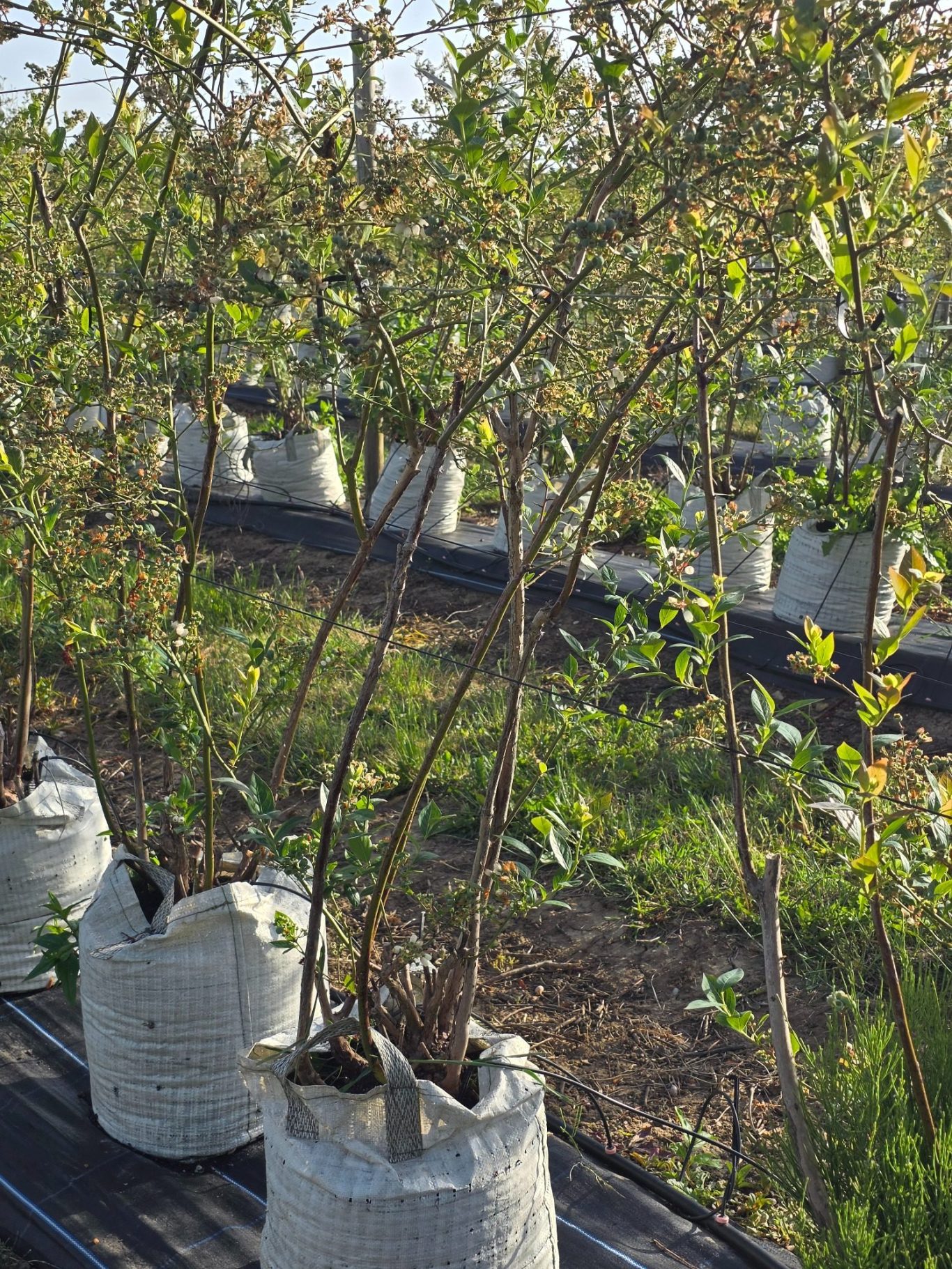
Blueberries in Northamptonshire being trickle irrigated
17/05/2026
As spring remains dry following two months of below average rainfall the Environment Agency (EA) is likely to publish another round of irrigation prospects in June following the decline in May’s forecast with the risk of lower water availability for farmers.
There is a risk that the early stages of drought (officially classified by the EA as Prolonged Dry weather) will appear in June. As a result the EA is “reviewing options” about a possible earlier meeting of the National Drought Group, currently not planned until the autumn.
The current ‘flip flopping’ of the EA’s incident response from floods to droughts does raise the need for setting up an extreme weather group to enable managing these hydrological outliers in a more integrated way. This would acknowledge that droughts and floods are part of the inherent hydrological continuum that farmers and others are now facing on a virtually annual basis in response to a changing climate.
The latest weekly summary from the EA shows that England’s May rainfall to date has been as low as 14% in the East of England. Most river flow sites are now below normal or worse.
An EA staff member admitted that in East Anglia: “The picture is not looking very good at the moment. Whilst there is a bit more rain in the forecast, some showery rain, we're still in a very difficult position.”
Another EA colleague revealed that in Lincolnshire and Northamptonshire: “The one concern that we really are seeing at the moment as compared to this point last year is the soil moisture deficit. That really is already outstripping at the same point last year, which is obviously very much a big concern.”
Projected river flows at key indicator sites up until the end of September 2026 show that under a scenario of 80% of the long-term average rainfall most of these will be at below normal or worse by the end of September. Although the number of abstraction licence cessation conditions on rivers is still relatively low continuing dry weather will increase this risk.
There is a likelihood that towards the end of the month the EA will write to abstractors in the South Level (Cambridgeshire fens) asking for voluntary abstraction restrictions. This could then escalate to a relatively early trigger for hands-off flow summer abstraction conditions related to Denver sluice on the Ely Ouse.
Although river flows are dropping off groundwater levels typically remain relatively healthy given the extensive recharge to aquifers over the wet winter.
Lindsay Hargreaves, Chair of the Lark Abstractor Group commented: “Not all dry springs are the same. The thing that tends to differentiate them is the background temperature. What's saving us a little bit this year is it's slightly cooler than it has been.”
Lindsay added: “But irrigation is going pretty hard and people have started much earlier than they might otherwise have expected. And so they will be now thinking about how they're going to plan that, how they're going to eke that out - when is it going to rain? The level of anxiety is probably quite low at the moment, but it will be rising and if it continues to be dry, then it'll get worse.”
Unsettled conditions are expected to continue for the rest of May. However, high pressure from the south is expected to quickly start to build near to the UK towards the Bank Holiday weekend, bringing some fine and dry conditions. High pressure is then expected to dominate across much of the UK, with spells of fine weather.
The Scottish Environment Protection Agency has already started to publish its routine weekly water scarcity reports for the spring and summer reflecting the high water demands through May to September.
In Scotland soil moisture levels are quite dry across most of the country with no significant rainfall in May so far. River flows are generally low for the time of year across the North East and parts of central Scotland, with more normal flows in the west. The Ythan catchment in Aberdeenshire has moved to Alert status, with a number of other areas across the North East, central Scotland, south west and islands currently at Early Warning.
Eilidh Johnston, Senior Leader in Compliance at SEPA, said: “Many abstractors, particularly farmers and growers, will already be aware of the dry conditions developing in some areas and the pressures this can place on water resources.
“We are not currently seeing the same level of water scarcity pressures as this time last year, when a number of areas had already reached Moderate Scarcity. However, last year demonstrated how quickly conditions can change depending on rainfall and why planning ahead is so important.
“Taking steps early, such as reviewing equipment, contingency plans and water efficiency measures, can help improve resilience if dry weather continues later in the season.
“We encourage abstractors to regularly monitor local conditions using our DRAT tool (Drought Risk Assessment Tool) and to engage with SEPA early if they have concerns about managing water use during prolonged dry conditions.”
Centre of Expertise for Waters (CREW) has published its Planning for Water Scarcity: Practical guidance for Scottish farmers and growers including a section on managing water and irrigating efficiently.
Water Resources East (WRE) has recently updated its Agriculture Water Resources page packed with lots of information including links to funding streams for water infrastructure and the UKIA’s Planning Farm Reservoir booklets.
The UKIA is also organising a visit to Jack Buck Farms in Lincolnshire on the 16th June (with limited places available). The farm covers some 1800 acres of the best silt land in the country, growing a range of irrigated vegetable and flower crops including its famous celeriac brand, ‘The Ugly One.
Don’t forget to read the interview with Will Veness at CatchmentAI talking about his advanced risk-based weather forecast app (Probcast) which is designed to help achieve optimal irrigation.
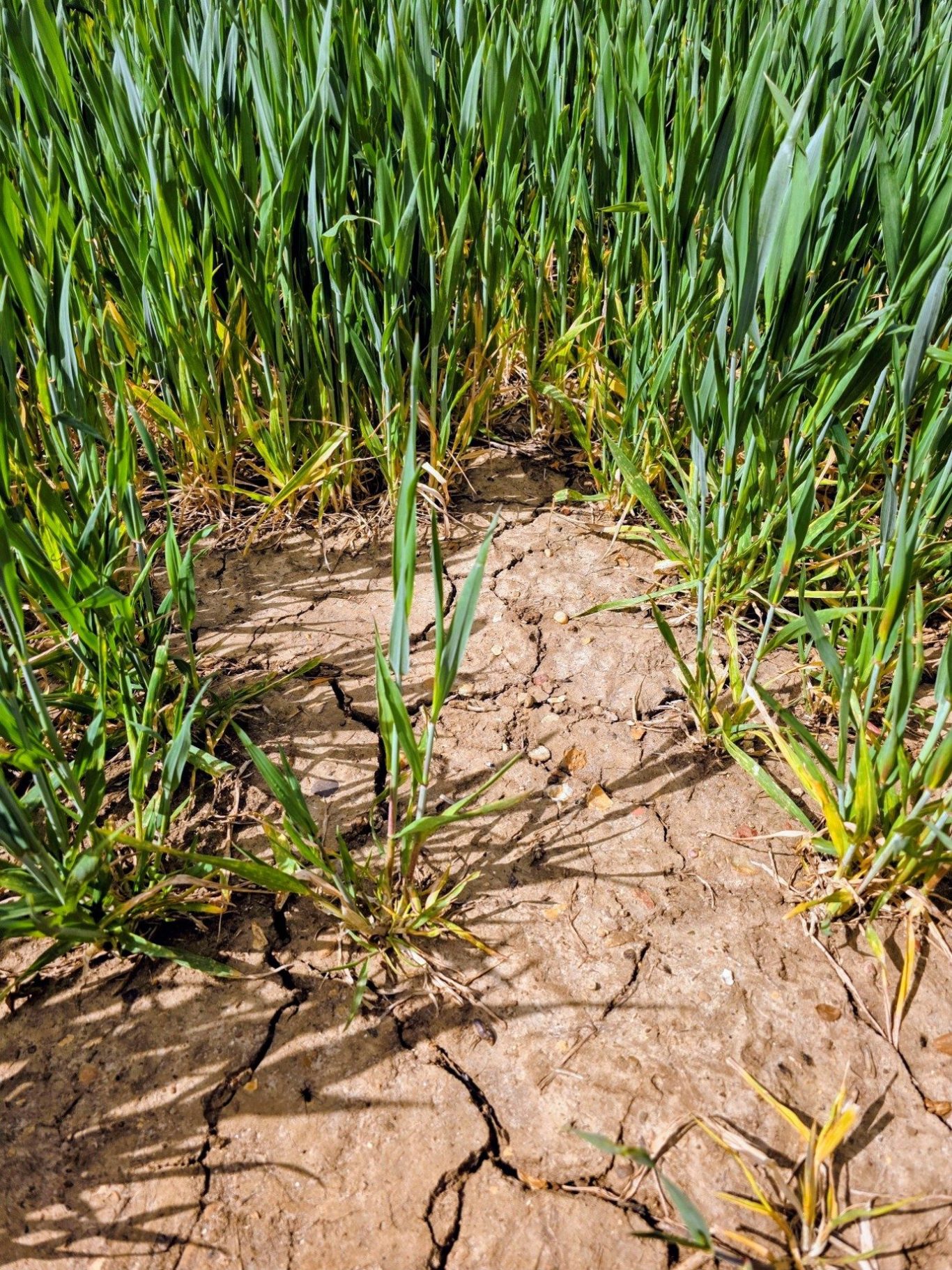
Despite an unsettled week many soils are still very dry like this wheat field in Cambridgeshire
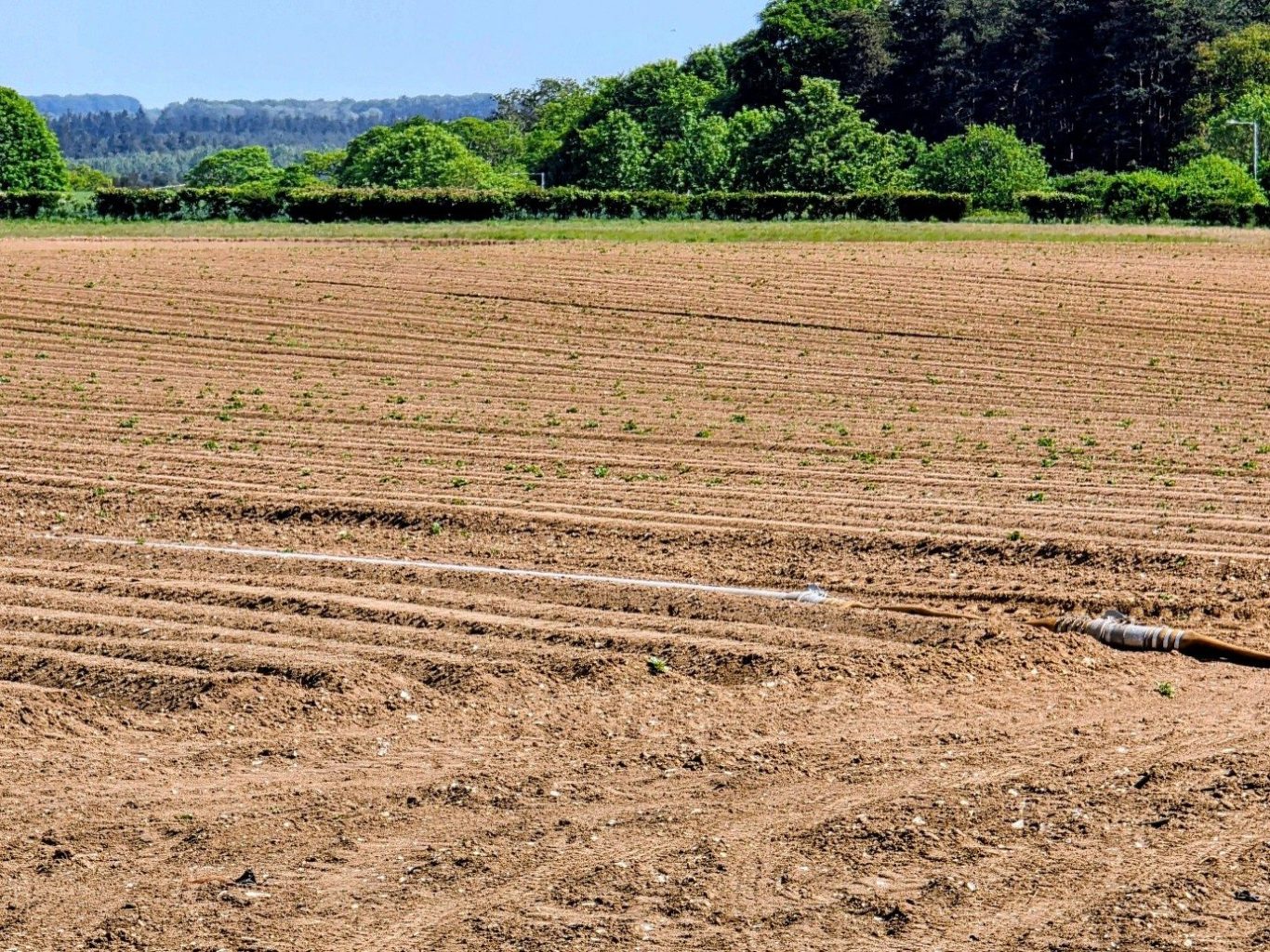
Irrigation being set up in a dry potato field in North Norfolk
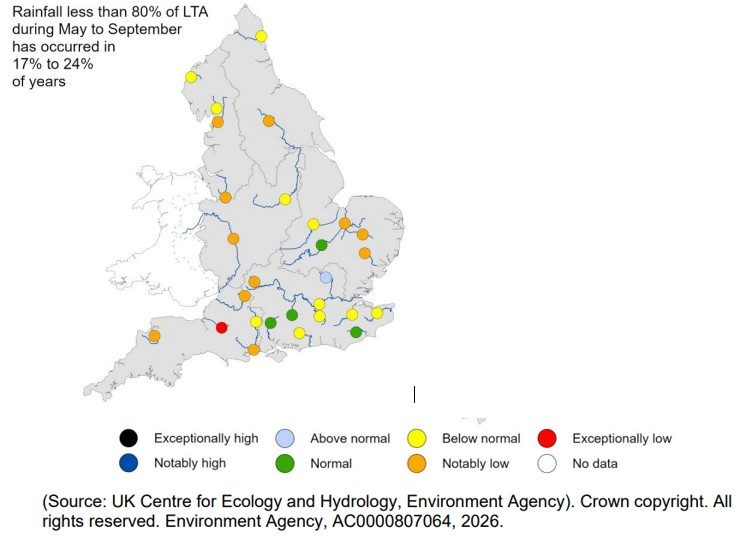
Projected river flows at key indicator sites up until the end of September 2026. Projections based on scenario of 80% of long-term average rainfall between May 2026 and September 2026.
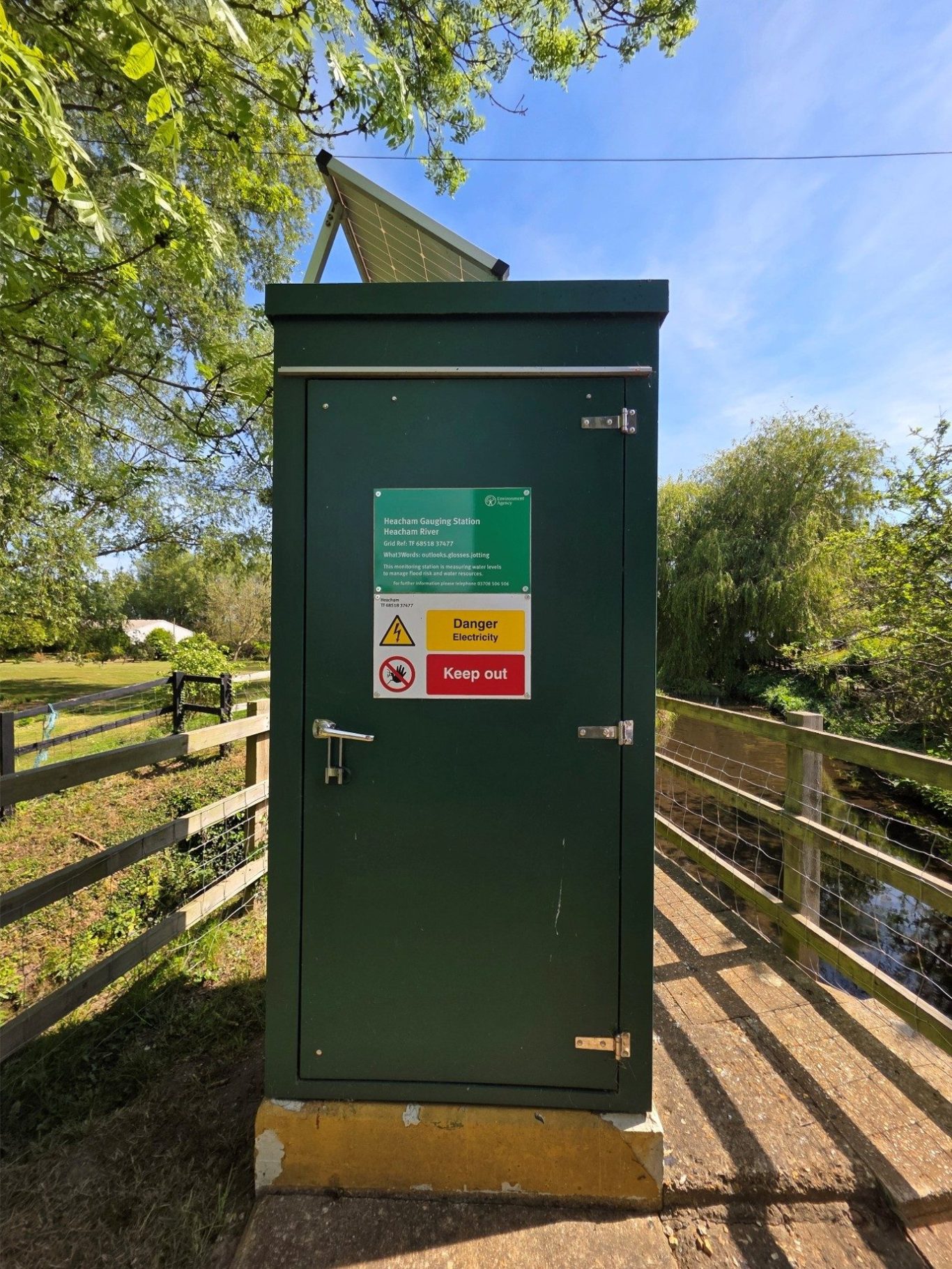
The Environment Agency continues to monitor river flows – in this case at a gauging station on the River Heacham in Norfolk
02/05/2026
The Updated Irrigation Prospects for England have just been published by the Environment Agency. As anticipated East Anglia remains in moderate status following several weeks of dry weather. England recorded just 38% of its average April rainfall.
The southeast of England was the driest part of the UK, with East Anglia seeing just 4.0mm of rainfall, which is just 10% of its average April total. This makes April 2026 the third driest April on record for East Anglia in a series dating back to 1836, although it did not exceed the record low of 1 mm set in 2007.
Several counties experienced one of their driest Aprils on record, including Cambridgeshire (second driest), Norfolk (third driest), Bedfordshire (fourth driest), Essex (fifth driest) and Kent, Hertfordshire, Northamptonshire and Greater London all seeing their sixth driest.
Overall, the irrigation prospects have deteriorated from February’s good status in Lincolnshire, Northamptonshire, Midlands and Thames, to good to moderate. Elsewhere across the country prospects remain good.
The EA has downplayed the decline in the forecast and said that the prospects indicate a generally positive outlook. However, it has admitted that there are emerging pressures in parts of the country, particularly eastern England, the epicentre of irrigation demand. The EA has stated: “We will continue to monitor the situation and will keep you updated. Our next Agriculture, Environment and Land use meeting is planned for October, with flexibility to bring this forward if required.”
The EA notes that in Norfolk, Suffolk and Essex the change to very dry weather has resulted in rapid drying of the soil. Soil moisture deficits are notably high for the time of year, between 50-60mm, and it is unlikely that there will be any further recharge to groundwater or significant river flow response.
In the West of East Anglia, groundwater levels are similar to last year, with the lowest levels in the North Norfolk catchment. If conditions are dry this summer groundwater levels are expected to reach below normal conditions. The Fenland IDB-drained areas are always susceptible to prolonged dry, hot weather during the irrigation season. Under this scenario, local water management actions using existing licence conditions are likely to be required
With the dry weather, the EA is encouraging farmers and growers to take early action to manage water use and safeguard supplies for the summer. A third round of Local Resource Options is due to be launched in June, and farmers can find out more by emailing WRAgriculture@environment-agency.gov.uk.
Meanwhile Water Resources West has published a number of documents on agriculture water resources to help farmers and growers across the North West, Midlands and Wales. These include setting up a Water Abstractor Group, drought planning for livestock farms and lessons from last year’s drought to help forward planning.
Andrew Blenkiron Managing Director of Elveden Estate in Suffolk speaking on BBC news reflected on the dry start to spring: “It’s very comparable with last year unfortunately. It started in April, went really dry very quickly last year. One of the big challenges, particularly for cereal crops is once we have to move our irrigation resource away from them basically they start dying on their feet and we lose half the yield.”
Dry weather in combination with the current high energy and fertiliser costs is a potential double whammy for farmers undermining the bottom line for their businesses. Andrew explained: “We face the volatility of the weather and the volatility of pricing. The big challenge is losing half the yield (2,000 tonnes) of our winter barley crop at £150-£160 pounds per tonne. It’s relatively easy to do the maths.”
Lindsay Hargreaves, Chair of the Lark Abstractor Group commenting on the irrigation prospects said: “Flows in the rivers in the east are falling away very rapidly, but they're falling away from a reasonable position and we've got good groundwater levels. But I think anybody who's relying on summer surface water has got to be braced for a hands-off flow restriction at some point.”
Without significant rainfall in May Lindsay adds: “There could well be a need very soon for voluntary restrictions in the South Level (Cambridgeshire fens) and we might well see a relatively early trigger for hands-off flow summer conditions related to Denver sluice on the Ely Ouse. That would be a lot earlier than last year.” In July 2025 hands off flow conditions on abstraction licences in the catchment came into effect, affecting irrigation of crops.
Lindsay is concerned about the increasing trend of dry springs: “I think there were one or two exceptions, but most people got their reservoirs filled up, so they've gone into the growing season with them full. But this is now the sixth dry spring in the last eight years. The dial's moved - how do we move this on? There's always an assumption that something is going to come from the sky. If you've used half your stocks by the end of May, then you've got a lot of the growing season to cover. I think it's concerning.”
As for the future of agriculture water resilience he said: “You have to say to yourself can I live with this in the long term or what can I do to make life more secure for the future? We’re trying to get local authority planning processes smoothed up, lobby for reservoir grants and other support for major infrastructure and also getting the EA to try and take a longer view, to give people a bit of cover, in terms of length of licence, to justify the payback period.” There is still complete radio silence on a possible third round of the Water Management Grant to help fund reservoirs.
The Met Office’s 3 month outlook has stated that the chance of a hot late spring-early summer period is higher than normal bringing an increased risk of heat waves and heat related impacts. However, a wet 3 month period is more likely than a dry one, although near average rainfall remains the most likely outcome.
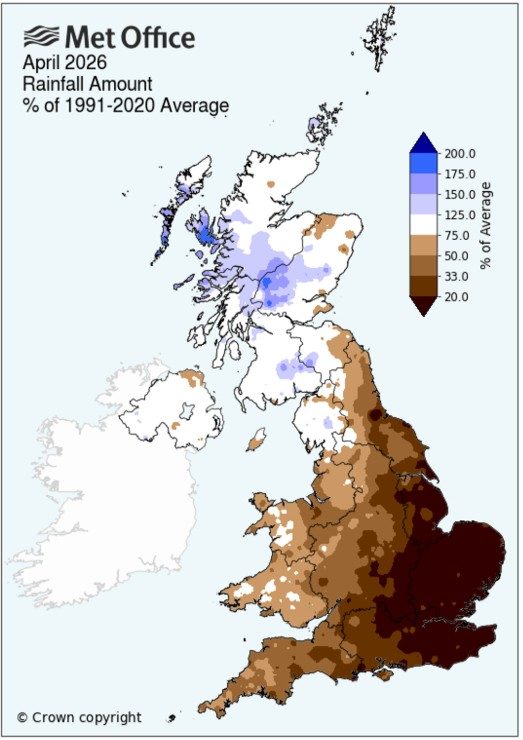
Met Office April 2026 Rainfall map
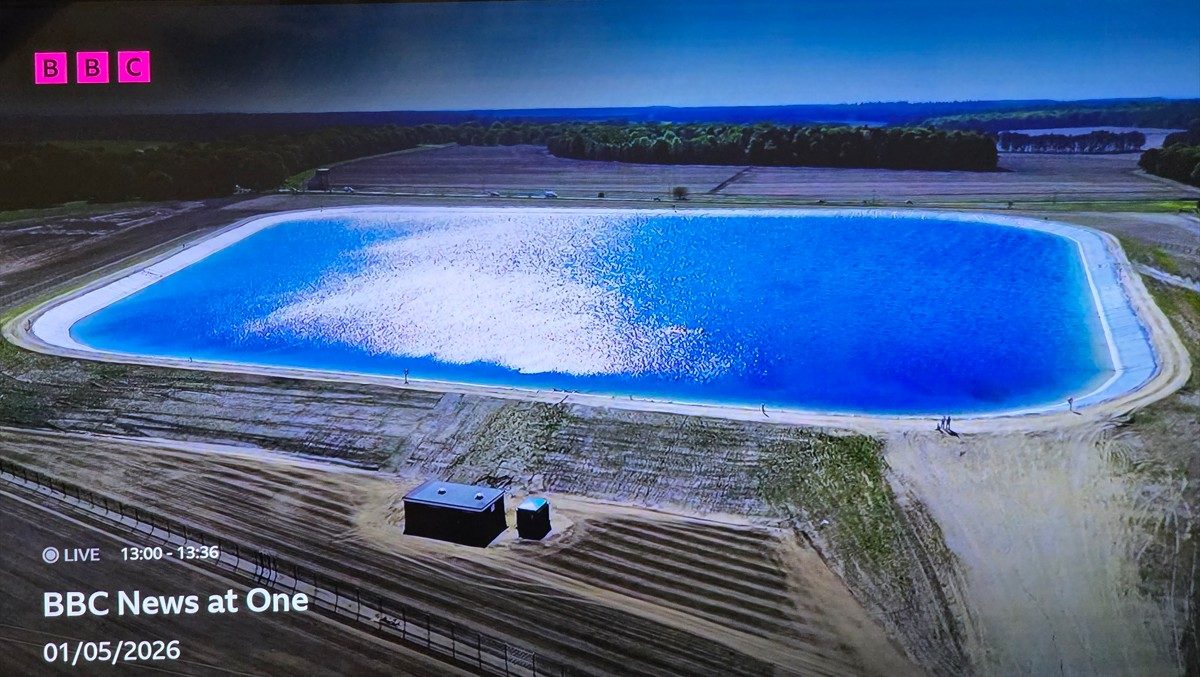
Elveden Estate's latest 500,000 m3 reservoir (© BBC)
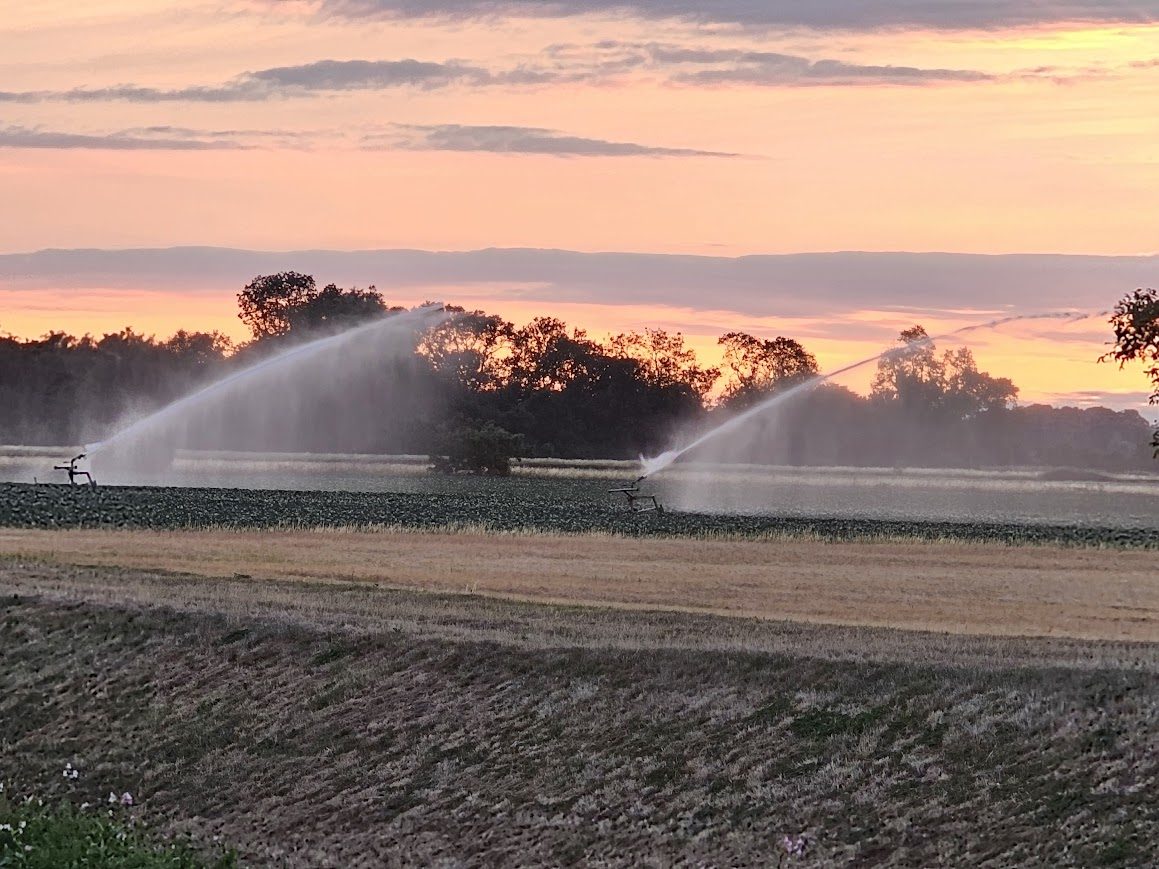
The Updated Irrigation Prospects are Moderate for East Anglia
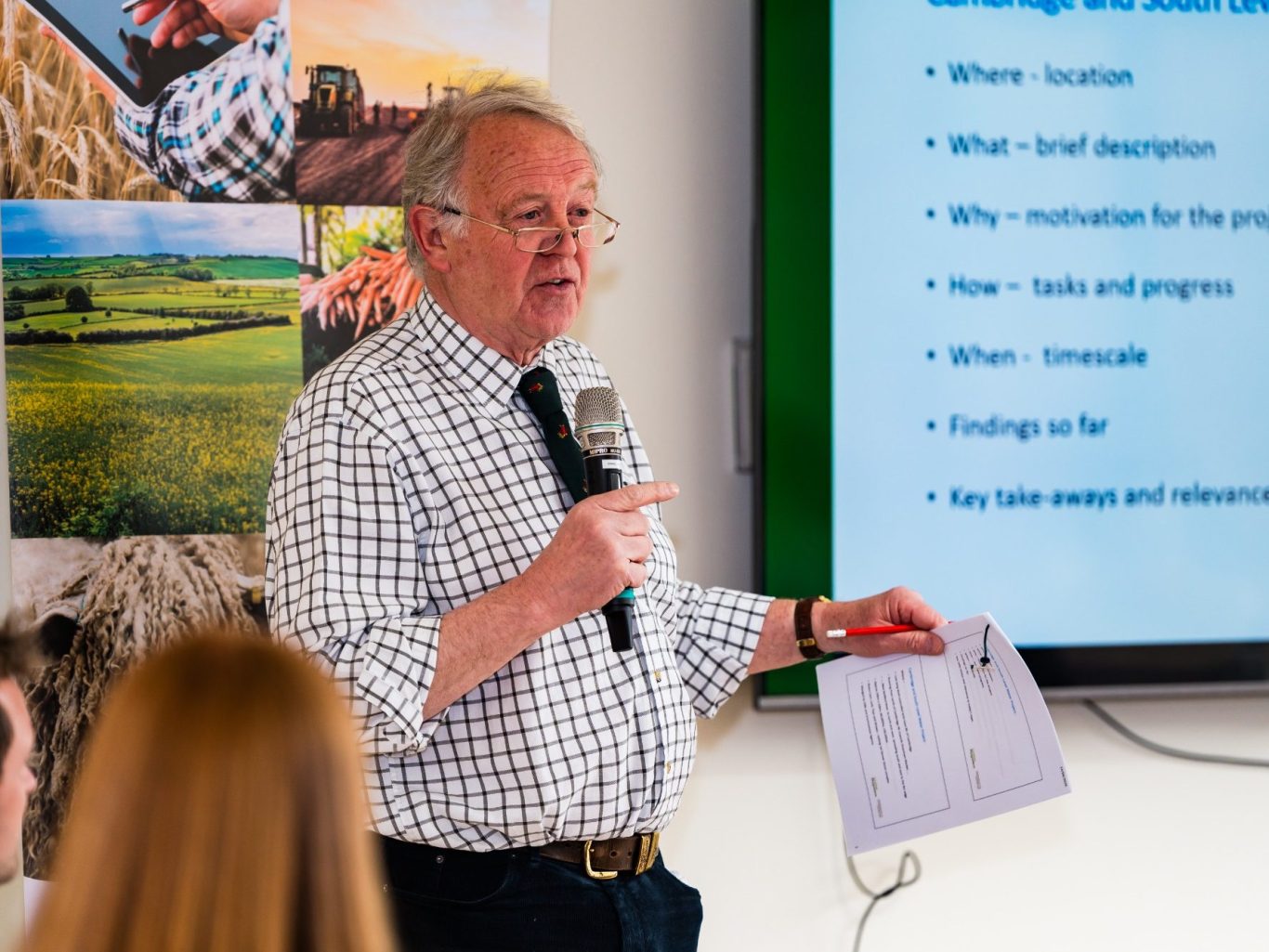
Lindsay Hargreaves - Chair of the Lark Abstractor Group (Epic Media Productions Ltd)
26/04/2026
With just a handful of days remaining until the end of the month April 2026 looks to be an even drier month than last year - part of the record dry spring. East Anglia averaged 22mm rainfall in April 2025 while rainfall up to the 21st April this year has totalled only 3-4 mm based on EA data.
Apart from some scattered heavy April showers on Monday afternoon, the rest of the month is forecast to remain dry according to the Met Office. Looking ahead into early May high pressure is initially expected to predominate with dry conditions before changeable weather from low pressure systems become more established.
Holbeach in Lincolnshire has received only 2% of the average April weather while Shoeburyness in Essex has recorded just 1% according to BBC Weather earlier in the week.
River flows in East Anglia are now below normal or notably low for the time of year. While groundwater levels are generally normal, although already on their way down, North West Norfolk aquifers haven’t fully recovered and are below normal. With Soil Moisture Deficit levels now notably high, groundwater recharge is largely finished for the spring.
The Environment Agency will be updating its initial irrigation prospects at the end of April. Any change to East Anglia’s current moderate status will largely be determined by how much groundwater has recovered to ensure sufficient base flow to rivers.
North Norfolk is unlikely to have recovered enough to move into good, meaning surface water availability could be low with the possibility of hands-off flow conditions kicking in later in the season. In Scotland SEPA will begin publishing its weekly water scarcity reports later this week.
Irrigation is well underway in response to the dry conditions. Andrew Blenkiron, Managing Director of Elveden Estate in Suffolk said “It’s certainly dry! Irrigation is flat out, focusing on cereals at the moment, although onion sets have had a good drink and we will soon be into drilled onions and early spuds.” Last year Elveden Estate strengthened its water security by building a 500,000 m3 reservoir to increase its resilience against drought.
At a recent Investment in Farm Reservoirs Conference in Lincolnshire, Robert Cauldwell Chairman of the Association of Drainage Authorities (ADA) highlighted the importance of Internal Drainage Boards (IDBs) in agriculture water management.
Robert said: “IDBs aren't currently funded to manage water for irrigation. It does require legislative change enabling IDBs to manage water for irrigation and be able to charge any costs that are incurring. I would like to take that a stage further and see IDBs enabled to store and move water and actually sell that water on."
Robert appealed for better integration of water and flood management. He said: “Why, oh, why, oh, why do we think that we have to build something separate for flood risk management and something separate for water storage? For God's sake, let's pull together and actually get ourselves in a situation where we have too much water. This is something that local teams in the EA, I have a lot of respect for, they know what the solution is, to take that off stream and store it. But by the time decisions are made and it's gone toing and froing, the event has passed and land has been flooded.
“Farmland is an unpaid for flood risk asset often. Why do we not store that water? I've explained this to Alan Lovell [Chair of EA], that I have land that does regularly flood. I'd be more than happy to be paid for that to be part of a storage mechanism to store that water, and then either put it back in the river when flows are low for environmental gain or for somebody to abstract downstream, or to be able to sell that to some of my neighbours."
Robert cites a European example to show the benefits of integrated flood and water management. “One of the things that I often quote is that in the Po Valley region, a big fruit and vegetables producing region in North Italy, it's gone through successive periods of drought and flood. Their proposal is for 10,000 small reservoirs to take that excess flow when it's available and feed it back in the system so farmers can still abstract further down the system and maintain that production without being flooded. It can be done.”
Robert passionately believes that effective water management is key to a sustainable thriving economy. He explains: “If you want growth in the region, one of the ways you can enable growth is to have better water management, and more storage of water to enable the food industry. Not just agriculture, but the whole food industry, to expand, and how important it is in this region. I think we should be briefing all our mayoral candidates right across the region and making sure they really understand this, that as part of their remit, if they want growth, water management has to be upfront and central.”
Water Resources East is launching its new Farm Reservoir Guidance for Eastern England on Wednesday 6 May at 10am. This session is open to partners, practitioners, and stakeholders from across the water, agricultural and horticultural sectors to introduce new guidance supporting the planning, design and delivery of on-farm reservoirs. Registration is available here.
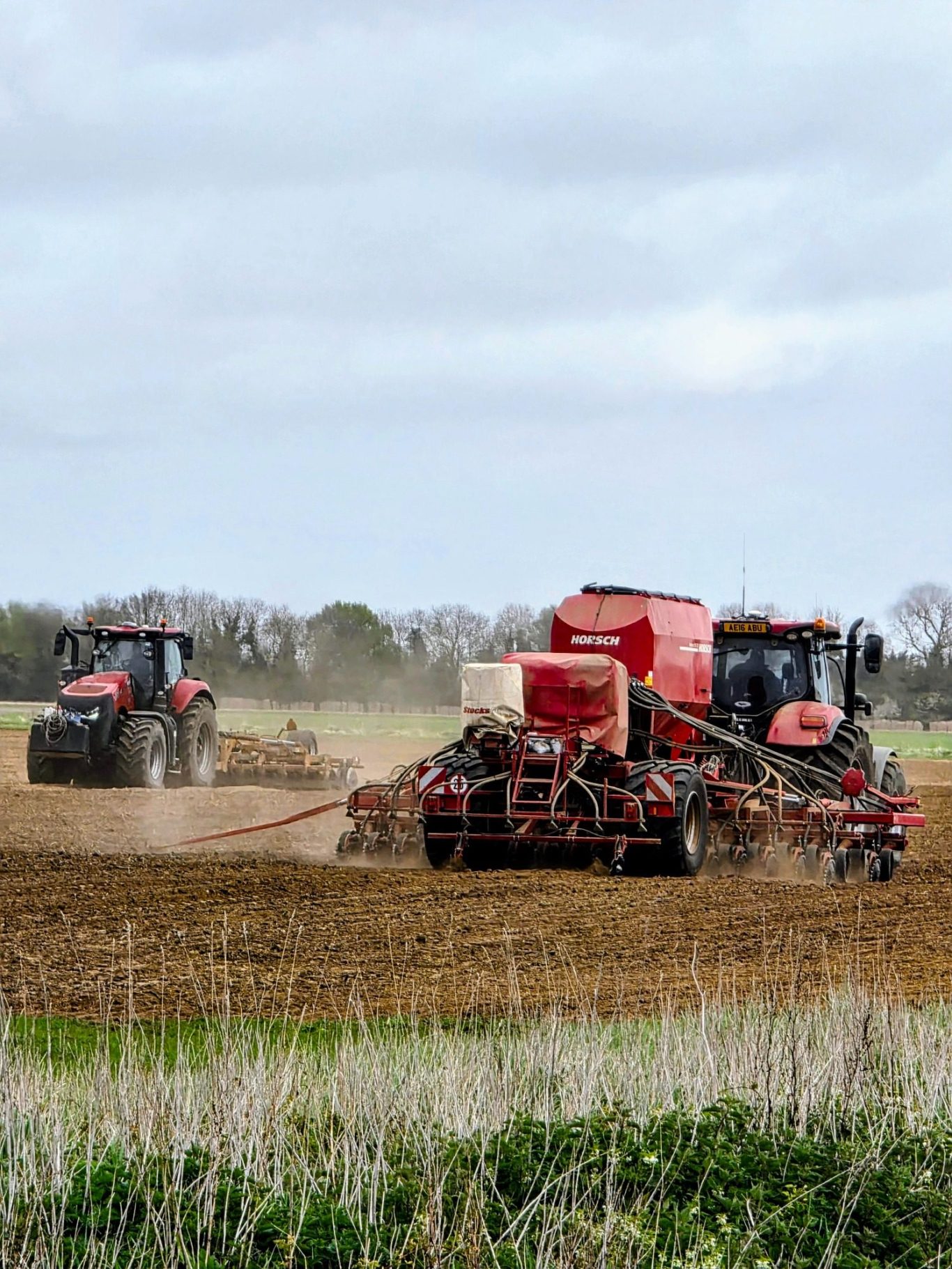
Cereal drilling into dry soils - Lincolnshire
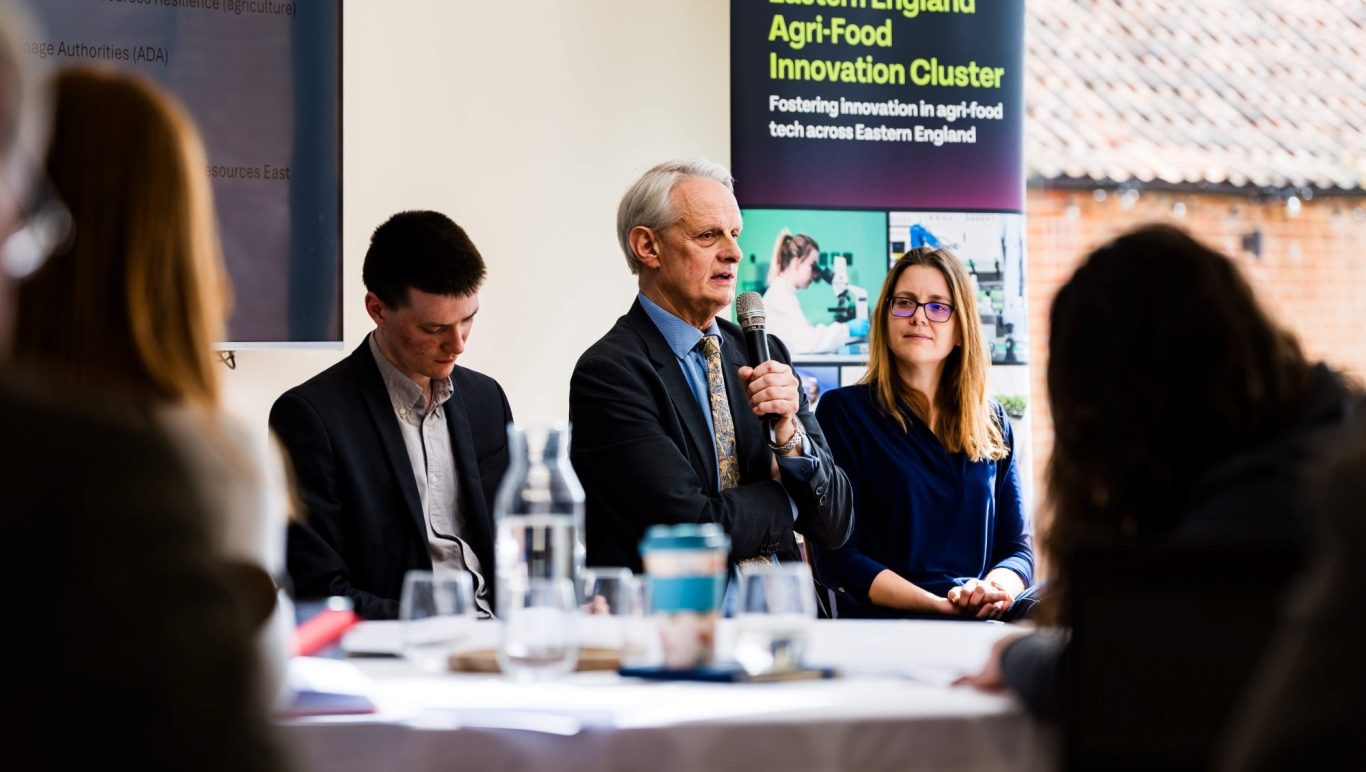
Robert Caudwell - Chair of ADA at the recent Investment in Farm Reservoirs Conference (Epic Media Productions LTD)
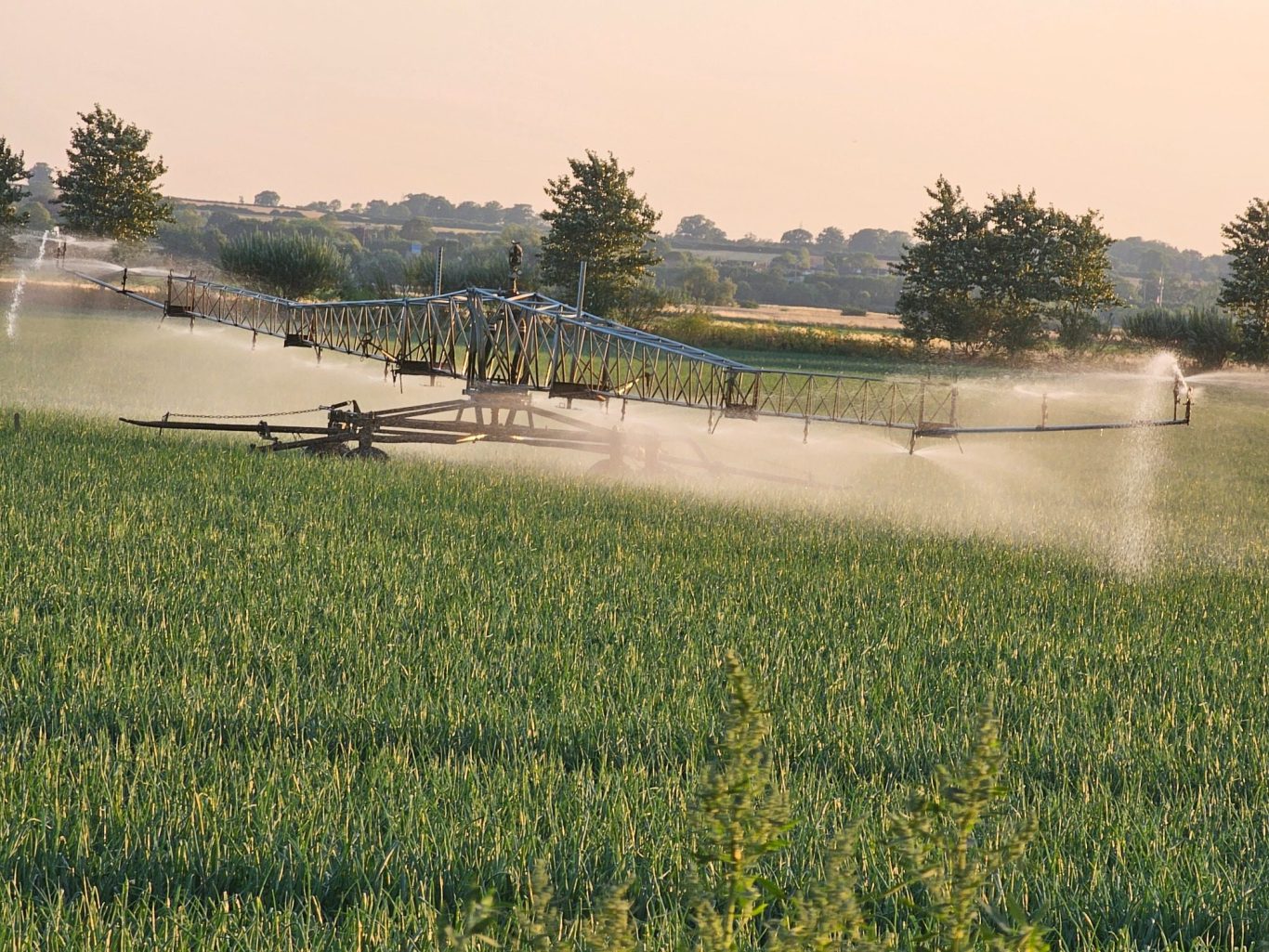
The irrigation season has started early again this year
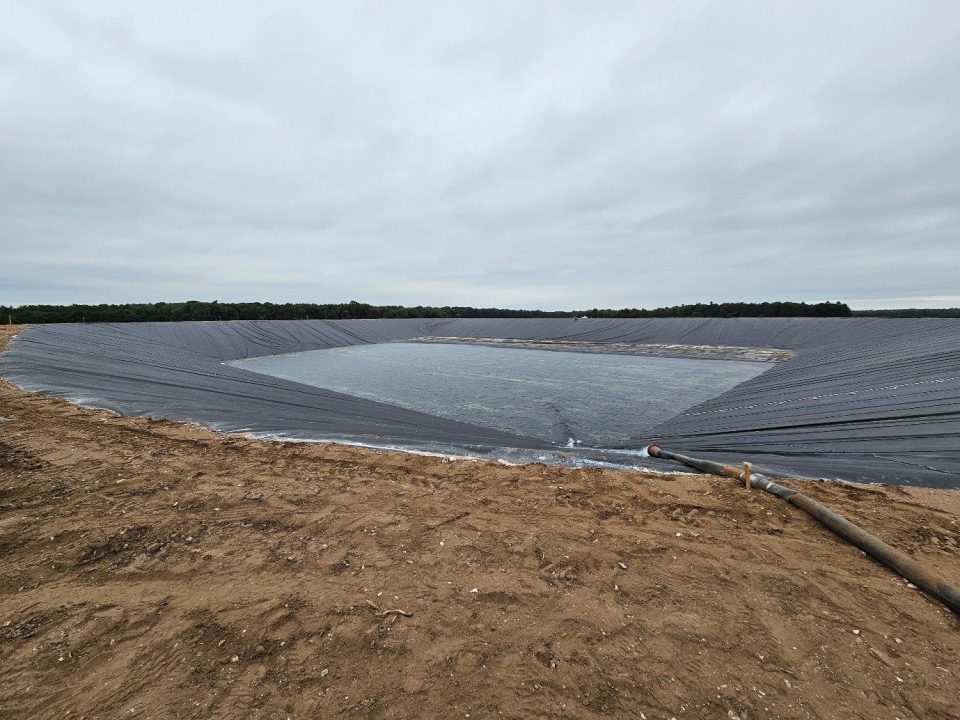
Elveden Estate's latest 500,000 m3 reservoir being refilled over the winter
14/04/2026
With a dry start to spring some in the agriculture sector fear another drought may be closer than people think.
March was a drier month with most of England receiving below average rainfall - 83% of the long-term average (LTA). The majority of hydrological areas were classed as normal or below normal for the time of year.
The last three weeks up to the 7th April have been largely dry across east and south-east England with just over 5mm rainfall received over this period while central and south-west England have received just less than 15mm. In East Anglia recent data reveals rain for the month up to the 14th April ranges from just 2% of the LTA in the Fens to 14% in South Essex. Although rain is forecast in England for this week, the Met Office is currently predicting this will be followed by an east-west split as Atlantic lows struggle to cross the country for the remainder of the month.
Soil moisture deficits in Central, Eastern and Southern England are above average for the time of year meaning irrigation is already underway to establish crops. Indeed, in East Anglia soil moisture deficits are now notably high. Andy Knaggs at Agrial Fresh Produce said: “Our first lettuce of the season are coming along well. Our Irrigation teams are already hard at it with little to no rain in recent weeks.”
The Environment Agency is expected to update its initial irrigation prospects at the end of April. Any change to East Anglia’s current moderate status will largely be determined by how much groundwater has recovered to ensure sufficient base flow to rivers. North Norfolk is unlikely to have recovered enough to move into good, meaning surface water availability could be low with the possibility of hands-off flow conditions kicking in later in the season. In Scotland SEPA will begin publishing its weekly water scarcity reports next month.
A continuing dry spring in combination with higher energy costs could provide a double whammy for farmers and growers, significantly impacting the irrigation season at a time when food security is likely to be paramount given the conflict in the Middle East.
April 1976 was a very warm and dry month with Plymouth receiving a record low of just 4mm. The twelve month period to April 1976 was the driest on record and ultimately led to the infamous summer drought of that year with standpipes in the street. The Guardian has reminded us that “In April, though, everybody expected that normal rain would resume shortly.”
Reflecting on last year’s drought and subsequent wet winter Lindsay Hargreaves, Chair of the Lark Abstractor Group said: “We’ve come through the driest period for a very long time and worried how irrigation would work. We’ve then come through a winter which we regard as a wet and most reservoirs are full.”
Lindsay highlighted the vagaries of weather and its impact on farmers and growers, with a concern that drought may not be far away again: “It remains that in my back garden only three out of the last 12 months have been above long-term average rainfall. We are already into the second month in succession where there has been very little rainfall. We’ve come through extreme dryness, a winter that we consider wet and have been baled out, but we’re already starting to look at drought again. If anything illustrates the volatile nature of water resources management and its impact on agriculture the last twelve months does just that.”
Lindsay will be presenting on the South Level project in Cambridgeshire (which is looking to use agriculture reservoirs to support public water supply) at the Investment in Farm Reservoirs Conference in Lincolnshire this week. The event organised by Anglian Water is designed to shape a shared understanding of the practical barriers to on-farm reservoir development and identify where policy, regulatory or operational changes could enable delivery. Professor Jerry Knox and Melvyn Kay from the UK Irrigation Association will also be speaking on the Revised Guide to developing On Farm Reservoirs they have produced.
Water Resources East will also be providing an update to members on agriculture water resources later this month. This will include smart agri-abstraction trials and an introduction to a new Agricultural Water Management Grant Scheme in Cambridgeshire, supporting water efficiency, rainwater harvesting, and innovation in the sector.
The updated Water resources planning guideline was published recently for water companies producing their new water resources management plans which will demonstrate how they will ensure security of water supplies to their customers. These plans should include an assessment of the demand for water from new customers switching to public water supplies, from other sources of abstraction such as agriculture in a significant drought.
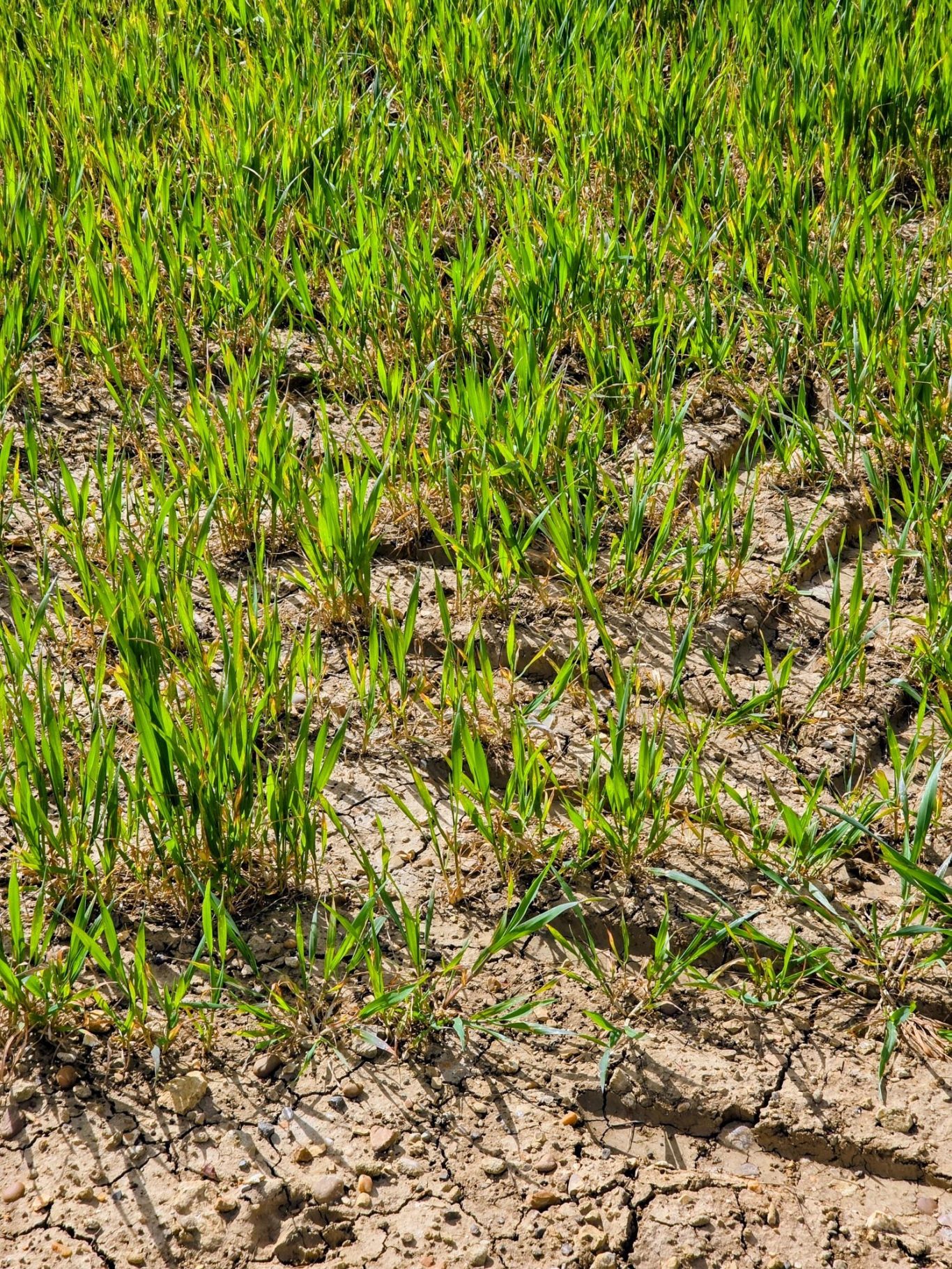
After a wet winter soils are now drying out
Lindsay Hargreaves - Chair of the Lark Abstractor Group will be speaking at the Investment in Farm Reservoirs Conference this week
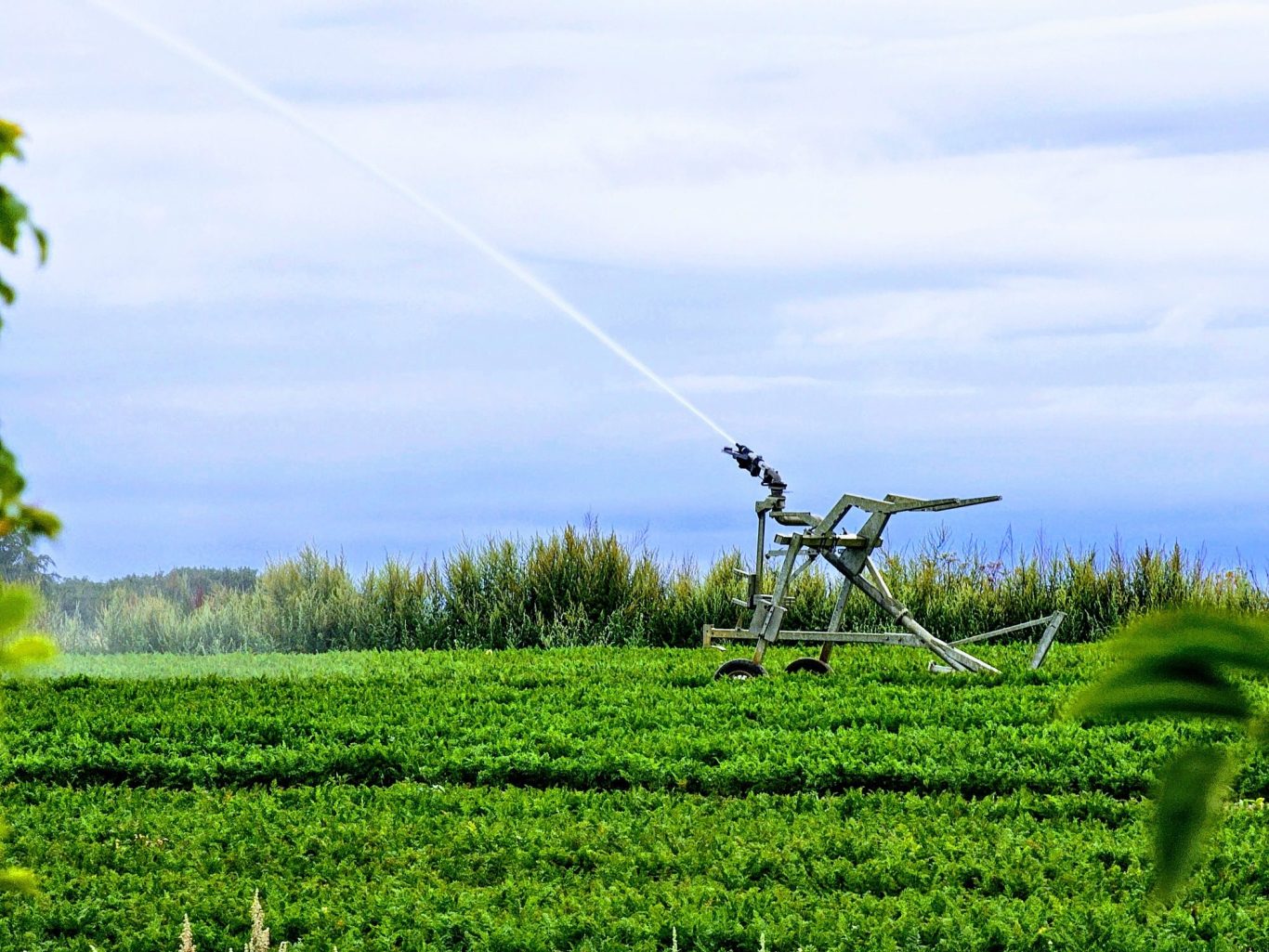
Updated irrigation prospects could still be moderate in North Norfolk
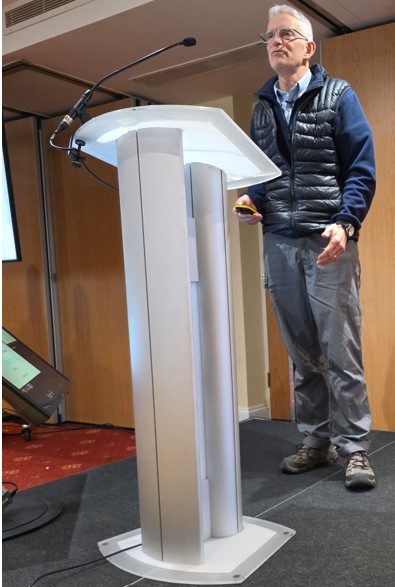
Jerry Knox from Cranfield University speaking at this year's UKIA Conference
01/04/2026
While the Middle East conflict impacts on the agriculture sector continue to be highlighted in the media especially around energy and fertilisers, one area that hasn’t been focussed on is irrigation. Could the declining stocks of red diesel and potential electricity cuts affect the sector’s ability to irrigate this season with water required to be pumped from rivers, boreholes and reservoirs?
The latest Defra Farm Report states that red diesel was the most common fuel type in 2023/24, with 98% of farms using it, equating to around 50,500 farm businesses. This was closely followed by mains electricity at 96%.
Andrew Blenkiron, Managing Director of Elveden Estate (growing over 75,000 tonnes of potatoes, onions, parsnips and carrots each year) in Suffolk admits there could be logistical problems: “Thankfully, we don’t pump any water with red diesel, but we obviously use it to move the [irrigation] kit around and grow and harvest crops.”
Price hikes in red diesel are already affecting the business. Andrew explained: “The doubling in cost is already having a financial impact - an extra £1,600 per day at the moment to get planted. Supply is being maintained for now, but any tightening on that front will obviously cause us significant issues.”
As for electricity concerns Andrew explains: “Hopefully, our notional energy infrastructure can cope with the reduction in gas volumes, especially during the summer with so many renewables about. Thankfully, we are keyed into a long-term electric price for this season, so that won’t negatively impact on us…for now, that is. That will help with water for irrigation (and refrigeration).”
With the Met Office forecasting a higher than normal chance for a dry April this could aggravate cost pressures on agriculture businesses with an early and increased need for irrigation. March’s UK rainfall was just above the long-term average at 102%, continuing a notable sequence of wetter-than-average months. March is the fifth consecutive month since November with above average UK rainfall.
The overall figures do hide regional variability with England generally the driest in the UK, recording 17% less rainfall than the March average. There was also a pronounced north–south split, with northern England seeing 14% above average and southern England 37% below. Catchments in East Anglia received low rainfall ranging from 42 – 85% of average for the month.
The Environment Agency has formally announced the end of the drought which started last year. It recently published that all catchments in England have now returned to normal following the remaining East Anglian catchments moving out of recovery.
Envireau says that whilst this is welcome news for abstractors, it is important to remain cautious and monitor developments closely. Now is exactly the right time to review future water requirements and invest in resilience measures.
The initial prospects for irrigation are good this spring for most parts of England (apart from East Anglia which is moderate) and an updated report will be published at the end of April. In East Anglia most farmers with storage reservoirs have been able to refill them but some did see a delayed start to the season due to local conditions. The EA encourages farmers with concerns over water availability to contact their local office to discuss options to help them prepare for the irrigation season. It’s understood a small number of farmers have already done so.
More Water Abstractor Groups are also being set up, including one in the South Level within the Ely Ouse catchment in Norfolk, following hands off flow abstraction licence conditions kicking in last year affecting irrigation of crops.
Meanwhile, The Food and Drink Federation (FDF) said in response to the war that food and non-alcoholic drink inflation, previously expected to ease to 3.2% by December 2026, would now climb above 9% by the end of the year.
The government also appears to be starting to make contingency plans for agriculture with today’s publication of the Defra fertiliser survey asking farmers whether recent fertiliser price changes have affected them.
Lee Stiles, secretary of the Lea Valley Growers’ Association said his glass house members who represent London’s salad bowl growers producing peppers, tomatoes and cucumbers are considering stopping growing this season. Lee said his members: “Would lose less money by sending workers home, pulling the plants out and turning off the boiler. They would still lose money but less. It’s not much of a choice.”
Back in November 2025 McCain’s Farmdex report revealed that 74% of British farmers were already pessimistic about the future of UK farming amid economic uncertainty, shifting policies, and climate change. 51% of farmers had also considered leaving the industry in the past year due to financial strain, while only 4% believed current government support is adequate.
UKIA members can now access all the presentations from the 2026 Annual Conference: Farming the Future at https://www.ukia.org/2026-conference-using-existing-resources/.
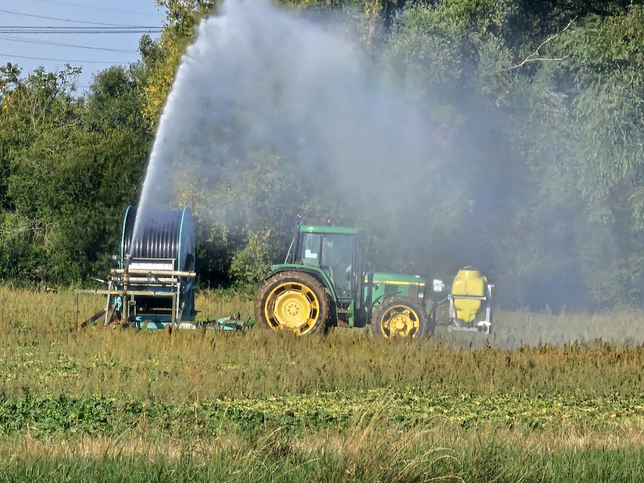
The Environment Agency’s Initial Irrigation Prospects are good across England except in East Anglia
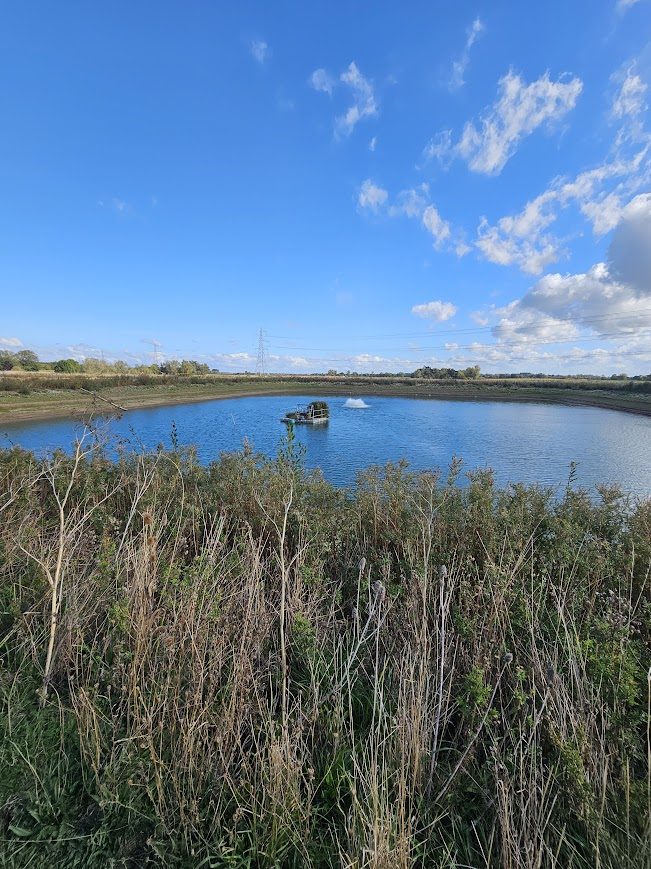
Farmers should contact their local Environment Agency office if they have concerns about refilling their reservoirs
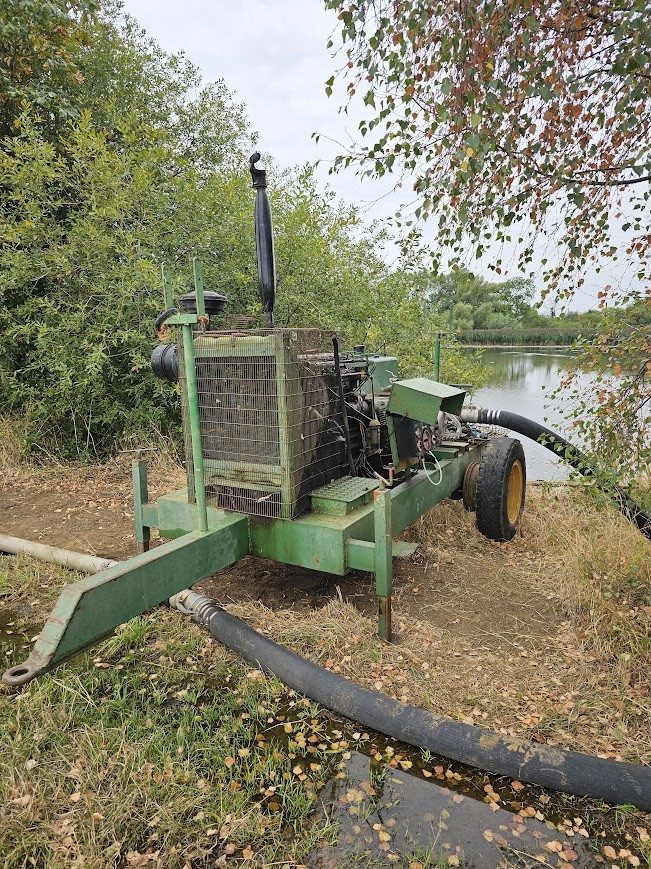
Lack of red diesel could impact on irrigation operations this season
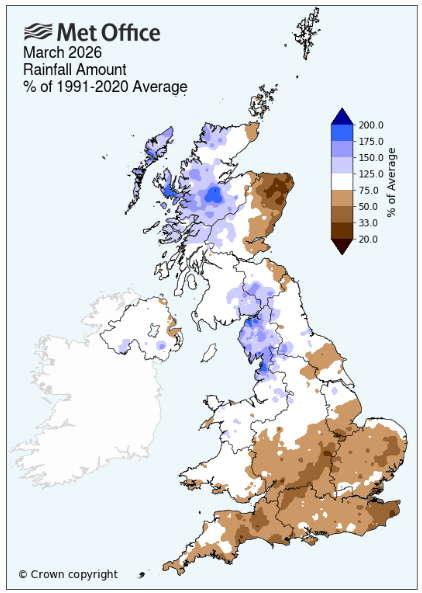
March’s UK rainfall map – Met Office data
15/03/2026
UK food security is back in sharp focus following the eruption of the war in the Middle East which has drastically raised energy and fertiliser prices threatening farming production in the country. Glasshouse growers are preparing to shorten the production season, seeking to import from abroad to maintain supply commitments.
With production from the Mediterranean already hit by flooding and supply chains facing the prospect of war disruption there is the increasing threat of rising food inflation for consumers. A dry start to March has meant farmers also have one eye on another possible drought affected year. Any combination of these factors could cause a food system crisis through food riots as outlined in the recent Sustainability Journal article, which looked at three trigger events - an international conflict, an extreme weather event and a cyber-attack.
East Anglia has received less than 15% of March’s total rainfall during the first ten days of the month. The latest Met Office forecast is predicting it will be more settled across the UK until the end of the month, with most places remaining predominantly dry. 2025 saw the driest spring in England since 1893.
The Environment Agency recently announced that summer irrigation prospects in East Anglia are only moderate, with groundwater likely to be normal or below normal without further sustained rainfall. This precautionary position reflects that some catchments in East Anglia have moved out of prolonged dry weather but only into a recovering state rather than back to normal.
Northwest Norfolk groundwater levels are expected to remain notably low. For the rest of England irrigation prospects are good, similar to this time last year before the start of the drought. The EA will update its irrigation prospects in the spring, but any farmers struggling to refill their winter storage reservoirs before the end of the month should contact their local Agency office for potential help.
In Scotland The Scottish Environment Protection Agency’s Winter Water Situation Report, shows that rainfall patterns over the past three months have varied significantly across the country.
Despite the UK experiencing one of its wettest winters on record, Scotland recorded around 14% less rainfall than the long-term average, with marked regional differences.
In the north-east of Scotland, including Dundee, Angus and Aberdeenshire, groundwater levels that reached record lows during the 2025 drought have now recovered to between normal and very high levels for the time of year following significant winter recharge.
However, recovery in other eastern areas has been more variable. In Fife and parts of the south-east, groundwater levels are now generally normal for the time of year but remain lower than levels recorded ahead of the 2022 drought.
Eleanore Cooper, SEPA’s Head of Environmental Forecasting and Warning, said: “As our climate continues to change, preparing for periods of water scarcity is becoming increasingly important. The cooperation we saw from farmers, industry and other water users last year played a vital role in protecting Scotland’s water environment. Planning ahead now is essential. The actions that reduce the impact of water scarcity, such as improving efficiency and reviewing contingency plans, must be taken before dry conditions develop.”
SEPA will begin weekly water scarcity reporting in May, closely monitoring how conditions develop across the country as Scotland moves into the spring and summer period.
The Growing Voice presented on What Next for Agriculture Water Resources at the UKIA’s recent annual conference - Farming the future: Getting the best from available water resources. Look out for all the presentations on the UKIA’s website.
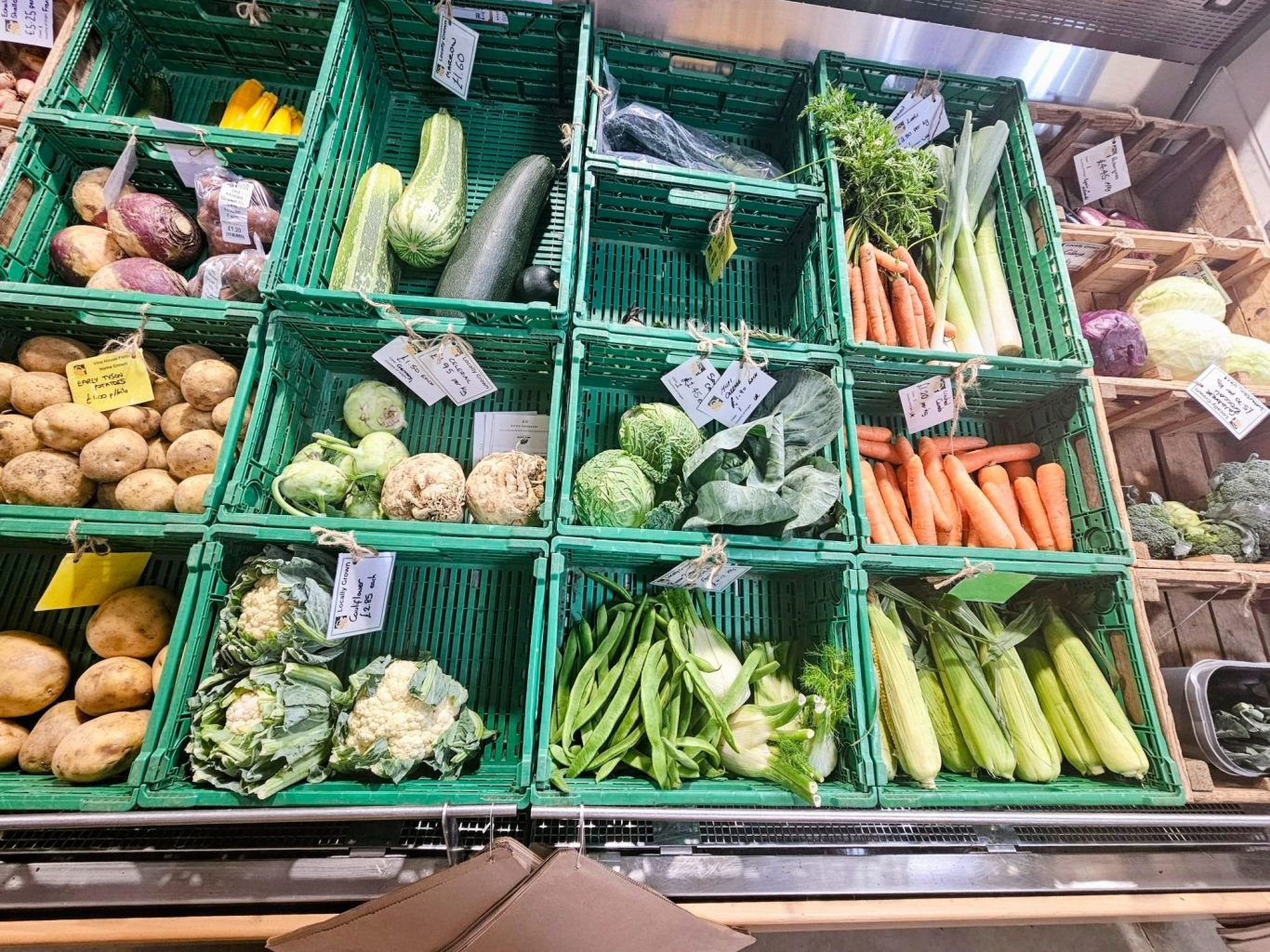
Food security is back in sharp focus given repercussions of the conflict in the Middle East
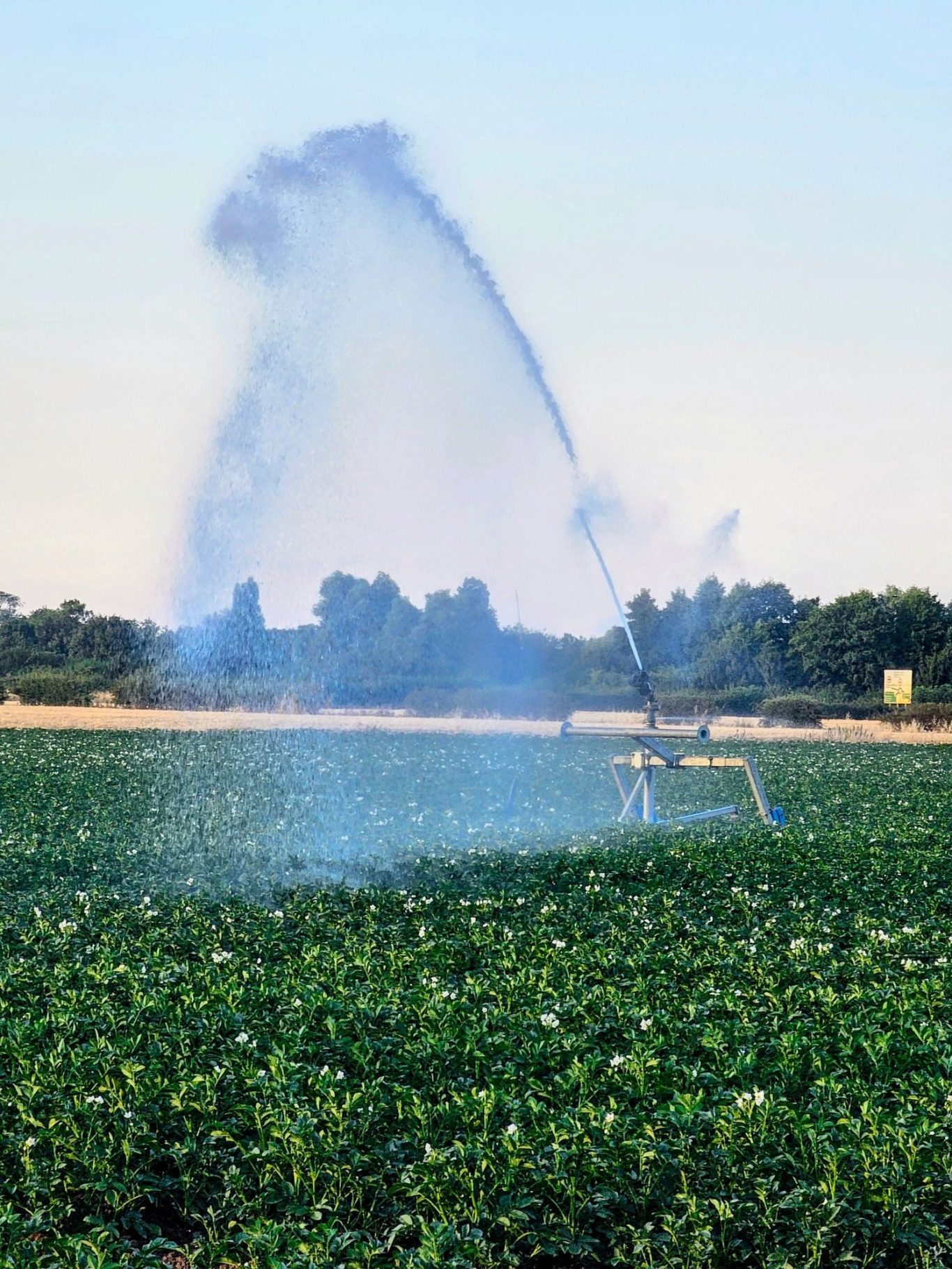
Irrigation prospects are only moderate in East Anglia with a mainly dry March forecast
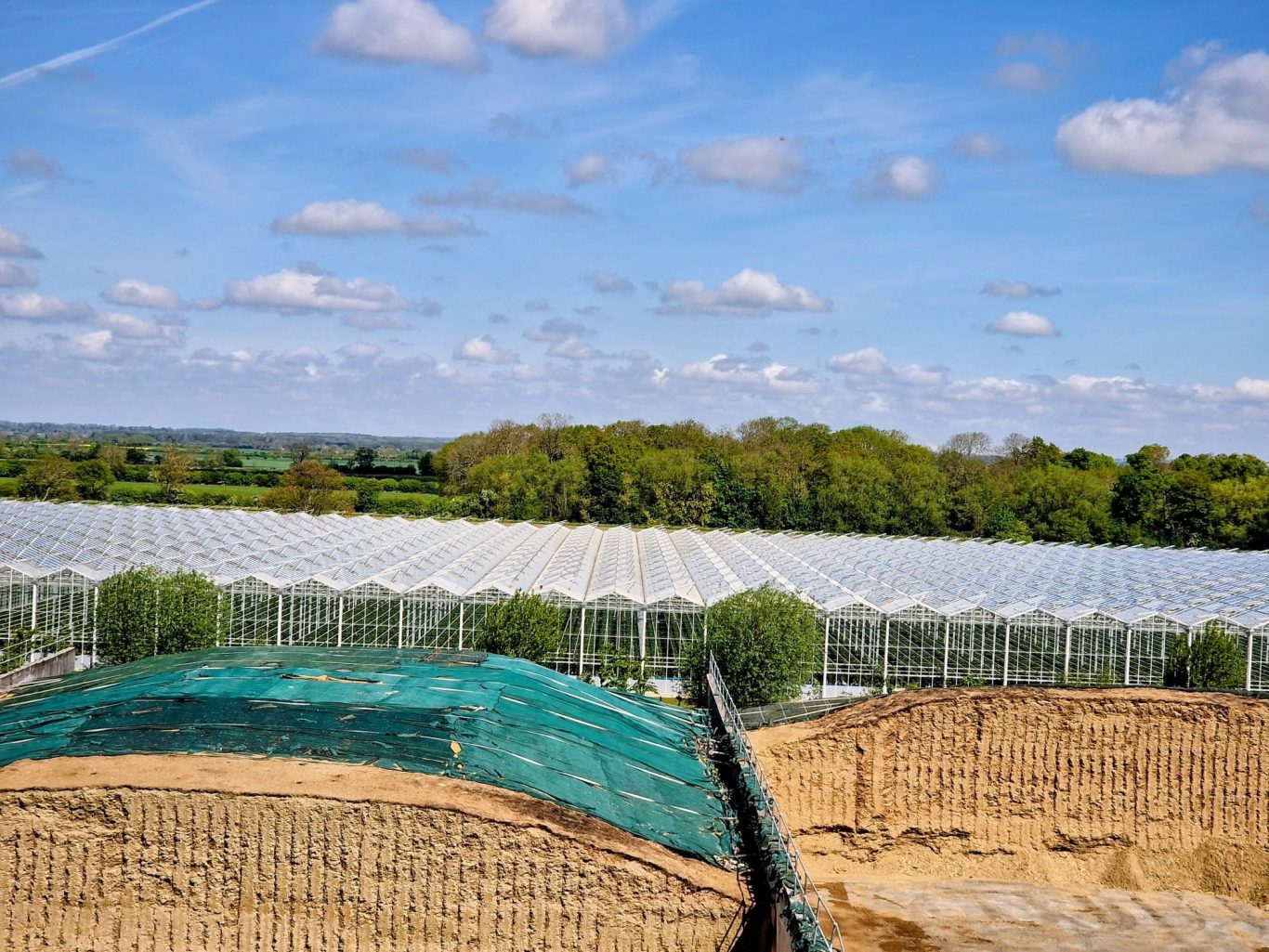
Spiralling energy costs are already threatening glasshouse production
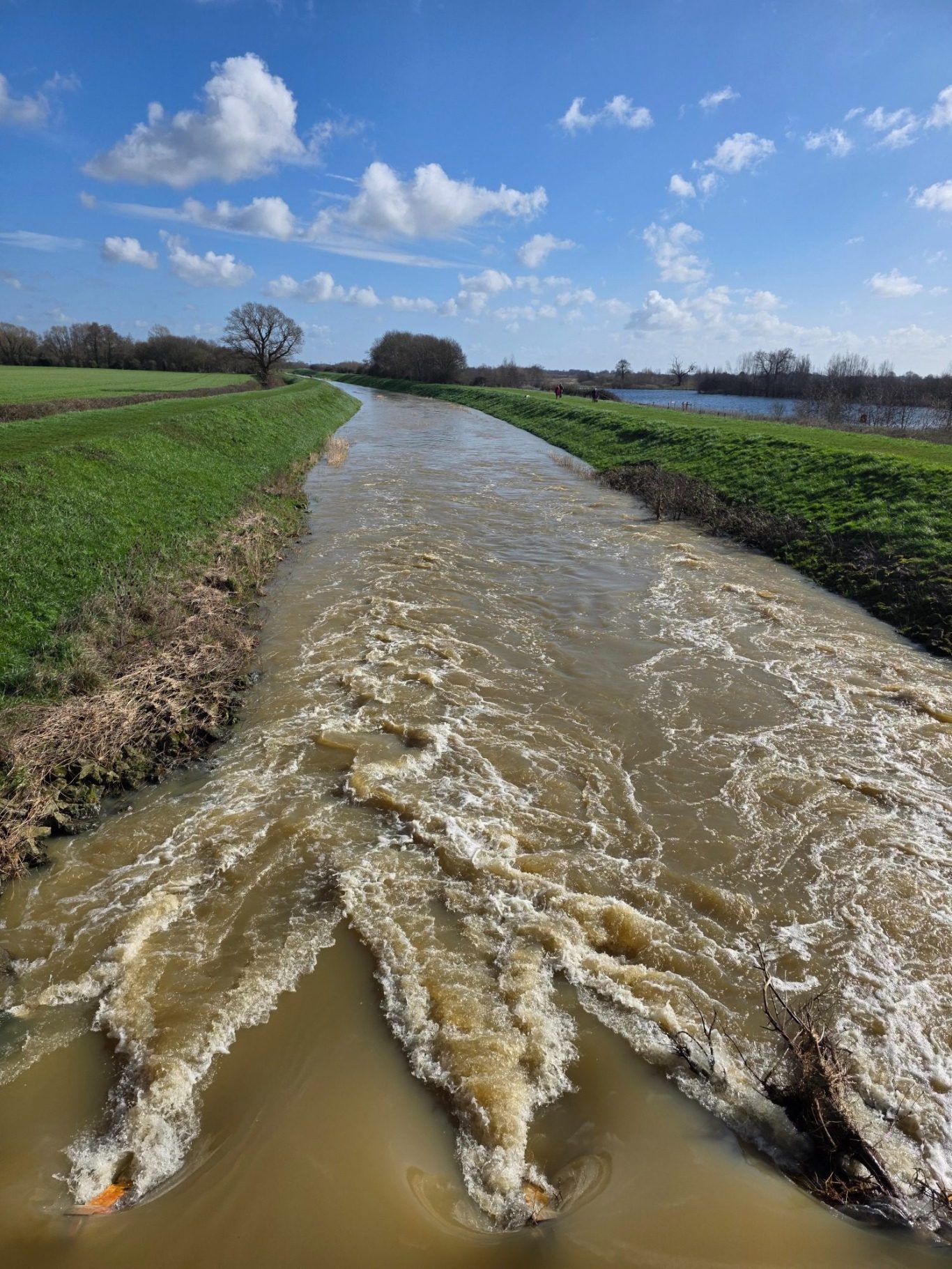
Farmers should contact their local Environment Agency office if they are struggling to fill their reservoirs
15/02/2026
With parts of the country having already received over twice the average volume of rainfall over January, deluge is more on the lips of farmers at the moment rather than drought.
In Scotland more than 277mm of rain fell on Aboyne in Aberdeenshire during January alone - about four times the monthly average. The intense wet start to the years has continued into February with Aboyne recording 107 mm during the first nine days of the month. Aboyne has already recorded around half of its annual rainfall this year.
In contrast Aviemore, on the opposite side of the Cairngorms, recorded only 1.8mm. Sunshine was last recorded in Aberdeen three weeks ago, on 21 January and finally returned for 30 minutes on the 12th February.
With flooding evident across the country, especially in areas like Somerset farmers are reporting fields of winter cereal, grass and herbal leys under water which may in some cases need redrilling. Forage levels have already been heavily impacted by last summer’s drought. There is an increasing tendency for an annual cycle of floods and drought as highlighted by the Climate Change Committee. Newcastle University has indeed reported this week that UK winters are becoming wetter in response to fossil fuel driven warming.
It is time that an extreme weather department was set up by the Environment Agency to reflect managing these outliers in a more integrated way, acknowledging that they are part of the inherent hydrological continuum that farmers and others are facing on an annual basis.
Aquifer water levels are still low in some parts, while river flows are generally very high. Anthony Hopkins – Chair of UKIA reports that the Joseph Camm Farms reservoir near Retford is virtually full, having pumped 26 million gallons (118,000 cubic metres) over the winter.
Salinity issues have however been seen in Norfolk affecting reservoir refill. Many farmers are looking at rainwater harvesting as a useful potential source to boost farm reservoir refill. Water quality issues aren’t limited to farm reservoirs. Essex & Suffolk Water’s Abberton and Hanningfield reservoirs have been hit by a number of operational problems including high nitrate concentrations in river water, constraining their refill.
Farming groups are being encouraged to contact the EA if they are struggling to refill their reservoirs beyond the winter abstraction season. Guidance is available at https://www.gov.uk/guidance/water-abstraction-flexible-options-in-exceptional-dry-weather. It’s understood a few farmers have already come forward to take advantage of this potential help.
Although the EA’s initial irrigation prospects aren’t out until the end of the month it’s reasonable to assume that they will be generally good and at worse moderate (in parts of East Anglia for example where groundwater levels are still relatively low).
Drought was one of the topics discussed at the recent NFU East Water Conference held at Elveden Hall in Thetford. Mark Betson, the NFU’s National Water Resources Specialist remarked that although parts of East Anglia including north Norfolk have been relatively dry over the winter the EA drought prospects report “doomsday scenarios have not come to pass.”
While colder settled weather is set to dominate over this weekend more stormy wetter conditions from Atlantic low pressure systems is predicted by the Met Office for the rest of February. The current low confidence meteorological signal for the first half of March is a mixture of unsettled periods and dry conditions.
Mark Betson also highlighted the looming abstraction changes on the regulatory landscape including time limited licence renewals and Environmental Destination impacts. More Environment Agency consultation is on the cards with the Environmental Improvement Unit Charge residual funds use and reservoir safety reform programme plus the recently announced Proposed Regulatory Position Statement for low-risk abstraction activities.
Mima Boardman, the EA’s Water Resources Senior Advisor focussed on agriculture gave an update on the drought situation across the country. Only the North-West Norfolk, Cam & Ely Ouse, and Essex catchments remain in prolonged dry weather status. This is the first time since 29 May 2025 that England has been drought free. Mima also highlighted progress on the local resource options screening studies programme which is deep into its second round of projects.
Teresa Meadows from Water Resources East (WRE) presented on the smart agri-abstraction trial in the Upper Cam catchment carrying out real-time dynamic abstraction management to enable increased water resources for abstractors. Teresa also described the work on Environmental Destination which sets out the Government’s long-term ambition to restore and protect England’s water environment, ensuring sustainable abstraction that balances the needs of nature, people and the economy in the face of climate change and growing demand. There are several water resources catchment workshops being run by WRE over the next few weeks covering Environmental Destination. For more information please contact environmentaldestination@wre.org.uk. WRE’s latest Regional Water Resources Plan Progress Report was published recently with a recording of the associated February webinar available here.
Steve Moncaster Managing Director of Norfolk Environment Food and Farming gave a presentation on the water resources planning his Water Abstractor Group is undertaking in the Broads.
Tim Harper the director of Lincoln Water Transfer Ltd talked about the sharing of water amongst his members allocating it according to a collectively agreed-upon protocol. He covered how the group is approaching the licence renewal process set against the future climate change and regulatory challenges by considering conjunctive involving managed recharge.
There was discussion about the optimal size of Water Abstractor Groups. Tim argued for smaller ones to meet operational and licensing needs, while Steve Moncaster highlighted the benefits of larger formations for abstraction policy and modelling to understand and mitigate against regulatory changes.
Mima Boardman, Teresa Meadows, together with the Growing Voice are amongst the speakers at the UKIA’s Annual Conference - Farming the future: Getting the best from available water resources. The event is on the 4th March at Orton Hall, Peterborough. Book now with limited places left and more information available here.
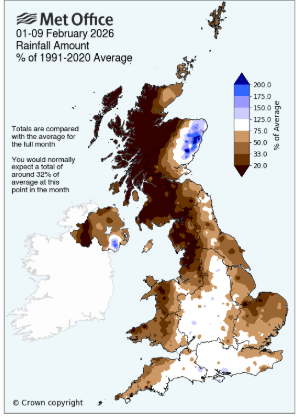
Met office map of rainfall across the UK during the first few days of February 2026
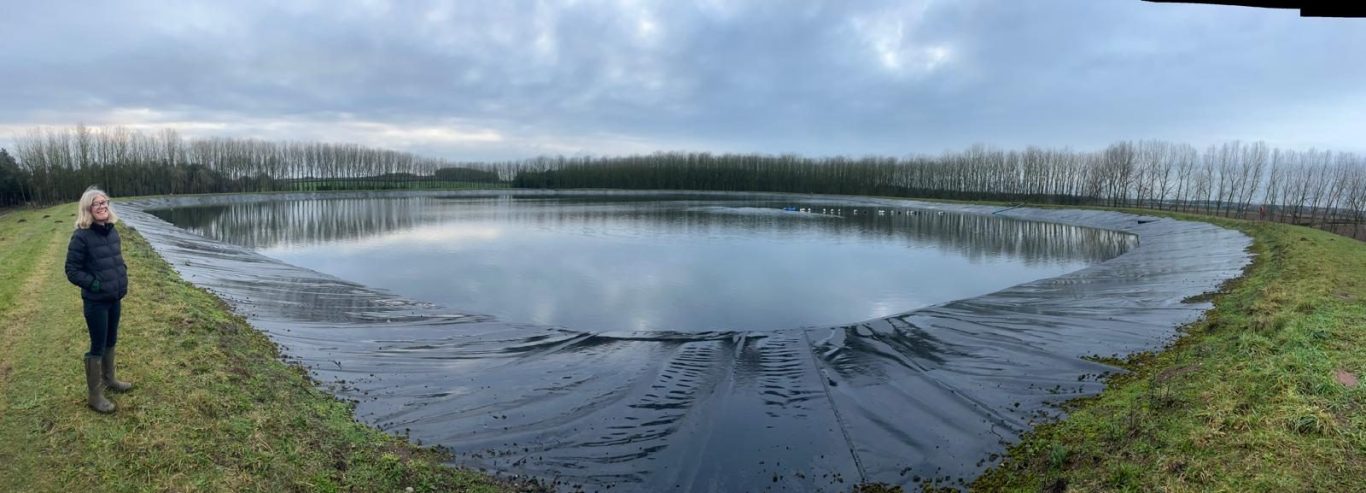
Joseph Camm Farms reservoir near Retford is virtually full after pumping 26,000 gallons over the winter. Photo courtesy of Anthony Hopkins.
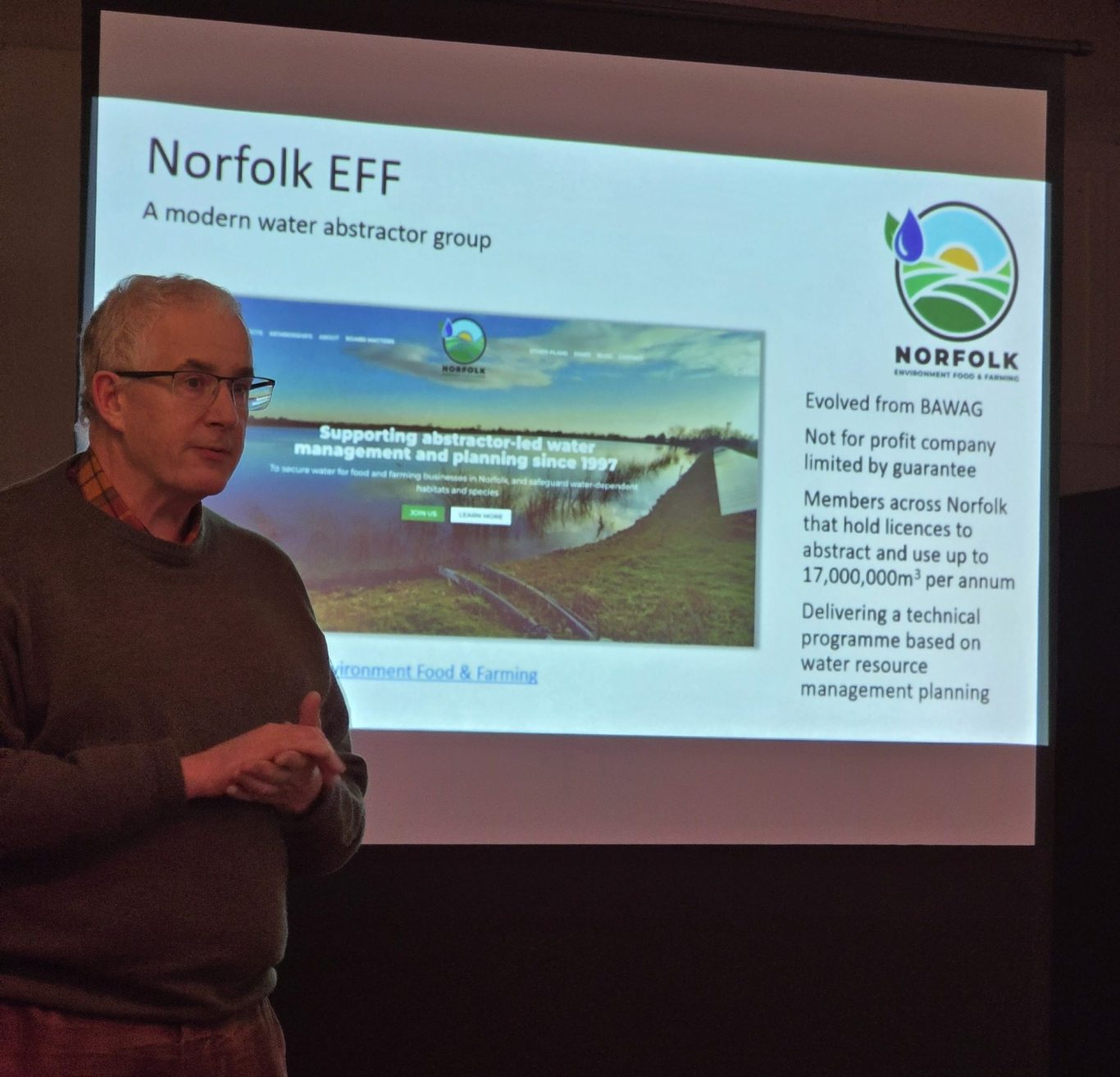
Steve Moncaster - MD of Norfolk EFF presenting on water resources planning at the NFU East's recent Water Conference
Aboyne has received close to 50% of annual rainfall already in early February 2026. ©BBC
18/11/2025
Last week was all about the C word in Water Resources. No, not the damaging effects of Storm Claudia causing severe flooding in Monmouth and Wales and three deaths in Portugal. Rather it was collaboration as the word echoed from the British Water Conference through to Envireau’s Beyond Drought Conference and ultimately into the Environment Agency’s (EA) Drought Prospects.
Emma Hardy, the Water Minister speaking at the British Water Conference said: “Collaboration. The theme of this conference isn’t just nice words – it’s the only way we are going to succeed.” At Envireau’s Beyond Drought Conference Collaboration was also a strong theme. The Growing Voice explored how abstractors and regulators can collaborate to help improve water resilience in a changing climate. The Environment Agency’s Drought Prospects Report also pushed for more collaboration across all sectors, with a list of recommended actions.
The headline from the Drought Prospects report is that it will take at least 100% of long-term average (LTA) rainfall between November and the end of March for the vast majority of areas in England to return to near normal status. However, the area around Cambridge and Bedford could be more vulnerable due to the groundwater levels not fully recovering. Under drier conditions (80-60% of LTA) there is an increasing risk of drought predominating across the country.
Farm reservoir refill prospects are good across most parts of England under the 100% of LTA rainfall. However, where groundwater or river flows are below normal over the winter, there is a risk that some reservoirs may not completely refill ahead of the irrigation season. This is because there may be some local restrictions on abstraction. The message for farmers is that they should take the earliest opportunity to refill irrigation reservoirs if conditions allow, to ensure that they increase their water resilience for next year. Farmers should be ready to take water during any high flow events to maximise the fill of on farm reservoirs.
Speaking on BBC Farming Today EA Water Resources Manager Andy Turner reiterated: “It is really important that farmers take every opportunity to fill reservoirs when water is available. There is the real prospect of reduced access to water and some restrictions being in place next summer, so we want farmers to consider their water requirements for next year now and to look at the business risks of not having that water. They shouldn’t just hope for rain.”
The EA has also identified other actions farmers can undertake including trading water rights, forming abstractor groups to share water or applying for variations to their abstraction licences so they have enough resilience in place. However, apart from the cost of varying an abstraction licence the major concern for farmers is the reliability of water to fill a reservoir. Summer hands off flow conditions can be so high in many water scarce catchments (in order to protect the environment and other water abstractors) that there are few opportunities to abstract following significant rain.
Under the drier scenarios there is an increasing risk that Section 57 spray irrigation restrictions may also be required during the spring across some areas of the country. This is especially the case if groundwater and river flows are significantly below average. The biggest fear for the agriculture sector is irrigation restrictions, especially those affecting groundwater licences, which typically don’t have an equivalent hands-off flow or level cessation condition that many surface water licences have. Groundwater S57 restrictions were last applied during 1992 summer in the Lark catchment in Suffolk. The Growing Voice recommends that to understand the full methodology, rainfall analysis and output statistics from the report that Appendix A should be read in detail.
The EA has also produced a complementary report on Prospects for winter refill of irrigation reservoirs and drought forecast for 2026. This has the same content as the full report but is streamlined for the agricultural sector and follows the format of its irrigation prospects reports which are published in February and April. This outlines the prospects for not only winter refill of farm storage reservoirs but also the potential of abstraction restrictions in spring 2026 under different winter rainfall conditions.
NFU Vice-president Rachel Hallos responded: “With farmers and growers making decisions on what to plant for 2026, we must try to mitigate the impacts now. A good start would be more flexibility with abstraction licences, including extensions to winter licences, so if it rains after March next year and water is available, anyone with a reservoir can take the water they need.”
The NFU has just published its Abstracting floodwater outside of licence conditions during flood events reminding farmers how they can take advantage of the Environment Agency’s Regulatory Position Statement. The NFU has also just published its latest guidance on funding, planning and licensing of farm reservoirs. Ahead of next week’s budget the NFU is calling for further rounds of the water management grant and support for additional tax incentives towards building reservoirs for on-farm resilience.

The Growing Voice presenting at Envireau's Beyond Drought Conference highlighting the importance of collaboration between abstractors and regulators (Photo courtesy of Thomas Enright)

The Environment Agency is calling for farmers to use all opportunities to refill reservoirs

There is increased risk that Section 57 spray irrigation restrictions may be required in the spring if winter rainfall is less than 100% of long term average

Reservoir refill prospects under 100% of long term November to March average rainfall
1/11/2025
On Thursday the National Drought Group warned England must prepare for this year’s drought to continue into 2026, unless there is significant rain over the autumn and winter.
The meeting however provided little practical help for farmers and growers beyond existing measures during the “nationally significant incident.” Farmers have been urged to check their licences and speak to the Environment Agency if they are likely to need flexibility. They have also been asked to look to increase reservoir storage and work with their neighbours to share water, where possible.
There was no reference to the publication of the winter irrigation prospects, although it is understood to be available later this month.
The government’s focus is understandably on public water supply ensuring customer taps remain on through allowing water companies to take more water in the winter through drought permits and orders. Water Minister Emma Hardy said: “We are closely monitoring all regions - especially those still experiencing drought – and working with the National Drought Group and water companies to maintain supplies.
“We face increasing pressure on our water resources. That is why this Government is taking decisive action, including the development of nine new reservoirs to help secure long-term water resilience.”
However, there was no offer of comparable support for agriculture in the form of a new round of the water management grant to enable increasing the required level of farm reservoir storage.
The Environment Agency highlighted the water resources position. England needs at least 100% of average rainfall (482mm) to largely recover from drought by the end of March next year. For context, only two months of 2025 have seen more than 100% so far.
National Drought Group chair Helen Wakeham echoed the words of the government: “The changing climate means we must prepare for more droughts. Securing our water resources needs to be a national priority.”
Met Office Chief Meteorologist, Dr Will Lang, said: “By 28th October, provisional data shows England had only 61% of its expected annual rainfall, when we’d normally have about 80% at this time of the year (based on 1991–2020 average). While recent rainfall has helped, regional variations remain, and drought conditions continue to affect several areas.
“Looking ahead, there is an increased risk of dry spells through late autumn and early winter and regional differences in rainfall continue to be likely. Without sustained and widespread precipitation, a consistent recovery from drought remains uncertain.”
On the 20th November the Farming Advice Service is running a free webinar on Improving Water Resilience on Farm supporting farmers in England to reduce their vulnerability to future climate and water risks. Jerry Knox (Professor of Agricultural Water Management at Cranfield University) will be presenting.
In Scotland the Scottish Environment Protection Agency's (SEPA) latest water scarcity report marks the end of weekly water scarcity reporting for 2025 with all areas at Alert level or below and all abstraction restrictions across Scotland lifted.
Peter Wright, Unit Manager in Regulation, Business and Environment, said: "Following recent rainfall and improving river conditions, all abstraction restrictions across Scotland have now been lifted. Over the next week, SEPA will issue communications to agricultural businesses with abstraction licences, advising how future significant water scarcity situations will be managed. This will help businesses plan ahead, consider future land use, and manage their activities and land in a more climate-resilient way."
SEPA's next report will be published at the end of autumn and will summarise how weather conditions during September, October and November have impacted water resources across Scotland.
The Met Office 3 month forecast has recently said that the chance of a dry 3-month period for the UK as a whole is higher than normal. The latest Met Office forecast is for the unsettled weather to largely continue into mid-November followed by a possibility of developing high pressure. However, there is a very high level of uncertainty associated with the late November forecast.

While government asks for more reservoir storage farmers are waiting for a new round of the water management grant

November typically marks the beginning of the farm reservoir refill season from winter high flows.

The agriculture sector awaits the winter irrigation prospects

The Environment Agency is encouraging farmers to share water
26/10/2025
The agriculture sector will be focussed on the National Drought Group’s meeting on Thursday and the publication of the winter irrigation prospects.
Meanwhile, the Environment and Climate Change Committee this week launched a new inquiry into drought preparedness. The aims of the inquiry include understanding how drought will affect England in the short- and long-term, particularly in response to climate change and identifying the opportunities for improved drought preparedness and response.
The deadline for submitting written evidence is Monday 24 November. The Committee is seeking answers to a number of questions. These include potential risks of increased drought in England to the rural environment and economy as well how Government considers drought management alongside its other priorities such as food security and flood management.
Drought has already been highlighted in the media this weekend with concern over climate change and impacts on water resources. Dr Geoff Darch, Head of Strategic Asset Planning at Anglian Water said: “I think we've got to a point now where we have to realise that water is a precious resource, it's something that we all have to look after so that we have it for future generations and for the environment and with climate change and drought, we will need more reservoirs."
The NFU is already working with individual members and groups of members (such as Water Abstractor Groups) to try and build water resilience within the agriculture sector over the winter and beyond. With worries over how heavily drawn down and empty reservoirs will refill over the winter the NFU’s advice is to take every opportunity to access water under licensed conditions to be able to refill reservoirs.
For those farmers and growers who are reliant on boreholes the situation is equally concerning. With extremely high soil moisture deficits generated through this year’s hot and dry weather a wet autumn is also required to secure meaningful groundwater recharge to recover water levels.
John Adlam from Dove Associates has commented on the current water resources position of the ornamental and glasshouse sector. Rain came at the right time, so tree lifting and rose lifting is very active currently. However, there has been a lot of unusual early leaf drop this year, not due to natural abscission, but the leaves just dying through dry weather.
John stressed how growers are working together on securing their water needs amid this year’s dry weather which has affected plants sales and threatens to impact on future years investment programmes. He said: “We're certainly seeing a lot more collaboration with people looking at sharing reservoirs and looking at ways in which they can increase their resilience”. However, he is concerned over the lack of reservoir panel engineers, especially if reservoirs between 10,000 m3 and 25,000m3 are brought into regulation, increasing their workload.
John described rainwater harvesting being in “full swing.” He has several clients who are looking at supplementing or even substituting their mains water using captured rainwater. Lack of water storage space is a major challenge for many nurseries with very high tanks above 4.5 metres being installed to reduce their ground footprint. Tanks of this size can hold up to 900 m3.
John Patrick from the East Suffolk Water Abstractor Group has highlighted the work that his members are already doing to improve their resilience. Building on the success of the frequently cited Felixstowe Hydrocycle project, construction is planned to begin next year on two similar projects at Hollesley and Butley.
However, he is critical of the lack of funding commitment from government on another round of reservoir funding, or on actually implementing the excellent Local Resource options (LRO) screening studies findings.
The latest water scarcity report from the Scottish Environment Protection Agency (SEPA) shows conditions are gradually improving but parts of the north and east have not yet recovered. The Avon, Lower Spey and part of the Ythan remain at Significant Water Scarcity, while the Deveron and the rest of the Spey and Ythan remain at Moderate Scarcity.
Ellen Willmott SEPA Principal hydrologist in Water Resources, said: “As we move into more unsettled and typically autumnal weather, we’re starting to see gradual recovery in some areas. However, the length of time that rivers have been at low flows shows the accumulated impact of the dry conditions over recent months.”
The Met Office is forecasting unsettled weather to continue into mid November as low pressure predominates before a trend for more drier settled conditions is established.

Rainwater harvesting is in "full swing"

John Patrick from East Suffolk Water Abstractor Group at the Felixstowe Hydrocycle

Concern over winter refill of farm reservoirs

Water tanks optimising a small footprint and large storage are crucial for many nurseries
20/10/2025
With the return of significant rainfall this weekend, farmers will be hoping that the generally unsettled UK weather forecast by the Met Office over the next few weeks will see refilling of reservoirs start sooner rather than later.
There are currently 465 hands off flow restrictions in force on abstraction licences in England, where river flows remain low. The number of hands-off flow restrictions will change at the start of November when summer licences expire and winter reservoir refill licences come into effect. The Environment Agency (EA) will be issuing a winter irrigation prospects report similar to the conventional spring forecast to help farmers understand their refill potential.
The EA’s East Anglia Area has already warned that for irrigation to be ‘good’ next year, significant consistent rainfall (80-100% of Long Term Average) is needed over the winter period. Unless soil moisture deficits fall facilitating good aquifer recharge irrigation prospects are likely to be poor or moderate going into spring 2026.
In the latest Monthly Water Situation Report the Area states that surface water flows are projected to continue to decline with an increased likelihood of notably low and exceptionally low flows in March 2026. Groundwater levels are projected to continue dropping and have a high chance of being either below normal or lower levels by March 2026. Nationally, by the end of March 2026, groundwater levels have the greatest chance of being below normal or lower across most of the country.
More information will be shared at the Agriculture Subgroup meeting of the Environment Agency’s National Drought Group on Thursday.
In Scotland several rivers in the north and east remain at unusually low levels, reflecting both the scale and persistence of this year’s dry conditions. The latest water scarcity report from the Scottish Environment Protection Agency (SEPA) shows that the River Avon, Lower Spey, and parts of the Ythan remain at Significant Water Scarcity. SEPA continues to manage a limited number of restrictions on abstraction licences in these areas to protect the environment.
Anthony Hopkins, Chair of the UK Irrigation Association (UKIA) and Managing Director of Wroot Water has highlighted the importance of long-term investment in water infrastructure. Joseph Camm Farms near Retford, is the family farm of his wife Ruth and her daughter Priscilla and boasts a 40-million-gallon (182,000 m³) reservoir. However, this year’s stored water levels have been among the lowest Ruth has seen. Anthony said they weren’t over concerned as: “We renewed about nearly one thousand metres from the pump from the River Idle with polyethylene pipe. The first year we renewed this pipe, the reservoir was filled in four weeks.”*
With announcements on the next round of the Water Management grant still awaited the British Berry Growers recently published their 2025 Sustainability Report. There has been a big increase in the number of farms with reservoirs so that water is available when needed. More than half (57%) of berry growers now have one or more reservoirs, with their reservoirs typically meeting just under half of their total water needs. A more recent development is the use of systems to capture roof water from polytunnels, with 30% of growers now capturing rainwater in this way to provide just over 22% of their average water needs.
Envireau Water has arranged the timely event: Beyond Drought: From Risk to Resilience. Taking place on 12th November 2025, this one-day event brings together a number of diverse expert speakers from leading organisations and regulators to examine when dry weather becomes drought, how to manage its impacts, and what true resilience looks like. The lineup includes Andrew Francis, Managing Director, Home Farm (Nacton) who has over 30 year’s experience in agricultural business. Andrew looks at the options for managing and optimising abstraction during prolonged dry weather while The Growing Voice explores how abstractors and regulators can collaborate to help improve water resilience in a changing climate.
Phil Ham, Managing Director of Envireau Water commented: “This event will be of particular interest to the agricultural sector. Whilst growers and irrigators are all too familiar with the challenges of unpredictable weather, 2025 highlights the need for a step change in the way available water resources are managed and regulated. This conference provides a platform to share experiences from across the public water, agricultural and other sectors; discuss practical opportunities to improve drought resilience and explore how abstractors and regulators need to work together to deliver collective responses.”
See the full programme and for any queries please email marketing@envireauwater.co.uk or call 01332 871 882.
* See the next The Growing Voice Newsletter for the full article “From Reservoirs to Ring Mains”.

Environment Agency's East Anglia groundwater level probabilistic forecast for March 2026

Dry soils in Rutland threatening the chances of good irrigation prospects for 2026

Joseph Camm Farm's 182,000 m3 reservoir bolstered by an improved pipeline from the River Idle

Envireau Water's Beyond Drought Event -12th November
12/10/2025
Drought continues to affect the UK, with a growing North-South divide in England and a persistent East-West split in Scotland. Regulators in both countries continue to express concern over winter rainfall being sufficient to improve the current water resources situation.
Drought has been declared in Sussex for the area supplied by South East Water due to declining water levels at Ardingly Reservoir. Richard O’Callaghan, Area Environment Manager at the Environment Agency (EA) said: “Autumn and winter may feel like there is an excess of water at hand, but the climate is changing.
“A few bursts of recent rainfall do not undo several dry months of cumulative impact. It will take sustained rainfall to address prolonged dry weather and replenish reservoirs and rivers.”
Farmers and growers are continuing to experience issues with drier conditions having returned across the south and east, leading to concerns regarding refill of winter storage reservoirs for next year’s irrigation season. Drier conditions and low river flows in the south and east mean that hands off flow restrictions on abstraction licences remain. There are still currently 456 restrictions in force on abstraction licences.
The EA is expected to publish its prospects report later this month covering the key risks and actions that all sectors (including agriculture) will take under different winter rainfall scenarios.
The Energy and Climate Intelligence Unit (ECIU) reported that this year’s record dry and warm weather has hit cereals and oilseed yields, reducing overall harvest volumes and making 2025 the second worst on record in England. This means that three of the five worst harvests on record in England have occurred this decade following periods of extreme weather.
Tom Lancaster, land, food and farming analyst at ECIU commented: “This is what farming with climate change looks like, as extreme weather wrecks harvests, hits farm incomes and reduces our food security. It should now be an urgent priority for government and business to support farmers to adapt to these extremes and build their resilience by investing in healthier soils and more climate and nature-friendly farming”.
Speaking at the Labour Party Conference recently NFU President Tom Bradshaw said in the Scottish Farmer: “Unless [food production] becomes a government priority, then it’s always going to be the poor relation… We haven’t seen policies that flow from the Labour manifesto line that food security is national security,”
Elveden Estate in Suffolk has strengthened its water security by building a 500,000 m3 reservoir to increase its resilience against drought. The whole engineering project has cost around £3 million including construction of the reservoir itself, geotextile membrane and associated infrastructure such as pumps, pipelines and high voltage electricity cable. The reservoir is linked to a ring main that has enough capacity to back pump to the other two reservoirs in the estate to provide additional flexibility in moving water around for irrigation.
Managing Director Andrew Blenkiron is the mastermind behind the reservoir. Andrew is also director of the local water abstractor group - Lark Abstractors Group (LAG). LAG members are concerned about how long the current dry weather will continue to impact both refilling winter farm reservoirs and recharging groundwater boreholes.
Andrew explains that the added reservoir storage has given his business an extra buffer against drought. “The plan is to be able to start every year with around half of our volume of water required for the worst season in reservoirs rather than in the groundwater. It has given us that element of protection, which is I think what we all need now.”
He explains the hydrological analysis that has gone into planning the reservoir. “The work that was done showed that in an average winter there is 60 days of flow reliability, and at the rate that we can pump (500 m3 per hour) and refill the reservoir in 40 days. But in an average year, there's usually enough to pump into this reservoir and fill the other two.”
In an average season the estate should also have enough volume left on its ground water licences to fill all three reservoirs. This illustrates the benefits of conjunctive use - utilising the combined sources of surface water and groundwater to optimise water resilience.
At the recent LAG meeting members discussed the importance of receiving earlier insights from the EA on summer irrigation prospects, especially regarding any likely impacts on abstraction licence restrictions. LAG Chairman, Lindsay Hargreaves strongly supported this initiative as a key element of the collaborative approach to water resources management between farmers and the regulator in the catchment.
In Scotland although Storm Amy helped restore river levels and soil moisture in many areas, rainfall totals varied sharply from west to east. Around 300 mm fell on Skye compared with just 17 mm in the Lower Spey. The River Avon and Lower Spey, along with parts of the Ythan, remain at Significant Scarcity due to continued low flows.
The Scottish Environment Protection Agency (SEPA) is reporting that while the west has largely returned to normal, the north-east remains vulnerable and could deteriorate again if dry weather returns. Groundwater levels in the north-east remain very low for the time of year, with some monitoring sites at their lowest levels in 17 years of records.
Above-average rainfall through autumn and winter will be essential to reverse the deficits built up over 2025 and to replenish groundwater and river systems. Eilidh Johnston, SEPA’s Senior Manager in Water Industry and Rural Economy, said: “Storm Amy has brought welcome improvements in several areas, but parts of the north-east remain at Significant Scarcity and restrictions on abstraction licences are still in place where required.”
The Met Office is forecasting that high pressure is expected to continue to initially dominate the UK into the second half of October with unsettled weather then developing, although details are currently very uncertain.

Environment Agency’s drought map recently updated to reflect Sussex moving into drought

Elveden Estate’s Managing Director Andrew Blenkiron and Miles Water Engineering’s Director Giles Orford discuss the construction of the new Elveden reservoir

2025 was the second worst cereals and oilseed harvest on record in England

Elveden Estate’s newly constructed 500,000 m3 reservoir slowly being filled from groundwater
04/10/2025
As the UK moves further into autumn with the first storm of the season, drought’s lingering grip continues to shape the water resources situation across the country.
Despite recent rainfall, drought conditions continue to persist in five Environment Agency (EA) areas of England. Although the Met Office reported that many parts of England received above average September rainfall, some catchments such as the Cam and North Norfolk were drier than normal. Going into this weekend most river flows in East Anglia were still in the range of below normal to exceptionally low with soil moisture deficits exceptionally high.
England’s September rainfall has generally helped ease pressure on the agriculture sector but drought conditions remain with 483 hands off river and steam flow restrictions still active on abstraction licences. Concerns remain for refilling reservoirs over winter and resulting water availability for next year’s irrigation season.
Some farmers are already worried about reservoir refill and groundwater recharge. Andrew Blenkiron, Managing Director at Elveden Farms Ltd in Suffolk is concerned about his surface water licence for filling reservoirs this winter as river flows are so low. His additional fear is that this year’s low rainfall will lead to negligible aquifer recharge until if and when a prolonged period of rain occurs. This could lead to licensed volumes being restricted in 2026. His plea as for many is: "Please let it rain."
The EA is asking the agriculture sector about key risks and actions that it will take under different winter rainfall scenarios. A report covering all sectors will be published later this month.
As we approach the winter refill season the (EA) has published its guidance to help farmers refill winter reservoirs after drought. This includes:
- checking licences for abstraction start dates and conditions.
- being aware of Hands-Off Flow (HOF) conditions that your abstraction licence is dependent on. If river levels are below these, you’ll receive a stop notice and must wait for a resumption notice before abstracting. You can receive these notices by email, (so called Abstraction E-alerts) by signing up to Manage your water abstraction licence online - GOV.UK . Many farmers and growers have already registered but the EA is encouraging all abstractors to sign up for this service.
- using the Hydrology Data Explorer and monthly Water Situation Reports to monitor local river flows.
Even with expected wetter weather, the EA is highlighting that now is a good time for farmers and growers to consider how they can become more resilient to future droughts and climate variability including through:
- Reviewing abstraction licences and varying them where necessary to ensure they meet future water needs. It’s understood that the EA’s abstraction licence queue is relatively short at the moment and response times for applications and pre-applications are generally as published.
- Collaborating with neighbours to develop Local Resource Options.
- Joining or forming a Water Abstractor Group to coordinate water use.
There is still no news from government on the next round of water management grants for reservoirs.
The EA is also reminding farmers and growers that now is a good time to carry out reservoir inspections and preventative maintenance. Key actions to consider include:
- Inspecting reservoir liners for cracks, tears or signs of wear that could lead to leaks or structural issues when refilling.
- Checking for sinkholes or subsidence in exposed reservoir beds, which may indicate underlying instability.
- Clearing sediment build-up from reservoir beds and channels to improve storage capacity and water quality.
- Assessing for shrinkage and loss of active grass cover - prolonged dry conditions may have weakened vegetation, increasing erosion risk during refill.
- Inspecting emergency grass spillway surfaces - while the root systems are likely to remain intact but dormant, the overall surface may still be more susceptible to erosion.
- Inspecting earth dam crests for desiccation cracks in upper levels of clay cores, which could become an erosion risk when the reservoir refills.
More guidance is available at managing your reservoir in extreme weather. The EA is emphasising that greater and more prolonged extremes of both high and low water levels will place increased stress on reservoirs in the future. It is likely that more reservoirs will be needed to meet water supply demands, alongside upgrades and ongoing maintenance of existing structures.
To address these challenges, the Reservoir Safety Reform Programme has been created, to ensure the regulatory system is fit for purpose, proportionate and resilient to climate change – today, tomorrow and in the future. Tony Deakin, Reservoir Reform Manager at the EA, said: “Today, through our work on Reservoir Safety Reform Programme, we have a great opportunity to shape how we will manage the risks posed by reservoirs for the next 50 years, and possibly beyond.”
The Reservoir Safety Reform Programme is planning its first public consultation soon on asking opinions on a range of proposed changes to reservoir safety regulation including reducing the risk of damages to property, infrastructure and the environment and delivering fair and proportionate regulation of reservoir safety.
In Scotland several eastern catchments remain at significant water scarcity. The River Avon, Lower Spey, Deveron, Ythan, South Ugie Water, and Upper and Lower Don (Aberdeenshire) and Orkney are all affected. As a result, the temporary restrictions on water abstraction licences that the Scottish Environment Protection Agency (SEPA) has issued remain in place in these areas.
In the west catchments continue to remain wet with predicted rain forecast to cause surface flooding. The east–west split is expected to continue despite the imminent arrival of Storm Amy.
Rachel Harding-Hill, Head of Water and Planning at SEPA, said: “Scotland is currently experiencing the ongoing challenge of too much water in some places and too little in others. This reflects the climate resilience challenge our country faces, managing and adapting to both flooding and water scarcity as weather patterns become more variable.”
In contrast the whole of Wales is now in recovery from drought following significant rainfall. However, there may still be agricultural impacts as a result of the previous dry period while low groundwater levels in some areas are yet to recover, affecting private water supplies.
The Met Office is forecasting weak frontal systems to bring rain to northern and western areas of the UK over the next few days while the east remains drier. By next weekend high pressure is expected to build bringing mostly settled weather before a transition to more widely unsettled conditions into the second half of October.

Dry soil blow in the Lincolnshire fens ahead of this weekend’s Storm Amy.

The EA is reminding farmers and growers that now is a good time to carry out reservoir inspections and preventative maintenance.

Met Office rainfall map for September. While many parts of the UK experienced a wet month, parts of East Anglia and North East Scotland received lower than average rainfall.

Elveden Estate's Reservoir- farmers hoping for good winter refill this winter (photo courtesy of Andrew Blenkiron).

Lower River Don in Aberdeenshire still at Significant Water Scarcity (photo courtesy of Alison West).
20/09/2025
The National Drought Group warned this week that the drought in England is far from over despite recent rain. Five areas remain in drought, with more areas likely to be declared in the next few weeks, as groundwater and reservoir levels across the country continue to recede.
Will Lang, the Met Office Chief Meteorologist said, “Importantly, even with the overall signal for wetter weather, and the chance for flooding in some places, this does not guarantee that current drought conditions will ease consistently across the country.
“Drought conditions and the potential for flooding can occur at the same time in different parts of the UK, such is the nature of our climate.”
There was some welcome news for farmers and growers. The Environment Agency (EA) reiterated that Section 57 spray irrigation restrictions are unlikely to be required with recent rainfall and the irrigation season effectively finished. It also confirmed that some of its offices are starting to receive requests for early refill of winter reservoirs which are being reviewed on a case-by-case basis.
However, there is still no confirmation of another round of farm reservoir grants. At last week’s EFRA Committee meeting on Reforming the Water Sector Emma Hardy the Minister for Water and Flooding said she'd "have to talk to my farming colleagues about funding opportunities.”
At last week’s mini symposium on Smart Agricultural Water Resources Management the EA discussed enabling more high flow abstraction and persuading Defra to make grants available to encourage the construction of farm storage reservoirs.
The EA said they are working on policy to allow abstractors to vary their licences to enable them to access higher summer flows in the face of more intense climate change driven rainfall events. There is currently nothing to stop licence holders applying to vary their licences. However, national EA water resources colleagues will need to work with their area teams to make them more “receptive” to these type of requests.
The EA also made a plea to encourage farmers to contact them about monitoring rainfall and contributing to the national network of Met Office registered gauges. If you are interested, please contact hydrometry@environment-agency.gov.uk
Water Resources East (WRE) is keen for water resources ideas to be fed into its ‘Call for Options’ scheme, which will support the next Regional Water Resources Plan, due for publication in 2028. The deadline for submissions is 30th September and is open to all sectors, including agriculture. “All ideas are welcome—whether they are at concept stage or already shovel-ready,” says Daniel Johns, WRE’s Managing Director. These could include ideas of sites for new reservoirs, water saving ideas for manufacturing or leisure businesses or water recycling schemes, through to smaller-scale innovations like nature-based solutions, urban SuDS schemes or ideas for how to improve water use efficiency.
One such potential option has been proposed by East Cambridgeshire District Council. Working with local farmers, it wants to see a network of new and existing agricultural reservoirs set up to capture excess winter water, currently pumped out to sea. At a time when large-scale infrastructure, such as the proposed £2.2 billion fenland reservoir at Chatteris, remains years away, the council believes this local approach offers a scalable, cost-effective solution that could meet growing demand for water across the region.
Councillor Anna Bailey, Leader of East Cambridgeshire District Council, said: “Rather than wait for major national infrastructure projects that may take decades, our proposal focuses on capturing excess winter water - currently pumped out to sea - and storing it in mid-sized reservoirs.” A report was produced earlier in the summer which came up with several recommendations on next steps including amending legislation to enable Internal Drainage Boards to lead on water storage and distribution.
The Middle Level Commissioners, who transfer flows from the River Nene into the fens at Peterborough to meet irrigation demand, has recently published its view on water resources management: “We hope that government will change legislation and funding arrangements to truly recognise, value and reward the role the Middle Level Commissioners and Internal Drainage Boards play in conserving, transferring and sensitively managing water.”
WRE is taking forward work on this network of agriculture reservoirs option through the Cambridge Water Scarcity Group.
Delays in the delivery of national strategic water infrastructure were highlighted at last week’s Foundation for Water Research (FWR) webinar on Trading Water Across Regions. The Growing Voice argued that water rights trading could provide breathing space (headroom) against such delays and associated uncertainties. By collaborating more actively with agriculture, water companies can meet their own demand and help farmers improve their water resilience for a more holistic sustainable approach to water resources management.

S57 spray irrigation restrictions are unlikely so late in the season with wet weather

Panel session at the Mini Symposium on Advanced wireless sensors for agricultural water resources management hosted by Harper Adams.

The Environment Agency is working on its high flow summer abstraction policy

Investment in reservoir storage is important in capturing high flows
17/09/2025
Sarah Faulkner, the agricultural lead at Water Resources West (WRW), is spearheading efforts to strengthen farm resilience through collaborative water management and the formation of Water Abstractor Groups (WAGs).
With a wealth of experience in agricultural abstraction and sector engagement, Sarah is helping farmers navigate through the growing uncertainty of climate extremes and water resources regulation.
Backed by funding from the Environment Agency (EA) and WRW, Sarah is leading a project to establish WAGs- local alliances of farmers and growers collaborating to secure and manage water resources. Drawing on lessons from the Local Resource Options studies, the initiative aims to embed long-term water resilience into farm businesses.
Currently only a very small number of groups currently operate across the country (the EA recognises twelve which have formed or are actively forming), formed in response to abstraction pressures such as Section 57 spray irrigation restrictions. Sarah acknowledges the time and expertise these existing groups have given to help form new ones in the west of the country. She says: “They are helping put us on the right track.”
Sarah continues: “It brings farmers together to look collectively at how they manage their water resources and gives them a voice to talk to the EA about water resources issues. It’s a forum for knowledge transfer and upskilling.”
The project has already catalysed the formation of five new WAGs - from the Idle and Torne in Nottinghamshire to Shropshire, Worcestershire, and the Wye Valley, where an informal group is formalising its structure. Nine catchments in total have been identified as priority areas for future WAG development.
Sarah argues that many of the farmers involved are struggling with potential future abstraction licence changes generated from the EA’s Environmental Destination approach. She explains: “We want to see these WAGS once they’re formed working together as a network” helping them learn from each other. Having a consensus on a water resources issue in the catchment is important. However, it’s knowledge of the impacts of factors such as climate change and abstraction licensing changes which can be missing or at varying levels of understanding.
Confidence in water supply is especially critical for livestock producers, many of whom lack mains water and are highly vulnerable to drought. Practical advice, such as how to apply for or vary a licence via Gov.Uk, is a key part of the support offered.
Collaboration is central to sharing of existing and developing new water sources. The Local Resource Options studies has initiated conversations around shared water resilience, including the use of reservoirs for flood storage and drought resilience. Sarah sees potential for WAGs to drive policy change through coordinated lobbying - especially around planning and funding for reservoirs.
As WAGs evolve, questions of structure and governance emerge. Should they align with EA operational catchment boundaries, sub-catchments, or county lines? Should they incorporate as limited companies, who should be the chair and who should form the committee? The Shropshire Severn WAG offers a model of organic growth, expanding to include the Worcestershire River Severn area.
The first Shropshire Severn WAG meeting in March drew fifty attendees, confirming strong interest. Outreach through the CLA and NFU has helped attract these members, with sub-catchment leads communicating with and preparing farmers for future regulatory changes. Sarah noted the hard work of the WAG’s chair Michael Bubb and his committee.
“We need to connect water policy with food policy” Sarah adds. “Trust is a big element, not just between farmers, but with regulators. That means sharing resources, adopting smart sensing technology and speeding up regulatory decision-making.”
Melvyn Kay from UKIA endorses the approach and says most of the existing groups “had formed out of a crisis.” He warns: “They come together very quickly, but the challenge then is sustaining that.” Melvyn stresses the need for training and consultancy to understand catchment hydrology and the need for patience.
He explains: “Just remember it’s slow, you can’t do it overnight, you need a minimum of five years.” He continues: “You need a local champion and a small group of people to take it forward and fight for that cause.” He argued it was “social engineering not civil engineering.”
Melvyn argues: “Sustaining it is the challenge. It’s like the droughts, everyone relaxes when it rains until the next one, but we can’t do that with WAGs, we have to keep the pressure on.” The UKIA have published a guide on how to form a WAG on its website.
For more information on WAGs contact: Sarah Faulkner Tel: 07817 726190 or sarah@fmagri.co.uk
* This article has been produced from a presentation by Sarah Faulkner at the mini symposium on Smart Agricultural Water Resources Management at Harper Adams University on the 11th September, organised by Cranfield University.

The first meeting of the Shropshire Severn WAG which attracted fifty farmers & growers – photo Kate Mayne

Horticulture polytunnels in the Wye Valley, Herefordshire

Water intake for irrigation on the River Wye, Herefordshire

Cattle along the River Wye, Herefordshire

Irrigation equipment in the Wye Valley, Herefordshire
09/09/2025
After the political maelstrom of last week that saw the appointment of a new Secretary of State for Environment, the Met Office is forecasting a wet and stormy hydrological autumn.
However, regional weather variation means drought status will not be consistent across the country. The Met Office said: “While the longer-range forecast leans towards wetter-than-average conditions for the coming months, rainfall is likely to vary significantly across regions.
“There is an increased likelihood of westerly weather patterns, which typically bring more rainfall to western and northern parts of the UK, while eastern and southern areas may experience drier conditions than the national average suggests. Importantly, despite the overall signal for wetter weather, this outlook does not guarantee that current drought conditions will ease consistently across the country.”
With the National Drought Agriculture subgroup meeting later this week focus will be on what help can be given to refill farm reservoirs. The importance of storage was also one of the key themes at the recent East Suffolk Water Abstractor’s Open Day.
Andrew Francis, Managing Director at Home Farm Nacton demonstrated how an enlarged estate reservoir will be refilled by the Felixstowe Hydrocycle estuary water to increase the business’s resilience to drought. Andrew outlined his frustration at not obtaining a water resources management grant for the reservoir. This delayed construction, thereby missing out on filling over the last winter. The reservoir is one of eight shared by local businesses with a combined storage of eight hundred thousand cubic metres.
Water resilience relies on carry over of some of the stored water from one year to the next. In a normal year 18% of storage is planned to be carried over, with the current forecast for this year to be 11%. This reduction amounts to the combined storage being around one hundred thousand cubic metres short of full capacity ahead of the next irrigation season.
Andrew is “praying for a wet winter” and sufficient water from the Hydrocycle, otherwise cropping plans will need to be reviewed. In a drought year like 2025 storage carryover of around 50% is the ideal level, especially if events like these become more common. This raises issues about having multi-year storage and abstraction licence volumes to ensure there is sufficient flexibility to provide enough water resilience.
With irrigation starting in March and continuing into September water planning across many crops over such a long period is challenging. Andrew introduces the concept of headroom. Headroom is having more water available (a buffer) in an abstraction licence than meets the needs of just average use. It acts as an insurance policy for businesses against drought and dry weather when water usage is higher.
Modelling headroom on licence quantities and storage helps to manage the risk of running out of water. A drought year like 2025 highlights why significant headroom is required. In June with forecast water resilience down to 2% a decision was made to sacrifice yield and focus on quality by reducing irrigation of maturing crops to allow watering of later season ones.
Farmers can do their own analysis of drought risk on water availability for irrigation. Cranfield University has developed a D-Risk webtool that provides drought risk profiles for annual irrigation deficit and headroom for individual farms or groups of farms that takes account of volumetric abstraction licence limits and storage volumes. D-Risk can also be used to quantify the effects of regulatory abstraction licence changes and additional reservoir storage.
Home Farm uses grey water recycling from storm drains to top up storage but there are issues of water quality associated with it. Andrew produces water resources planning tables to forecast water demand across several crop rotations, so irrigation is not overextended in one specific area. Andrew said: “as farmers we are starting to think more like water companies.”
Andrew also raises the issue “that the unintended consequence of restricting water through changing regulation will actually drive both food and diet availability.”
The question of farm reservoir grants was raised at today's EFRA Committee meeting on Reforming the Water Sector. Emma Hardy the Minister for Water and Flooding responded that she'd "have to talk to my farming colleagues about funding opportunities." Henry Dimbleby also spoke of the importance of farm reservoirs and funding in his analysis of the government reshuffle but expressed concerns over the lack of progress on the national food strategy linked to wider government policy.
The recently published UK Food Security Outlook to 2050 report highlighted the “declining trends in both domestic agricultural yields and food production over the past 10-15 years. This can be attributed to a range of climate, market and policy-related factors, including challenges of extreme weather, rising farm input prices, loss of key crop protection products, tighter restrictions on input use, and a greater focus on production-limiting farm policy incentives.”
In Eastern Scotland flow conditions continue to typically deteriorate. The Scottish Environment Protection Agency (SEPA) has confirmed that six new areas in the east have reached Significant Scarcity. Restrictions are being issued for abstraction licence holders in the Tyne (Lothian), Leven (Fife), East Neuk (Fife), Findhorn, South Ugie Water and Lunan Water areas. There are now a total of 13 areas now at Significant Scarcity in the east of Scotland. Restrictions have however been lifted for the Lower Tweed, Berwickshire Coastal and Whiteadder Water, after rain over the past week improved river conditions in those catchments sufficiently.
Without sufficient rainfall, four further areas are expected to go to Significant Scarcity over the next few days. These are the Lower Dee and Water of Feugh, Upper Tweed, and Mid-Tweed and Lauderdale on Tuesday, and Findhorn East on Wednesday.
David Harley, SEPA’s Head of Water and Planning, said: “Scotland’s rivers are under real pressure, and the six new areas that have reached Significant Scarcity today reflects the ongoing impact of this exceptionally dry period. We know that restrictions are challenging, but they are essential to safeguard the environment, which underpins Scotland’s economy and communities.”

The extended reservoir at Home Farm Nacton, Suffolk

Rain gun irrigation of brassicas

Andrew Francis demonstrates irrigation equipment at the East Suffolk Water Abstractor Group Open Day

Jennifer Riddell-Carpenter MP emphasised the East of England being the "driving force of the future of agriculture."
Updated 01/09/2025
With confirmation of Significant Water Scarcity in Scotland and drought in North Wales the importance of communication has come into sharp focus.
In a rapidly escalating situation, Significant Scarcity has been issued for North Fife, Ythan, Deveron, Upper Don (Aberdeenshire), Lower Don (Aberdeenshire) and Lower Tweed areas. Unless there is sustained rainfall in the coming days, Significant Scarcity could be reached in several other eastern areas next week.
SEPA confirmed to The Growing Voice that across the farming sector there are currently 20 suspensions and 86 variations (reductions in abstraction rates/limits) covering the six areas currently in Significant Scarcity.
David Harley, Head of Water and Planning at SEPA, said: “Six areas of Scotland are now at Significant Scarcity, the highest level of water scarcity we have. It’s a critical moment for farmers, businesses and communities who depend on these rivers.
“We've been warning about water scarcity and the impact it could have on Scotland since May and communicating directly with abstractors across the summer. We also been working with key partners, including Fisheries Management Scotland, NFUS, Scotch Whisky Association and Scottish Golf to help the country prepare for potential restrictions. We’ve spoken directly to farmers, distillers, golf courses, industry and hydropower businesses over the past few months - this should not come as a surprise to anyone.
“SEPA officers will be out in areas where restrictions are in place, ensuring abstractors understand their obligations and helping with any questions they may have. While rain is forecast in the coming days, it is too soon to know if it will bring real relief.”
NFU Scotland (NFUS) in response said: "Water scarcity is now a critical and recurring challenge for Scottish farmers, especially those growing crops like broccoli, which need sustained irrigation well into late summer. We estimate hundreds of growers are affected, with tens of thousands of tonnes of produce potentially impacted if conditions don’t improve soon. The pressure on catchments is intense, and while forecast rain might bring short-term relief, it won’t solve the deeper issue."
NFUS added: "This is not a future problem – it is happening now, with climate change driving more frequent and prolonged dry spells. Our members are adapting where they can, but infrastructure like on-farm water storage and efficient irrigation systems needs long-term government support. This must be a shared priority for policymakers, regulators and the farming industry if Scotland is to remain a reliable producer of fresh food.”
SEPA has arguably set the gold standard across the UK on drought and dry weather communication with its weekly publication of its Water Scarcity Reports. It began providing regular early warning of water scarcity to water users back in April.
The importance of good communication was again highlighted this week when the NFU met in East Anglia with farmers and the Environment Agency to discuss water abstraction restrictions that had impacted the sector this year.
NFU National Water Resources Specialist Mark Betson said: “As the dry weather continues to place significant pressure on water resources, building constructive relationships between abstractors and EA has never been more important.
“This was a useful meeting for all those involved. Improving communications was a key topic of conversation during the day, including discussing how to develop more integrated and rapid systems that can alert abstractors plus water abstractor groups to better relay information and undertake collaborative farmer action.”
The NFU has also updated its dry weather information and advice, including examples of abstraction licensing flexibility, building upon the previously issued EA guidance.
The EA continues to review the need for S57 spray irrigation restrictions in East Anglia. Given the peak irrigation season is over and recent and forecast rain, the hope is that the risk of such restrictions has passed. The EA is also expected to allow for increasing frequency of night time irrigation in the fens in response to the favourable weather conditions. The focus of attention is expected to switch to farmer requests for accessing water to help lifting of crops and early refilling of winter storage reservoirs.
Natural Resources Wales (NRW) also announced drought in North Wales this week, joining South East Wales which moved into that status earlier in August. While many parts of Wales have received some welcome rain this week, increasing reports of dried up rivers and fish in distress have been seen in the North.
Other impacts of the drought include the drying of private water supplies in some areas, impacts on land management, tree planting, navigation and recreations and farmers needing to seek alternative livestock watering supplies and supplementary feeding due to reduced grass growth and the loss of recently planted trees.
Ben Wilson, Principal Advisor, from NRW said: “The rainfall this week will provide some welcome respite for our environment, land and wildlife, but it will take many months, and more consistent rainfall for our environment to fully recover.
“The six-month period between February and July was the driest since the drought of 1976, and has placed extreme pressure on our rivers, groundwaters, agriculture and wildlife. In some areas, this has caused river flows and groundwater levels to drop below historic lows.”
Meanwhile, provisional statistics from the Met Office show that summer 2025 will ‘almost certainly’ be the warmest summer on record for the UK. The top five hottest summers have occurred this century. January-July 2025 has already been confirmed as the driest such period since 1929. The Met Office’s latest long range forecast indicates that low pressure and unsettled weather will dominate into late September. This should help farmers lift crops and start recovery of river flows for later refill of winter storage reservoirs.
Defra has also published its updated estimates of cereal and oilseed crop areas on commercial agricultural holdings in England. The report notes that initially, the 2025 cereal harvest began quickly, the earliest for almost 20 years driven by a prolonged dry spring and warm summer temperatures but by late July, heavy rain disrupted the harvest and farmers struggled to resume hindered by intermittent heavy rainfall, making the harvest stop start in some regions.
Early indications show below average yields for winter wheat but winter barley and oilseed are more encouraging, although this varies regionally.

Met Office - Top Ten warmest Summers

Farmers in East Anglia are hoping to avoid S57 spray irrigation restrictions this season

River Wharfe in Yorkshire - photo courtesy of Mark Lomas

Lower River Don, Aberdeenshire - Significant Water Scarcity - photo courtesy of Alison West
24/08/2025
With the drought situation in England described as "nationally significant" by the Environment Agency, the farming industry continues to worry over depressed crop yields. The supplier Albert Bartlett sources potatoes from all over the country and has warned that across all areas ‘”we have been challenged with the dry weather”. Albert Bartlett has also highlighted the need for reservoir funding as it moves to develop new drought resistant potato varieties.
The NFU has again lobbied for government investment in farm reservoirs ahead of the autumn budget. Deputy President David Exwood highlighted the need for “investing in water reservoirs so we can store more water.” Rachel Hallos, Vice-President echoed the message by demanding "investment in water infrastructure across the wider farming sector and planning reforms that allow us to better capture and store in times of plenty for use when it’s needed.” This follows the call to ease planning permission regulations and funding routes for farm reservoirs by Alan Lovell, the Chair of the EA, at the NFU Water Summit in July.
The Environment Agency (EA) is still reviewing the need for S57 spray irrigation restrictions in East Anglia and on the River Wye in the West Midlands. Andrew Howseman who runs Howseman Agriculture Ltd has revealed his company has installed drip (trickle) irrigation for customers to grow green stem broccoli and leeks for the first time. Drip irrigation is exempt from these type of bans.
The EA has also received and is progressing 25 flexible abstraction requests to relax licence conditions to allow farmers to access water. The EA expects to see an increase in requests as we reach the end of irrigation season and move towards winter refill. It will "examine each application on its merits." Back in the 2018 drought the EA received around 150 such requests with two thirds given approval as they were assessed to be protecting the environment and other abstractors. Many farmers will undoubtedly be hoping for appropriate flexibility to help early refill of reservoirs over the winter.
Irrigation demand continues to remain high for finishing off and lifting crops, with many farm reservoirs virtually empty, especially in East Anglia. Meanwhile, the EA has issued a drought permit that will allow Yorkshire Water to reduce how much water is released from the Grimworth Reservoir to “top up” natural flows within the River Wharfe. The permit was issued by the Environment Agency on Friday 22 August and will last until 22 February 2026.
The Scottish Environment Protection Agency (SEPA) has published its latest Water Scarcity Report. Parts of eastern Scotland remain under sustained water scarcity pressure, and a small number of catchments are approaching trigger levels where regulatory restrictions on abstractions may be required early next week.
Kenny Boag, SEPA’s Head of Environmental Performance (National), said: “Some rivers in the east of Scotland are days away from the point where restrictions may be needed to protect the environment. We are speaking directly to licence holders, so no one should be caught off guard. If you abstract water from the environment, you should already have plans in place. Reduce volumes where you can, stagger abstractions and make sure you are following the conditions of your licence.”
South East Wales has also moved into drought. For England and Wales, July was the sixth consecutive month of below average rainfall, marking the driest February to July period since 1976, while August is looking to be very dry.
High pressure is expected to predominate until towards the end of August before a change to unsettled weather, although confidence is low.
The continuing drought has highlighted the need for famers to consider forming water abstractor groups. Lindsay Hargreaves gives his advice as Chair of the Lark Abstractor Group in the interviews section. (The interview is also included in August's Newsletter).

Concern over drought impacted potato yields

The EA has issued a drought permit to Yorkshire Water for the River Wharfe - photo courtesy of Mark Lomas

Irrigation of flattened and flowering sugar beet

Trickle irrigation of leeks
16/08/2025 (Updated)
As parts of the UK experienced their fourth heatwave of the summer this week, the drought tightened its grip with the agriculture sector warning that farm reservoirs are virtually empty.
England’s water supply situation has become “nationally significant” despite no change to the Environment Agency’s (EA) drought status during a week which saw just 2 mm across the country. South east Wales has moved into drought and Scotland’s rivers are nearing critical low flow levels with some areas just a fortnight away from potential Significant Scarcity.
The water situation in England was described as “nationally significant” by the Environment Agency’s Director of Water Helen Wakeham as she chaired the National Drought Group earlier this week. Emma Hardy, the Water Minister stated later “Water companies must now take action to follow their drought plans - I will hold them to account if they delay.”
Rachel Hallos, the NFU Vice President commented that, “Access to clean, reliable water is essential for food production. What’s worked well during this drought has been early, coordinated communication with stakeholders around licence restrictions and drought permits and orders and it’s crucial this continues.”
Dr Geoff Darch, Head of Strategic Asset Planning at Anglian Water, said water demand from customers was throttling back after seeing a significant rise in the early part of the summer. He commented, “In the peak periods in late June and July we saw an increase of about 20%. Once the school holidays start we see a decline in demand except in coastal areas. Smart metering is appearing to dampen down peaks, as well as average consumption.”
Meanwhile as Wales experiences another spell of hot, dry weather, Natural Resources Wales (NRW) confirmed that trigger thresholds have been met to move south east of the country into drought status. The six month period between February to July has been the driest in Wales since 1976. NRW said, “Catchments in south east Wales have been particularly impacted, with rivers receiving very little rainfall in recent months, and the Usk and Wye recording persistently high river temperatures which can threaten fish populations.”
Three months into a drought which initially affected just the North-West of England the EA has sent 254 letters to abstractors in the Wye asking for voluntary reductions ahead of possible S57 spray irrigation restrictions. While similar letters were sent earlier to farmers in East Anglia, no decision has yet been made to implement irrigation restrictions despite the ongoing hot and dry conditions. The EA will undertake another review next week. The number of hands-off flow restrictions in force on abstraction licences across England has increased to over one thousand.
The EA said, “Uncertainty and significant challenges remain in the [agriculture] sector especially if there is a dry autumn/winter period and farm irrigation reservoirs are not refilled, which may impact on the next year’s planting of crops.” This message has been echoed by Lindsay Hargreaves, Chair of the River Lark Abstractor Group. He said reservoirs were “nearly empty” with irrigation demand remaining high in response to the challenging weather conditions. Some reservoirs are down to 10% of their available capacity (deployable output).
He explained, “For some time now farmers have been planning their water use very carefully. They will manage their way through it, but don’t think they have had enough water. They will prioritise those crops where history tells them they will suffer most from lack of water and have most to gain if you get it right. If water wasn’t restricting, people would be irrigating sugar beet and putting more water on carrots and parsnips. They are managing what they have left."
Lindsay is already thinking about winter rainfall. He said, “Attention is now turning to next year, will winter refill of reservoirs be possible? Will summer groundwater be restricted?”
In Scotland six river catchments remain at Moderate Scarcity. The Scottish Environment Protection Agency (SEPA) has announced that if conditions do not improve and areas move to Significant Scarcity, SEPA will need to take regulatory action. Measures may include limiting or temporarily suspending abstractions where necessary.
Eilidh Johnston, SEPA’s Senior Manager in Water Industry and Rural Economy, said: “Rivers in eastern Scotland remain under sustained pressure. Approaching Significant Scarcity for the third time this year in some areas highlights the vulnerability of eastern Scotland's water environment. Throughout the spring and summer, we’ve been working closely with abstractors in the areas most at risk - including calling licence holders directly. We’ll also continue to work with organisations like NFUS, Scotch Whisky Association and Scottish Golf to ensure advice is shared and impacts are understood.”
The Met Office commenting on this summer’s heatwaves said, “So far, there have been 14 days with temperatures exceeding 30°C, compared to 10 last year. While we’re not yet at the 1995 record of 34 such days, the consistent warmth is notable.
“The season has seen only brief, mild cooler spells, with most days either in heatwave conditions or several degrees above average. This persistent warmth is partly due to dry spring conditions, which left the ground with less moisture and more prone to heating quickly. Once a heatwave begins, the dry ground amplifies the intensity of subsequent hot spells.”
The Met Office is forecasting that, “The next 10 days offer a mix of warm and hot conditions, thundery showers, and increasing uncertainty. The first half of the period is dominated by high pressure and a southerly flow, bringing widespread warmth and sunshine, particularly in the west.”

East Anglian reservoir down to 10% of its effective capacity (deployable output). Photo courtesy of Lindsay Hargreaves.

Irrigation of potatoes is continuing

Unirrigated flattened sugar beet suffering from hot and dry weather

River Don in Aberdeenshire close to Significant Water Scarcity – photo courtesy of Alison West
09/08/2025
Crop yields have again been in sharp focus this week as drought and dry weather continues to affect large areas of the UK.
While the AHDB has highlighted the “stop start” nature of cereal harvesting following short intense rainfall periods, televison personality and farmer Jeremy Clarkson said on X, “It looks like this year’s harvest will be catastrophic. That should be a worry for anyone who eats food. If a disaster on this scale had befallen any other industry, there would be a lot of wailing and gnashing of teeth.”
On BBC’s farming Today Stephen Francis, Managing Director at Fenn Peas in Lincolnshire said the pea harvest yield has been “more than devasting.” He blamed warm nights and strong winds - “The savageness of mother nature and wind and heat.” Rainfall wasn’t really a factor as soil conditions during the spring were good allowing germination of peas and rooting to an optimal depth.
Martin Lines, CEO of Nature Friendly Farming Network commented, “As our soil and climate heats up we're getting more windy days. The wind is sucking the moisture out of our crops and soil. So having more hedges and trees about is an added benefit. So when we're looking increasingly at putting more trees and hedges in the landscape and getting them up and big and bushy, that helps the crops as well.”
Martin Lines warns of climate change impacts on crop production. He said, “I think the future for us around here in East Anglia and for us in Cambridge is going to be really challenging and uncertain in the future, because in 10-20, years time, what crops will we be growing?” Hear more of Martin’s thoughts on extreme weather and the climate change mitigations and adaptations that farmers can adopt.
SEPA is reporting that despite a wet and windy start to August, Scotland's water scarcity picture remains largely unchanged, with concerns persisting in the east. Storm Floris brought heavy rain to the west and some localised showers elsewhere, but most of the rainfall fell in areas not currently affected by water scarcity.
SEPA is also highlighting that while July rainfall was average to below average overall, it fell in short, intense bursts, particularly in the east. At Baluniefield in Dundee, over half of the month’s rainfall was recorded in a single day.
While this rainfall caused temporary increases in river levels, it did not soak into the ground and therefore failed to significantly replenish groundwater supplies. At several monitoring sites in Fife, groundwater levels were the lowest ever recorded for July.
This means eastern rivers are increasingly vulnerable if dry weather continues into late summer.
Claire Tunaley, SEPA Senior Hydrologist – Water Resources Unit, said, “Although August began with wet and windy weather, the reality is that the rainfall hasn’t reached the parts of the country that need it most. The longer-term picture, particularly in the east, remains one of sustained pressure on our water environment.
“We continue to work with water users, including farmers and businesses, to help them manage resources efficiently.”
In England the Environment Agency (EA) said “patchy rain fell across England last week, with an average of 11mm bringing light relief to some parts of the country.” As a result there has been no changes to the EA drought status.
However, the EA is still “reviewing the need for Section 57 irrigation bans in parts of East Anglia” because of low river flows having previously notified abstractors of voluntary restrictions. While peak irrigation is over, the coming week is likely to be pivotal in decision making on restrictions. The Met Office warns “the south will enjoy drier, sunnier conditions with temperatures rising into the high 20s and possibly low 30s.” The EA is “also monitoring the River Wye catchment in the West Midlands for any potential Section 57 bans.”
A range of voluntary night time irrigation restrictions are still in place across the Cambridgeshire fens in the South Level system and parts of the Middle Level system.
The EA also notes that “as of 7th August, there are 814 hands off flow restrictions in force on abstraction licences which are limiting the ability to irrigate some crops.”
Farmers and growers are working together to share water to help keep irrigation going wherever possible. John Adlam from Dove Associates says “gentlemen agreements” are being set up where water for irrigation is being shared between abstractors to ensure crops remain viable for market. On the River Waveney in East Anglia for example water from one farmer has been pumped into his neighbour’s reservoir for subsequent irrigation. These agreements importantly comply with the relevant abstraction licence conditions. Farmers are also engaging with the Environment Agency to ensure that they can take water after rainfall events when flows are above hands-off flow conditions in rivers and streams. Environment Agency advice is available for abstractors affected by drought and dry weather.

Irrigation of potatoes continues in windy conditions

Preparation of soil ahead of autumn planting

Harvesting in Lincolnshire continues

Martin Lines, CEO of Nature Friendly Farming Network
04/08/2025
Provisional Met Office statistics confirm that July 2025 was the UK’s fifth warmest July since records began in 1884, continuing a remarkable run of above-average temperatures. This marks the sixth consecutive month of warmer-than-average conditions and the fifth month in a row to rank within the top ten warmest.
Met Office Scientist Emily Carlisle added “July also saw below-average rainfall, making it the sixth month this year with drier-than-average conditions across the UK.” Scotland experienced cooler and wetter conditions overall, though still warmer than average.
While rainfall over last week has slightly eased the water situation in Scotland SEPA is reporting that six eastern catchments still remain in moderate water scarcity despite rain – entering the fourth consecutive month of water scarcity.
SEPA continues to support abstraction licence holders, ensuring they have the information and guidance they need given the ongoing risk of dry weather impacts.
Catrin Thomas, Senior Scientist in SEPA's Water Resources Unit, said, “Water scarcity isn't just a one-off event - it's a long-term challenge, and we're here for Scotland throughout.
“Our staff have been monitoring conditions, sharing updates weekly and engaging directly with those who rely on our water resources. Another period of warm dry weather could quickly push some areas back into more serious levels of scarcity.
“We understand the pressures that come with managing water, and our role is to provide timely reliable information so no one is caught off guard. As the weather shifts, we urge all abstractors to continue using water efficiently, especially those in at risk areas, and keep informed through our website and reports. We’ll continue providing timely information and expert advice to help manage Scotland's water resources sustainably.”
In England there was some brief respite from drought with unsettled weather late last week, although harvesting and irrigation were both in evidence. The Environment Agency has warned that there is a risk of Section 57 spray irrigation bans in eastern catchments of East Anglia and has written to abstractors asking for voluntary restrictions on 804 licences. On the Wye in the West Midlands the Agency has "no imminent intention to implement Section 57 bans" but is "engaging with the agricultural community in the catchment." In addition, "there are approximately 780 hands off flow restrictions in force across the country."
High pressure and settled conditions with above average temperatures look most likely for the second half of August providing a significant challenge for finishing off and lifting crops. The Environment Agency has published its latest guidance in the Farming Advice Newsletter including on registering for Water Abstraction E-Alerts on its Managing Water Abstraction Service.
The NFU held a Water Summit last week which covered water availability, a significant challenge to food production in the UK. NFU also subsequently published its Delivering Sustainable Water – A plan for British Farming.
Defra Secretary of State Steve Reed attended the summit and was reminded by NFU President Tom Bradshaw that having a dependable water supply was critical for farmers and of a commitment in Labour's manifesto that stated “food security is national security.”
Alan Lovell the chair of the EA who also attended, highlighted the need to ease planning permission regulations and funding routes for farm reservoirs. Speaking on BBC’s Farming Today Programme he said, “Planning and permitting should be made much easier. For simple online reservoirs we shouldn’t need any planning at all. It should be much easier to get financial support from the government if onsite reservoirs are eligible for capital allowances instead of being subject to grants.
"It’s illogical at the moment that a farmer gets a capital allowance for a tractor but not for building a reservoir and that would make a significant difference. It would be really helpful if farmers were allowed to buy and sell non potable water so if they can trade water that they have stored in their reservoir to a neighbour who hasn’t got the ability then that would provide some immediate income recompense for their expenditure.”
Martin Lines, CEO of Nature Friendly Farming Network, speaking ahead of a last week’s visit to his farm by the Secretary of State, echoed the need for more effective join up of reservoir funding and planning permission. He said, “Last year when I looked into it there were over 650 farms wanting to put water storage on their farms but being held up through funding availability, planning or something else in the location.”
He also advocates non-potable water reuse including rainwater harvesting for growing food crops, adding, “For our own farm can we get more rainwater harvesting tanks in…so we can take less water out of the system when it is hot and sunny.” You can listen to more from Martin Lines by signing up to the first of our regular newsletters. Martin provides valuable insights on a variety of topics including the importance of good soil and water management in mitigating the effects of drought.
Nick Deane, a Broadland farmer emphasised that the “key thing for farmers is security of reliable water supplies.” He also highlighted the use of “smart farming – a more sophisticated way of using our water” to know when farmers can abstract water from the various sources and how much they can use to irrigate crops and therefore minimise risks to the environment.
Another Broadlands farmer added, “We’re now providing water for climate change mitigation in the management of lowland peat in the Broads, so the demand for water for the environment is going to increase at the same time as our demand for water with more hotter summers is also going to increase. It’s vital we get that balance to give that protection to the environment.”
The AHDB has commented that although cereals harvest had a rapid start, unsettled weather has slowed it down.
Further afield, the AHDB has reported on Ukraine’s harvest which is down on last year. Mike Lee from Green Square Agro Consulting who specialises in crop forecasting and markets in the Black Sea region says crop yields in Ukraine have actually been on an increasing trend over the last two decades.
You can listen to more from Mike Lee by signing up to the first of our regular newsletters. Mike talks about the fascinating Black Sea region and its farming practices and the importance of water.
Reuters have also published a special report on how Australian wheat yields have increased since the 1980’s despite declining rainfall with a changing climate through enabling “more crop per drop”. This has been achieved through no till irrigation, plant breeding, and soil re-engineering.

Norfolk Broads –water security concerns for farmers

River Don in Aberdeenshire is still in moderate water scarcity despite rain (photo courtesy of Alison West)

Irrigation and harvesting have been taking place in tandem - Lincolnshire

Soil cracks evident after harvesting reflecting dry conditions in Lincolnshire
25/7/25
While rainfall over the last week has slightly eased the water situation in Scotland, in England more areas have moved into drought or at risk of drought.
SEPA are keen to highlight that while there has been limited recovery in some rivers it hasn’t been enough to ease the long-term pressures on water resources underlining the east-west divide in Scotland.
Recent rainfall has made enough of a difference to allow the agency to avoid unnecessary restrictions, while still protecting the environment.
However, SEPA is reminding abstractors that the underlying long-term rainfall deficit in the east remains substantial. Even after the weekend downpours, many of the rivers in the east have started to fall again.
Moderate Scarcity persists in the Deveron, Ythan, Don (Aberdeenshire), Esk, Firth of Tay and Tyne (Lothian). The Outer Hebrides and Orkney have been raised to Early Warning and several other areas remain in Alert.
Ellie Willmott, SEPA Principal Hydrologist in Water Resources, said: “It can be confusing; how can we have Flood Alerts and water scarcity in the same week? However short, intense rainfall can cause surface water flooding but often the ground can’t absorb it fast enough. This kind of rain doesn’t effectively recharge groundwater and restore long-term resilience.
“It’s only July, there’s still a lot of summer to come, and the environmental pressures from low river flows can take much longer to recover from than people realise. That’s why we’re urging abstractors, particularly in the east, to keep using water efficiently, plan ahead and work with others in at risk catchments to stagger abstractions. We'll continue to monitor conditions closely, publish weekly updates and keep abstractors informed.”
As demand for irrigation remains high, drought continues to push into more areas of England despite a wet week. East Anglia East moved into prolonged dry weather status as confirmed by the Environment Agency (EA). This has coincided with the EA sending 395 voluntary restriction letters to farmers in the area requesting help to conserve surface water for abstraction, staving off more formal restrictions.
With hands off flow conditions no longer affecting the Middle Level Internal Drainage Board area in Cambridgeshire, 650 conditions remain in place across the country to protect rivers. The EA’s engagement with the agriculture sector has included responding to fourteen flexible abstraction requests to help abstractors manage exceptional dry weather events.
Farmers Weekly has highlighted the impacts of prolonged dry weather on potato crops with lower yields likely. The outlook for potato growers in England appears relatively poor unless sufficient irrigation is available. Growers in Scotland have received more favourable weather and yields are forecasted to be higher.
Conversely, the recent rainfall has brought some temporary relief to livestock farmers with improved grazing conditions. Severn Trent Water has been supporting livestock producers in Shropshire to improve water resilience on-farm by giving away 80 free mobile water bowsers. The 1,100-litre bowsers were prioritised for farms most in need, offering a portable solution to help farmers manage water demand during this period of extreme heat. A total of 700 bowsers will be made available to farmers across Severn Trent’s region, with priority given to those with livestock, particularly dairy farms, to help them store enough water and support animal welfare during potential hot weather periods.
The Independent Water Commission’s report was also published this week. The report covers how the system is regulated, how to manage the competing demands on water, how water companies are governed and how critical water infrastructure is kept resilient both now and in the future.
Responding to the report's publication NFU Vice-president Rachel Hallos said that it “clearly highlights the huge pressure on water in this country be it resources, flooding, or quality”.
On plans for new, regional water authorities Rachel said: “It’s vital that, if the government adopts this approach, agriculture is represented on these groups in order to deliver on that goal.
“Ultimately, we need a joined-up approach that includes a comprehensive water management strategy that encourages investment in the country's water infrastructure and allows us to collaborate better with government, local authorities and water companies, and prioritises UK food security as national security.
"We will continue to examine in detail all the recommendations within the Cunliffe report and the potential impacts on our farmer and grower members.”
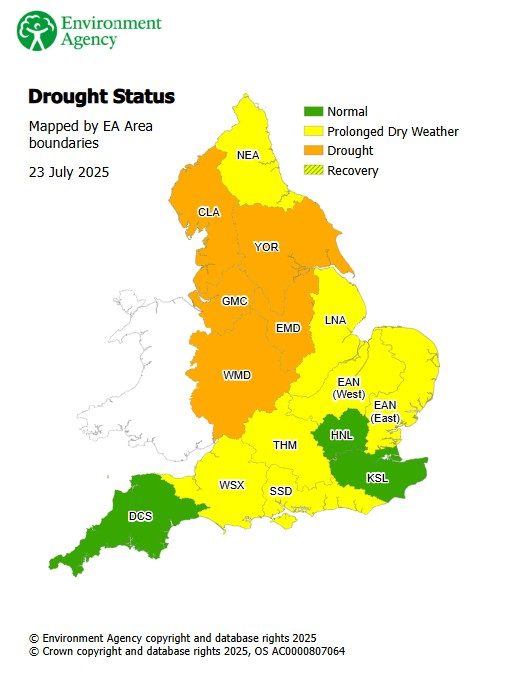
The remaining catchments in East Anglia area (North-West Norfolk, Broadland, East Suffolk and Essex) have moved into Prolonged Dry Weather status.
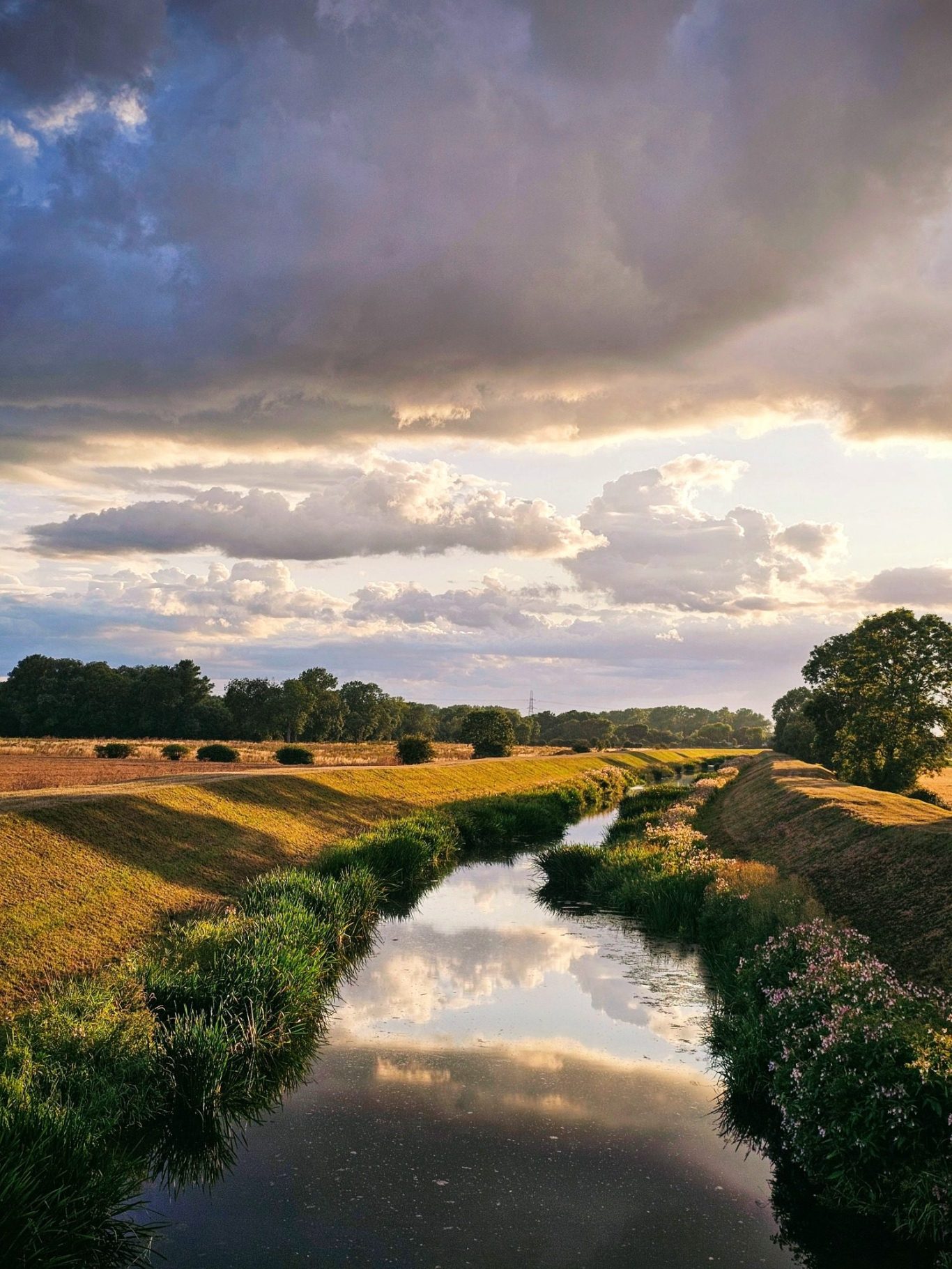
The Welland catchment - Lincolnshire
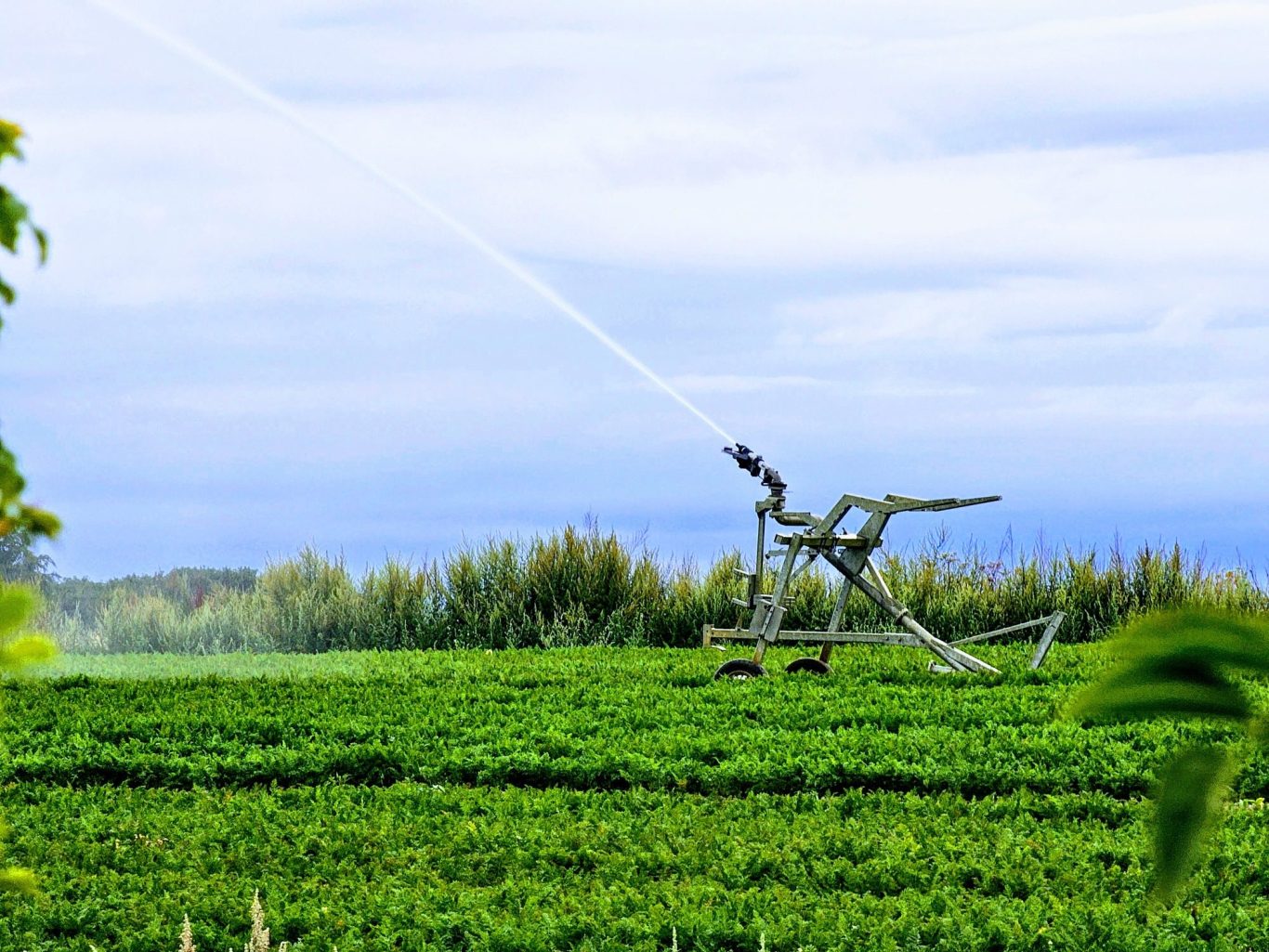
Irrigation of alfalfa in North West Norfolk
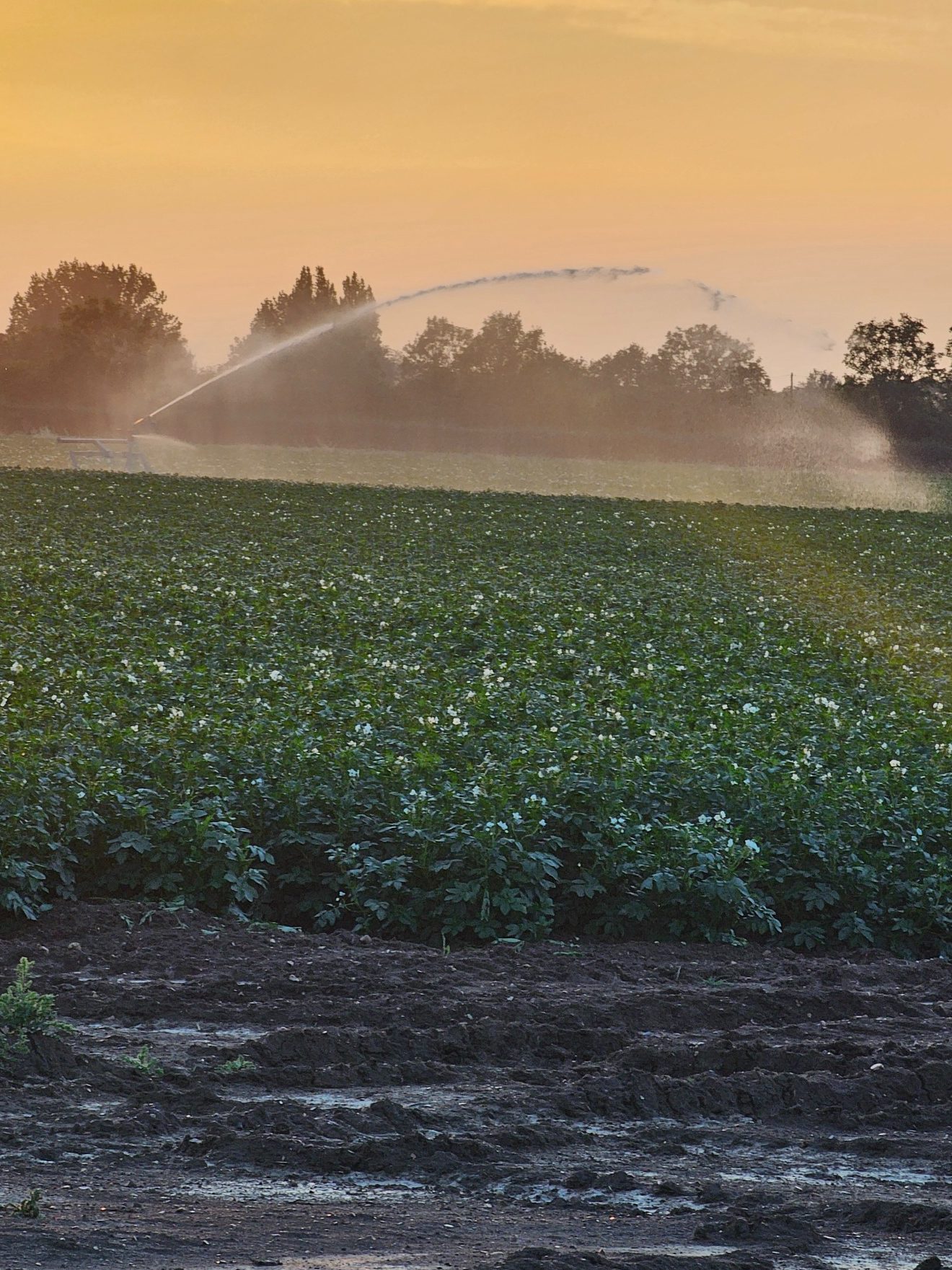
Night time irrigation of potatoes in Lincolnshire
Agriculture's voice is heard as drought marches on - 18/7/25
Drought and the threat of it has enveloped most of the UK impacting more farmers and growers across the country.
The Environment Agency (EA) and SEPA are continuing to work to help the sector.
The EA has confirmed that recently announced restrictions will be lifted for approximately 150 of the 240 farmers impacted by a recently announced hands off flow cessation condition in the Cam & Ely Ouse catchments of East Anglia. This followed an urgent meeting between the EA and NFU on Wednesday after farmers in the catchments received notices of cessation from abstraction licences last week.
The NFU has said it will now work to find solutions for members who have not had restrictions lifted. It is also continuing its calls for the EA to work with the farming community to deliver long-term solutions to ensure farmers and growers have guaranteed access to water during dry periods for the sake of national food security.
NFU Vice-president Rachel Hallos said, “We need to ensure that agriculture's voice is heard, and I'm doing my upmost to ensure that is the case. We are pleased to have been able to work collaboratively with the Environment Agency and Internal Drainage Board (IDB) to find a quick solution for some members.
“The scale of the problems we are seeing due to the dry weather on farms on the ground is horrendous. It is costing farm businesses enormous sums of money and some businesses will never be able to recover. This will threaten our national food security.
“This was a huge and very immediate concern for many of our members, who are already having great challenges due to the extreme dry weather we have been experiencing.
“We will work with those members who have not had restrictions lifted and see what solutions can be found for them. There is huge pressure on water in this country. It's about the bigger picture, storing the water when it rains for future use.
The EA confirmed that for a limited number of licences, the hands off flow restrictions will be lifted, with the Internal Drainage Board able to add more water into the system, and new restrictions will be put in place allowing irrigation on Monday, Wednesday and Friday nights only, from 6pm to 6am. This will be on a temporary two-week basis and then reviewed.
A spokesperson for the EA said: "Prolonged dry weather continues to affect East Anglia. Low river levels and dry conditions means we have had to apply temporary abstraction restrictions in the South Level of the Fens.
"These pre-agreed abstraction licence conditions are there to protect the environment and the rights of other abstractors. We are working with the NFU, Internal Drainage Boards, and local farmers to manage water availability."
In Cambridgeshire, Middle Level IDB farmers are reduced to irrigating four nights a week.
Further North, Aden Biddle, Yorkshire Area’s Water Resources Specialist at the Environment Agency said “With rainfall predicted in most areas of ‘The North’ this weekend, the drought incident of 2025 moves onto another important phase. This is when it does rain sporadically and possibly even heavy enough to cause localised surface water flooding but, it in no way ends the drought.
“For the Northern Pennine Reservoirs dry moorland will soak up a lot of the rainfall and it's unlikely that we will see significant refill but it will help river flows for both Public Water Supply and all those agricultural abstractors who have been under "Hands Off Flow" [conditions] for a really long time. Please keep a close eye on the EA's water situation reports.”
For those farmers and growers who use mains water supplies they can view Yorkshire Water’s stocks on its website.
Anglian Water reported this week that the recent rain had helped river and reservoirs levels, delaying the need for restrictions. However, uncertainty over the future forecast meant a hosepipe ban for its customers could still be needed this summer to help support agriculture as well as the environment.
Director of Water Services, Ian Rule said, “We don’t want to put restrictions in place unnecessarily, but protecting the environment and the vital agricultural sector in the region in the face of such unusually dry conditions means leaving as much water in the environment as possible, so we have to strike a careful balance.”
The East of Scotland continues to be the focus of concern for SEPA with eight river catchments remaining at Moderate Scarcity – the Spey, Deveron, Ythan, Don (Aberdeenshire), Dee (Aberdeen), Esk, Firth of Tay and Tyne (Lothian). Rain is expected over the next few days but north east areas remain largely dry.
If conditions do not improve and these areas move to Significant Scarcity, SEPA expect to take action early next week. Measures may include limiting or temporarily suspending abstractions where necessary. SEPA have been in regular contact with licence holders throughout this period and have been working closely with partners including NFUS, Scotch Whisky Association, Scottish Golf and others.
Chris Dailly, SEPA’s Head of Environmental Performance (Geographic), said, “These rivers are approaching critical environmental thresholds following months of sustained low rainfall.
Those who take water from our rivers and lochs have a key role in protecting our environment, and most take that role seriously. Farmers, land managers, food and drink manufacturers and other businesses across the country have been making a real effort. Many distilleries have brought forward summer shutdowns. Irrigators are already adjusting practices. We see that and we value it. But if restrictions are needed they must be implemented and they must be respected.
“This is about protecting rivers and lochs for the long term, ensuring the environment and the businesses that depend on it can thrive. We do not take these decisions lightly. Restrictions will only apply where they are absolutely necessary, and for the shortest possible time. But the evidence is clear, the pressure on the environment is too great in some areas.”
If restrictions are required licence holders will receive written communication from SEPA next week detailing what is required of them. Advice for abstractors is available on SEPA’s website.
The Met Office is forecasting heavy rain and thunderstorms for the UK for much of this weekend into next week with continuing unsettled weather into at least the start of August.
The Met Office’s State of the UK Climate Report 2024 published this week provides a comprehensive analysis of long-term climate trends using data from weather stations. The report confirms a clear warming trend since 1884, with the past three years ranking among the five warmest on record. Earlier springs are likely to be one of the most obvious responses of Nature to the changing climate. The 2024 leaf-on season and the 2024 lawn cutting season were longer than the 1999–2023 baseline, mainly due to the earlier spring.
The Environment Agency has also published its position on nature-based solutions. Nature based solutions include benefits such as increased climate resilience to droughts – by storing water and increasing groundwater recharge. Permits may be required for some nature based solutions including water discharge, abstraction or impoundment and groundwater activities.
Nature Friendly Farming Network has more on how farmers are handling drought and water management. The Growing Voice interview with the CEO of the Nature Friendly Farming Network, Martin Lines, will be published soon.
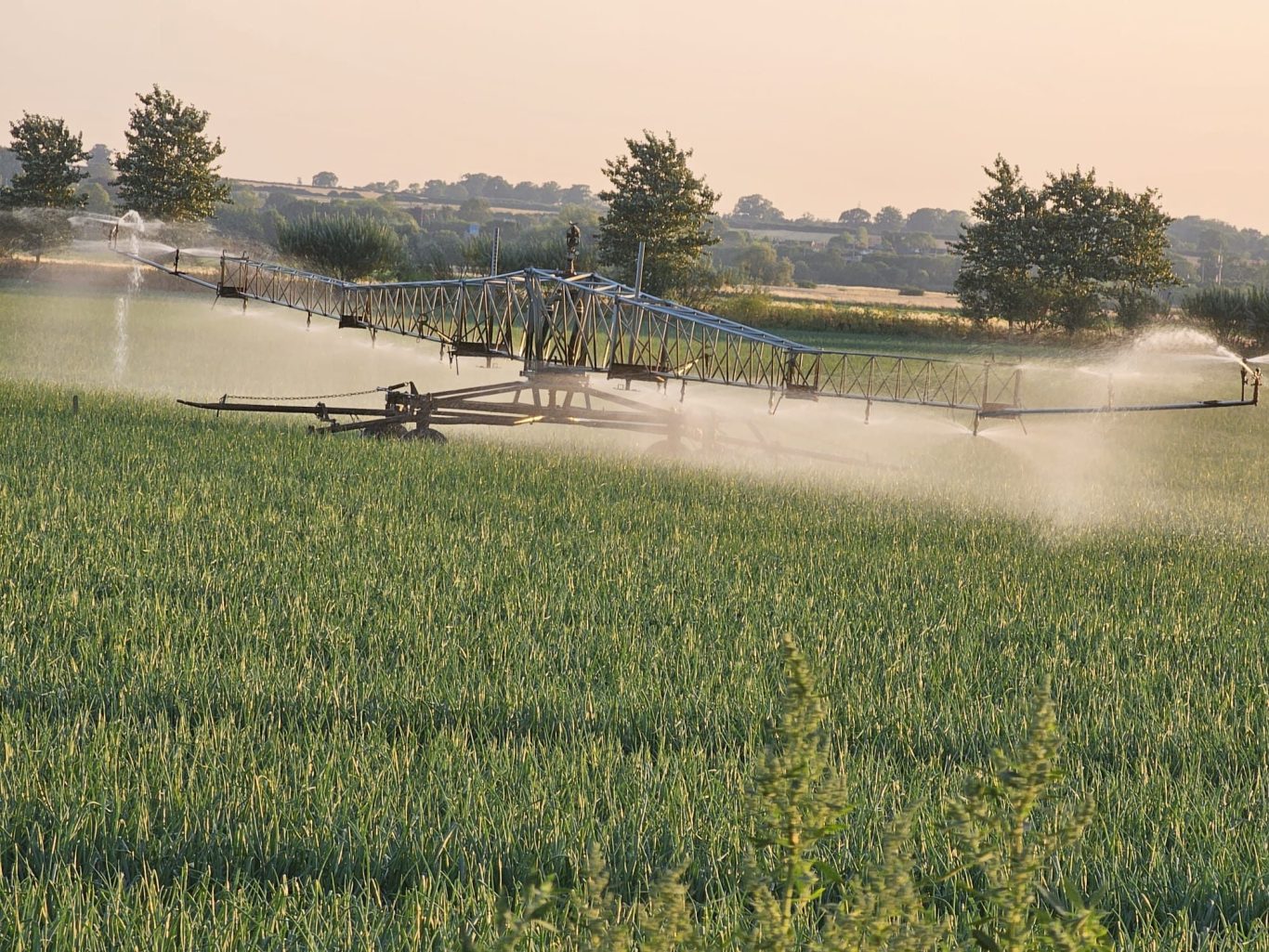
Irrigation is still significant ahead of a breakdown in the weather this weekend. Some farmers are looking to obtain water from sharing by other irrigators where their sources have physically run out, maximum licensed quantities have been reached or hands off flow conditions are in effect.
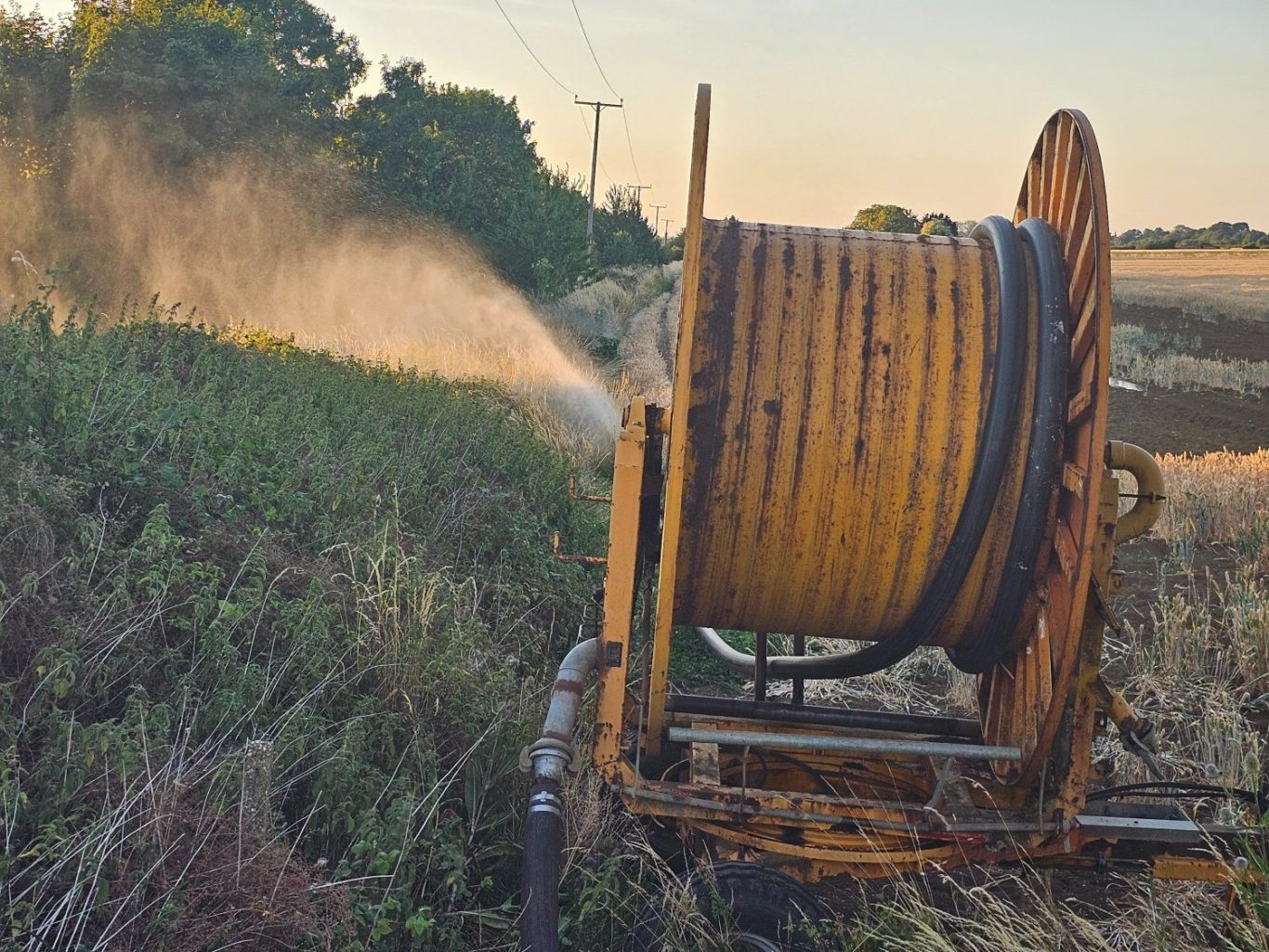
Farmers are urged to continue to follow good irrigation practice such as prioritising night-time irrigation, reducing leaks and avoiding windy conditions.
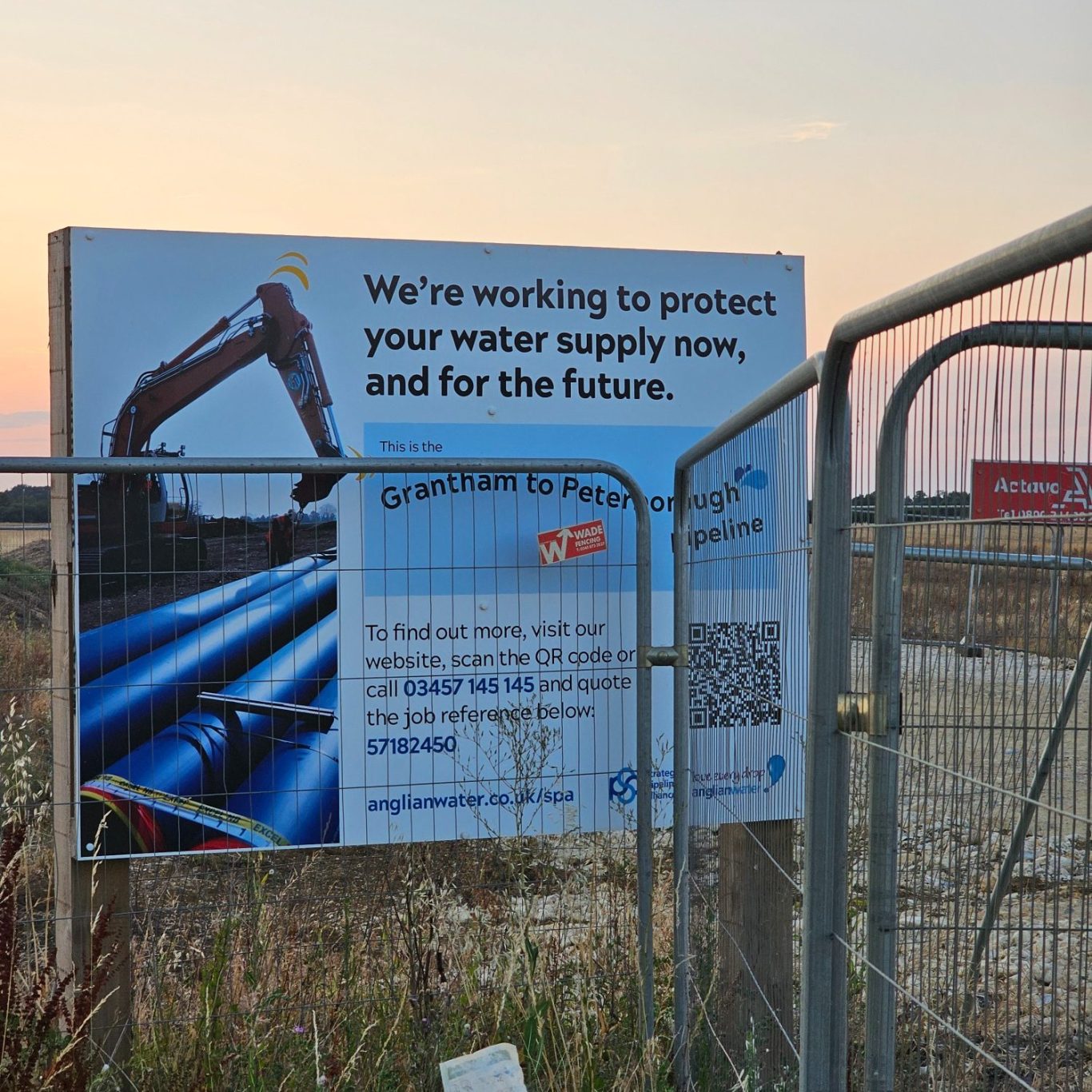
A hosepipe ban for Anglian Water customers could still be needed this summer to help support agriculture.
UK Farmers Face Growing Water Crisis Amid Historic Drought - 11/7/25
With a third summer heatwave affecting the country and media comparisons with 1976, farmers and growers across the UK are sounding the alarm over worsening drought conditions.
Despite recent rainfall the east of Scotland continues to be the focus of concern. The river flows remain very low across much of the east of Scotland. Moderate scarcity remains in the Spey, Deveron, Ythan, Don (Aberdeenshire), Dee (Aberdeen), Esk, Firth of Tay and Tyne (Lothian) river catchments. The Findhorn, Firth of Forth and Almond catchments remain at Alert.
Above-average rainfall is still required for water scarcity levels to recover in the east of the country. The first half of the year in the east of Scotland has been the driest since 1973. These exceptionally dry conditions, following on from a dry autumn and winter last year, have led to the lowest groundwater levels for June on record in Fife and parts of Angus.
Eilidh Johnston, SEPA’s Senior Manager in Water Industry and Rural Economy, said: “We’ve seen how abstractors have responded to the challenge of water scarcity this year and took early action to reduce pressure. However, the risk of required restrictions is not over.
“It won’t take a heat wave to tip rivers into crisis. Sustained low flows and dry soils are already putting pressure on businesses and the environment. We’re asking all abstractors to stay aware of conditions and check the local direct station data regularly especially in the east where pressure is building.
“We’re already in touch with those at highest risk of restrictions, but if you have any questions please get in touch.” SEPA has published more online advice for abstractors.
The Environment Agency has confirmed that the January – June period is the driest start to the year across England since 1976. River flows continue to fall with some north east catchments registering their lowest monthly mean flows on record in June (since the early 1970’s). Groundwater levels continue their typical summer recessions, but most are still within normal or higher levels thanks to good winter recharge. By September, groundwater levels have the greatest chance of being normal or lower across England while river flows are forecast to be below normal at best. The Met Office is forecasting another hot and dry weekend with temperatures building up again late next week.
There is concern within the agriculture sector as more hands off flow conditions on surface water abstraction licences kick in.
The horticulture sector is resorting to emergency measures to water plants with some nurseries tankering in supplies as they run out of stored reserves. Field trees are also being irrigated by bowsers just to keep them alive.
Suffolk farmers are seeing reservoir water volumes significantly reduced (and in some cases completely used up) due to early season irrigation, although many farms have been saved by switching to abstraction from their licensed boreholes. Sugar beet remains unirrigated and second cropping with brassicas is being abandoned with worries over scarce water supplies for plant establishment.
With water supplies running out farmers and growers are making difficult decisions on which crops to irrigate and when. Rodger Hobson, chairman of the British Carrot Growers Association admitted to The Grocer “We’re sort of gambling a bit at the moment. We’ve committed the majority of our water resource to early crops.”
Farmers Weekly has also pushed water resources up the agriculture agenda in Andrew Meredith’s article on food security. “If you want to improve food security, there is no better place to start than with water.”
Water stress impacts on crop development are reported on the AHDB website. Following long dry spells in the spring and recent high temperatures, cereal harvesting is off to the fastest start since at least 2006, with multiple reports of winter barley being cut in June.
The National Trust is recording more drought effects on trees including limb drop. Innovative agroforestry projects are part of the National Trust’s long term plan to plant and establish 20 million trees by 2030 to tackle climate change.
The Environment Agency continues to highlight a range of immediate actions to help farmers and growers. This includes following good irrigation practice and dry weather guidance, contacting them if struggling with abstraction licence conditions and signing up to email alerts to enable taking water as soon as hands off flow conditions allow.
Additional help for the sector is available from the NFU (National Farmers' Union) with its dry weather information and advice page.
The Environment Agency has launched another round of Local Resource Option (LRO) Screening Studies to support groups of farmers in identifying practical, local solutions to help improve their long-term water resilience. The closing date is 20th July, so farmers and growers are encouraged to get their applications in as soon as they can.
Lindsay Hargreaves – Chair of the Lark Abstractors Group was interviewed about abstraction licensing for the agriculture sector on BBC’s Farming Today programme earlier this week. Lindsay highlighted the need to have an abstraction licence and the importance of closely following its conditions (including volumetric limits, recording and submitting data). With constraints on abstraction from hands off flow conditions many farmers are moving to reservoirs to store winter water for summer irrigation. For more information check if you need a licence to abstract water.
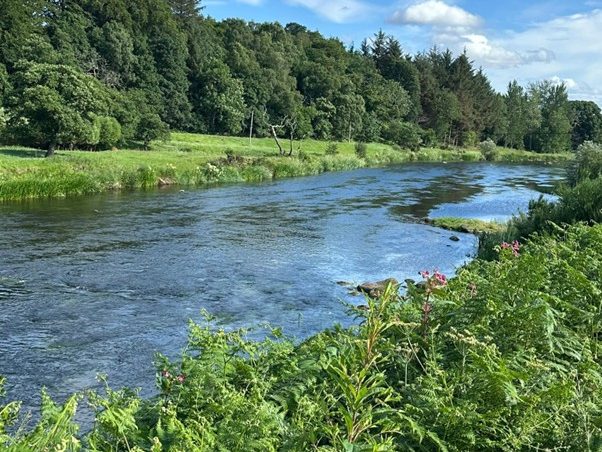
River Don in Aberdeenshire still at Moderate Water Scarcity despite recent rain (Photo courtesy of Alison West).
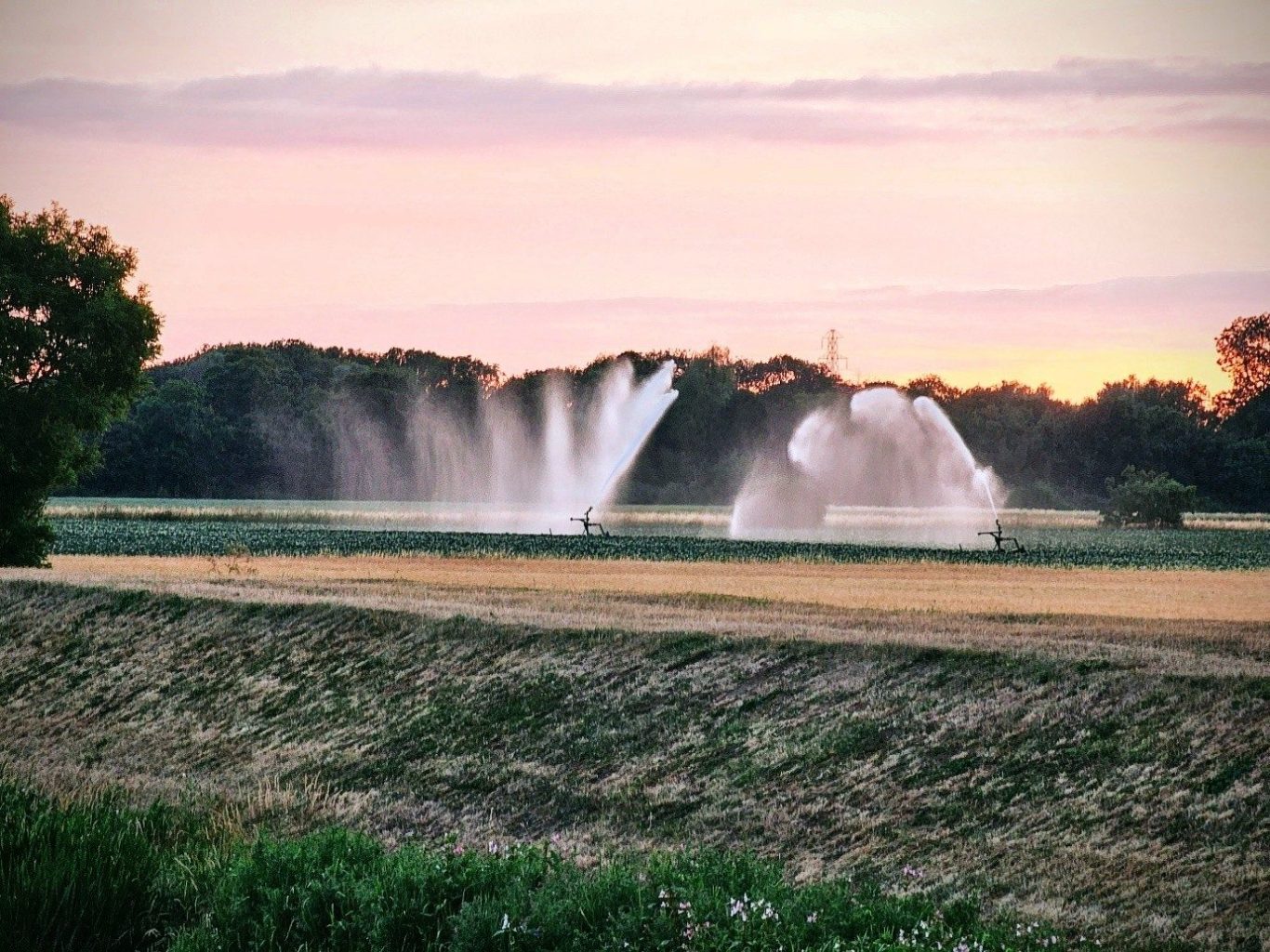
Irrigation under pressure with hands off flow conditions and reservoir water running out
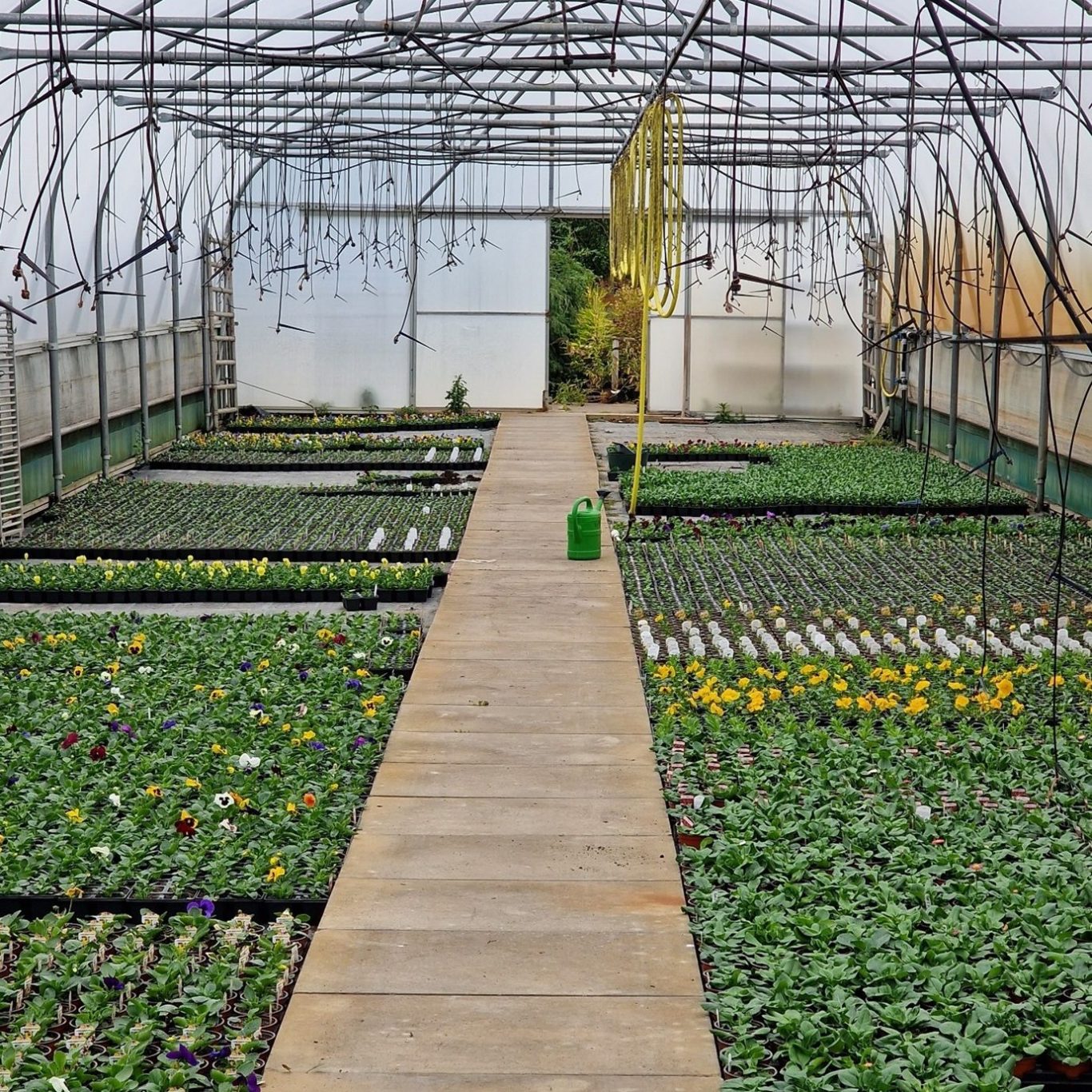
Horticulture resorting to emergency measures such as tankering
As Weather Records Tumble, SEPA and EA Step Up Water Advice to Farmers - 4/7/25
Following the warmest spring on record for the UK and the driest for England since 1893, The Met Office provisional stats for June show that England had its warmest recorded June. Conversely, Scotland experienced cooler conditions as a whole and Orkney registered its wettest June since records began in 1836.
However, SEPA’s latest Water Scarcity Report reveals several rainfall stations in Tayside have now experienced below average monthly rainfall for the last 13 months. Mylnefield near Dundee for example, has only had 58% of its long-term average over the course of the first six months of the year and only 62% over the last 13 months.
Rainfall over the past week has been insufficient to see much recovery across most of Scotland, with ground conditions drying further down the east coast and low river flows persisting. The Spey, Deveron, Ythan, Don (Aberdeenshire), Dee (Aberdeen), Esk, Firth of Tay and Tyne (Lothian) river catchments all remain at Moderate Water Scarcity. Many of these areas have had less than 70% of their average rainfall since the start of the year. As a result, many of the associated river flow stations have had the highest number of days at low flows for the first half of the year on record (spanning almost 100 years in some cases).
In the far north, southeast and southwest however, there has been some improvement in river flows and ground conditions and as a result, the Wick, Helmsdale and Tweed catchments have recovered to Early Warning, and the Cree has recovered to Normal Conditions.
Kenny Boag, Head of Environmental Performance (National) at SEPA said added: "Although there has been relief in the West, most of the East Coast continues to experience water stress. Many catchments remain under significant pressure and the water environment is still in a vulnerable state. More rain is forecast over the next few days, but we need sustained rainfall in the right places over weeks, not just days, to make a real difference.
“We welcome the proactive steps taken by many abstractors, especially in areas of Alert and Moderate scarcity who have already been planning ahead and taking steps to use water efficiently. We urge them to continue to do that as we won’t wait until the situation reaches crisis point to act, and we don’t expect water users to either.
“We will continue to work closely with abstractors and sectors using water from our environment in the areas facing sustained water scarcity. Clear, early communication is being provided so no one is caught off guard. We know how important water is to the Scottish economy, particularly sectors like farming, food and drink, and energy – and we also know that without a healthy water environment those sectors cannot thrive.”
Advice for abstractors is available at: https://beta.sepa.scot/water-scarcity/advice-for-abstractors/
The Environment Agency (EA) in its updated irrigation prospects has already encouraged all irrigators in England to actively review their water needs and consider the range of options to help secure and increase water resilience for the summer.
In East Anglia several catchments have been downgraded to poor where water levels are well below average. Soil moisture deficits have developed early and significant restrictions on abstraction from surface and groundwater are probable. This includes the Old Bedford & Middle Level, North-West Norfolk, Cam & Ely Ouse and the Upper Bedford Ouse.
In England Deputy Director for Water Resources at the Environment Agency, Richard Thompson, had this message for farmers: “Our officers are working with farmers to ensure they have access to water whilst also protecting the environment. I urge farmers to take action now to conserve water as we enter the summer and to use water resources as efficiently as possible.”
Steps include continuing to follow good irrigation practice and dry weather guidance, contacting the EA if struggling with abstraction licence conditions and signing up to email alerts to enable taking water as soon as hands off flow conditions allow. The NFU has echoed this advice calling for strong collaboration between the Environment Agency and farmers during the next few months.
Melvyn Kay, Executive Secretary of the United Kingdom Irrigation Association has a wealth of advice which includes the option of neighbouring irrigators co-operating and sharing water resources where possible. For those using direct irrigation they should be aware of others abstracting upstream and work together to avoid everyone abstracting at the same time.
Looking ahead for the rest of the summer, there seems little respite for farmers requiring water to finish off and lift crops. The Met Office released its three month forecast earlier this week. The chances of hot weather are higher than normal for July-September increasing the likelihood of heatwaves and heat related impacts.
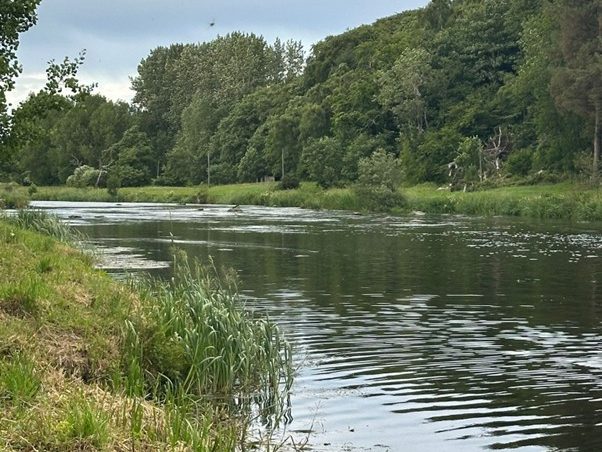
River Don in Aberdeenshire still at Moderate Water Scarcity despite a wetter than average June (Photo courtesy of Alison West).
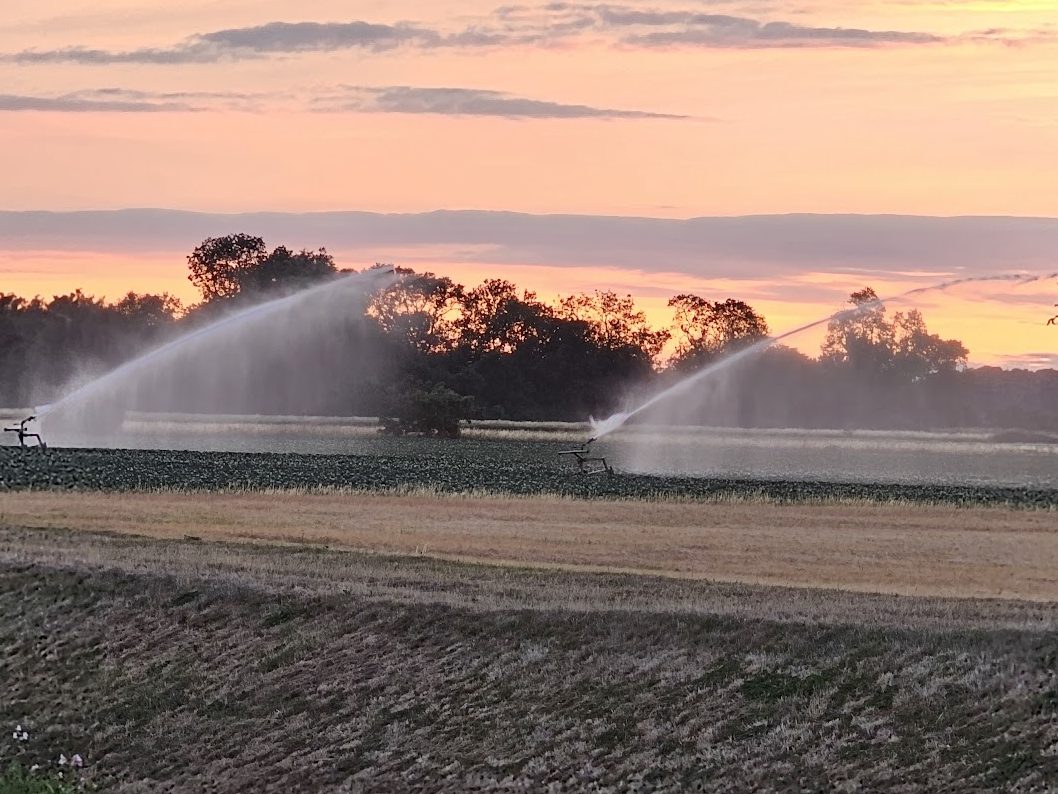
Night time irrigation of Lincolnshire potatoes
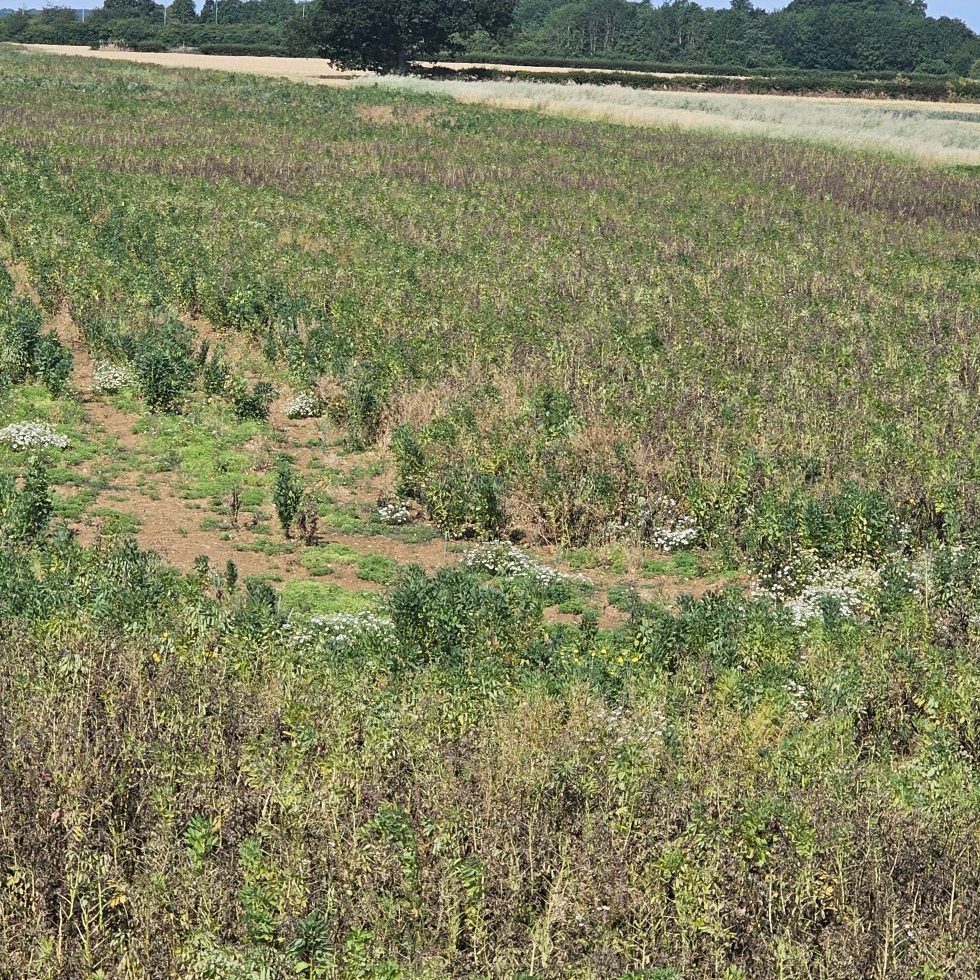
Unirrigated Cambridgeshire field beans struggling in hot and dry conditions
As Scotland’s Water Scarcity Eases, England’s Irrigation Outlook Worsens - 26/6/25
While Scotland has seen easing of water scarcity levels in some catchments, in England farmers face another further decline in irrigation prospects for the remainder of the summer.
Scottish Environment Protection Agency has published its weekly water scarcity report.
"The rain has led to some improvement in river flows in the far north of Scotland. The Naver area has recovered to Early Warning, and the Northwest Highlands and Orkney have recovered to Normal Conditions. But the Wick, Helmsdale, Findhorn, Firth of Forth, Almond and Tweed catchments remain at Alert."
Despite rain, Eastern catchments remain in moderate scarcity: The Spey, Deveron, Ythan, Don (Aberdeenshire), Dee (Aberdeen), Esk, Firth of Tay and Tyne (Lothian).
In England the Environment Agency has published another update to its irrigation prospects reflecting the continued dry weather into June following less than half (44%) of the long term average rainfall over March to May in England. Updated Prospects are here
With many rivers suffering from low flows and reservoir storage depleting in response to high earlier demand for irrigation, this has led to another decline in prospects to moderate across the country, with some catchments in East Anglia ranked as poor.
The Environment Agency is highlighting a range of immediate actions to help farmers and growers. This includes continuing to follow good irrigation practice and dry weather guidance, contacting the EA if struggling with abstraction licence conditions and signing up to email alerts to enable taking water as soon as hands off flow conditions allow. Longer term actions involve considering plans for longer term infrastructure such as reservoirs for future water resilience, applying for a local water resources options screening study and reviewing future cropping plans.
The Met Office is forecasting a low pressure system affecting the northwest of the UK bringing some wetter, windier conditions during the first 10 days of July. Conditions will likely continue to be changeable through much of July.
However, there are very tentative signs of more widely settled weather during the second half of July. Temperatures are expected to be above average for most areas, especially towards the southeast where there will be an ongoing chance of some very warm or hot conditions at times.
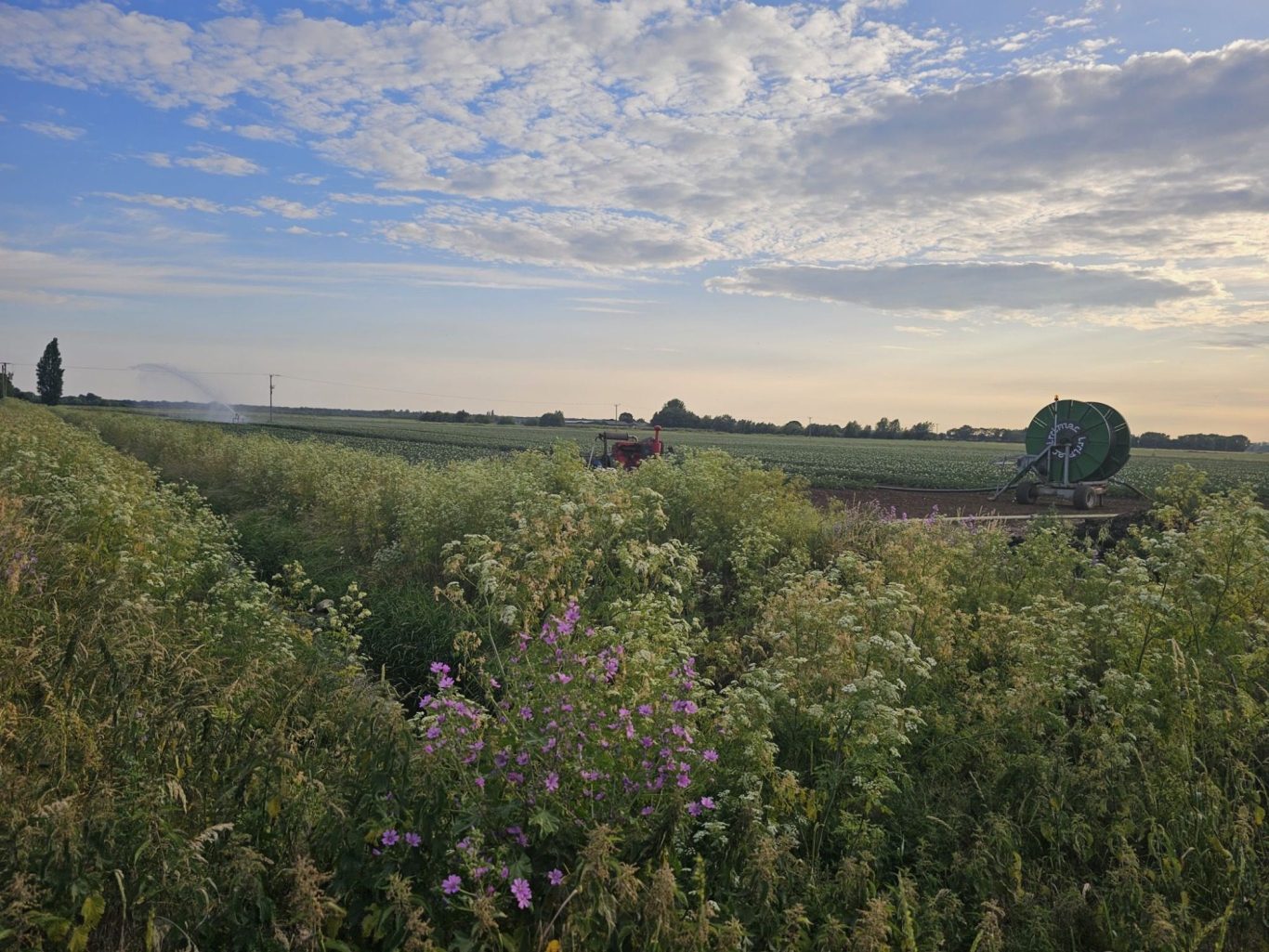
Evening Irrigation in Cambridgeshire Fens
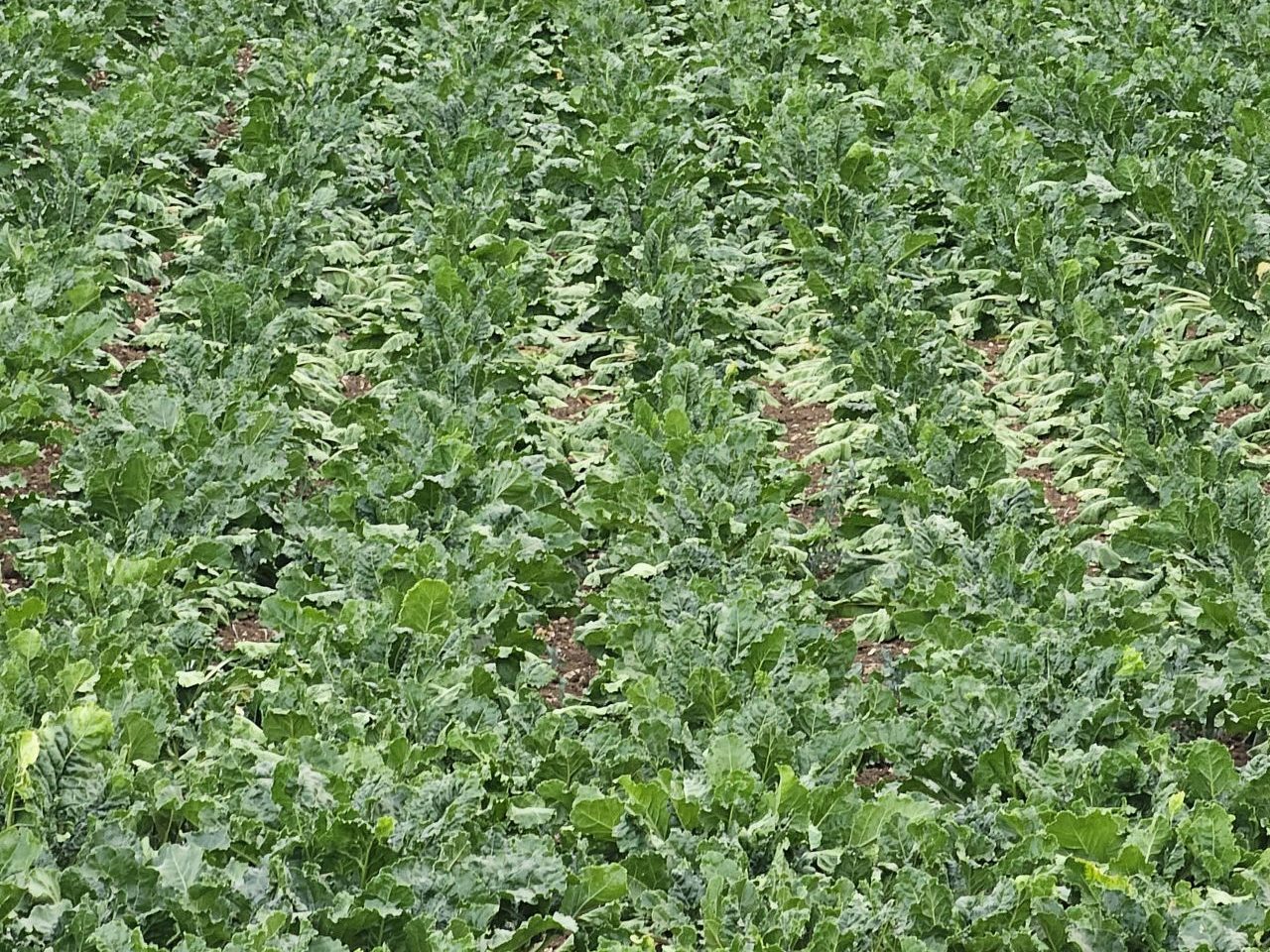
Sugar Beet struggling in Hot and Dry Conditions
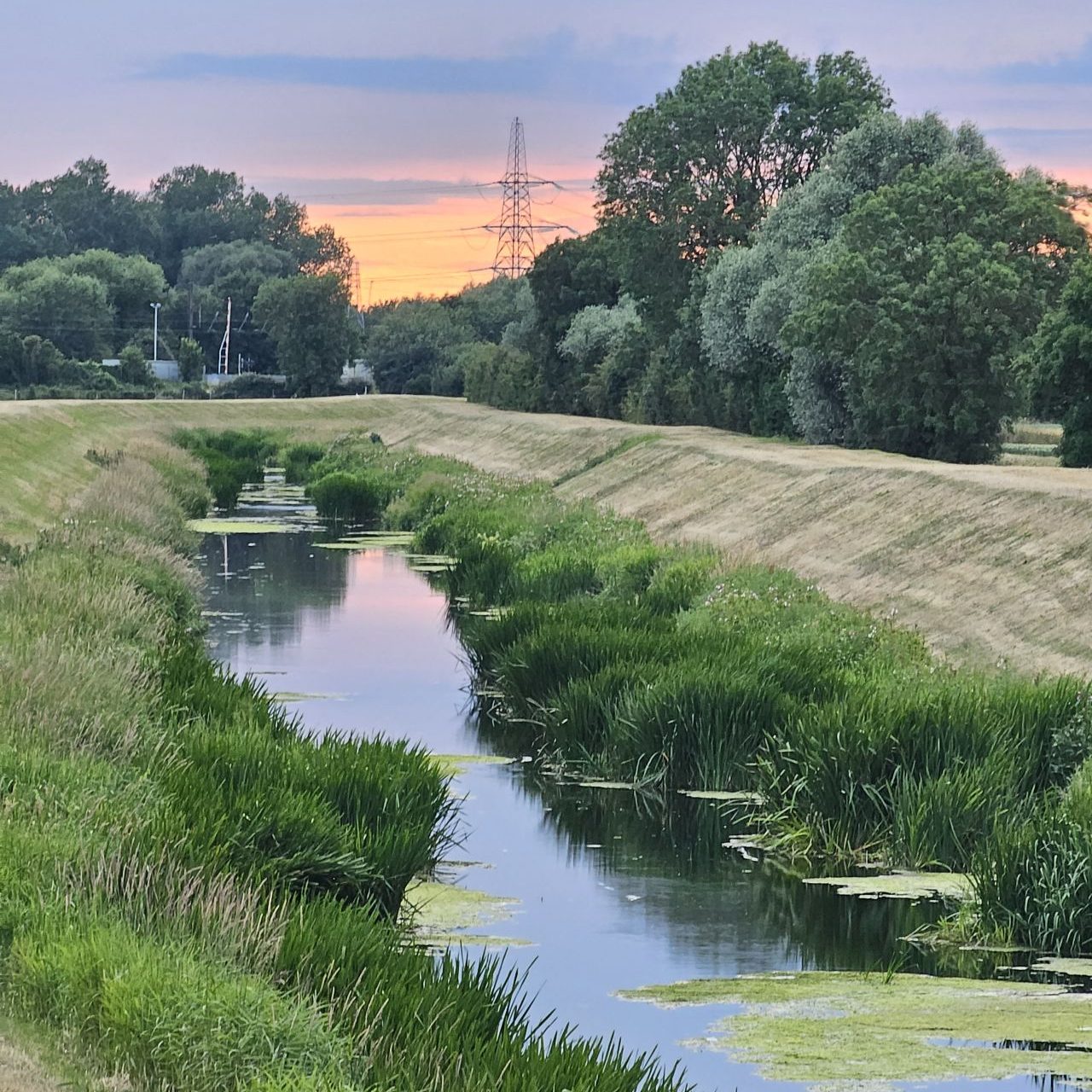
Maxey Cut Lincolnshire
Scottish Catchments Still in East West Water Scarcity Split - 20/6/25
Scottish Environment Protection Agency has published its latest Water Scarcity Report.
There is still very much an East West split with North East Scotland catchments tending to see the worst of the conditions with Moderate Water Scarcity. The Spey, Deveron, Ythan, Don (Aberdeenshire), Dee (Aberdeen), Esk, Firth of Tay and Tyne (Lothian) all remain at Moderate Water Scarcity.
“Since the weekend, rain has been concentrated in the west, and particularly in the north-west, with little in the east. This rainfall has promoted further recovery in western areas. The Esk (Dumfriesshire), Nith, Dee (Galloway), Irvine and Ayr, Doon and Clyde catchments, as well as Loch Fyne, Kintyre, Loch Shiel and the Outer Hebrides, have recovered from Early Warning to Normal Conditions."
Advice is available here for abstractors and irrigators.
Meanwhile, in England, the Environment Agency will soon be publishing another update to its irrigation prospects. This reflects the continued dry weather into June following less than half (44%) of the long-term average rainfall over March to May across the country. Currently around peak irrigation season many rivers are suffering from low flows with reservoir storage depleting rapidly in response to sustained higher than normal demand.
The Environment Agency continues to highlight a range of immediate actions to help farmers and growers. This includes following good irrigation practice and dry weather guidance, contacting the Environment Agency if struggling with abstraction licence conditions and signing up to email alerts to enable taking water as soon as hands off flow conditions allow.
Additional help for the sector is available from the NFU (National Farmers' Union) with its dry weather information and advice page. Advice is here.
The Met Office is forecasting a north south split in the weather next week “as a series of Atlantic low pressure systems pass largely to the northwest of the UK. Whilst some rain or showers will be possible farther south and east, here longer drier spells are more likely, under the influence of higher pressure.”
Into the first half of July “rather changeable conditions are anticipated … the wettest and windiest conditions most likely towards the northwest with a risk of some heavy rain at times.” But again “Southern and eastern areas are most favoured for longer drier and more settled spells, although even here some occasional rain or showers will be possible, perhaps thundery."
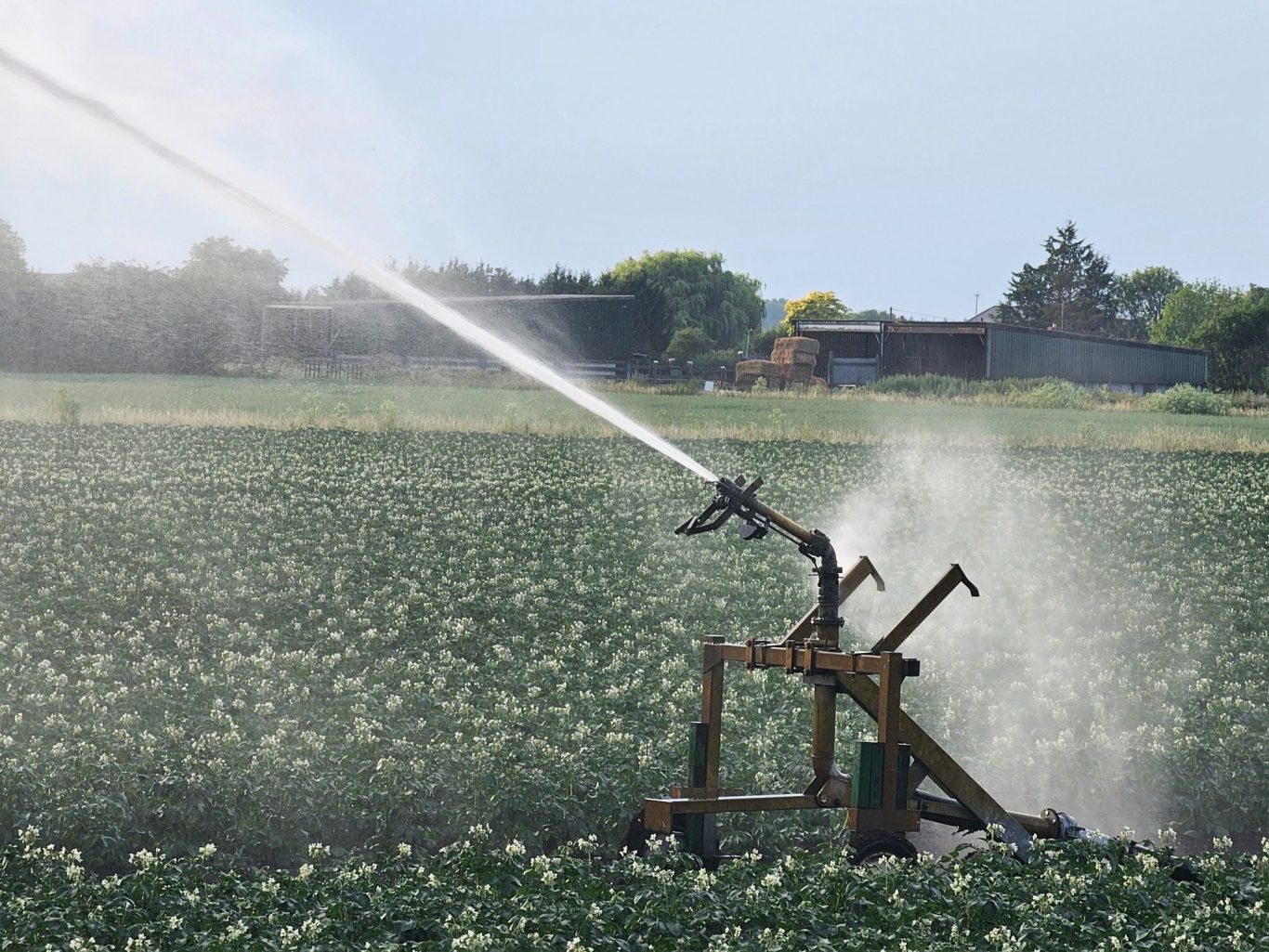
Irrigation Cambridgeshire
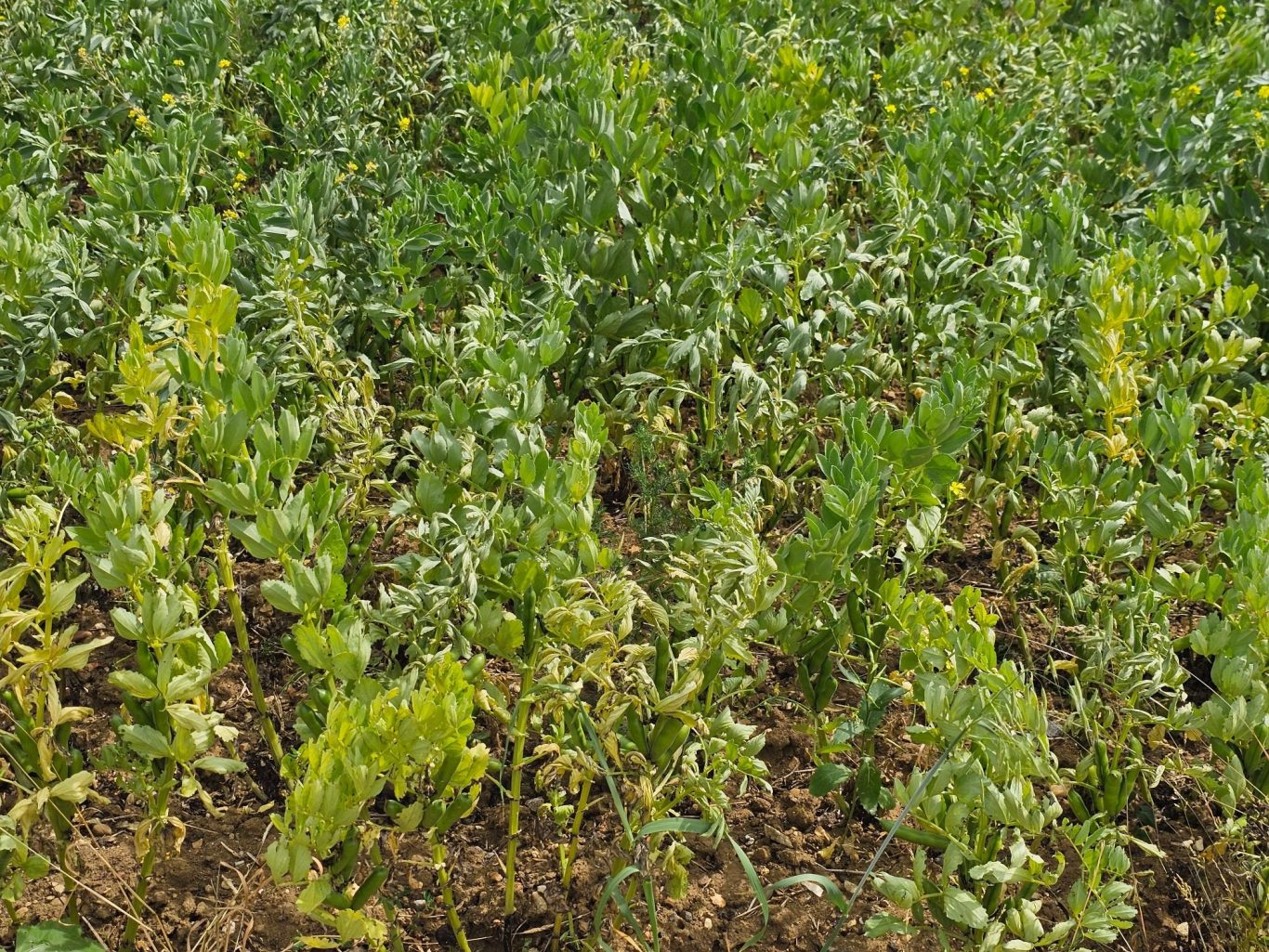
Beans Low Yield
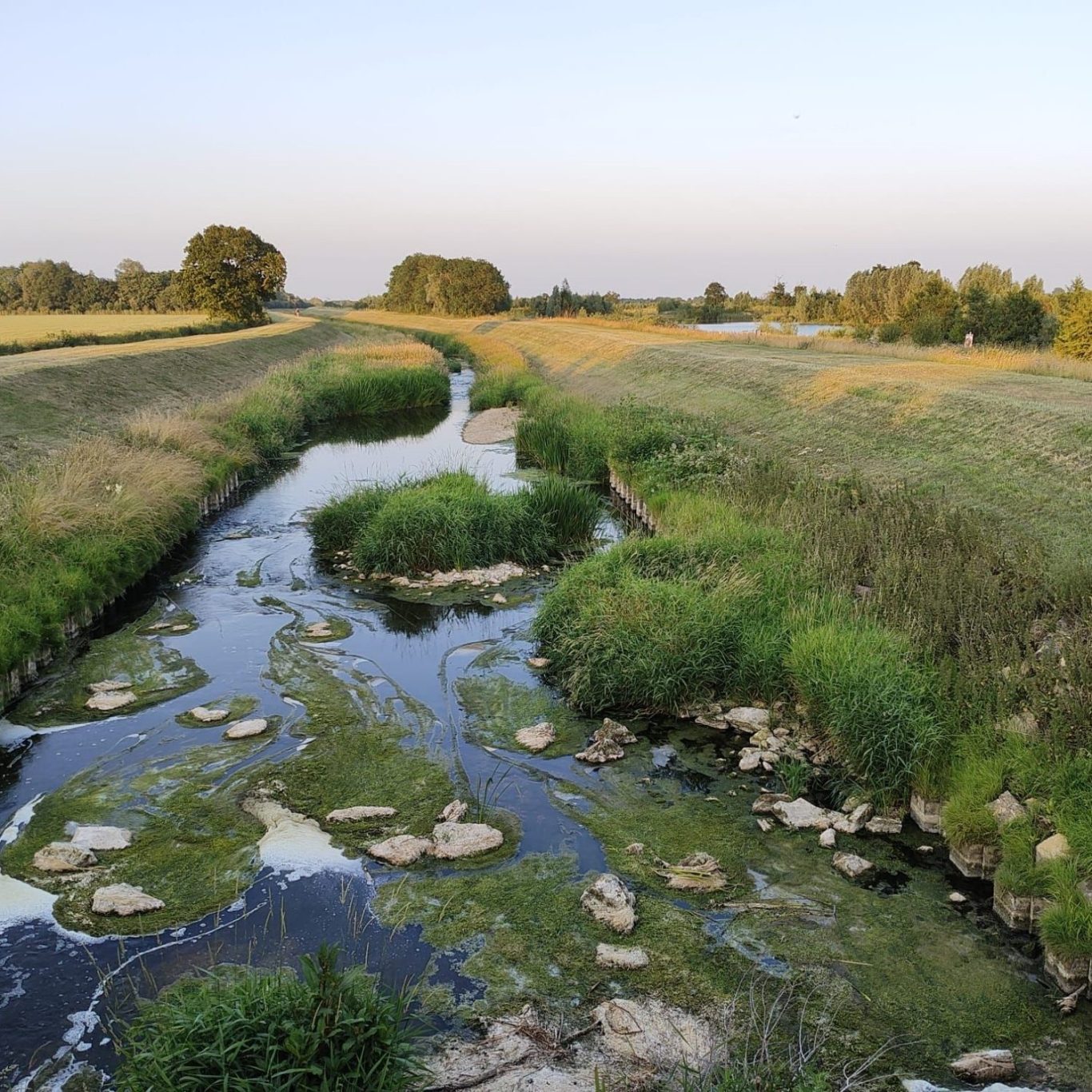
Maxey Cut Lincolnshire
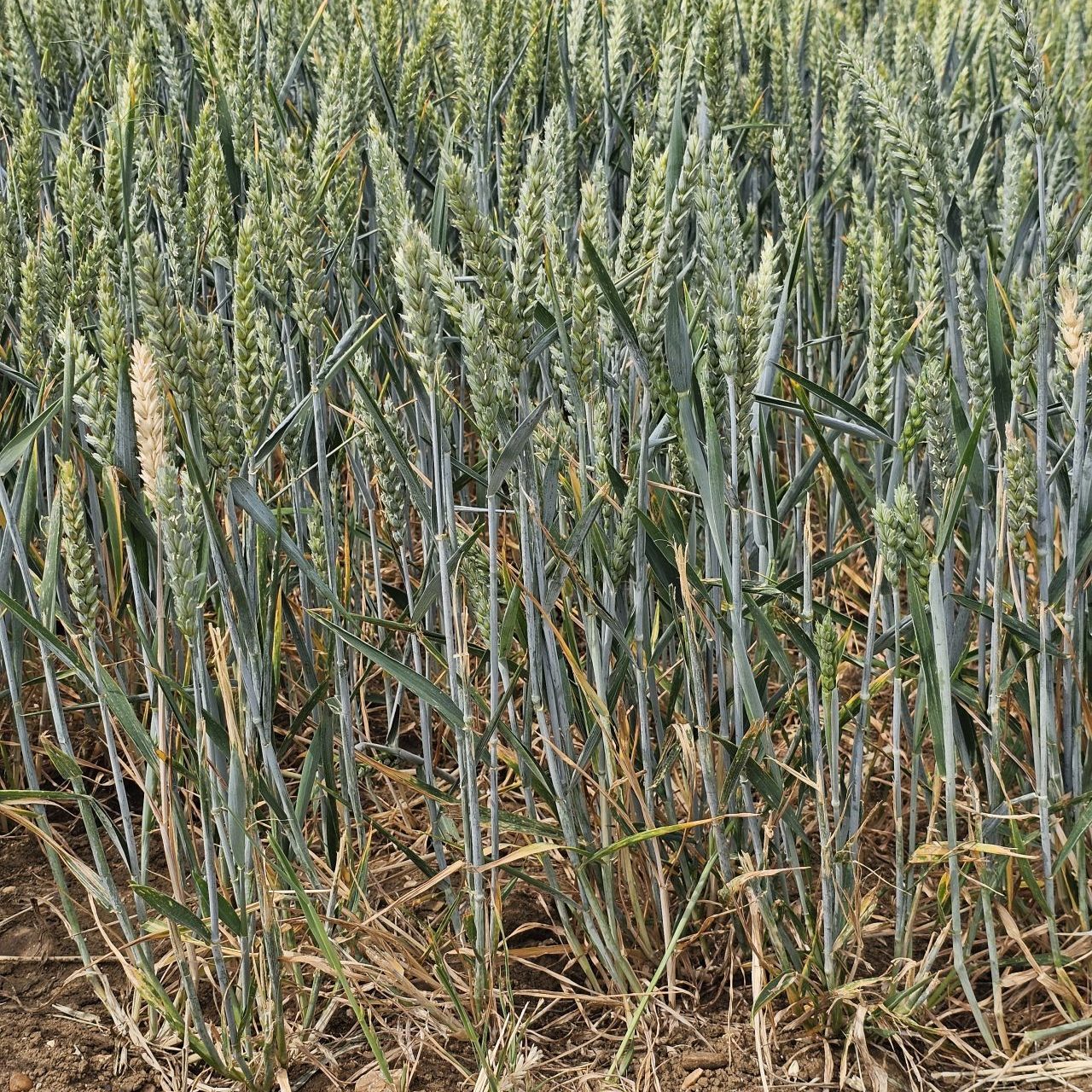
Wheat Low Yield
Dry Weather Effects on North East Scotland Agriculture - 10/6/25
The east of Scotland has seen its second driest spring in 100 years and there are some parts of the east coast that have had below average for the last 12 months.
At the recent Open Farm Sunday event organised by Linking Environment and Farming (Leaf), Scott Campbell who owns an arable (cereals and oil seed rape) farm at Kirkton Farm, near Kinellar in Aberdeenshire commented on the water situation.
He said: “Rain is our biggest asset if you can control it. We’ve done a lot of work on our farm making new drains and improving the soil with farmyard manure to add organic matter to the soils. That’s really important in a dry year as soils with a lot of organic matter will look a lot better. Last year was the wettest year we ever saw with a 1000mm of rain between October and March. If you can keep the drainage right and the soil in good health you will get fantastic crops.
“This year has been the complete opposite with the driest spring in 70 years and the crops were suffering more in the drought than they were in the wet. The winter wheat that’s in good soil that has rooted really well shouldn’t be affected too badly. The spring barley that was planted in April it hasn’t tillered, spread out it’s tillers and thrown its roots out because its been so dry. If we lose tillers, we’ll lose plant population and we’ll lose yield. The flag leaf is out already. It normally doesn’t come out until two weeks time, so it could be an early harvest but with less yield. That will be a major concern especially with the malting market dropping in demand too.
As for irrigation Scott says “Potato growers around us do but we wouldn’t invest in irrigation unless we had three consecutive years of drought. Irrigation is for potatoes and high value crops. It’s too much staff and money to purchase the equipment. We haven’t had any grants for that. I don’t think it would fund an awful lot. We need to learn to be on our own two feet and get a good price for our produce. We can’t be holding out our hands to the government. They are carting in water up in Elgin and Speyside when its really dry. I saw irrigators working down in Angus on barley, that’s the first time I’ve heard of that. SEPA is there to help us and work with us and we need to work with them.”
Mike Davis who grows a wheat/oats rotation on his farms in Insch and Oldmeldrum added: “We had an awful year last year as it was so wet. This year it’s been as dry as can be from the beginning of the year. It’s hardly rained and it’s meant that crops went into very good ground really and had a nice seed bed and everything was looking fine. But then it never rained which meant that crops were very slow to germinate established crops like wheat were just about hanging on because of the residual moisture in the ground but were showing signs of struggling. And now the rain’s come it’s actually too late for some crops.
“A lot of spring barley in the North East of Scotland hasn’t tillered and produced secondary shoots. It’s the second tillering that you depend upon to get you the number of heads. If you don’t have the number of heads you won’t get the yield and the result is a very poor crop of spring barley – one of the main crops in the North of Scotland. We have some spring oats which were sown quite early and established itself reasonably well with a bit of a root before the dry weather started to impact.
“Other oats which were sown a fortnight later are really struggling as without the moisture in the ground the plant can’t get the nutrients it needs because all the fertiliser isn’t mobilised. If the plant had a brain the barley would have used it by basically not tillering. Fundamentally the aim of any living organism is to reproduce. The best chance of survival in a year that it didn’t rain is going to be to produce a minimum amount of seed and die. The plant has actually done that and that’s why yields are going to be so poor. The traditional sort of seasons that we had seem to have got blurred into a complete mess. Things are changing”.
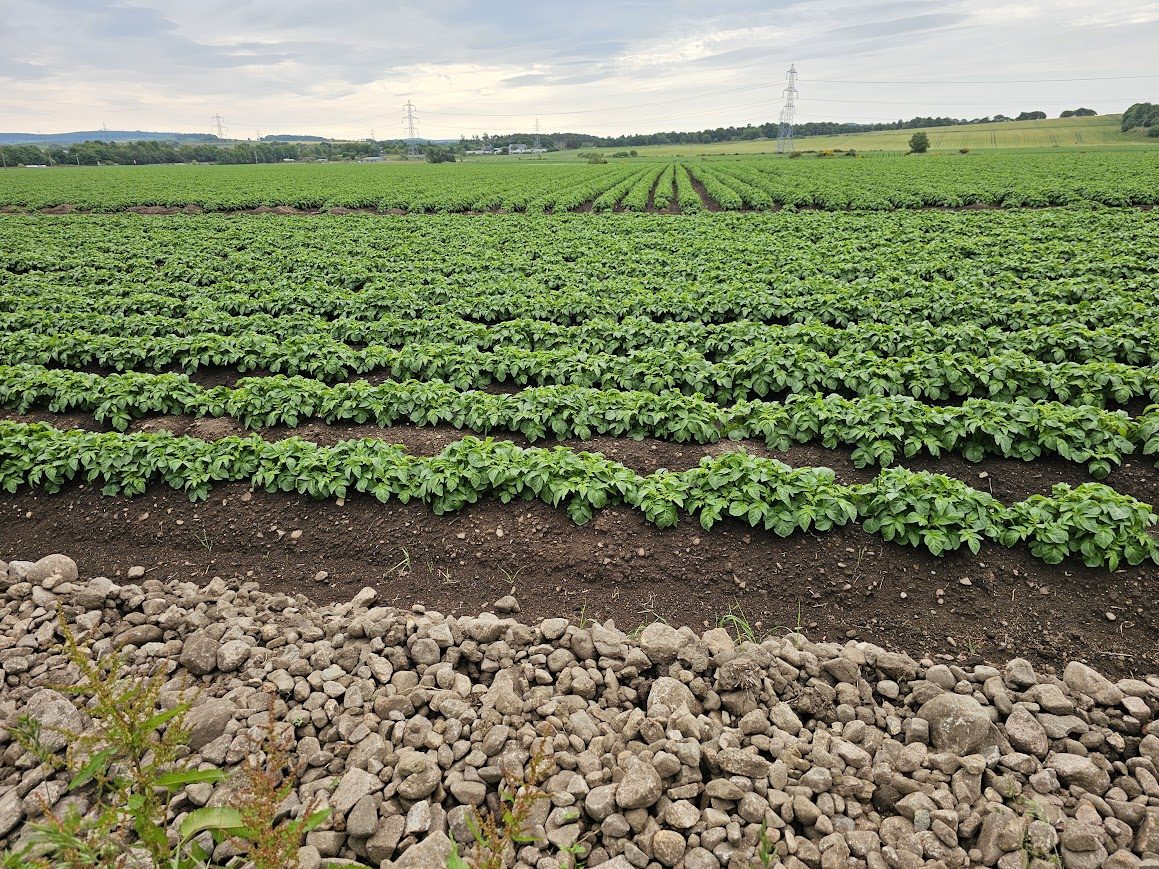
Potatoes in Aberdeenshire
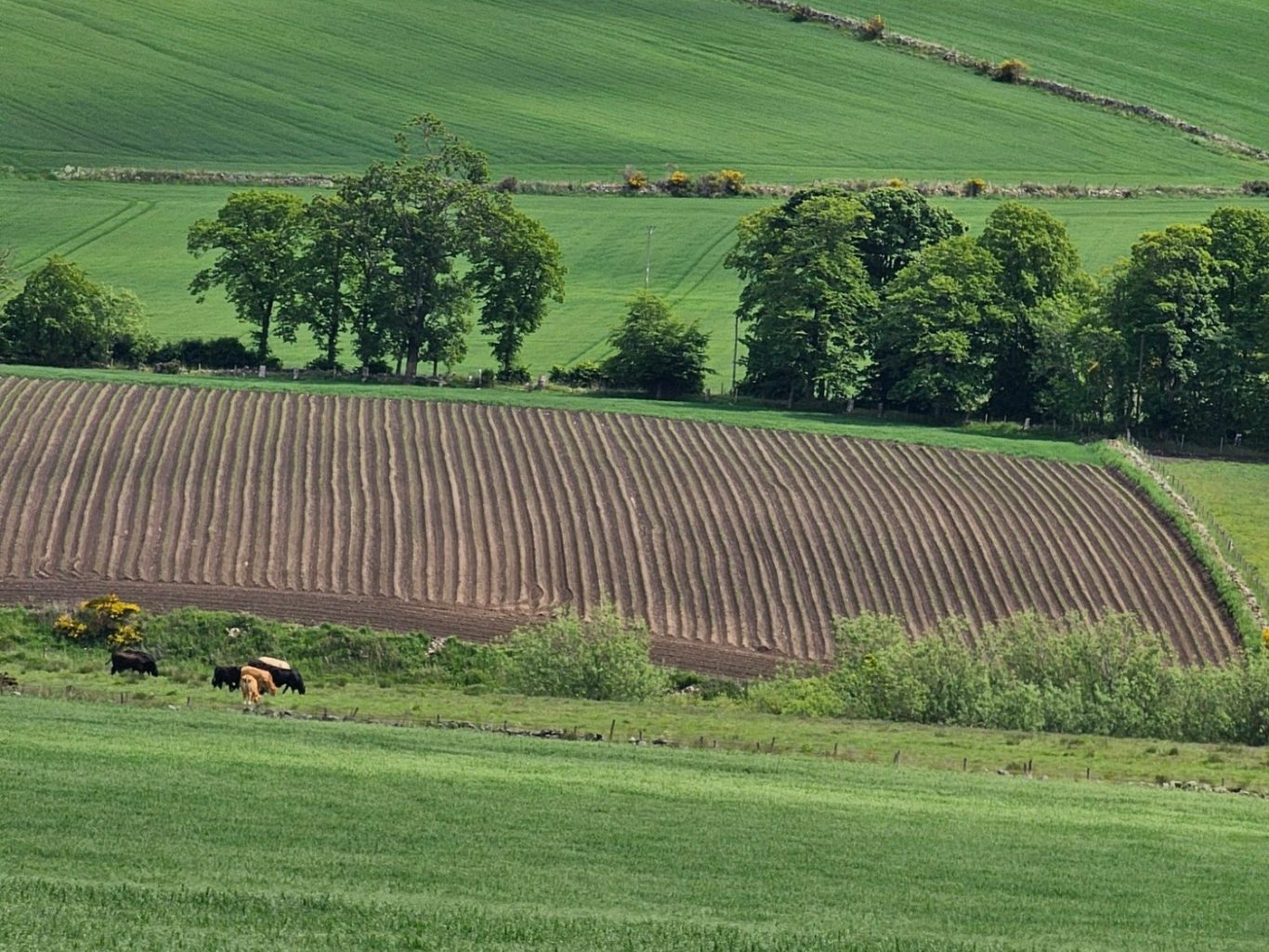
Cereals in Aberdeenshire
Scottish Catchments still suffering from Water Scarcity despite rain - 3/6/25
Scottish Environment Protection Agency has published its latest Water Scarcity Report
"The River Helmsdale area has been raised to Significant Water Scarcity. The Wick, Spey, Deveron, Ythan, Don (Aberdeenshire), Dee (Aberdeen), Esk, Firth of Tay and Tyne (Lothian) river catchments remain at Moderate Water Scarcity. The Firth of Forth and Tweed have recovered to Alert. Further recovery means that many of the remaining areas are at Early Warning or Normal Conditions, with some catchments still at Alert.
"If river flows remain very low, the Wick and Thurso catchment will be raised to Significant Scarcity within the next week. Further rain is forecast in the coming week, however well above average rainfall will be required for water scarcity levels to recover after such a prolonged dry period, especially in the parts of the country where rainfall has been limited in the previous weeks.
"The east of Scotland has seen its second driest spring in 100 years and there are some parts of the east coast that have had below average for the last 12 months. “We advise water users, including those with private water supplies, to be aware of the potential risk of water scarcity this summer, and for businesses to plan ahead where possible.” Advice for abstractors and irrigators is available here
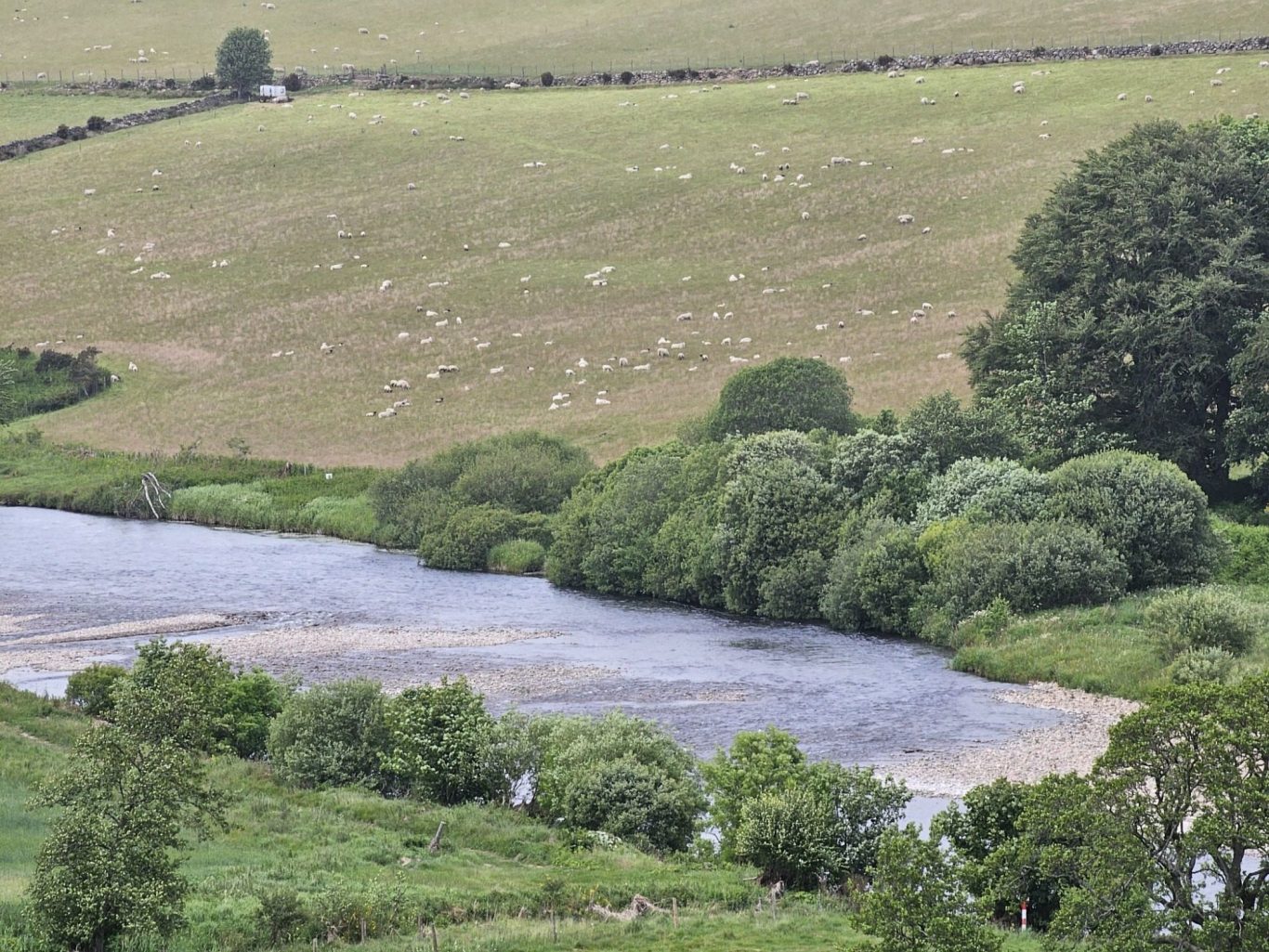
Low flows on the River Dee
Reuse of Water for Agriculture - 23/5/25
"We are talking about innovation now. It's really clear we've reached capacity from a water resources perspective in many many catchments. We have a lot of sectors asking for more water, which is a struggle when we are running out".
"More and more, I think the EA are willing to explore the art of the possible in terms of what solutions look like, so it's really pleasing to see examples like this".
Just a couple of comments from discussions following the River Ingol wetland site visit event, near Ingoldisthorpe, West Norfolk.
The treatment wetland was established in 2018 to provide a natural, low-cost and sustainable water treatment method for removing contaminants from the outflow of the local Water Recycling Centre. Although the treated water is not used for agriculture, it does provide an example of what constructed wetlands can achieve in terms of improved water quality. The wetland serves as a good example to consider how to develop this type of water resource as a source for irrigation in the future. The outflow from the wetland is 1Ml/d (1000 cubic metres per day). Some excellent insights from those who designed, constructed and continue to manage the site.
Post visit discussions were led by Huw Richards and George Warren on the application of reused water for agriculture, building on the recent final report on Re-using water for non-potable purposes: a review of opportunities
Potential water reuse in hydrogen production and data centre cooling was highlighted together with the need for wider engagement with other sectors such as golf and race courses, along with the need for appropriate regulation. Water reuse is one of the options that the Environment Agency has explored in its suite of agriculture Local Resource Options Screening Studies.
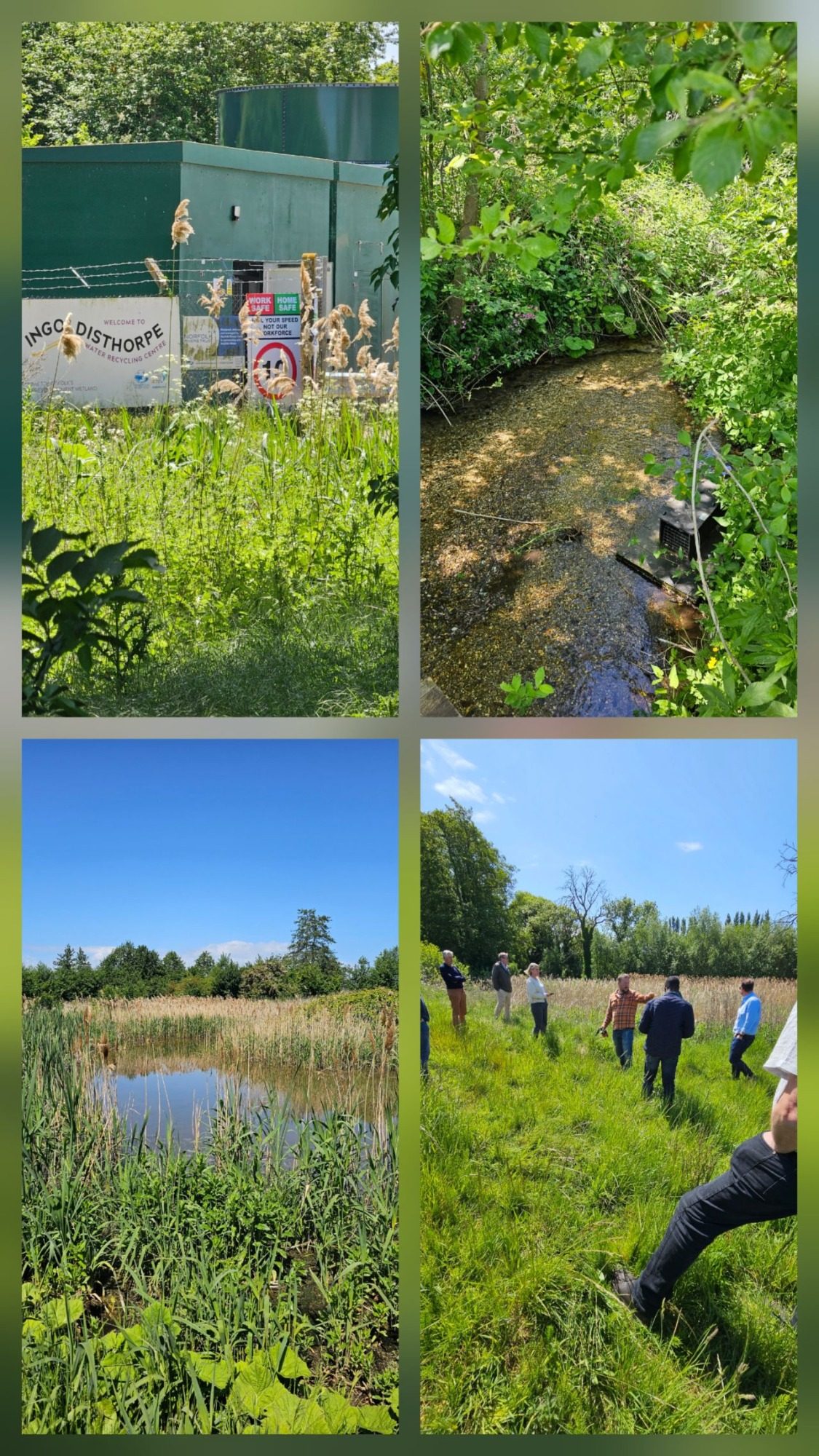
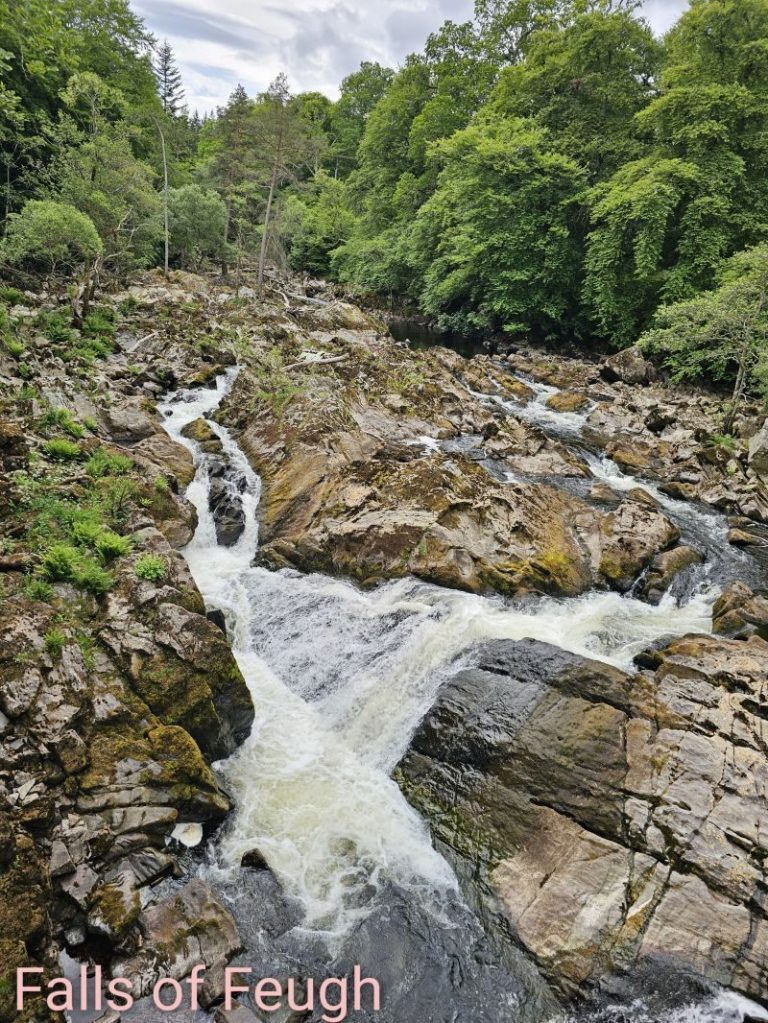
Scottish Catchments at Risk of Significant Water Scarcity - 5/6/25
Scottish Environment Protection Agency has published its latest Water Scarcity Report.
https://beta.sepa.scot/water-scarcity/previous-reports/05-june-2025/
"Further heavy rain over the past week has resulted in some recovery of ground and river conditions, particularly in the west of Scotland.
" However, some areas of the north and northeast are still at risk of reaching significant water scarcity. If river flows in these areas remain very low, the Avon catchment in the Spey, the Lower Dee and Water of Feugh in Aberdeenshire, and the Helmsdale catchment will be raised to Significant Scarcity next week.
"Further rain is forecast in the coming week, however well above average rainfall will be required for water scarcity levels to recover after such a prolonged dry period, especially in the parts of the country where rainfall has been limited in previous weeks. The east of Scotland has seen its second driest spring in 100 years and there are some parts of the east coast that have had below average for the last 12 months."
Advice for abstractors including improving water resilience and contingency planning is available at https://beta.sepa.scot/water-scarcity/advice-for-abstractors/

Off the Grid -4/6/25
Not just an ordinary cup of tea... Greyhope Bay are living the water recycling dream serving up 200 litres of highly treated rainwater harvested hot drinks per day!
https://www.greyhopebay.com/greyhope-stories/sustainability-at-greyhope-bay
Food Security - 5/6/25
In advance of a key defence review, former senior figures in the UK military are urging the government to broaden its definition of what constitutes “national security” to include food, energy and water security as well as measures to protect communities from flooding, extreme heat and sea level rises.
There are also calls to counter the possible “weaponisation of geoengineering” – hostile actors using geoengineering techniques to manipulate weather patterns to cause extreme conditions.
https://www.theguardian.com/politics/2025/may/29/national-security-definition-food-climate?CMP=share_btn_url
The 2023 paper examined the alarming impacts of malign geoengineering techniques further. :
https://www.sciencedirect.com/science/article/pii/S2211467X22002255#:~:text=Geoengineering%20as%20an%20actual%20weapon,plausible%20%5B19%2C20%5D
It highlighted "conversion of climate technologies into weapons that could affect rainfall, kill off agriculture or affect crops, degrade forests, or interfere with water security."

Whisky & Dry - 28/5/25
Innovative nature based solutions are helping to make the whisky industry (and wider population) more water resilient in the face of current water scarcity and future droughts.
The University of Aberdeen team "demonstrated the benefits of a series of small leaky dams installed in channels to slow water flow by holding the water in that location in temporary mini reservoirs. This allows it to soak into the subsurface so that more water is available at times when it is needed."
" This will help us to assess how resilient different water resources in Speyside are to drought and to understand what causes certain water resources to be more vulnerable whether it is driven by geology, land use or other issues.
“We will then use modelling to help future planning and our understanding of which nature-based solutions might work best where to mitigate water scarcity across the region.”
Dr Mark Wilkinson, from the James Hutton Institute, said: “There is significant interest from diverse stakeholders for these ‘green solutions’ to environmental problems and the project is designed to share insights and to develop a toolkit of options for different environments and users.”
The Environment Agency's Local Resource Options screening studies includes nature based solutions. Hopefully this University of Aberdeen study demonstrates the practical applicability of these types of solutions in suitable catchments.
https://www.abdn.ac.uk/news/24422/

Hot Summer Ahead - 26/5/25
The Met Office are forecasting that the chance of a hot summer is higher than normal:
https://www.metoffice.gov.uk/binaries/content/assets/metofficegovuk/pdf/business/public-sector/civil-contingency/3moutlook-jja-v1.pdf
Meanwhile Global climate predictions show temperatures are expected to remain at or near record levels in the next 5 years
https://www.metoffice.gov.uk/about-us/news-and-media/media-centre/weather-and-climate-news/2025/global-temperatures-expected-to-remain-at-or-near-record-levels
Water minister Emma Hardy said "A situation of rationing, more hosepipe bans, the situation that we see happening in different countries in the Mediterranean. Now, I’m not prepared to let that happen under my watch.”
Hardy is announcing the fast-track construction of two new reservoirs [Fens Reservoir in Cambridgeshire and the Lincolnshire Reservoir], with another seven to come before 2050, after a three-decade period in which none were built. Work has already started on Havant Thicket reservoir in Hampshire.
https://inews.co.uk/news/politics/uk-water-rationing-reservoirs-3719228
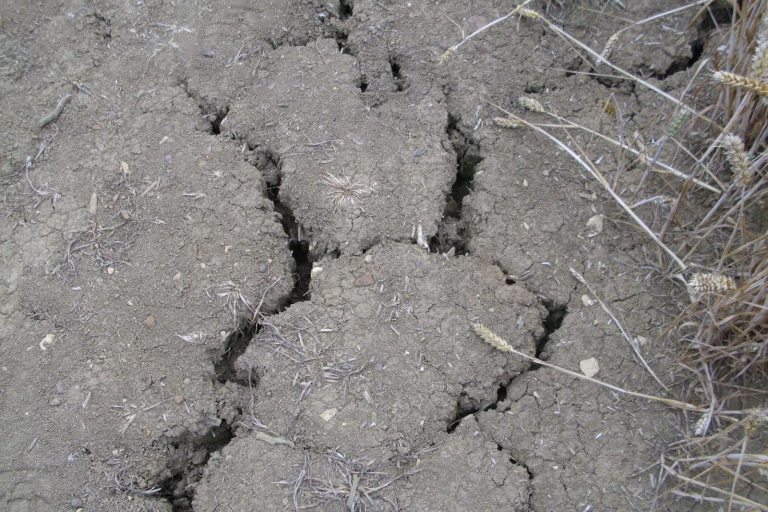
Driest Spring in a Century -22/5/25
‘It’s a critical time’: European farmers struggle through driest spring in a century
Wider European significant dry spring effects being reported on in the Guardian. Extreme weather costs the EU about €28.3bn in lost crops and livestock per year, equal to about 6% of its total food production, with more than half the losses stem from drought.
"Local farmers had responded to the 2018 drought by investing in mechanical tools to extract water from irrigation channels and distribute it over their fields.
In the short term, though, farmers across Europe see little choice but to wait for more rain. Almost a third of the continent was under orange drought warnings by the end of April, according to the European Drought Observatory, with 0.7% in the critical red alert stage."
In response to the continuing dry conditions in England farmers are rapidly using up reservoir storage and abstraction licence volumes in some counties and will be selectively irrigating crops as the summer progresses. Some cereal production is being harvested for anaerobic digestion plants due to poor cropping.
https://www.theguardian.com/environment/2025/may/22/its-a-critical-time-european-farmers-struggle-through-driest-spring-in-a-century